Hybrid Solar · Solar + Grid + Battery
Hybrid solar — savings during the day, backup when it matters
Hybrid systems intelligently combine solar energy, grid electricity and battery storage, giving you bill reduction and reliable backup power according to your requirements.
What is hybrid solar?
Three energy sources, one intelligent inverter
A hybrid solar system combines solar energy, grid electricity and battery storage to provide energy savings and reliable backup power according to your requirements.
The hybrid inverter is what makes this possible. It decides, moment by moment, whether your loads should be supplied by solar, by the battery or by the grid — and whether surplus solar should charge the battery. During the day you reduce your bill; when the grid fails, the backed-up circuits keep running.
This is the configuration most people picture when they imagine "going solar without losing power" — and it is the one we most often recommend to households in areas where outages are a routine part of life.
Ideal for customers who want
- Solar energy generation to cut daytime consumption from the grid
- Battery backup during power outages
- Grid power available when solar and battery are not enough
- Reduced electricity bills
- Greater energy independence
- Flexible use of solar, battery and grid power
The trade-off, plainly
Hybrid costs more than on-grid because of the inverter and battery. What you buy with that extra cost is continuity — power that stays on when the grid does not. If outages genuinely disrupt your home or business, that is usually money well spent. If they don't, we will say so.
Complete hybrid solar power systems
Two systems we install regularly
Complete hybrid solutions combining solar generation, lithium battery storage and intelligent power management.
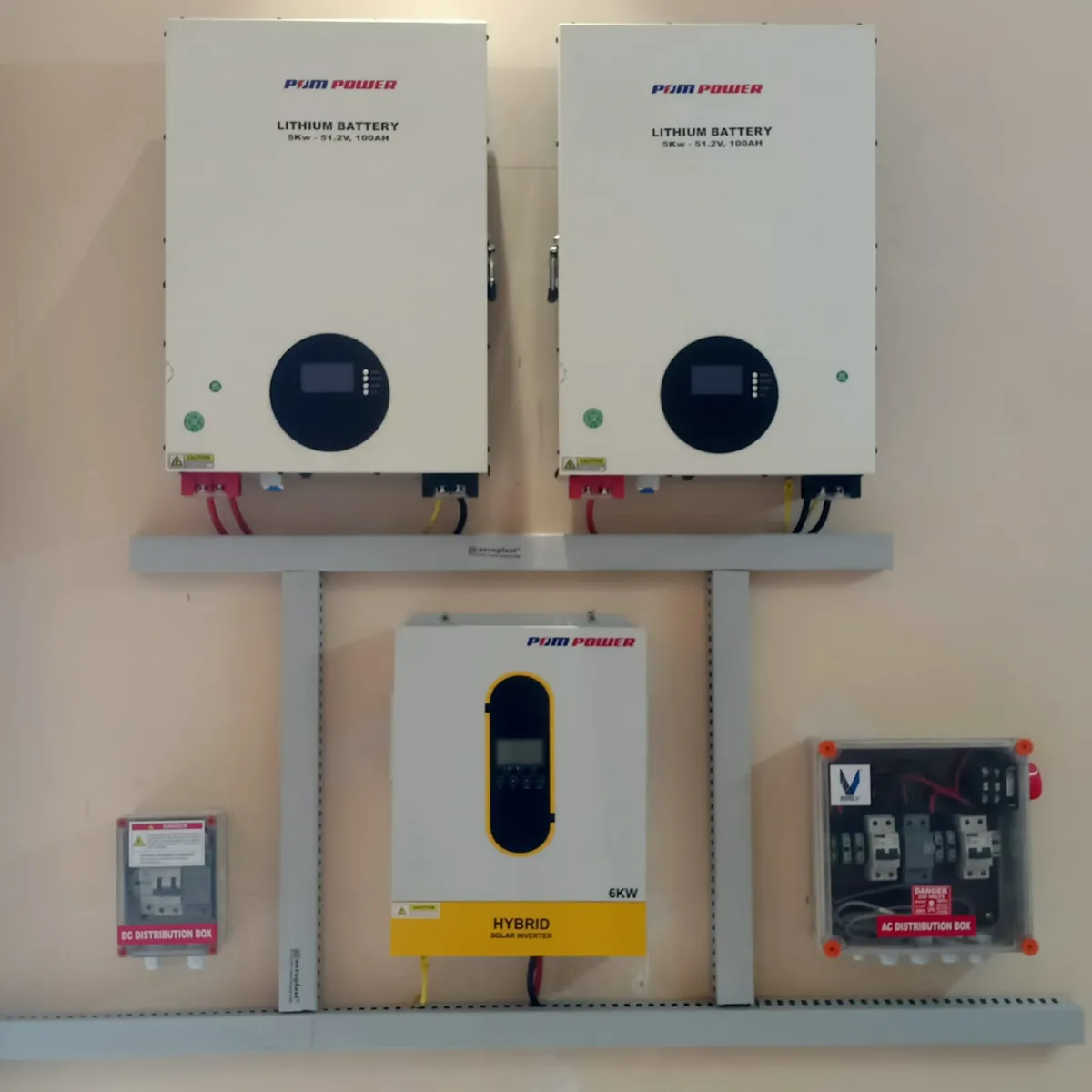
6kW Hybrid Solar Power System
Reliable solar power with battery backup — a professionally installed 6kW hybrid system designed to provide efficient solar energy generation with reliable battery backup.
- ☀️6kW hybrid inverter
- 🔋2 × 5kWh lithium batteries (10kWh total)
- ⚡Solar generation & battery backup
- 🛡️AC & DC protection
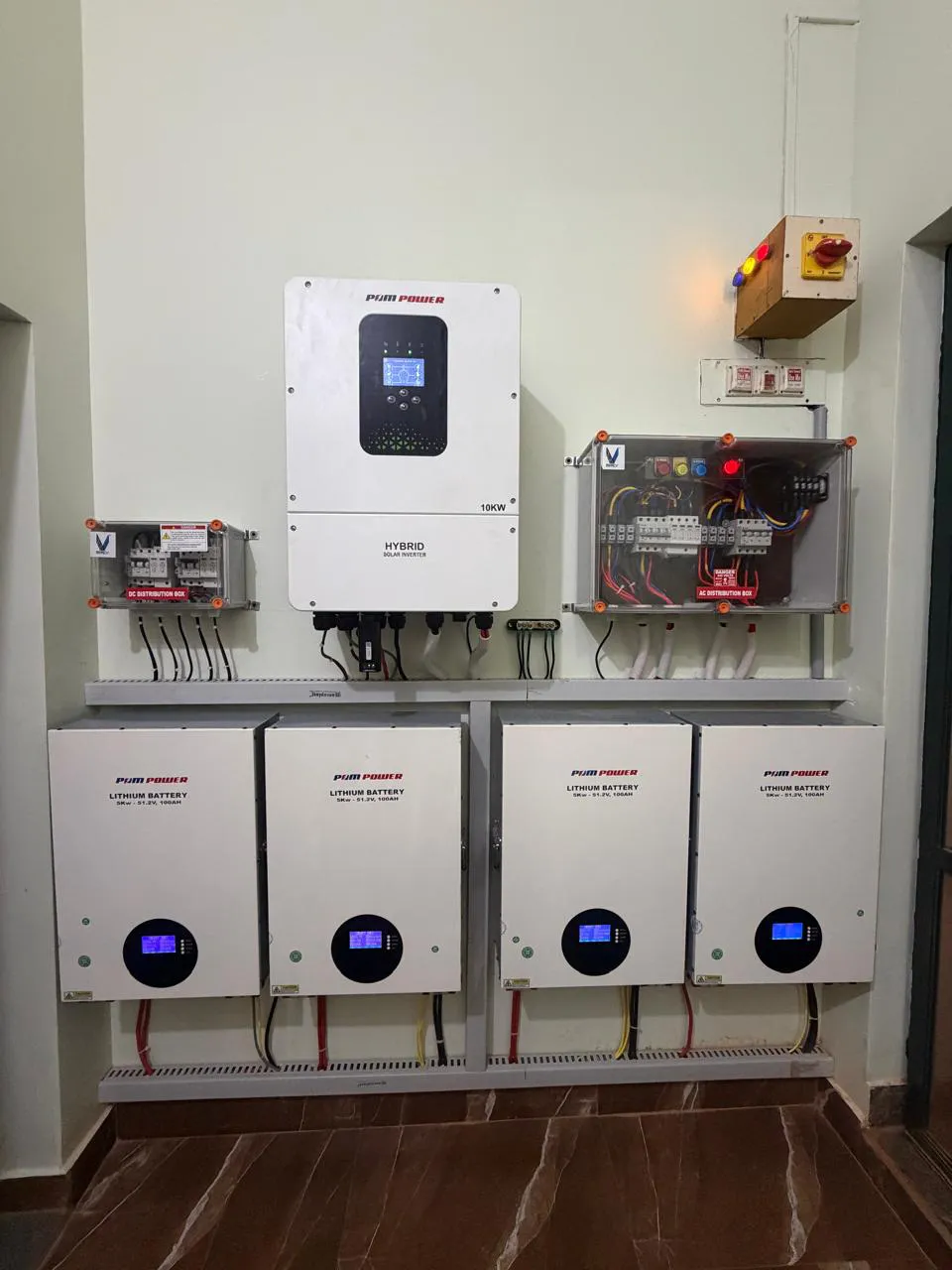
10kW Hybrid Solar Power System
High-capacity solar power with advanced battery backup — designed for high-power residential and commercial applications.
- ☀️10kW hybrid solar inverter
- 🔋4 × 5kWh lithium batteries — 20kWh total storage
- ⚡Solar generation & battery backup
- 🛡️AC & DC protection
6kW vs 10kW — side by side
| Feature | 6kW Hybrid | 10kW Hybrid |
|---|---|---|
| Hybrid inverter | 6kW | 10kW |
| Lithium batteries | 2 × 5kWh | 4 × 5kWh |
| Total battery storage | 10kWh | 20kWh |
| Solar generation | Yes | Yes |
| Battery backup | Yes | Yes |
| AC & DC protection | Yes | Yes |
| Application | Home & backup | High-power home & commercial |
Backup duration is not listed here because it depends entirely on which loads you connect to the backup circuit. We work that out with you during the site survey rather than quoting a number that may not hold.
How the day works
Solar first, battery second, grid last
A hybrid system has a simple priority order, and understanding it is the key to getting value from one.
- Morning to afternoon — solar supplies your loads directly. Whatever is left over charges the battery.
- Battery full, sun still up — surplus can go to the grid where net metering applies, or generation is limited to what is needed.
- Evening — the battery supplies your backed-up loads as generation falls away.
- Battery depleted — the grid takes over seamlessly, so nothing shuts down.
- Power cut — the backed-up circuits keep running from the battery for as long as its capacity allows.
Solar energy charging a lithium battery bank
Hybrid solar FAQ
What people ask before choosing hybrid
Yes — that is the main reason to choose hybrid. During an outage the system supplies the loads connected to the backup circuit from the battery. How much runs, and for how long, depends on the battery capacity and the loads you back up, which we decide together during the design.
Yes, because it adds a hybrid inverter and battery storage. Whether the extra cost is worth it depends on how much power interruptions actually affect you. If outages are rare and brief, on-grid may serve you better; if they are frequent or disruptive, hybrid usually justifies itself.
It depends on the inverter already installed. Some systems can be extended and some cannot, because a standard on-grid inverter is not designed for battery management. If you think you may want backup eventually, it is worth planning for it at the design stage.
Usually only selected circuits. Backing up lighting, fans, the refrigerator, routers and a few sockets is far more economical than backing up air conditioners and heavy loads. We help you decide what genuinely needs to stay on.
We offer hybrid-capable inverters from brands including Deye, Sungrow and Growatt, and lithium storage from brands including Sungrow, Deye, Waaree, Vikram Solar VION, Eastman, Loom Solar, UTL, Microtek, Luminous and Genus — subject to model, capacity, availability and project requirements.
Next step
Power cuts? Explore a suitable hybrid + battery solution.
Tell us which loads must stay running during an outage and roughly how long. We will design a hybrid system around that requirement and quote it honestly.
- Your electricity requirement and 60-day EB bill
- Property type — home, shop, office, farm or institution
- Backup requirement and available roof space
Related: Lithium Batteries · On-Grid Solar · Finance & EMI · Products