Solar guide
Solar Inverter Replacement Guide
A practical guide to spotting inverter trouble, choosing the right replacement, and getting the changeover done without guesswork.
Solar repair advice
Solar inverter replacement guide for real-world faults
This solar inverter replacement guide is for anyone whose rooftop system has started acting up and needs a straight answer. Maybe the display keeps flashing, the unit trips at odd times, or the system just stopped carrying the load it used to handle. We help you work out whether the inverter should be repaired, replaced, or reconfigured so the rest of the solar setup can keep doing its job.
In Kanyakumari District, inverter trouble often shows up after long stretches of heat, moisture and cable wear, especially on roofs that take wind and sea air. That can happen in Kottar, around Nagercoil town, or on a house near Rajakkamangalam where salt-laden air gets into fittings faster than people expect. We look at the actual site, not just the fault code, because the same symptom can come from very different causes.
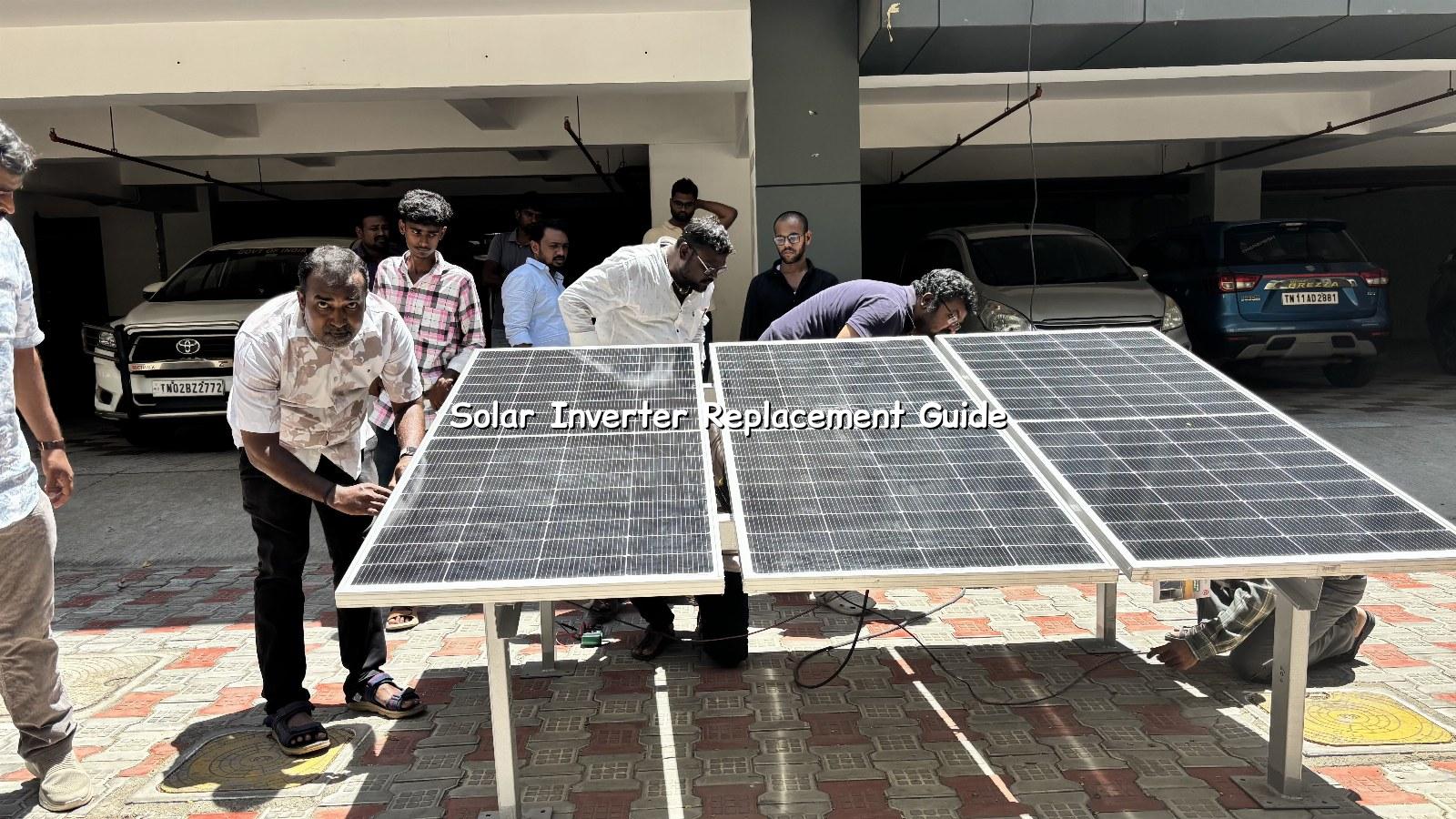
Start with the fault
What actually points to inverter replacement?
Most people call us after a few repeats: the system starts, stops, restarts, then throws a fault again. That pattern can mean the inverter itself is failing, but it can also point to loose terminals, damaged DC cable, a weak battery bank, or a grid-side issue from the EB connection.
Symptoms we check first
We begin with the basics because they save time. If the display is dead, if the fan sounds strained, if the unit heats up more than usual, or if the output comes and goes when the load changes, those are worth checking carefully. A little fault light is one thing, repeated shutdowns after a reset are another.
In many rooftops around Kottar and Vadasery, the inverter cabinet sits where dust and heat build up quicker than people realise. That alone does not mean the unit is finished, but it does mean the terminals, filters and cable gland points need a proper look. We also check if the roof wiring has become brittle or if water seepage has entered during the monsoon.
When a repair visit is no longer enough
Sometimes the old unit has simply reached the point where chasing one fault after another is no longer worth it. If the board is damaged, if the internal parts are no longer responding cleanly, or if the model no longer suits the array and battery setup, replacement is usually cleaner. That is especially true when a home has added more load over time and the old inverter is undersized for present use.
We do not force replacement when a service visit can solve it. If the issue is a connector, a cable end, a setting or a protection device, we will say so. Honest diagnosis matters more than selling a box.
- Switch off safely. The system must be isolated before any inspection starts, both AC and DC sides.
- Check the full path. We review the panels, cables, protections, earthing and battery side, not just the inverter shell.
- Match the replacement. The new unit has to fit the real load, system type and site conditions.
- Install and test. We verify generation, charging and changeover behaviour before leaving the site.
- Explain the display. You should know normal readings, warning signs and when to call us again.
Choosing the right unit
What to look at before you buy or change the inverter
The right inverter is not just the one with the biggest label. It has to suit the way your site actually works, which means looking at daytime load, backup need, battery chemistry if there is one, roof orientation, and the space available for ventilation. A small shop in Marthandam will often need a different answer from a house in Kottar, even if the panel count looks similar on paper.
We also check local conditions that matter in this district. Near the coast, salt exposure can affect connectors and housings faster, while inland roofs may face stronger wind loading or more dust. If the site is in a place like Manavalakurichi or Colachel, hardware selection needs a bit more care than a sheltered inland terrace.
The details that shape the final choice
A replacement should suit the existing solar panels, but the inverter also has to be practical for daily use. If the household has a fridge, water pump, computer load and lighting all on the same setup, the switching behaviour matters. If batteries are present, communication and charging profile matter too. The safer route is to match the machine to the real site, then test it under load.
| Site condition | What we check | Typical replacement approach |
|---|---|---|
| Old on-grid rooftop system | Panel string, AC protections, EB sync, cable condition | Choose a compatible grid-tied unit and test the connection carefully |
| Home with battery backup | Battery health, charging profile, switchover timing, load pattern | Match the inverter to the battery type and present backup need |
| Hybrid system with mixed use | Solar generation, grid input, backup circuits, display settings | Use a hybrid model that can manage both supply sources cleanly |
| Roof exposed to salt air | Terminals, gland points, corrosion, enclosure placement | Upgrade protection and rework weak terminations during replacement |
- Check whether the old inverter is still under manufacturer support before you replace anything.
- Look at the condition of DC isolators, AC breakers and earthing at the same time.
- Ask whether the new unit will work with your existing solar panels without re-stringing.
- Make sure ventilation around the new inverter is real, not just promised on the brochure.
- Confirm whether batteries, if fitted, need a different charging setup after changeover.
How we handle the changeover
The replacement process we follow on site
We keep the process simple because most people just want their system working again. The steps matter, though, and skipping any one of them can create a fresh fault later. That is why we go through the full check instead of treating inverter replacement like a quick box swap.
Step by step, without shortcuts
First, we talk through the fault history and ask what changed before the problem started. Then we inspect the roof setup, the inverter location, and the wiring path from the panels or batteries to the unit. If the old inverter is still alive enough to test, we verify the behaviour under load, which often tells us more than the display screen does.
After that, we recommend the best path. If the issue is small, we fix it. If the inverter is genuinely worn out, we suggest the right replacement and explain what will happen to the existing setup. For some homes in Thovalai or Boothapandi, a replacement is also the right time to improve the cable routing and protection so the next monsoon does less damage.
Once the new inverter is installed, we test the full cycle again. That includes solar input, load response, battery charge behaviour if applicable, and any switching linked to the EB connection. We then show you the normal display readings and what to watch if the unit warns again.
Why old systems fail sooner than expected
A lot of failures start outside the inverter. Loose gland fittings, heat trapped in a closed space, cable joints that were fine for a while, and roof leaks around the mounting area all add stress. In district conditions like ours, where the south-west and north-east monsoon both affect exposed roofs, the little details matter more than people think.
Repair or replace?
A plain way to decide what to do next
A lot of customers expect a simple yes or no, but the real answer depends on the whole system. If the inverter fault came after a cable issue, a bad connector or a settings change, replacement may be unnecessary. If the same unit keeps failing after checks, or if it no longer fits the load and backup pattern, a new inverter is the cleaner path.
We often see older rooftop systems where the panels are still fine, but the inverter has become the weak point. In that case the rest of the system can continue to do useful work once the inverter is matched properly. The opposite happens too: someone wants a new inverter, but the real issue is moisture in a junction box or a loose AC connection. That’s why we test first.
If you live in a coastal pocket, or on a roof that gets full sun and strong wind, replacement should include a look at the enclosure, the fasteners and the cable ends. A unit swapped without checking the surroundings can fail in the same way again, and nobody wants that round trip.
| Observation | What it may mean | What we usually do |
|---|---|---|
| Single fault after a power issue | Could be a temporary protection trip | Inspect protections, reset properly, and retest the system |
| Repeated shutdowns on the same day | Could be inverter wear or a deeper wiring fault | Check cables, load, and the unit itself before deciding |
| Battery-backed system not switching cleanly | May be a settings or compatibility problem | Review battery type, charging profile, and switchover logic |
| Visible corrosion around terminals | Site exposure is affecting the hardware | Rework the affected points and decide if the inverter body still makes sense |
- Don’t swap the inverter until the DC and AC side are checked properly.
- Do not ignore a display that keeps resetting after the load changes.
- Keep the new unit in a place with real airflow, not just a tight corner.
- Recheck earthing when the system is opened, because old joints often tell the story.
- Ask for the fault history to be reviewed, not only the current error code.
How JRS helps
How JRS SunTech Energy Can Help
We handle inverter replacement for solar systems, battery-backed setups, and hybrid installations, and we do it by looking at the whole site first. That means the roof, the wiring, the EB connection, the existing panels, and the condition of the mounting and cable points. If the old unit only needs a repair, we will say that plainly.
Our team works from Kottar, Nagercoil and travels across Kanyakumari District for surveys, installation, documentation support and after-sales help. If you want a proper replacement plan, send us a message or call and we’ll take it from there.
Contact: JRS SunTech Energy, Door No. 227, First Floor, Cape Road, St. Xavier's Church Junction, Kottar, Nagercoil, Kanyakumari District, Tamil Nadu - 629002 | Phone: 9787775999 | Email: jrssuntechenergy@gmail.com
Frequently asked
Questions we hear about solar inverter replacement
Start with the symptoms. If the inverter keeps shutting down, shows repeated fault codes, makes unusual noise, or refuses to sync with the EB connection after basic checks, replacement may be the better path. We usually look at the age of the unit, the condition of the wiring, and whether the rest of the system is still healthy before suggesting a swap.
Yes, in many cases we can. The older inverter is removed, the wiring and protections are checked, and the new unit is matched to the panel string and battery setup if one is present. The exact method depends on roof layout, shading, and whether the system is on-grid, off-grid, or hybrid.
Check the current system size, panel count, battery type if any, and the way your EB connection is set up. You should also confirm whether the roof has space for future expansion or if the replacement only needs to match the present load. In Kanyakumari District, wind exposure and salt air can also affect the mounting and terminal condition around the equipment.
Yes. We handle site checks for homes around Kottar and also travel across Nagercoil and other parts of the district. The idea is simple: see the actual condition first, then suggest repair, replacement, or a cleaner redesign if the old setup no longer fits the house.
Usually it can, but only after a proper compatibility check. Voltage window, string design, battery communication and protection devices all matter. We do not guess on this part, because a mismatch can cause nuisance trips or poor day-to-day output.
We first isolate the system, inspect the old inverter, check the AC and DC side, and review earthing and cable condition. After the new unit is installed, we test generation, charging and switchover behaviour if batteries are involved. The last step is explaining the normal display readings so you know what to watch.
Hurry up!Subsidy ends 31 March 2027 · 134 days left
Next step
Is your inverter the real problem?
Send us a photo of the inverter display, a short note about the fault, and your location in Kanyakumari District. We can help you decide whether it needs repair or replacement.
- Your electricity requirement and 60-day EB bill
- Property type — home, shop, office, farm or institution
- Backup requirement and available roof space
Related: Solar Maintenance · Products · Contact
Free site survey · Kottar, Nagercoil