Solar inverter guide
Growatt Solar Inverter Features Explained
A practical look at what the inverter can do, how those features matter on a real roof, and what to check before you choose one.
Solar inverter guide
What this inverter actually does on your roof
Growatt solar inverter features explained starts with the part people often ignore: the inverter is where the solar output becomes usable power for the building. If the unit is easy to monitor, well protected and suited to the roof and load pattern, the rest of the system feels calmer to live with.
Most calls we get are not about brand names first. People want to know if the inverter suits their EB connection, if the phone app will tell them anything useful, and whether the unit can sit safely in a utility space without becoming a problem later. That is the right way to think about it, because the same model can feel excellent on one site and awkward on another.
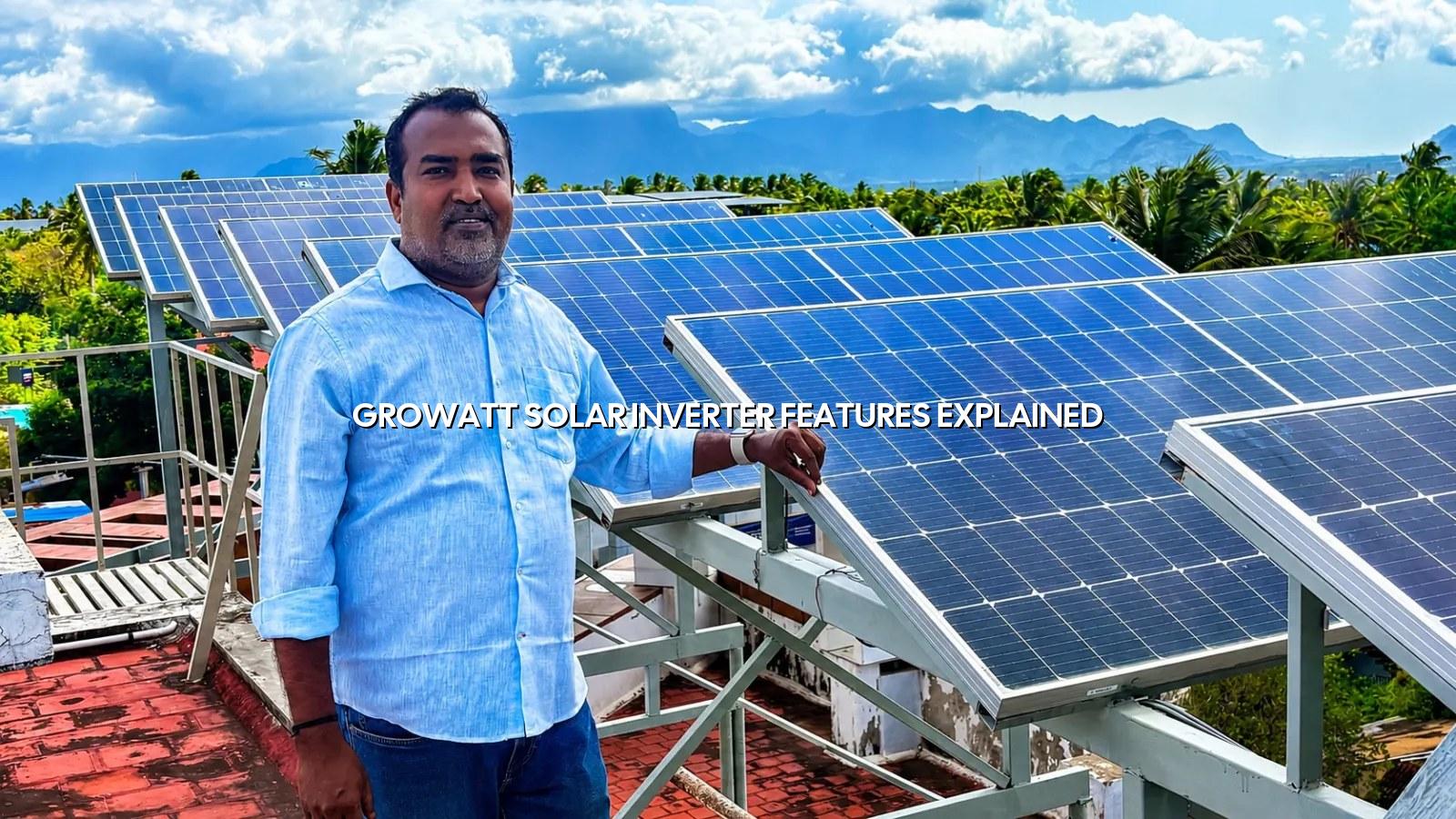
Feature check
Which Growatt features matter most to real users?
A brochure can make every model sound busy. In practice, only a few features decide whether the inverter is easy to live with: monitoring, protection, battery support, grid behaviour and the way it is installed on the property. If those parts are right, the rest usually falls into place.
Monitoring that tells you something useful
Most customers like the monitoring side first, because it makes the system feel less mysterious. A decent Growatt model can show generation, running status and past performance through an app or portal, so you don't have to wait for a bill cycle to know if the system is doing its work. That matters when the inverter is mounted in a store room, under a stair landing or in another place you don't visit all day.
We tell people to treat monitoring as a practical tool, not a fancy extra. If you see a sudden drop in output, a warning symbol or unusual offline time, you can call for a check before the issue grows. In a place like Nagercoil, where houses often mix indoor and outdoor cable runs, that early warning is handy.
Protection features you should ask about
Protection functions are the quiet part of the story, but they matter a lot. Surge handling, grid interaction checks, over-temperature protection and basic fault reporting help the inverter protect itself and the system around it. If your site is closer to the coast, say toward Colachel or Manavalakurichi, we pay closer attention to enclosure placement and cable terminations because salt-laden air can be hard on sloppy connections.
A buyer sometimes focuses on power rating alone and ignores those details. That usually ends with avoidable service calls. The model should suit the site, the wiring path and the building type, not just the roof size.
Hybrid readiness and battery support
If you want backup power later, or you already know that the EB supply can be patchy at times, hybrid support becomes important. Some Growatt models are meant for solar plus battery use, which lets you plan for backup loads in a smarter way. That can be useful in shops at Thuckalay or homes in Kottar where the owner wants selected lights, fans and internet equipment to stay on during an outage.
The point is not to oversize the inverter and hope for the best. It is to match the inverter, battery path and expected backup loads from the start. We have seen people buy a unit for "future use" and then discover the battery side was never discussed properly. That gets expensive in time, not just money.
Grid tie behaviour and everyday convenience
For on-grid systems, the inverter should work smoothly with the EB connection and the loads in the building. Changeover logic, grid sensing and clean shutdown behaviour all affect daily comfort. If your site is a commercial unit in Marthandam or a busy office in Kuzhithurai, you want the inverter to behave predictably when the supply fluctuates.
People rarely ask for that language on the first phone call, but they notice the result quickly. If the unit starts restarting too often or showing repeated faults, the entire system feels less dependable. Good selection avoids that.
| Feature area | What it tells you | Why it matters on site |
|---|---|---|
| Monitoring app | Shows generation and status | Helps you spot low output or offline time early |
| Battery support | Whether backup can be planned | Useful for selected loads during EB interruptions |
| Protection functions | Handles faults and abnormal conditions | Important where heat, wiring paths or surges can stress the unit |
| Grid interaction | How the inverter behaves with the EB connection | Affects stability in homes, shops and offices using regular daytime power |
| Enclosure and mounting | Placement and installation style | Needs proper ventilation and dry, safe cable routing |
What to check first
A simple way to compare models without getting lost in spec sheets
We like to begin with the building and the bill, not the model number. If the site has daytime use, a regular EB connection and enough roof area, an on-grid Growatt option may be enough. If the owner wants backup support, battery integration becomes part of the discussion straight away. The same logic applies in a busy roof in Vadasery or a mixed-use building near the town centre — the load pattern decides a lot.
Then we check roof position, shade and cable paths. In parts of the district that see stronger wind exposure, such as open stretches toward Aralvaimozhi, the mounting and wiring plan deserve extra care. A well-chosen inverter still needs a clean physical installation, or the owner ends up calling us about avoidable trips and warning lights.
- Start with the load pattern. Look at how many units the building uses over a 60-day billing cycle and when the power is actually needed.
- Check the roof and mounting area. RCC flat roofs, tiled roofs and sheet roofs need different cable and fixing choices.
- Decide whether backup matters. If you want battery support, choose a model with the right hybrid path from the beginning.
- Ask about monitoring. If you want phone-based checks, confirm the app or portal setup before installation.
- Plan for local conditions. Heat, wind and coastal air all affect how the inverter is placed and protected.
We also ask a blunt question that saves time: where will the inverter sit? A shaded indoor wall is easier to keep healthy than a spot that gets extra heat or dampness. That answer changes the model choice more than most people expect.
Features that are useful, and features that only sound good
A fancy display looks nice on day one. But if the readings are hard to understand or the app keeps dropping connection, it isn't very helpful. What you really want is clear status, sensible alerts and a unit that matches your site. That is why we spend time on actual placement, cable sealing and expected use, not just the brand label.
If your requirement leans toward storage or future backup planning, take a look at hybrid solar and inverters & batteries as well. Those pages help explain how the inverter sits inside a wider system. For battery choices, lithium batteries is a useful companion read.
Local site sense
Why the same inverter can behave differently from one roof to another
A shop roof in Thuckalay, a house in Kottar and a building closer to the coast do not ask the same thing from the inverter. Some sites need better shading control, some need stronger enclosure care, and some need careful routing because the owner wants the unit hidden but still reachable for service. The device itself may be identical, but the installation isn't.
Monsoon periods also change the way we think about cable sealing and drainage around the mounting area. Water should not stand near the inverter path, and cable entries should be sealed neatly. That sounds basic, but the calls we get after heavy rain often come from tiny installation misses, not from the inverter brand itself.
- Choose a shaded, dry mounting spot with airflow around the unit.
- Keep cable routes short and neat, with proper sealing at entry points.
- Ask whether the model suits on-grid use, hybrid use or both.
- Check if the monitoring app is part of the setup, not an afterthought.
- Make sure the structure can handle local wind and roof conditions.
One small thing we see often: people want the inverter hidden away and then complain they can't read the display. That is fair. So we try to place it where it is safe but still practical to inspect. The best setup is the one you can live with for years without fuss.
How we handle it
How JRS SunTech Energy checks a Growatt inverter fit
We start with your actual roof, not a generic assumption. Then we look at the EB connection, the equipment location, the need for battery support and whether the site is a home, office, shop or agricultural property. After that, we suggest a suitable capacity and the right installation style, because the same inverter can't solve every problem.
In Kanyakumari District, that approach matters. A terrace in one street, a tiled roof in another and a small commercial space in the next town can all need different fixing methods and different cable plans. If there is salt exposure or extra wind, we say so plainly before work begins. No drama, just the facts.
How the selection process usually goes
First, you contact us. Then we visit for a free site survey, check the roof and review your requirement. Next comes the design and quotation stage, followed by installation, EB documentation, commissioning and after-sales support. For many customers, that order makes the whole process easier than trying to piece it together from a sales brochure.
If you want broader context on our brand choices and package options, our products page helps. If the site is part of a wider solar plan, the solar solutions hub is a good place to compare systems. And if your question is really about how the inverter fits into a full home or shop setup, the Nagercoil local page gives the local picture.
Practical checklist
What we ask before we suggest a model
A customer usually thinks the inverter question is only about wattage. It isn't. The best answer comes from a few plain checks, and once those are clear the choice gets much easier. We keep the conversation grounded because the site has to work on day one and on the days you don't think about it at all.
- How much power does the building use over the 60-day EB cycle?
- Will the system be on-grid, off-grid or hybrid?
- Where will the inverter be mounted, and is there airflow?
- Do you want phone-based monitoring or a simple local display?
- Is the roof RCC, tiled or sheet, and what fixing style does it need?
- Will the site face wind, heat or salt-laden air?
The answers steer the model choice more than the brochure does. In a family house in Ozhuginasery, for example, a simple monitoring setup may be enough. On a commercial roof in Marthandam, the owner may care more about stability during business hours and how quickly the system shows a warning if something changes.
We also care about how easy the inverter will be to service later. If a unit is mounted in an awkward corner, every routine check takes longer than it should. Small details. Big difference.
How JRS SunTech Energy can help
Choose the inverter by fit, not by guesswork
JRS SunTech Energy helps you compare the real Growatt features that matter on site, then links them to your roof, load pattern and future backup needs. We supply solar panels, Growatt and other inverter brands, batteries and full hybrid packages, and we also handle installation, EB documentation, commissioning and one year of free service support after installation. If you want a straight answer about whether a model suits your building, start with the site survey and we will work from there.
Contact JRS SunTech Energy, Door No. 227, First Floor, Cape Road, St. Xavier's Church Junction, Kottar, Nagercoil, Kanyakumari District, Tamil Nadu - 629002. Phone: 9787775999, WhatsApp: +919787775999, Email: jrssuntechenergy@gmail.com.
Frequently asked
Questions people ask before choosing a Growatt inverter
Start with the output type, monitoring method, protection functions and whether the model fits on-grid or hybrid use. Those four points usually tell you more than a long spec sheet, especially if your roof has mixed shading or you want app visibility.
Yes, if the model is matched to your EB connection, roof layout and the way your house uses power through the day. For RCC roofs and tiled roofs in this area, we also look at ventilation, cable runs and how the inverter will be mounted indoors or under cover.
Many Growatt models support app-based monitoring, so you can check generation and basic status without opening the unit every time. That helps when the inverter is in a utility area or on a shaded wall, and it makes it easier to spot unusual drop-offs early.
Ask how the battery input works, what backup loads it can support and how the changeover behaves during a power cut. If you plan to add storage later, it also helps to confirm the battery type and the site wiring path before installation.
Honestly, yes. The same inverter can behave very differently on a shaded terrace in Vadasery, a shop in Marthandam or a coastal house with salt exposure, so we check the site instead of guessing from the brochure.
The unit may be the same, but the mounting and cable route are not. In open stretches toward Aralvaimozhi we pay more attention to fixing points, enclosure placement and how the wiring is protected from strain.
Hurry up!Subsidy ends 31 March 2027 · 134 days left
Next step
Need help picking the right Growatt inverter?
Send us your roof type, EB connection details and whether you want backup support, and we will tell you what fits best.
- Your electricity requirement and 60-day EB bill
- Property type — home, shop, office, farm or institution
- Backup requirement and available roof space
Related: Hybrid Solar · Solar Inverters & Batteries · Contact
Free site survey · Kottar, Nagercoil