Solar guide
Solar Panel Efficiency Explained
A practical look at how panels turn sunlight into useful power, and what changes the result on roofs in Kottar, Nagercoil and across Kanyakumari District.
Solar basics
What solar panel efficiency explained means on a real roof
Solar panel efficiency explained in simple words is just this: how much of the sunlight on the panel becomes electricity you can use. That one number matters when you're planning rooftop solar for a home, a shop or an office, because roof space is limited and the EB connection only sees the final units, not the theory behind them. People usually call us after reading a lot online and they still want one clear answer — will this roof produce enough, and which panel makes sense here?
That is the right place to start. A panel never works alone. Shade from a water tank, the pitch of a tiled roof, wind loading on a sheet roof, salt air near the coast and even cable routing all change the real result. In Kottar and nearby areas, we look at the roof as a full system, not just a brochure spec.
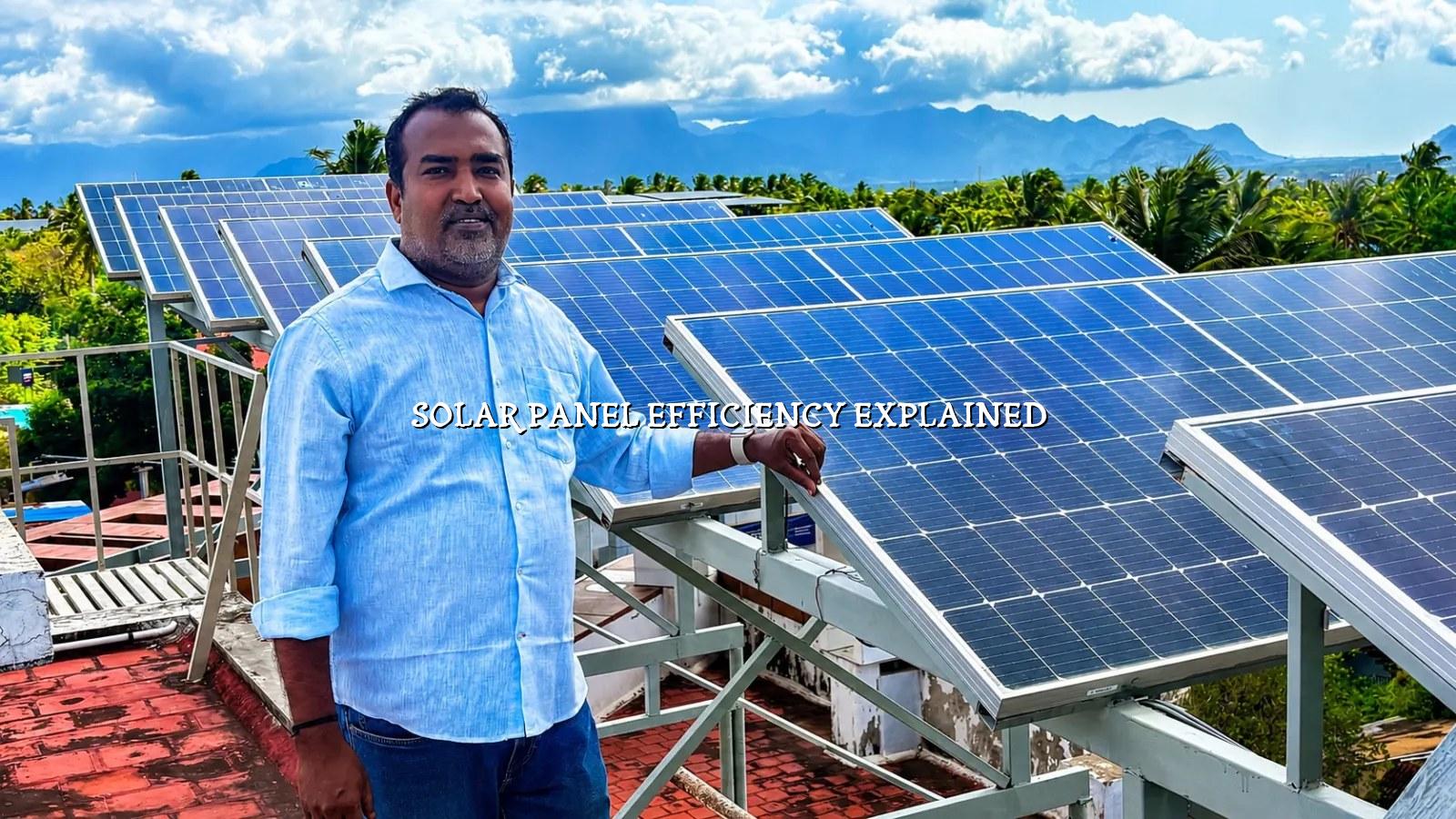
How the system works
From sunlight to the units on your EB bill
Once you understand the conversion process, the numbers stop feeling mysterious. Then you can compare one quotation against another without guessing what the seller really means.
Sunlight becomes DC power first
Solar cells react to sunlight and create direct current, usually called DC power. That power then goes to the inverter, which changes it into AC power for your home appliances and EB-connected loads. When the panel is efficient, more of the available sunlight turns into electrical output from the same surface area, and that matters most when the roof is not very large.
People often hear the word "efficient" and think it only means better. It is a bit more practical than that. High-efficiency panels are useful when roof area is tight or when you want to fit a larger system into a smaller footprint. On a flat RCC roof in Vadasery, for example, the layout may be different from a sloped tiled roof in Suchindram, and the panel choice should follow that rather than the other way round.
Why the same panel does not always perform the same
The brochure number is only one part of the story. Real output also depends on mounting angle, shading, temperature, dirt and the health of the inverter. A rooftop near the shore at Manavalakurichi may need more attention to hardware and connection points because salt-laden air can be hard on exposed metal and electrical joints.
In Kanyakumari District, the wind is part of the design discussion too. At a more exposed site around Aralvaimozhi, we would think carefully about the mounting structure so the array stays stable through strong gusts. That kind of planning does more for long-term performance than chasing a number on paper alone, and we see that every time we visit a roof that has already had trouble.
- Efficiency tells you how much sunlight becomes electricity from the same panel area.
- Shading on even one part of a roof can reduce useful output from the whole string.
- Temperature matters because hot panels can produce less than cooler ones in the same sun.
- Dust, salt film and bird droppings can hide active cells and lower generation.
- Inverter quality and cable routing affect how much of the panel output reaches your loads.
What we check first
The things that decide whether a panel is a good fit
We don't sell one standard system, and we don't treat every roof the same. When someone asks us about solar panel efficiency explained in real life, we begin with the EB bill, roof space and structure, then we look at the site itself. A bigger panel is not automatically the better panel. A smart layout on the right roof often matters more.
The roof always gets the first look
A house in Kottar with a clean RCC terrace can usually be planned differently from a sheet-roof workshop in Karungal, where the mounting points and cable paths need more care. We check where the morning and afternoon shade falls, whether nearby walls or trees block part of the array, and how much usable space is left once tanks and service access are considered. If the roof gets hot all day, we also think about airflow below the modules, because heat affects output.
Then we study the electricity side
The EB connection tells us how the system should be sized for your use pattern. A home in Ozhuginasery with daytime load from fans, lights and appliances may need a different setup from a shop where the demand stays steady through business hours. We match the panel choice with inverter capacity, cable size and the direction of power flow, then we keep the documentation clean for commissioning and EB-related steps.
Quick reference
Panel efficiency factors you can compare without guesswork
Different panels can both work well, but they do not behave the same on every roof. Use this table when you're comparing options for a house, office or small commercial building.
| What to compare | Why it matters | What we look for on site |
|---|---|---|
| Cell efficiency | Shows how much sunlight a panel can turn into usable electricity from its surface area. | Useful when roof space is limited or you want more output from a smaller footprint. |
| Shade tolerance | Partial shade can pull down generation more than people expect. | We check trees, parapet walls, tanks, nearby buildings and seasonal shade lines. |
| Mounting structure | Wind and roof type change how the array should be fixed. | Important across exposed parts of the district, especially on rooftops that catch strong gusts. |
| Temperature behaviour | Hot surfaces can reduce how much power the modules give in real conditions. | We consider roof colour, airflow and module spacing before finalising the layout. |
| Maintenance access | A panel that's hard to clean or inspect will usually perform worse over time. | We leave practical access paths for washing, inspection and cable checks. |
Step by step
How we size a solar system after checking efficiency
- Check the bill pattern. We start with the EB bill over the usual 60-day cycle so we understand how many units your place really uses and when the load is highest.
- Measure the roof properly. A roof in Thuckalay may look generous from the ground but lose usable space once shade, service walkways and slope are accounted for.
- Inspect the structure. RCC, tiled and sheet roofs all need different mounting thinking, and a windy site near the Aralvaimozhi side is never treated casually.
- Choose the panel and inverter mix. We match the module type with inverter capacity, wiring and the kind of backup or grid interaction you want.
- Plan the route for cables and protection. Good routing helps with safety, drainage after monsoon rain and long-term reliability, which sounds dull until a loose connection gives trouble.
- Commission and check performance. After installation, we confirm that the system is producing as expected and that the documentation side is in order.
That process sounds ordinary, but it avoids most of the mistakes people make when they choose by brand alone. A glossy brochure can miss shade from a neighbouring building, and it won't tell you how a coastal roof ages in the salt air around Manavalakurichi. Real site work does, and that's usually where the sensible decision shows up.
Local conditions
Why Kanyakumari District changes the answer
The district gets strong year-round sunshine, which is good news, but it also has wind exposure and coastal air that need proper planning. A roof in Colachel may need more attention to corrosion resistance and connection sealing than an inland site in Boothapandi, and that difference is not small. In the south-west and north-east monsoon periods, drainage around the array and the sealing of cable entry points matter more than people expect.
We see a mix of RCC flat roofs, sloped tiled roofs and sheet roofs across the homes and businesses we visit. Each one has its own limits. On a flat roof in Parvathipuram, you may have more freedom to orient the panels, while a sloped roof in Ramanputhur may give less choice but simpler drainage. The right answer is not the same for every address.
For agricultural land and borewell work, the questions change again. A solar water pump near Thovalai or Pechiparai is judged on water demand, pipe length, lift and daytime sunlight, not on the same checklist used for a city terrace. That is why we ask about the use case first and the hardware second.
Keeping output steady
Simple habits that protect real-world performance
Once the system is installed, a few habits help keep it performing well. None of this is fancy. It is just the kind of maintenance people forget until the numbers look lower than expected.
- Keep the panel surface clean, especially after dust, sea spray or bird droppings build up.
- Look at the inverter display occasionally so you notice odd readings early.
- Do not let loose wiring sit in sun or rain where it can wear faster.
- Trim back new shade from trees before it starts hitting the array for long periods.
- Check that mounting bolts and structure points stay tight after rough weather.
- Book inspection if the system output seems to drop without a clear reason.
What we usually find during service visits
Most service calls are not dramatic. A little dirt. A connector that needs attention. A cable tied badly near a roof edge. Sometimes a customer in Marthandam thinks a panel has failed, but the actual issue is shading from a new fixture or a dirty section of the array. That is why our maintenance work is as useful as the installation itself.
If the system was installed by another company, we can still inspect it and tell you what looks fine, what needs repair and what simply needs cleaning. We say that plainly because people deserve an honest answer, not a sales pitch.
How JRS SunTech Energy Can Help
What we do after you ask about solar panel efficiency explained
We start with the roof, the bill and the site conditions, then we explain what kind of panel efficiency actually suits your place. If you're in Nagercoil or anywhere else in Kanyakumari District, we can look at your roof space, shading, orientation and usage pattern and give you a straight recommendation. We also guide you through installation, the applicable subsidy procedures and the documentation side for eligible rooftop solar applications.
Our team handles homes, shops, offices and agricultural work, and we stay practical about what will work on your roof instead of pushing one standard system. For a solar conversation, contact JRS SunTech Energy, Door No. 227, First Floor, Cape Road, St. Xavier's Church Junction, Kottar, Nagercoil, Kanyakumari District, Tamil Nadu - 629002. Phone: 9787775999, WhatsApp: 919787775999, Email: jrssuntechenergy@gmail.com.
Frequently asked
Questions we hear about solar panel efficiency
It means how much of the sunlight hitting the panel becomes electricity. A more efficient panel can give you more output from the same roof area, which is useful when space is tight or the roof shape is awkward.
Not automatically. The right choice depends on your roof space, shading, structure and the EB units you want to offset over a 60-day cycle. Sometimes a panel with a slightly lower figure fits the roof better and gives a cleaner layout.
Sunlight shifts with season, cloud cover and monsoon conditions, so output moves too. In Kanyakumari District, wind exposure, salt air near the coast and cable sealing also affect how well a system keeps working.
Yes, and quite a bit in some situations. Dust, bird droppings, salt film and leaf debris can block light from reaching the cells, which is why inspection and cleaning matter on coastal and near-coastal roofs.
We look at roof direction, shade from trees or walls, the roof type and the actual space available for mounting. A flat RCC roof in Kottar does not behave the same way as a sloped tiled roof in Suchindram, so the survey is where the real answer starts.
No, they solve a different problem. Batteries help with storage and backup power, while panel efficiency is about how well the module itself turns sunlight into electricity during the day.
Hurry up!Subsidy ends 31 March 2027 · 134 days left
Next step
Need help reading your roof and panel options?
Send us your EB bill, roof type and a few photos, and we will tell you what fits your site best.
- Your electricity requirement and 60-day EB bill
- Property type — home, shop, office, farm or institution
- Backup requirement and available roof space
Related: Solar Solutions · Products · Contact
Free site survey · Kottar, Nagercoil