Solar guide
What Is Solar Panel Degradation
A practical look at how rooftop panels age, what makes output slip, and how to tell a normal change from something that needs attention.
Solar basics
What the term means when you’re looking at a real roof
What is solar panel degradation? It’s the slow, ordinary drop in output that happens as a panel lives outside in sun, rain, heat and wind. That change does not automatically mean anything is wrong. Sometimes it is just ageing, and sometimes it points to dirt, shade, water entry, a loose connection or a panel that is no longer behaving like the rest of the system.
People usually ask us after they notice fewer units on the inverter app, or when the EB bill feels different from what they expected for the same roof. In Kottar and Vadasery, we often find that there is more than one reason behind the drop. A new shadow from a water tank, a dusty array after a dry spell, or a string that is not sharing load properly can all look similar from the ground.
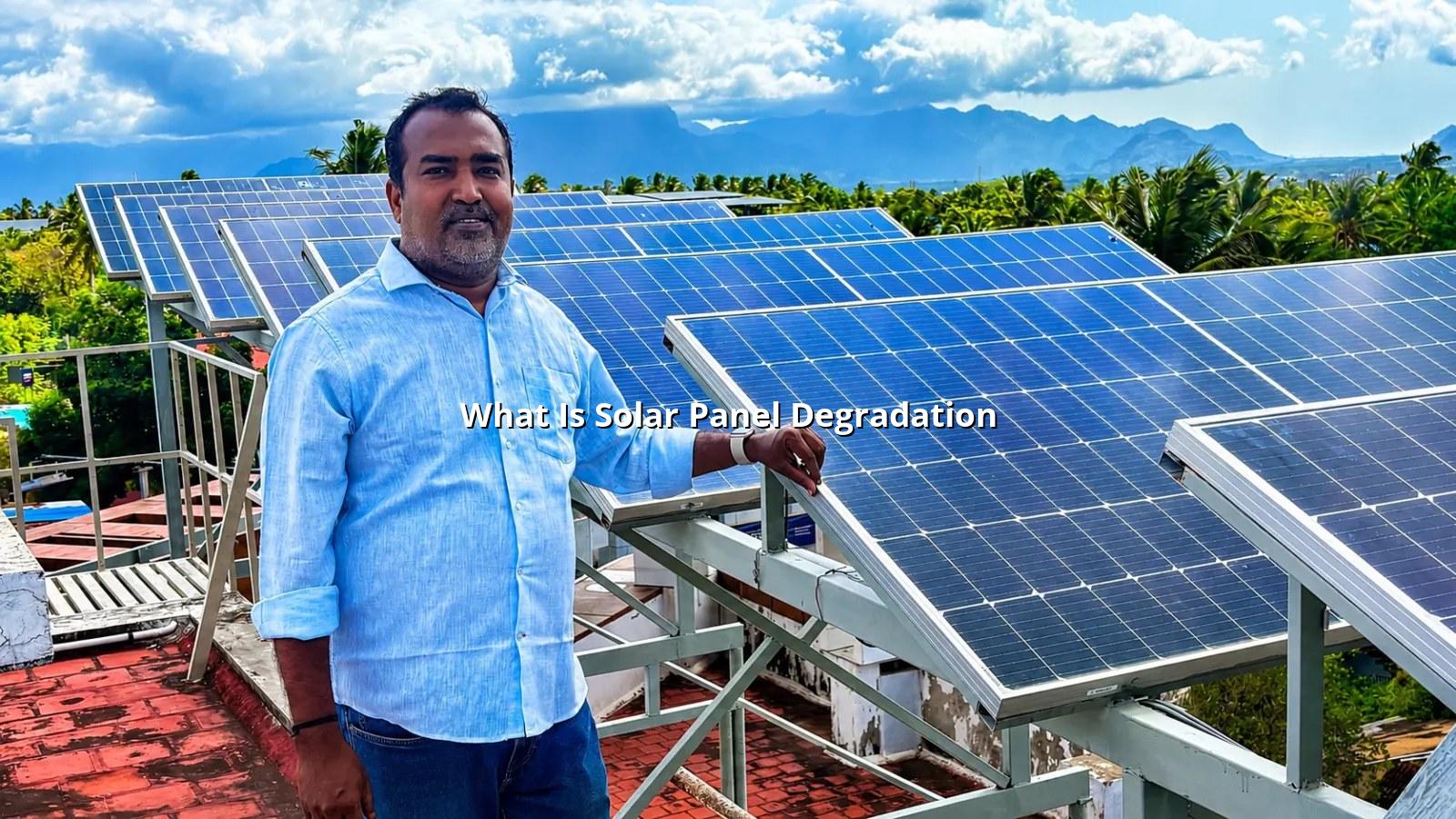
Why output changes
The main reasons panels age in this district
Panels sit outside every day, so a slow change over time is expected. What matters is how fast that change happens and whether it matches the site conditions. In Kanyakumari District, year-round sunshine is useful, but it also means the roof, frame and wiring are always under stress.
Heat, moisture and constant cycling
On an RCC flat roof, the surface can get very hot by midday and then cool again after rain or evening shade. That repeated expansion and contraction affects the panel, the frame and the wiring around it. Add monsoon moisture, cable joints, and the salt-laden air common near the coast, and you can see why the hardware around the panel matters as much as the panel glass itself.
Shade, dirt and seasonal weather
A little shade from a parapet wall, tree branch or overhead tank can drag down one part of the array while the rest keeps working. On sloped tiled roofs in Suchindram or Agasteeswaram, that effect can be easy to miss until someone checks the pattern properly. During the south-west and north-east monsoon periods, dirt clings in patches and drainage becomes part of the story too.
- Normal ageing is usually gradual and even, not a sudden collapse in one billing cycle.
- Shade often shows up as one string or one roof zone underperforming more than the rest.
- Salt film can affect clamps, screws and connectors before the glass itself shows any visible trouble.
- Dirt and bird droppings are often easier to fix than people expect, especially after a long dry spell.
- A loose cable or heat-stressed connector can make the panel look weak until the wiring is checked properly.
How to check it
A practical way to tell ageing from a real fault
If you are trying to work out what is solar panel degradation on your own roof, start with the trend rather than the alarm. One bad day can be weather. A repeated pattern needs a closer look. The easiest way to avoid guessing is to compare the system to itself, then check the roof before anyone starts talking about replacement.
- Look at the history. Compare today’s generation with similar sunny days from the same season. One odd reading does not prove degradation.
- Check the roof pattern. If the weak spot sits near a tank, parapet or tree shadow, shade may be the cause rather than the panel itself.
- Inspect the surface. Dust, salt film and bird waste can all reduce output, especially in coastal stretches near Manavalakurichi and Kanyakumari.
- Review the inverter side. Sometimes the panel is fine and the issue is a connector, string fault or inverter problem.
- Ask for testing before replacing. A proper inspection should show whether the panel, wiring or mounting is the real weak point.
| What you notice | What it may mean | What we check |
|---|---|---|
| Lower output across the whole array | Ageing, dirt build-up or a system-side issue | Cleaning condition, inverter readings, cable health |
| One string underperforms | Shade, connector fault or one weak section | Shading pattern, junctions, wiring continuity |
| Rust or looseness on mounting parts | Wind exposure, coastal air or poor hardware choice | Structure, fasteners, corrosion around joints |
| Output drops after rain or monsoon weeks | Water ingress, damaged sealing or a roof issue | Cable sealing, entry points, drainage path |
What we check on site
The parts that usually explain the drop
On a service visit, we don’t start by guessing. We check the roof condition, the mounting structure, the cable routing, the inverter display and the physical state of the panels. If the system is on a sheet roof in Marthandam or Thuckalay, we pay close attention to fixings and vibration because wind can loosen parts over time. On a flat-roof house, the questions are different: drainage, tilt, spacing and whether the array gets clean daylight through the whole day.
And sometimes it really is simple. A dull surface, bird droppings or a bit of coastal film can make a good array look tired. But if the electrical test points to an underperforming panel, we do not soften it. We say what we found and explain the next step in plain words.
Why the structure matters as much as the module
People often think degradation only means the cells inside the glass. That is only part of it. In our area, wind and salt exposure can age the structure and connectors first, and once a joint or cable begins to fail the whole string can suffer. That is one reason we look at service and maintenance as part of the answer, not as a side note.
What helps most
Simple habits that slow avoidable wear
There’s no magic fix here. Good installation and basic care do more than fancy words ever will.
- Choose the right tilt and spacing for your roof, not just the biggest open area available.
- Keep trees, tanks and neighbouring walls from throwing new shade onto the array.
- Wash the panels when dirt or salt film is clearly visible, especially after a long dry spell.
- Check for loose cable clips, cracked seals and any sign of water around entry points.
- Use hardware suited to the site, because coastal roofs need different care from inland roofs.
A lot of owners in Kottar and Vadasery ask if they should wait until the system fully fails before calling us. No. If the inverter log looks odd, if the roof has new shade, or if a monsoon season has left things messy, it is better to check early. Early checks usually mean simpler fixes.
For homes, the issue is often a few dirty panels or a loose connection. For shops and offices in Nagercoil town, the concern can be a roof obstruction or an inverter-side problem. For agricultural sites, we may be looking at a pump load, cable route or weather exposure around the field edge. Different roof, different diagnosis.
How JRS SunTech Energy can help
Inspection, honest advice and the next step
If you’re trying to understand what is solar panel degradation on your own system, we can inspect the panels, inverter readings, cables and mounting condition and tell you what is really going on. We work across Nagercoil and Kanyakumari District from our office in Kottar, and we handle new installations, problem checks, maintenance and subsidy guidance where it applies.
Sometimes the answer is a clean. Sometimes it is a repair. Sometimes it’s a replacement for one part only, not the whole system. If you want a straight answer, send us your EB connection details, a few photos of the roof and the inverter display, and we’ll take it from there.
Contact us
JRS SunTech Energy, Door No. 227, First Floor, Cape Road, St. Xavier's Church Junction, Kottar, Nagercoil, Kanyakumari District, Tamil Nadu - 629002. Phone: 9787775999. Email: jrssuntechenergy@gmail.com.
Frequently asked
Questions we get about panel ageing and output drops
It is the gradual drop in output that happens as a panel lives outdoors and keeps doing its work. Some of that change is normal ageing, while some comes from dirt, shade, moisture, heat or an electrical fault somewhere else in the system.
Start with the inverter history and compare similar sunny days, not just one odd reading. If one string, one roof section or one panel is far behind the rest, we check the panel, the wiring, the mounting and the inverter side before saying it has aged badly.
Yes, absolutely. In coastal parts of Kanyakumari District, salt film and dust can drag output down and make a good panel look weak. That is why we inspect the surface, the structure and the electrical connections together.
Not by default. A lot of systems only need cleaning, shade correction, connector repair or an inverter check. We only suggest replacement when the inspection shows the panel itself is the weak point.
We look at the roof, wiring, inverter readings and mounting condition, then compare actual performance with what the system should be doing on that site. If the issue is simple, we say so plainly. If it needs repair or replacement, we say that too.
It can, because salt-laden air and wind exposure add stress to frames, fasteners and connectors. That does not make solar a bad choice there, only that the hardware, cable sealing and maintenance need more care from the start.
Hurry up!Subsidy ends 31 March 2027 · 134 days left
Next step
Not sure if your panels are just dirty or actually ageing?
Send us your roof photos, inverter reading and EB connection details, and we will help you check the likely cause before you decide on repair or replacement.
- Your electricity requirement and 60-day EB bill
- Property type — home, shop, office, farm or institution
- Backup requirement and available roof space
Related: Solar Maintenance · Contact · FAQ
Free site survey · Kottar, Nagercoil