Sheet Roof Solar
Solar Panel Installation on a Sheet Roof
How we plan, mount and seal a solar system properly on sheet roofs across Kanyakumari District, without guessing or forcing one setup on every roof.
Sheet Roof Solar Planning
Solar Panel Installation on a Sheet Roof, done for real site conditions
Solar panel installation on a sheet roof is never just a matter of placing modules on top and tightening a few bolts. The roof decides a lot of the work. Fixing points, sheet condition, wind load and cable routing all need to be checked before a single frame goes up, because a shortcut on a metal roof usually shows itself later. We start from your EB usage, the roof shape, access and the way the building is actually used, then work out whether the roof is suitable and how the system should sit there.
In Kanyakumari District, sheet roofs are common on homes, shops and small work sheds, so we see this question a lot. Strong wind around Aralvaimozhi, sea air near the coast and monsoon water flow all affect the mounting choice and the sealing detail. A roof in Kottar is not treated the same as one near Colachel, and we don't pretend they behave alike. If the sheet roof is sound, solar can work very well there. If it isn't, we say so first.
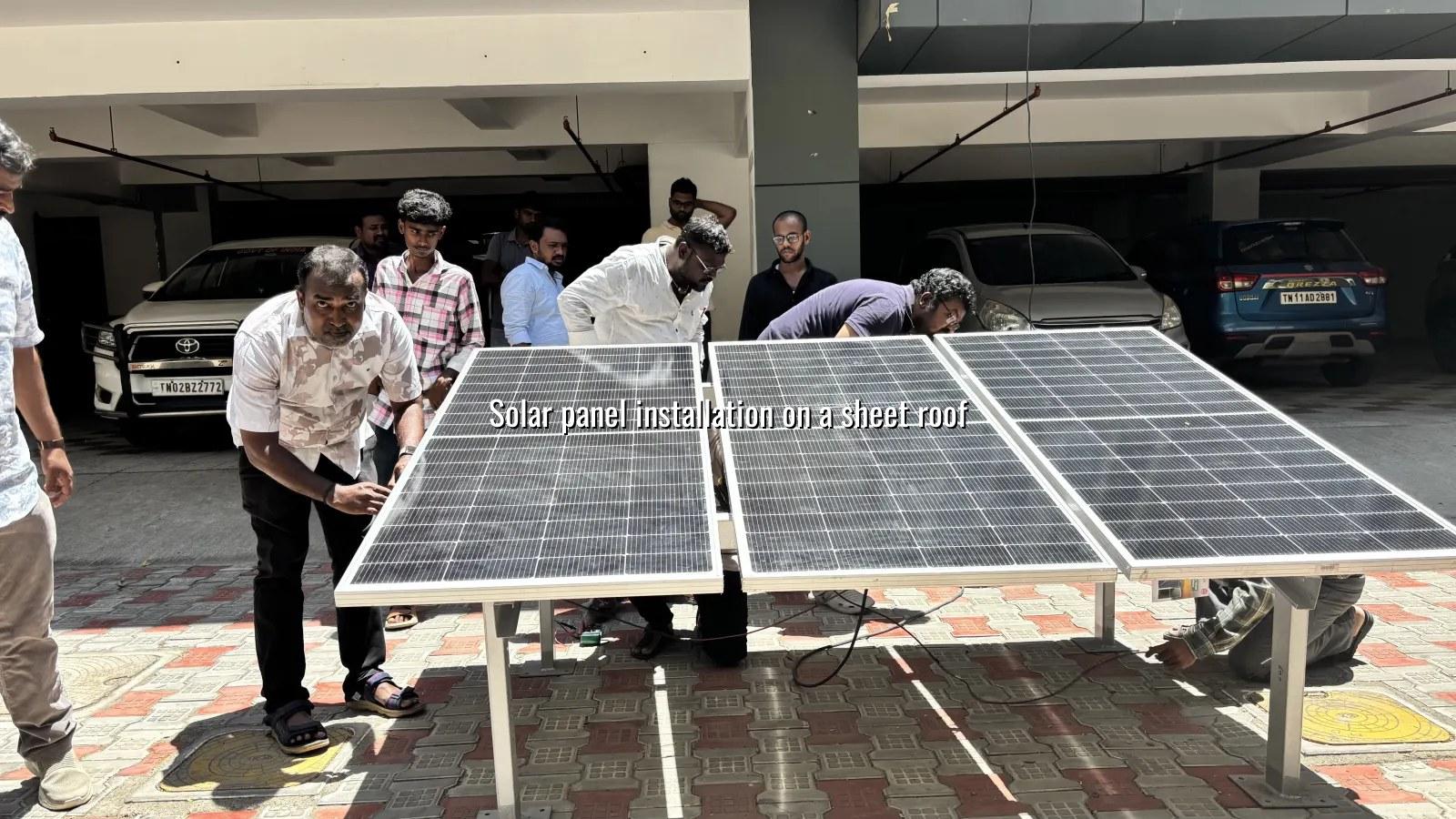
Before The First Drill Hole
What a sheet roof needs before solar panels go up
A sheet roof can take solar well, but only when the structure is read properly. We look at the roof sheets, the supporting members, rust, loose fasteners, access around the edges and the places where water already tends to sit. If those points are skipped, the panels may still get fixed in place, yet the roof becomes the weak part of the whole system.
Structure, purlins and fixing points
The first thing we want to know is what the roof is actually sitting on. Sheet roofs vary a lot, especially in older buildings, and the purlin spacing decides how we spread the load. For a shop roof in Thuckalay or a small office in Kuzhithurai, we do not assume the frame is uniform everywhere. We check where the fasteners can sit firmly and where reinforcement may be needed before the array is laid out.
Wind, corrosion and weather exposure
Kanyakumari District gets strong sun through the year, but it also gets wind and salt in many areas. That means the mounting hardware, clamps and exposed connections should be chosen with care, not whatever is easiest on the day. Near Manavalakurichi or Colachel, even a neat-looking roof can fail early if the hardware choice is careless. The right coating, proper tightening and sealed cable entry matter more than people expect, especially once the south-west and north-east monsoons start moving water across the sheets.
Our basic sheet roof checklist
- Check sheet thickness, rust patches and any old leak points before planning the array.
- Verify purlin condition so the fixing load goes into sound metal and not weak sections.
- Keep cable runs short and tidy so the roof is easy to inspect after installation.
- Seal every roof penetration properly, especially where rainwater can track along the sheet.
- Leave enough access for cleaning, future inspection and inverter service.
What customers usually ask us to look at
Most people are worried about two things first: leaks and wind. That's fair. A sheet roof gives you less forgiveness than a big RCC terrace, so the work has to be neat from the start. We also look at sheet age, the condition of the ridge and eaves, whether the roof has already been patched before, and where the inverter or wiring run will sit after the installation is done. If the roof is on a house in Vadasery or a workshop near Suchindram, the practical questions are usually the same, only the access changes.
We also think about the building's day-to-day use. If the roof is on a home, the family usually wants the panels set so the house still feels open and the cleaning path stays simple. If it is on a shed or commercial roof, the priority may be keeping the array clear of vents, loading points or places where people walk across the roof. Different use, different layout. That's how it should be.
How We Do It
Our installation sequence for sheet roofs
We don't treat sheet roof work as a quick fitting job. The order matters, because a small mistake in fixing or sealing can show up later as a leak, a loose clamp or a cable issue when the monsoon starts. Here is the way we usually move through the work.
- Site survey and roof reading: We inspect the roof, note the sheet type, check shade and see how the wind and rain hit the building.
- Capacity and layout planning: We work out the usable roof area from your actual EB use and the roof geometry, not from a guessed size.
- Mounting design: We choose the fixing method and structure style so the solar panels sit securely on the sheet roof without stressing weak points.
- Installation and sealing: The frames, modules, wiring and seals are put in with care so the roof stays serviceable after the job.
- Testing and commissioning: We check the electrical side, confirm the connection path and make sure the system is ready for use.
- EB and document support: We guide the paperwork flow where needed, especially for rooftop solar processes tied to the EB connection.
- After-sales support: You get one year of free service support after installation, plus continued technical help afterwards when needed.
A good roof survey usually saves one full round of trouble later. It tells us whether the job is straightforward or whether the building needs a bit of preparation first. Some customers expect us to say yes immediately, and we can if the roof is ready. But if the roof needs repair, that is the honest answer too.
We also keep the layout practical. Panels should not sit where cleaning becomes awkward or where a future service visit turns into a balancing act. That seems like a small thing until you need to inspect the wiring after a heavy wind. Then it matters a lot.
Roof Types Compared
How sheet roofs differ from other common roof styles
People often ask if a sheet roof is harder than an RCC terrace or a tiled roof. The answer is yes in some ways and easier in others. The table below is a simple way to see why the fixing approach changes from one roof to another.
| Roof type | Main installation concern | What we check first | Typical site feeling |
|---|---|---|---|
| Sheet roof | Fixing load, sealing and corrosion control | Sheet condition, purlins, slope, wind exposure | Fast to work on when the structure is sound |
| RCC flat roof | Ballast, anchor points and drainage paths | Water flow, parapet space, cable routes | Very common on homes in the district |
| Sloped tiled roof | Tile safety and rafter access | Tile layout, under-structure, entry points | Needs more care while moving around |
| Old sheet roof | Weak metal and hidden leak points | Rust, patch work, previous repairs | Can work well only after a proper inspection |
Local Site Factors
What changes the job from one roof to another
The roof is only one part of the story. In this district, the building use matters too. A workshop roof in Vadasery can be busy during the day, so access and shading become a real issue, while a house roof in Suchindram may have cleaner space but tighter edge conditions. We also think about monsoon drainage, because a sheet roof that traps water at the wrong point can turn a simple installation into a maintenance job later.
We also pay attention to the roof's age and the hardware already sitting there. Sometimes there are old antenna brackets, patched holes or a few sections that have been repaired more than once. Those little things change the fixing plan. If we spot a section that should be replaced before solar goes on, we say it straight. That saves arguments later and keeps the system easier to look after.
When a sheet roof needs extra caution
Older roofs sometimes look fine from below but show wear once we get on top of them. Small rust spots, bent sheets, loose screws or old sealant lines can change the whole plan. We would rather tell you the roof needs repair first than install over a weak section and pretend that the problem will sort itself out. On a coastal building or a wind-exposed shed, that sort of honesty matters even more, because small defects don't stay small for long.
And if the roof already has signs of repeated leaks, we pause. We do not push solar over a roof that needs attention first. That sounds simple, but it is the right sequence and it avoids trouble for everyone.
How JRS SunTech Energy Can Help
We plan sheet roof solar around your actual roof, not a template
At JRS SunTech Energy, we start with your EB connection, your roof condition and the way your building is used. For sheet roof work, that usually means checking the structure first, then matching the mounting and wiring to the site instead of forcing one standard idea onto every job. We do this for homes, shops and agricultural buildings across Nagercoil and Kanyakumari District.
We also guide the documentation side where rooftop solar procedures apply, and we support you after installation too. If your roof is in Kottar, near the coast or on a wind-exposed road toward Aralvaimozhi, we will look at the site properly and tell you what makes sense before the work starts.
Contact us at Door No. 227, First Floor, Cape Road, St. Xavier's Church Junction, Kottar, Nagercoil, Kanyakumari District, Tamil Nadu - 629002. Phone: 9787775999. Email: jrssuntechenergy@gmail.com.
Frequently asked
Questions people ask about solar panel installation on a sheet roof
Yes, if the structure is checked properly and the mounting is matched to the roof type. We look at purlin spacing, sheet condition, fixing points and cable routing before we say yes to the job.
We check the sheet thickness, rust, leaks, roof slope, wind exposure and where the fixing load will go. In places like Colachel or Manavalakurichi, we also pay close attention to corrosion protection because sea air is not kind to loose hardware.
It should not, if the penetrations are done the right way and the sealing is tidy. The weak point is usually rushed drilling or poor gland sealing, so we take time at those points instead of covering them up later.
Newer sheets are easier to work with because the fixing points are more predictable. Older roofs can still take solar, but only after we check for thin areas, corrosion and whether the roof really needs repair before installation.
Yes, we guide the EB and documentation part after installation, especially when the project is tied to the rooftop solar process. Customers in Nagercoil usually ask us to keep that part simple, and that is how we work.
You can, if the roof has the right load capacity and enough clear area. Sheet roofs on shops in Thuckalay or Kuzhithurai often have practical space, but the layout has to respect shade, access and maintenance space.
Hurry up!Subsidy ends 31 March 2027 · 134 days left
Next step
Thinking about a sheet roof for solar?
Send us a photo of the roof, your EB bill and the roof location, and we will tell you what looks workable before we schedule a survey.
- Your electricity requirement and 60-day EB bill
- Property type — home, shop, office, farm or institution
- Backup requirement and available roof space
Related: Solar Solutions · Solar Maintenance · Contact
Free site survey · Kottar, Nagercoil