Solar guide
How to Read a Solar Panel Datasheet
A plain-English way to compare panel specs, avoid mix-ups and understand what the sheet is really saying before you buy or install.
Solar guide
How to read a solar panel datasheet without guesswork
If you are trying to compare panels, how to read a solar panel datasheet is the first useful skill to learn. The sheet looks technical at first glance, but most of it is there to answer a few simple questions: how much power the panel can make, what kind of inverter it needs, and whether it will suit your roof or site. Once you know what to check, you stop comparing only the brand name and start comparing the actual numbers.
We see this a lot with customers from Kottar and nearby parts of Nagercoil. Someone gets two quotations, both mention solar panels, and the spec sheets are the only place where the real differences show up. A datasheet can tell you whether a module is a better fit for a flat RCC roof, a sloped tiled roof or a place with shade from a nearby tree, and that matters in Kanyakumari District where roof conditions vary more than people expect. One line about voltage can save a lot of confusion later.
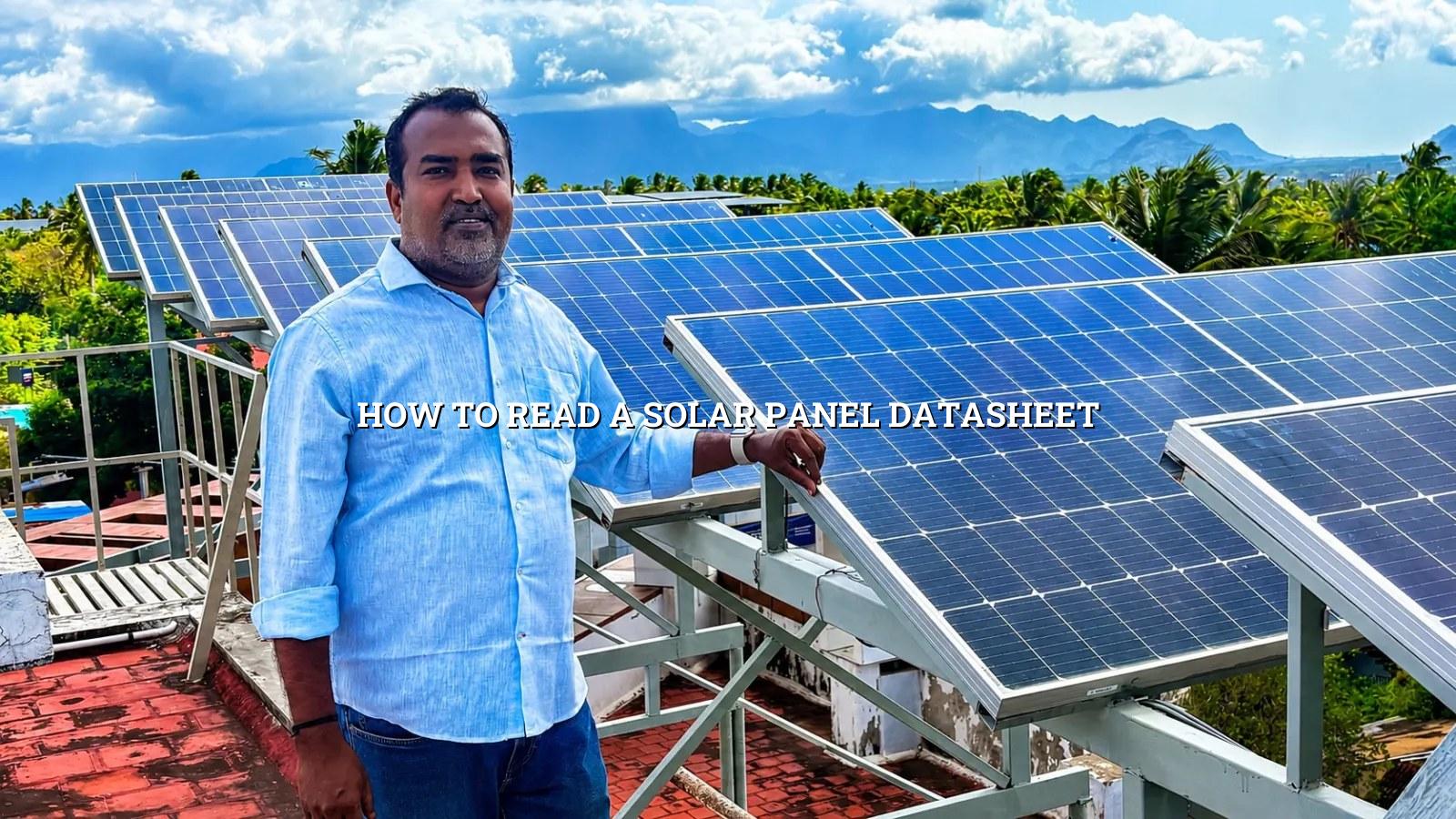
Reading the sheet
What the main lines on a solar panel datasheet actually mean
The key is to read the datasheet in order, not randomly. Start with the panel rating, then look at the electrical values, then the physical details and installation notes. After that, compare the small print. That is where many people miss the difference between a panel that looks fine on paper and one that suits the site better.
Rated power and test conditions
The rated power line tells you the headline output of the panel under standard test conditions. It is the first number most people notice, but it should never be the only number they look at. The test conditions matter because real roofs in Kanyakumari District deal with heat, salt-laden air in some stretches and strong wind exposure in open areas, so the actual working condition is different from a lab table. A panel with a neat rating can still behave differently if the temperature coefficient and voltage range are not a match for the system.
Voltage, current and the inverter match
The datasheet will usually show voltage at maximum power, current at maximum power, open-circuit voltage and short-circuit current. These are not just extra numbers for engineers, they help us design the string so the inverter stays inside its safe window. If the string is wrong, the system may not start properly or may not use the roof area well, and that is the kind of issue we try to avoid at the quotation stage itself. For a shop roof in Thuckalay or a home roof in Vadasery, the electrical match is as important as the panel brand.
| Datasheet item | What it tells you | Why it matters on site |
|---|---|---|
| Rated power | The headline output of the panel | Helps compare models, but only in context |
| Vmp and Imp | Voltage and current at maximum power | Used to match the inverter and string length |
| Voc and Isc | Maximum voltage and current limits | Important for safety and cold-weather design checks |
| Dimensions and weight | Physical size and handling load | Shows whether the roof space and mounting structure can take it |
| Temperature coefficient | How output changes as the module heats up | Useful for hot roofs and midday performance |
Step by step
A simple way to compare panels line by line
If you keep jumping between columns, a datasheet becomes noise. This sequence works better. It is the same approach we use when we review quotes and product sheets for real rooftops in Kottar, Marthandam and Thuckalay.
- Check the panel rating first. Note the wattage, then confirm that the same model name appears on the rest of the sheet. If a panel family has many variants, the exact model line matters more than the marketing label.
- Match the voltage to the inverter. Read the voltage at maximum power and the open-circuit voltage together. This tells us whether the array can sit inside the inverter range and still leave room for safe operation.
- Look at current and connector details. High current affects cable choice, connectors and layout, especially when the roof is large. The connector type should be clear, because mixed parts create extra troubleshooting later.
- Measure the physical size. A compact panel can fit more neatly on a tight roof, while a larger module may reduce the number of pieces but need a different mounting plan. The weight also matters on older structures.
- Read the environmental notes. If the panel has sealing, salt mist or wind load references, those lines tell you how much thought the manufacturer has given to real installations. We pay attention to this more near the coast and on exposed roofs.
- Compare the installation limits. Maximum system voltage, fuse rating and operating temperature are not decorative details. They affect whether the system can be built cleanly and stay within the expected electrical limits.
What many buyers miss
People often ask only about the wattage and stop there. That is understandable, but it can hide a poor fit. A datasheet also tells you whether the panel is practical for a particular roof line, whether the mounting structure needs to be stronger, and whether the system should be on-grid, hybrid or off-grid. On a house with a simple terrace in Suchindram, the choice can be very different from a sheet-roofed building with more wind exposure.
And yes, the fine print can feel dry. Still, once you know where the useful lines are, you can spot a mismatch in a minute or two.
What to check next
Details that matter in Kanyakumari District conditions
Local conditions change how we read the sheet. In a district with strong year-round sunshine, people naturally focus on generation, but the wind, monsoon and salt in the air matter too. A panel sheet may look the same whether it is going to a roof near the shore or an inland home, yet the mounting and connection choices are rarely the same. That is why we ask about the site before we quote.
In coastal or near-coastal work, we look closely at corrosion-sensitive details and cable routing. In monsoon months, we also pay more attention to drainage and how the cable entry is sealed, because water that sits near a connector can become a nuisance later. For a farm installation near Aralvaimozhi or a pump application in Boothapandi, the datasheet and the site survey need to be read together, not separately.
A few practical things worth checking
- Whether the panel dimensions fit the usable roof area after setbacks and walk space are considered.
- Whether the temperature coefficient makes sense for hot afternoon operation.
- Whether the maximum system voltage suits the proposed string design.
- Whether the mounting method needs extra care because of wind exposure or a lighter roof structure.
- Whether the connector and cable details match the rest of the equipment, so the job stays tidy.
If the roof is shaded in the afternoon or the building has an awkward parapet, the datasheet becomes even more useful. It helps us decide whether the same panel is still the right choice, or whether a different size or electrical profile would be easier to build around.
One small slip people make is assuming that two panels with similar wattage are basically the same. They are not. Their voltage curve, dimensions and operating range can differ enough to change the whole layout, and that is why we do not sell one standard system.
System fit
How the datasheet helps with homes, shops and farms
The same sheet can guide very different projects. For a home, the main question is often whether the panel size and electrical values suit the roof and the EB connection. For a shop or office, the roof may be more open, but the load pattern and shading can still affect the final array layout. In agricultural work, especially around irrigation or borewell pumping, the sheet has to be read with the motor load and site conditions in mind.
A lot of customers want one quick answer. We get that. Still, the honest answer is usually a short list of checks: roof space, shade, mounting strength, inverter match and the kind of usage you expect through the day. A datasheet does not replace a site survey, but it gives the survey a solid starting point.
How JRS SunTech Energy Can Help
We review panel datasheets alongside your actual roof, EB connection and budget, then explain which points matter and which ones you can ignore. If you are comparing panels, planning a new solar system or trying to understand a quotation, we can help you sort the spec sheet without the jargon. We also guide customers through installation, EB documentation and the subsidy process where applicable.
JRS SunTech Energy — Door No. 227, First Floor, Cape Road, St. Xavier's Church Junction, Kottar, Nagercoil, Kanyakumari District, Tamil Nadu - 629002. Phone: 9787775999. Email: jrssuntechenergy@gmail.com.
Frequently asked
Questions people ask about reading panel datasheets
Start with the rated power, the voltage at maximum power, the current at maximum power, and the physical size. Those four items tell you a lot before you get lost in the rest of the sheet. If the panel is for a home in Kottar or a commercial roof in Nagercoil, we also check whether the size fits the available roof space and mounting layout.
W is the panel output rating under standard test conditions, V is voltage, and A is current. The numbers matter together, not on their own, because the inverter and string design need the right voltage window and current limit. A high wattage panel is not automatically a better fit if the roof, shading or inverter size says otherwise.
Look beyond the headline wattage and compare efficiency, dimensions, temperature coefficient, maximum system voltage and connector type. A slightly smaller panel can sometimes suit a tight roof better, while a different electrical profile may work more neatly with the inverter. We often find the better choice is the one that fits the roof cleanly and keeps the design simple.
It shows how much the panel output changes as the panel gets hotter. On hot roofs and coastal sites in Kanyakumari District, that line helps you judge how the panel may behave in real daytime conditions, not just in a lab. You do not need to memorise the formula, but you should know that a lower loss figure is generally easier to live with.
Yes, partly. The sheet gives size, weight, electrical limits and installation details, and those help us see whether the module matches a flat RCC roof, a sloped tiled roof or a sheet roof. We still need the actual site, because shade, structure and cable runs can change the final recommendation.
They help with the technical side, especially when a system has to match the chosen equipment and the documentation trail. The datasheet itself does not replace the forms or approvals, but it gives us the model details needed for a clean file. For subsidy guidance, we use the scheme process and the product papers together.
Hurry up!Subsidy ends 31 March 2027 · 134 days left
Next step
Need help reading a solar panel datasheet?
Send us the panel model, your roof type and a photo of the quotation. We will tell you which lines matter and what needs a second look.
- Your electricity requirement and 60-day EB bill
- Property type — home, shop, office, farm or institution
- Backup requirement and available roof space
Related: Solar Solutions · Products · Contact
Free site survey · Kottar, Nagercoil