Solar guide
Solar Panel Wattage Explained
See what the watt number on a panel really tells you, and how we use it with your roof, usage and site conditions to shape a sensible solar plan.
Solar sizing basics
What the watt number on a panel is really saying
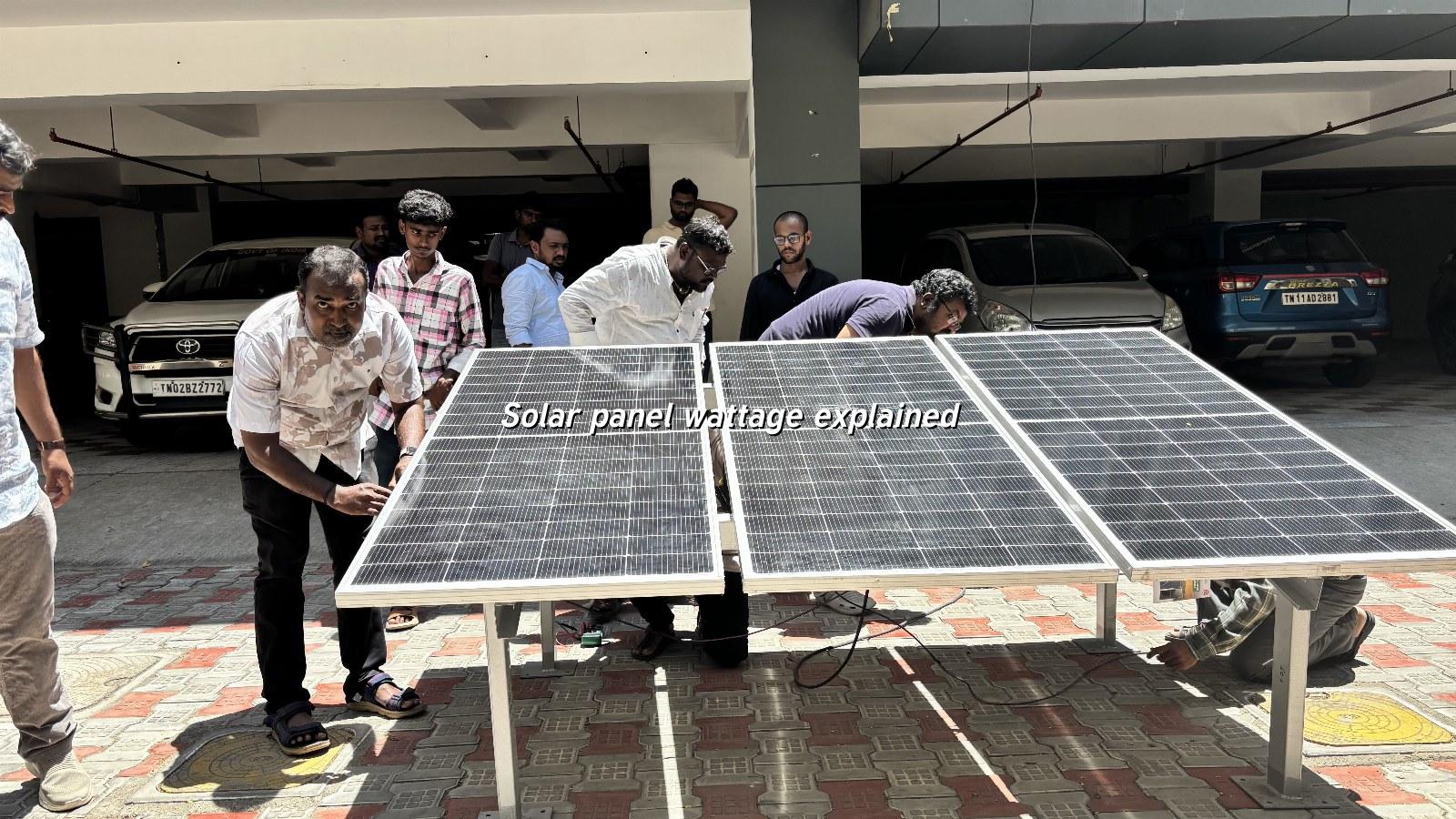
Solar panel wattage explained starts with a simple point: the number printed on the panel is a rating, not a promise that your roof will produce that exact output every hour. It tells us how to compare modules, how to estimate the array size, and how much roof area we may need for a given EB consumption pattern. That matters a lot in Kanyakumari District, where sunlight is generally strong, but wind, salt air and roof shape can change the final design.
Most people who call us have already seen a watt number on a brochure or on a neighbour’s roof and want to know if it is enough for their place. Fair question. We start from the actual site, because a slab roof in Kottar, a tiled roof in Suchindram and a sheet roof in another part of the district do not behave the same way once you add shade, cable runs and a mounting structure. The panel label is only one piece of the job.
Start with the site
Why panel wattage never stands alone
A solar panel’s wattage is useful, but it only becomes meaningful when it is read beside the roof, the EB connection and the way you use power through the day. Heat, dust, string design and inverter matching can move the final result away from the label on the box. That is why we do not treat wattage as a shopping shortcut. We treat it as one part of the design.
Where the watt number helps
The watt rating helps compare two panels that are otherwise similar. If one module gives more output in the same footprint, it can be useful on roofs where space is tight or where tanks, parapets and access paths already eat into the available area. On homes in Kottar and nearby residential streets, that can make a real difference because the roof often has to do a few jobs at once.
But the number on its own can also mislead people. A bigger label does not fix a weak mounting structure, poor ventilation under the panel or a roof that gets hard shade in the afternoon. If the layout is wrong, the wattage figure just looks impressive on paper and causes trouble later.
What changes output after installation
Kanyakumari District gets strong sunshine for much of the year, but the weather is not identical every month. The south-west and north-east monsoon periods bring cloud and wet weather, so drainage and cable sealing matter more than many first-time buyers expect. We pay attention to those details because water finds weak points quickly.
Coastal air is another quiet factor. A site closer to Manavalakurichi or Muttom needs careful thought about metal parts and connections because salt-laden air is real, not theoretical. Wind exposure matters too, especially where the mounting structure has to keep the array steady through rougher weather.
- Wattage is a rated output, not a bill-saving promise.
- Higher watt panels can reduce panel count, but the inverter and wiring still have to suit the layout.
- Shade from trees, nearby walls or tanks can affect the whole string, not just one panel.
- Coastal sites often need more attention to mounting hardware and exposed connections.
- RCC, tiled and sheet roofs need different fixing methods and different planning.
How we size a system
From EB units to a workable roof layout
We usually begin with the EB bill because the 60-day units tell us what the home or business actually uses, which is better than a guess. After that we measure the roof, look for shade, check the route for cables and confirm where the inverter can sit without being in the way. Only then does panel wattage become a design decision instead of a random number.
People often come in after hearing three different explanations from three different places, and each one talks about wattage in a slightly different way. One quote may focus on panel count, another on roof area and another on inverter size. We slow that down and explain the sequence, because it is easier to make a clean decision when the pieces are arranged in the right order. And yes, that usually saves a second round of confusion later.
The steps we follow on site
- Read the EB bill first. We look at the 60-day units and the kind of use pattern the building has through the day.
- Measure usable roof area. Tanks, parapets, stair heads and access paths all affect how many panels can fit.
- Match panel wattage to the layout. The panel rating has to work with the roof, not fight against it.
- Check the structure. In windier parts of the district, the mounting system has to be chosen with care.
- Plan cabling and sealing. Good routing and sealed entry points help the installation hold up through the monsoon months.
- Confirm the system type. The same panel wattage may support different results depending on whether the customer needs backup or only daytime generation.
Reference table
How different wattage choices usually fit different roofs
There is no universal wattage that suits every roof in the district. This table shows the kind of thinking we use when customers ask for solar panel wattage explained in practical terms.
| Panel watt range | Where it tends to suit | What we check first | Practical note |
|---|---|---|---|
| Lower watt modules | Small roofs, awkward layouts and sites with many obstacles | Whether the roof still leaves enough clear space for a safe layout | Helpful when the footprint matters more than chasing a larger label number. |
| Mid-range watt modules | Many homes with a standard RCC slab or a simple tiled roof | How the panels fit beside tanks, parapets and cleaning access | A common choice when the roof is straightforward and the usage pattern is steady. |
| Higher watt modules | Roofs where capacity has to be packed into a limited area | Heat, structure strength and inverter matching | Useful, but only when the roof and connections are ready for it. |
| Mixed-layout design | Sites with shade on one side or more than one roof face | String design and panel placement by sun path | We use this when one section of the roof is clearly better than the other. |
Local conditions change the decision more than people expect. A roof near Rajakkamangalam has different coastal exposure from a more inland one around Boothapandi, so the same panel wattage may still call for different hardware and different fixing details. We we can tell that only after we see the site, which is why the survey matters.
What to watch for
Questions to ask before you commit to a panel size
A decent solar proposal should answer a few plain questions before anybody signs off on the design. Is the roof area enough for the chosen panel count? Where does the shade fall in the morning and late afternoon? Can the inverter be placed where heat and moisture won’t give it an easy time? Those details tell you more than a shiny watt number ever will.
The kind of building matters too. A shop in Marthandam may use power in a very different way from a family house in Kottar, and an agricultural site near Thovalai can have its own pattern again because pumping hours matter. That changes how we read the wattage and where we place the system’s capacity. A panel that looks perfect for a home may be the wrong answer for a pump site, and the reverse can be true as well.
A short checklist you can use before the survey
- Keep your latest EB bill handy so we can see the 60-day units.
- Tell us if the roof is RCC, tiled or sheet, and mention any leak history.
- Point out where trees, walls or water tanks cast shade during the day.
- Say whether you want daytime use, backup support or both.
- Share if the site is coastal, since corrosion resistance may matter more there.
- Ask for the layout to be explained in writing so panel wattage is easy to compare with roof use.
How JRS SunTech Energy Can Help
How JRS SunTech Energy Can Help
We explain solar panel wattage in plain words and then tie it back to your roof, your EB units and your actual site conditions. Our office is at Kottar, Nagercoil, and we travel across Kanyakumari District to survey roofs, design the system, handle installation and guide EB documentation and subsidy procedures where they apply. If you already have a system and the numbers are confusing, we can also look at maintenance, inspection or troubleshooting.
Contact JRS SunTech Energy, Door No. 227, First Floor, Cape Road, St. Xavier's Church Junction, Kottar, Nagercoil, Kanyakumari District, Tamil Nadu - 629002. Phone: 9787775999. Email: jrssuntechenergy@gmail.com.
Frequently asked
Questions people ask about panel wattage
It is the rated output of the panel under standard test conditions. That number helps compare modules, but it does not tell the full story on its own because roof shape, heat, shade and cabling all change the real result on site.
We start with the EB bill and the 60-day units, then check roof space, shade and the type of roof before we talk about panel rating. That way the wattage choice follows the site instead of forcing the site to fit a brochure figure.
No, not always. A higher watt panel can help when roof space is tight, but it still has to fit the inverter, structure and layout properly or the system becomes awkward to install and maintain.
An RCC slab, a sloped tiled roof and a sheet roof all need different mounting decisions. A coastal site in Colachel faces different corrosion and wind questions from an inland roof near Boothapandi, so the same wattage choice may not suit both.
Yes. We usually explain the panel side first, then talk through <a href="on-grid-solar">on-grid solar</a> or <a href="hybrid-solar">hybrid solar</a> if backup and EB connection details matter. Wattage is one part of the design, not the whole decision.
Then we look at when that shade falls and how much of the array it touches. Even a good roof can underperform if one corner gets blocked at the wrong time, so we check the layout carefully before finalising the panel wattage.
No, because every site is different. A house in Kottar with a clear RCC roof, a shop in Marthandam with limited space and a farmhouse setup all need a different conversation before we recommend a panel rating.
Hurry up!Subsidy ends 31 March 2027 · 134 days left
Next step
Need help reading a solar panel wattage quote?
Send us your EB bill, roof photos and site location, and we will tell you what size and panel mix actually suits the job.
- Your electricity requirement and 60-day EB bill
- Property type — home, shop, office, farm or institution
- Backup requirement and available roof space
Related: Solar Solutions · Subsidy Guidance · Contact
Free site survey · Kottar, Nagercoil