Roof care
Solar and Roof Waterproofing
A practical look at how to protect the roof, seal cable entries and fit a solar system that stands up to sun, rain and wind.
Roof protection
Solar and roof waterproofing that fits the roof you actually have
Solar and roof waterproofing is not just about stopping rainwater. It is about making sure a rooftop solar system sits on a roof that can stay dry, support the mounting structure and keep cable entries sealed after installation. When people in Nagercoil call us about roof leaks, they usually want one thing: a roof that can carry solar without creating a fresh problem.
We start with the roof itself. RCC flat roofs, tiled roofs and sheet roofs all behave differently, and Kanyakumari District gives us a bit of everything. On a coastal house near Manavalakurichi we think differently about salt-laden air and hardware than we do for a more inland roof at Boothapandi, and on a wind-exposed site near Aralvaimozhi the mounting strength matters just as much as the sealing work.
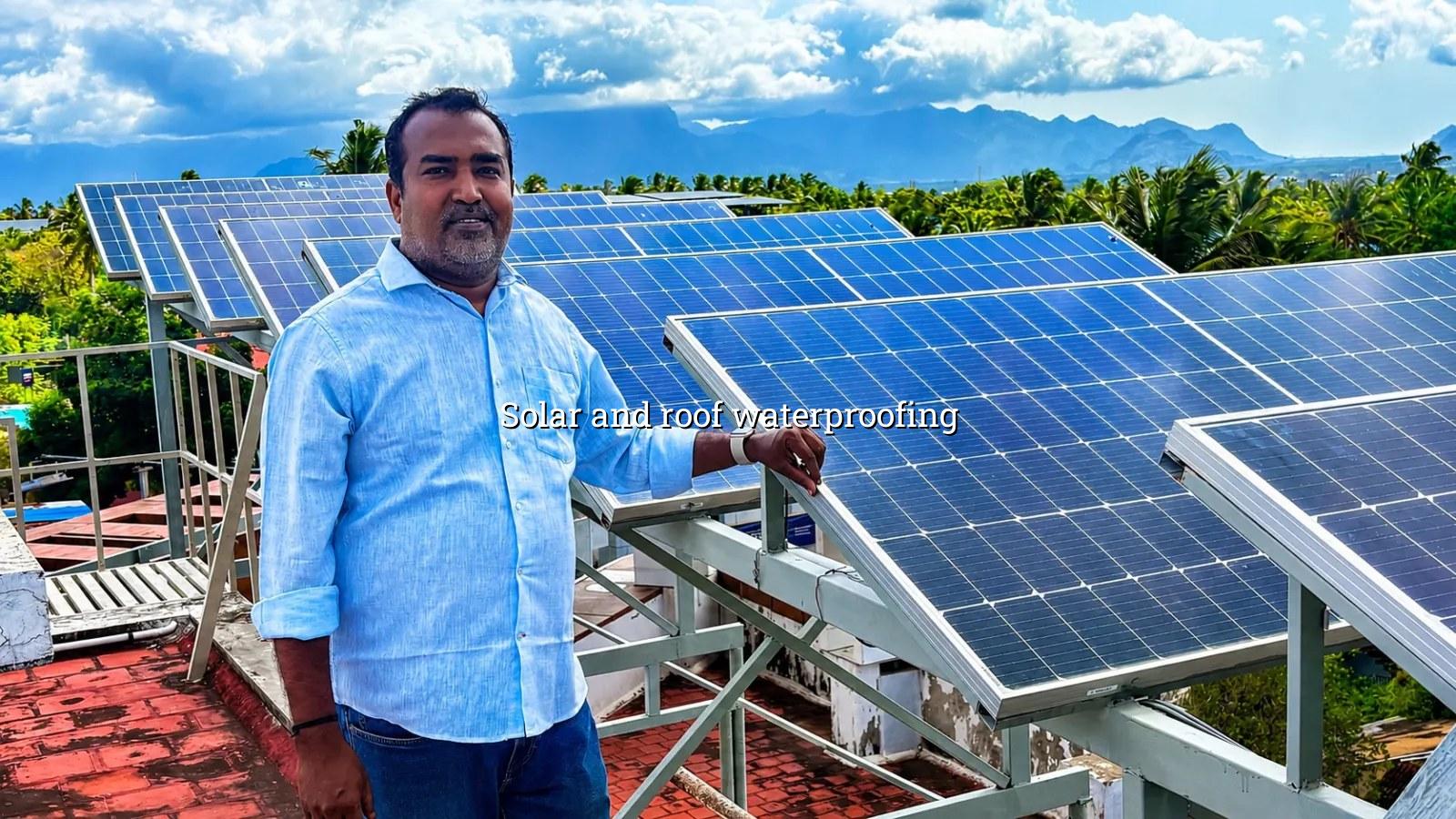
Before the panels go up
What we check before any solar waterproofing work starts
Most roof leaks are not dramatic at first. A little damp spot, a stain near a corner, a tiny crack around a pipe entry, that's how many jobs begin. If we ignore that and install solar over it, the roof can be harder to inspect later and the leak path becomes less obvious.
Roof surface, slope and drainage
The first thing we look at is how water moves across the roof. On a flat RCC roof in Kottar or Vadasery, blocked drainage or poor slope can leave water sitting near the base of a structure for too long. That is where sealing and drainage planning come together, because waterproofing is not only about patching a crack, it is also about helping water leave the roof in a sensible way.
Mounting, cable entry and roof finish
Next we study the fixing points, cable paths and the surface finish. Some roofs are already painted or coated, some are rough, and some have old patchwork that never really cured right. A solar system needs tidy cable sealing and proper bracket fixing, otherwise the roof may look fine on day one and start showing trouble after the first heavy rain.
- Inspect the roof: we look for cracks, loose edges, old sealant, damp marks and weak concrete patches before touching the solar layout.
- Check the structure: the mounting method has to match the roof type, the span and the local wind exposure.
- Plan the penetrations: every cable entry or fixing point is planned so the sealing is neat and inspectable later.
- Prepare drainage paths: water should not pool around the structure or sit against a wall junction after monsoon rain.
- Finish with testing: after installation we re-check visible joints, roof edges and the cable route before the system is handed over.
Local roof conditions
Why Kanyakumari District roofs need a careful approach
The district gets strong sunshine for much of the year, which is good for generation, but it also sees wind, salt air in many places and the monsoon swings that expose weak sealing quickly. That means a solar layout cannot be copied from one site to the next. A tiled house in Suchindram will not behave the same way as a sheet-roofed shed on an agricultural site near Thovalai, and our job is to read those differences before the first hole is drilled.
We also see a lot of mixed building conditions. Some customers have an old roof coating that is already tired, some have fresh RCC slabs, and some have sheet roofs with past repair work that needs a close look. If water has already found a path into the slab or under the sheet lap, solar work has to respect that path and not force the system to fight against it.
Where the topic usually gets tricky
The tricky part is not the panel itself. It is the small details around it, like where the cable comes down, how the structure is fastened and whether the roof edge has enough fall to shed water. In our experience the second month is where a rushed job starts telling on itself, especially after a windy spell or a heavy rain day. That's why we like to check the roof twice, once before and once after the main work.
What to look for
Useful signs that the roof needs repair before solar
- Water stains near parapet walls, pipe points or old bracket holes.
- Cracked surface plaster, loose sheet overlaps or lifted tile edges.
- Ponding water that stays after rain instead of draining away quickly.
- Rust around sheet fixings, fastener heads or exposed metal points.
- Old sealant that has gone hard, split or started peeling away.
- A cable path that runs across a wet area or crosses a low point on the roof.
Flat roofs, tiled roofs and sheet roofs are not the same job
RCC flat roofs usually need careful attention around penetrations and drainage, because water can sit for a while if the slope is poor. Tiled roofs need more care at the fixing points so tiles do not crack or shift later. Sheet roofs need attention at laps, ridges and fasteners, and we often see problems there where the original work was rushed or where repairs were done without thinking about the full water path.
Wind and coastal exposure change the hardware choice
Across Kanyakumari District, wind load is not a side issue. Near the coast, from Colachel side through Muttom and on other exposed stretches, the combination of wind and salt air can be hard on both the structure and the fasteners. So we choose the mounting arrangement with the roof, the air flow and the maintenance access in mind, not just the panel count.
A practical comparison
Roof types and how the sealing approach changes
| Roof type | Common issue we see | What the solar job needs | Extra care point |
|---|---|---|---|
| RCC flat roof | Ponding water, hairline cracks, old patch repairs | Tidy penetrations, checked drainage and visible sealing points | Water should not sit around the structure base |
| Sloped tiled roof | Loose tiles, cracked edges, fragile under layer | Fixing that respects the tile pattern and support points | Access for future inspection without breaking tiles |
| Sheet roof | Rust, loose laps, ageing screws and sealant failure | Careful fixing at strong points and neat lap sealing | Check the sheet line after wind and heavy rain |
| Mixed roof with old coating | Patchy surfaces and hidden weak spots | Surface review before deciding where to mount | Do not trap a weak area under the new work |
Our process
How we handle solar and roof waterproofing from start to handover
We keep the process simple. People do not want three different opinions and a pile of jargon, they want to know what happens next and who is checking what.
Step by step, the way we actually do it
First we speak with you and get the basic roof history. After that comes the free site survey, where we look at the roof condition, shade, orientation and the EB connection if the solar system is tied to the grid. Then we design the system around the actual site, not some standard one-size plan, because a shop roof in Marthandam is not the same as a home roof in Kottar and the roof finish can change the fixing choice.
Once the layout is agreed, the installation team prepares the roof surface and mounting points. We keep an eye on drainage, cable sealing and neat routing so the roof stays serviceable later. If any roof repair is needed before the solar work, we say so plainly; we do not cover over a problem and hope it stays hidden. That habit saves time and upset.
After installation, we check the connections, the visible seals and the overall roof finish again. If the system includes an inverter or battery backup, we also make sure the electrical side is organised and easy to inspect. The whole point is to leave you with a roof that does its job and a solar system that does not make future roof work harder.
What customers usually ask us to watch for
Usually it is the cable entry point, then the bracket area, then the roof corner where water tends to collect. Some customers also ask us to inspect older solar systems installed by other companies, and that's fair enough. If the leak is near the array, we will tell you what needs repair, what needs resealing and what simply needs a better layout.
Help from our team
How JRS SunTech Energy can help
At JRS SunTech Energy, we look at solar and roof waterproofing as one job, not two separate ones. That means we check the roof condition, suggest a practical mounting method and guide you through the solar side only after the roof can take it properly. We also handle the installation, EB and documentation support, commissioning and one year of free service support after installation, with continued technical help afterwards.
If you already have a roof leak or you're planning a new rooftop solar system, send us your roof details and a photo if you can. We'll take it from there. Contact JRS SunTech Energy, Door No. 227, First Floor, Cape Road, St. Xavier's Church Junction, Kottar, Nagercoil, Kanyakumari District, Tamil Nadu - 629002. Phone: 9787775999. Email: jrssuntechenergy@gmail.com.
Frequently asked
Questions people ask about solar and roof waterproofing
Often, yes. If the roof already has weak patches, hairline cracks or old sealant failure, we prefer to sort that first so the solar work does not trap a problem under the structure. A clean roof base makes the whole job easier to maintain.
We plan the fixing points carefully, use the right sealant at each penetration and check the roof surface before any drilling starts. On RCC flat roofs in places like Kottar and Vadasery, the detail around each fastener matters as much as the panel layout.
Yes, but the method has to suit the roof. We look at the tile condition, roof slope and support points first, then decide where the fixing can go without putting stress on the tiles or the under layer.
We do not ignore them. Damp patches can point to a hidden crack, a failed junction or a drainage issue, and the solar layout should not make that worse. In many cases we will recommend repair work before installation or a small redesign around the weak area.
It does. During the south-west and north-east monsoon periods we pay closer attention to drainage paths, cable sealing and roof edges, because water finds the smallest gap. That matters on both flat roofs and sloped sheet roofs.
Yes. We inspect the mounting points, the cable route, the inverter side and any roof penetrations to see where the weak spot may be. Many calls are from customers who want a fresh pair of eyes after another installer left the roof with patchy sealing.
Hurry up!Subsidy ends 31 March 2027 · 134 days left
Next step
Worried about leaks before solar goes up?
Send us a photo of the roof, the rough location and a short note about the leak or planned installation. We will look at the roof condition and tell you the sensible next step.
- Your electricity requirement and 60-day EB bill
- Property type — home, shop, office, farm or institution
- Backup requirement and available roof space
Related: Solar Maintenance · Subsidy Guidance · Contact