Solar panel comparison
Monocrystalline Vs Polycrystalline Solar Panels
A practical comparison for homes, shops and farm-linked sites, with the roof, structure and EB usage put before the brochure.
Panel choice
Picking between mono and poly panels for a real roof
Monocrystalline vs polycrystalline solar panels is one of those questions that sounds simple until you stand on the roof and measure the space. Once you start checking tanks, parapet walls, shade, cable paths and the direction the roof faces, the answer gets more practical and less theoretical. That is the way we prefer it.
In Kanyakumari District, the starting point is usually the roof rather than the panel label. A flat RCC terrace in Nagercoil gives you a different layout problem from a tiled roof in one of the older residential streets, and a sheet roof used for a shop or small store calls for another kind of fixing detail. The district gets strong sunlight through the year, but the wind and the coastal air mean the mounting plan matters just as much as the module choice.
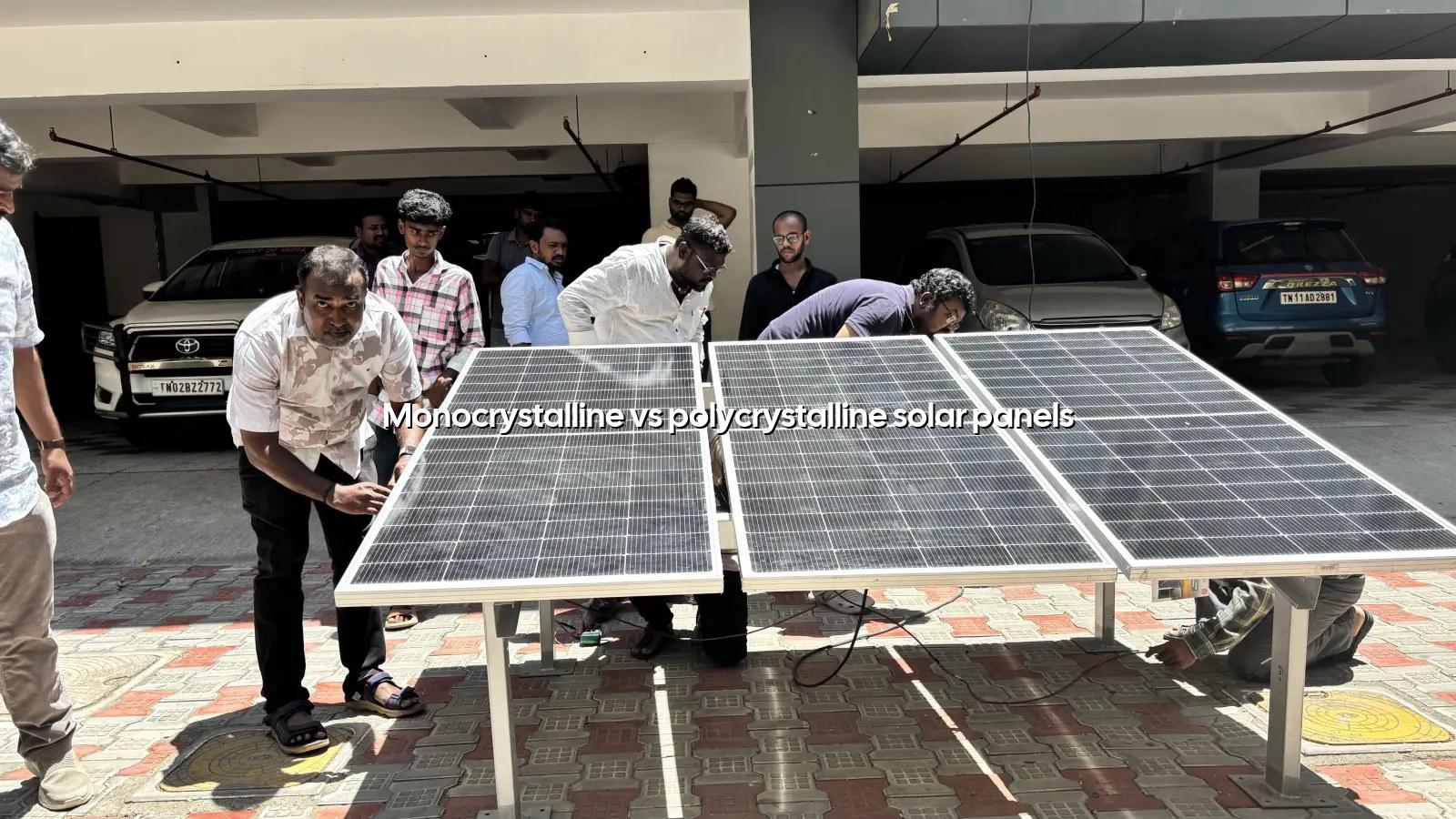
How the roof decides
What the two panel types mean in everyday use
A lot of people ask us for the “best” panel, but the better question is which one will fit the site without creating problems later. A panel that suits a compact home roof may not be the easiest choice for a wider commercial shed, and a layout that looks neat in a brochure can be awkward once you have to clean it or service the inverter. We look at the whole system, not just the glass.
Monocrystalline panels
Monocrystalline panels are usually the first option we consider when roof space is tight or the owner wants a cleaner, more compact layout. On many homes around Kottar and Vadasery, the usable terrace area can be interrupted by tanks, stair headroom, or shading from nearby walls, so squeezing the array into a smaller footprint becomes useful. That is where monocrystalline panels often earn their place.
Polycrystalline panels
Polycrystalline panels still make sense where there is enough room to lay out the array without crowding the roof. They can suit larger homes, open commercial roofs and other sites where the structure gives you breathing space. On a straightforward roof near Thuckalay or Padmanabhapuram, for example, the final choice may come down to layout ease, roof access and how the rest of the system is planned.
- Measure the usable roof area first. Clear space is the real starting point, not the theoretical size of the terrace.
- Check shade during the day. A wall or tank that looks harmless at 9 a.m. can change the array plan by afternoon.
- Look at the structure. RCC, tiled and sheet roofs each need their own mounting approach and fixing detail.
- Match the layout to the EB units. The 60-day bill tells us how much energy the site can actually use.
- Choose the inverter after the roof plan. The panel type is one part of the design, not the whole job.
Practical comparison
A side-by-side look before you ask for a quotation
People often want a quick answer, so we usually put the two panel types side by side after a site survey. That keeps the discussion honest. A shop roof in Marthandam with open span, for instance, gives a different set of choices from a home roof in Nagercoil where the usable area is broken up by tanks, stair access and shade. The useful comparison is always the one that matches the real building.
| Point | Monocrystalline | Polycrystalline |
|---|---|---|
| Roof fit | Often preferred where usable space is limited | Works well when the roof gives you more room |
| Layout planning | Can be easier to organise on compact roofs | Useful when a wider array can be placed neatly |
| Typical setting | Homes, shops and offices with tighter roof areas | Homes and buildings with open mounting space |
| Decision focus | Space, shade and clean roof use | Space, layout simplicity and practical fit |
| Overall use | Good where compact design matters | Good where the roof can take a broader layout |
The panel family should follow the site, not force the site to follow the panel. Near Colachel and Manavalakurichi we pay extra attention to corrosion-prone parts because salt air can be rough on small details like fasteners and cable terminations. A panel can be fine, but if the mounting or wiring is weak the whole install starts to age badly.
Local conditions
Why the district changes the answer more than people expect
Kanyakumari District has plenty of sunshine, but it also has the kind of wind exposure that changes how we think about mounting structures. In exposed stretches, especially where the roof is light or the building is tall and open, we check the fixing detail before we talk about the panel label. A layout that works on one house can be a poor fit one street away if the roof geometry is different.
The monsoon months matter too. Drainage paths, cable sealing and the way the array is set away from pooling water all deserve attention, because the wet season has a habit of exposing lazy work. That is why we look beyond the brochure specs and focus on how the system will actually sit on the roof through the year.
What we look at during a site visit
- Roof type, including RCC, tiled and sheet surfaces
- Shade from nearby walls, tanks and trees at different times of day
- Wind exposure and the strength of the mounting structure
- Cable sealing, drainage and service access for monsoon conditions
- The EB bill pattern over a 60-day cycle and the actual load pattern
How we decide
The way we narrow it down for a customer
We don't start from the panel brand. We start from your roof, your usage, and the practical limits of the site. If the clear area is small, monocrystalline usually gets attention first. If the roof is open and the array can be laid out comfortably, polycrystalline may still be a sensible choice. The bigger question is often the system type, because on-grid, off-grid and hybrid designs bring different equipment and different service needs.
A simple process that avoids guesswork
This is the sequence we follow when a customer calls from Kottar, Thuckalay, or nearby parts of the district. It keeps the discussion grounded in the actual site instead of turning it into a product debate.
- Read the EB usage. We look at the 60-day bill pattern to understand the load on the site.
- Measure the usable roof. We check the clear space, not the total roof size on paper.
- Inspect the structure. RCC, tiled and sheet roofs each need different fixing points and support details.
- Decide the system type. On-grid, off-grid or hybrid changes the parts that will sit on the roof and beside it.
- Compare mono and poly against the layout. This is where the panel question becomes clear.
- Check wiring and protection. Small details around cables, earthing and protection devices matter later.
A commercial site in Karungal or a farm-linked setup closer to the inland side can still follow the same logic. The difference is usually in the structure and the usage pattern, not in the order of the questions we ask. If the roof is awkward, a panel that saves space can matter more than one that looks plain on a spec sheet.
Where it shows up
Situations where the choice really changes the layout
Homes with limited clear space
On a smaller residential roof, the panel type can affect how cleanly the system fits around tanks, stair rooms and shaded corners. Monocrystalline panels often get used in these cases because they help keep the array compact and easier to arrange. We see that sort of roof regularly in Kottar and Vadasery, where the usable area is often smaller than people first think.
Open roofs and shop buildings
Where the roof is wider and placement is straightforward, polycrystalline panels may be just as suitable. A shop in Thuckalay or a larger building near Padmanabhapuram can sometimes take either type without much difference in the final arrangement. In that setting, access for cleaning and the inverter position can matter more than the panel family itself.
Service matters as well. Panels do not fail in isolation. Cables, mounting bolts, inverter connections and protection devices all age together, and a neat looking array can still turn troublesome if the support work was rushed. That is why we keep the full system in view.
What to check before deciding
Questions to ask before you settle on mono or poly
The first question is usually not “which panel is better?” It is “what does the roof allow?” If you answer that honestly, the rest gets easier. We recommend checking shade, usable space, roof condition, and how the system will be serviced later. That simple list saves a lot of wrong assumptions.
Things that affect the final choice
- The actual amount of clear roof area after walkways and tanks are counted
- Whether the building is RCC, tiled or sheet-roofed
- How much wind the roof catches during the year
- Whether the site is coastal enough to need extra care on metal parts
- How easy it will be to clean and inspect the system later
If you're comparing options for a house in Suchindram or an office roof in Marthandam, these checks are usually enough to separate the sensible option from the merely popular one. Photos help, but the roof tells the truth faster. And sometimes the roof tells it in a way the customer did not expect.
How JRS SunTech Energy Can Help
How JRS SunTech Energy Can Help with panel selection
We look at your roof, your EB use and the structure already in place, then tell you honestly whether monocrystalline or polycrystalline is the better fit. Our work covers the free site survey, system design, installation, EB documentation support and subsidy guidance under the applicable government solar programme. We also give one year of free service support after installation, with continued technical help afterwards depending on the product and the installation.
Contact JRS SunTech Energy, Door No. 227, First Floor, Cape Road, St. Xavier's Church Junction, Kottar, Nagercoil, Kanyakumari District, Tamil Nadu - 629002. Phone: 9787775999 | Email: jrssuntechenergy@gmail.com.
Frequently asked
Questions people ask before they choose a panel type
Start with space. If the usable roof area is tight, or the layout has tanks, parapets, and walk paths to work around, monocrystalline panels often make the design easier. The final call still depends on the roof shape, shading, and the EB units you use in a 60-day cycle.
Yes, they are. When the roof has enough clear space, polycrystalline panels can work well and keep the array simple to place. We usually see them as a practical option where the site gives you room to build a neat layout without squeezing every panel into a corner.
The roof itself usually matters more. We look at the structure, the slope, shading, mounting points, cable runs, and where the inverter and protections will sit. A panel choice can look good on paper and still be the wrong fit if the roof plan is weak.
The panel family is not the only issue there. Around coastal areas, the hardware, cable sealing, and connection details need attention because salt-laden air can be hard on small parts. The roof can be in good condition and still need better protection around the mounting and electrical side.
It is better to decide the system type first. On-grid, off-grid, and hybrid layouts change the number of parts, the battery needs, and the wiring plan. Once that is clear, we can compare mono and poly against the actual design instead of guessing from a product sheet.
Not always, but they often help when clear space is limited. In places like Kottar where roofs may already carry tanks or other obstructions, the layout can be the main challenge. That is why we check the roof first and only then talk about the panel type.
Hurry up!Subsidy ends 31 March 2027 · 134 days left
Next step
Not sure which panel type your roof needs?
Send us your EB bill, roof photos and a note about shade or space. We will look at the site and tell you what fits best.
- Your electricity requirement and 60-day EB bill
- Property type — home, shop, office, farm or institution
- Backup requirement and available roof space
Related: On-Grid Solar · Products · Contact
Free site survey · Kottar, Nagercoil