EB Bill Guide
How Solar Units Are Adjusted in Your EB Bill
See how import, export and the EB reading cycle usually appear on a rooftop solar statement, so the bill feels easier to read month by month.
Solar billing help
Read the EB statement without guessing at the numbers
If you're trying to understand how solar units are adjusted in your EB bill, the first thing to know is that the statement usually reflects three moving parts: what your home or shop used, what the solar system produced, and what the EB meter recorded during the billing cycle. Once you know which line is which, the whole page becomes less mysterious.
We get this question a lot from people in Kottar and from owners checking a monthly bill after a busy business week in Nagercoil. In Kanyakumari District the sun is strong for much of the year, but that does not mean the bill is fixed in one pattern. Roof shade, monsoon cloud cover, evening load and the meter reading date all change the final picture, so the adjustment has to be read from the actual site data.
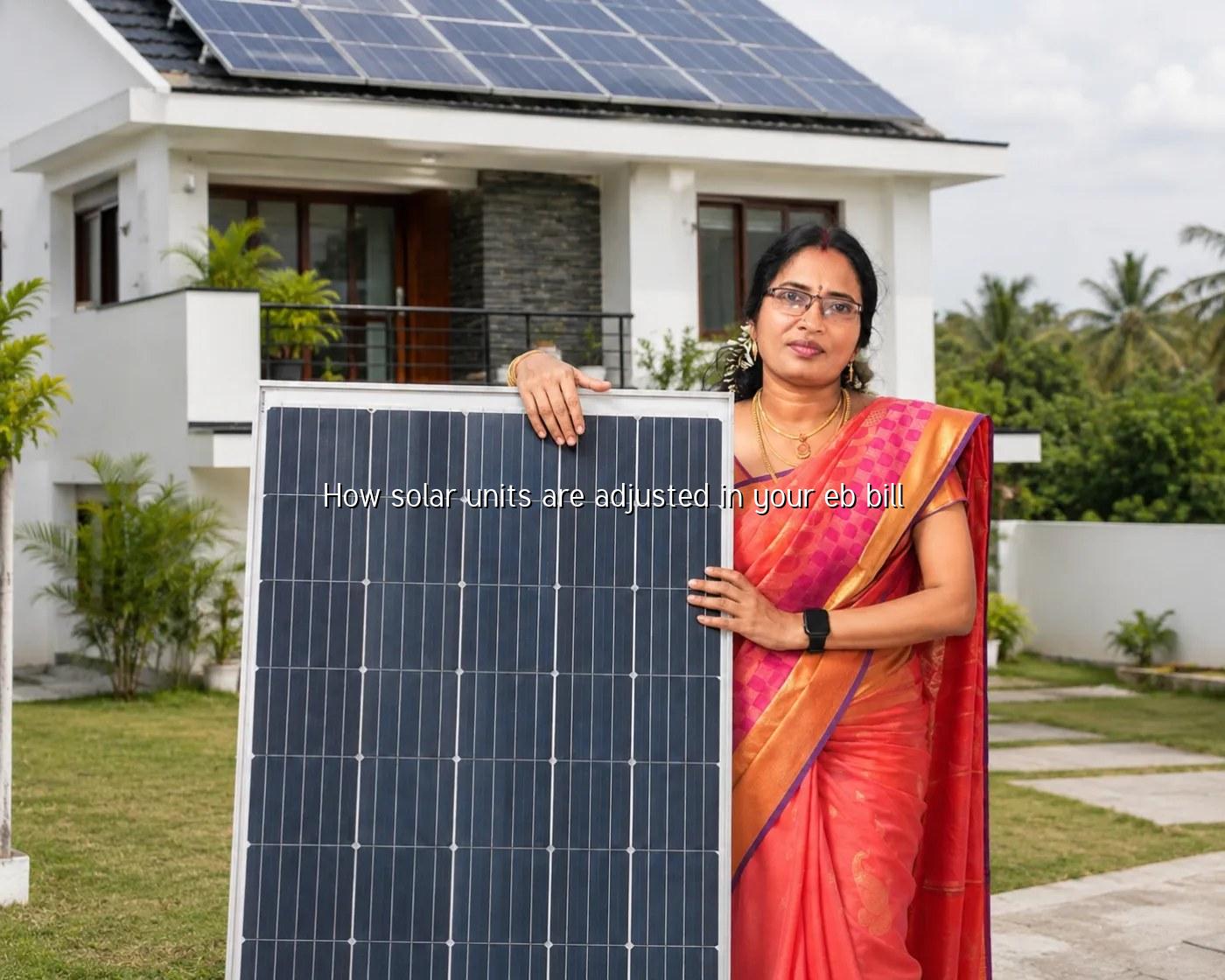
What the bill shows
Import, export and the part people usually miss
Most readers jump straight to the amount on the last page. That part matters, of course, but the real clues sit earlier, where the units are listed and the meter reading is turned into bill entries.
Units you still take from the EB connection
Import units are the electricity you draw from the EB connection when the solar system is not carrying the full load. At night, during cloudy hours, or when a pump, AC or other appliance runs harder than the panels can cover, those units are counted in the normal way. That is why a solar home can still have an EB line on the statement, even when the roof is producing well.
Units pushed back from the solar side
Export units are the extra units your inverter sends back after your own use is met. On a bright day, a house in Vadasery with light daytime use may export more than a family home that keeps fans and other loads running through the day. The meter records that flow, and the EB statement then applies the billing method used for your connection.
| Bill item | What it means | What to check |
|---|---|---|
| Current reading | The latest meter reading used for the bill cycle | Date, reading value and whether it matches the billing period |
| Import units | Units drawn from the EB connection | Daytime load, evening use and any heavy appliance timing |
| Export units | Units sent from the solar system back to the grid | Inverter output, sunlight hours and the net meter record |
| Net adjustment | The bill treatment after import and export are compared | Whether the reading method used is consistent across months |
| Carry forward items | Any amount or unit balance carried from a prior cycle, if shown | Old statement, previous reading and the same account number |
- Check the reading date first. If the billing period is off, the rest of the page becomes hard to trust.
- Separate import from export. They are different flows, and people often read them as one line when they are not.
- Match the bill with the weather and your daily use. A rainy stretch in Colachel will not look the same as a bright month in Nagercoil.
- Look for anything carried forward. Some statements keep the previous balance visible, so the older bill matters too.
- Ask for a site check if the same pattern keeps coming back. It could be shading, wiring, meter setup, or just the way the roof is being used.
Local factors
Why the same solar system can read differently from roof to roof
Solar billing is never only about the panel size. Roof shape, daily usage and weather all play a part, and that matters across Kanyakumari District where wind, salt air and seasonal rain are part of normal site conditions.
A flat RCC roof in Kottar usually leads to a different design conversation than a sloped tiled roof near Suchindram. The first one may need careful spacing and a clear mounting layout, while the second may need a different fixing method and cable route. Near the coast, we also pay attention to salt-laden air because hardware and electrical connections need more care there than they do inland.
Daily use makes just as much difference. A home that uses most of its power after sunset will import more from the EB connection than a shop that runs through the day with good solar exposure. So two buildings that look similar from the street can still show very different bills.
During the south-west monsoon and again in the north-east monsoon, generation can shift and drainage around the roof starts to matter more than people expect. We check cable sealing, inverter placement and the path water takes across the roof because small misses tend to show up later in the bill. Not always right away, but they do show up.
What we usually tell customers to watch
Keep an eye on the bill if a new water tank, wall or tree starts casting shade on the array. That change can be tiny in the morning and still affect export enough for you to notice a difference later. In a windy place like Aralvaimozhi, mounting structure strength also matters before billing even starts, because the system has to stay steady through the year.
When the system is small, even one appliance can change the story. A pump starting in the afternoon, a family running more loads on the weekend, or a cloud band passing for an hour can alter the export and import lines. The meter does not care why it happened; it only records what passed through.
Step by step
How we review a solar bill adjustment at site
When the statement looks odd, we start with the evidence, not with a guess. That means the bill, the inverter and the connection are all checked together.
What we ask for first
We usually begin with the latest EB bill, the previous bill if you have it, and a photo of the inverter screen or app reading. From there we compare the import units, export units and the reading dates. People in Marthandam and Thuckalay often bring only the latest bill, but the earlier one makes the trend much easier to see.
What the mismatch usually turns out to be
Sometimes it is only a change in usage. The system can be working fine, but the home used more power after sunset, or the shop stayed open longer than usual. At other times the issue sits in the wiring, the meter setup or a new shade on the roof, and a quick screen check won't show that on its own.
- Keep the current bill and the previous bill together.
- Check whether the meter date matches the billing period.
- Compare inverter output on a bright day and on a cloudy day.
- Notice any new shade from nearby work or growth around the roof.
- If the roof is hard to access, ask for an inspection instead of relying on one phone picture.
Common mistakes
What people misread on solar-linked EB statements
One common mistake is assuming every charge on the statement is part of solar adjustment. It isn't. Some items are just part of the normal EB billing process and stay there whether the roof is producing or not. That is why the unit lines need to be read carefully instead of rushed.
Another mistake is comparing a bright week with a cloudy one and expecting the same output. The district gets strong sunshine overall, but weather still changes the actual reading, and its easy to forget that when you're only looking at the amount on the page. A roof with more exposure in the morning may also behave differently from one that gets better light in the afternoon.
A third mistake is ignoring daytime use. If the site uses a lot of electricity while the sun is up, the export figure can fall and the bill will look different even though the panels are doing their job. That is why we always ask how the home or shop is actually used, not just how big the system is.
A short checklist you can keep handy
- Check that the billing period matches the meter reading.
- Compare the export figure with the inverter reading for the same cycle.
- Look for shade from new structures, trees or water tanks.
- Watch for cable sealing or roof water entry after the monsoon.
- Ask for a site review if the numbers keep shifting without a clear reason.
How JRS SunTech Energy Can Help
We check the bill, the system and the site together
If you want help with how solar units are adjusted in your EB bill, our team can review the solar layout, the inverter reading and the EB statement in one visit. We don't sell one standard system. We start from your actual EB consumption, roof space, structure, budget and site conditions, then recommend what fits the property.
We also guide customers through installation paperwork, EB documentation and the subsidy process where it applies under the government programme. For homes in Kottar, offices in Nagercoil and properties closer to the coast, that practical review often saves a lot of back-and-forth later.
If you'd like us to look at a bill that doesn't make sense, send your latest EB copy and a photo of the inverter screen. We'll tell you what the readings are showing and what should be checked next.
Contact: JRS SunTech Energy, Door No. 227, First Floor, Cape Road, St. Xavier's Church Junction, Kottar, Nagercoil, Kanyakumari District, Tamil Nadu - 629002. Phone: 9787775999. Email: jrssuntechenergy@gmail.com.
Frequently asked
Questions about solar unit adjustment on EB bills
The EB statement usually compares what you took from the grid with what your solar system sent back during the same cycle. The exact line names can vary a bit, but the idea stays the same: imported units, exported units and the final billing treatment are read together. If you want, we can go through the bill line by line with you.
Because most rooftop systems still work with the EB connection, not instead of it. When your load needs more power than the panels are making, the extra comes from the grid, and at other times unused solar can go back to the grid. So seeing EB units does not mean the solar system has failed.
Start with the meter reading date, the billing period and the import and export readings on the same page. A mismatch there is common, and it can make the whole bill look wrong even when the system is fine. Keep the previous bill beside the latest one, because that usually shows the pattern faster.
Yes, and that is normal. A flat RCC roof in Kottar, a tiled roof in Suchindram and a shop with daytime load in Vadasery will not behave the same way. The bill follows the actual readings, the roof condition and how the electricity is used through the day.
Not directly. The billing adjustment and the subsidy file are separate things, although people often keep them together in the same installation folder. We can help you with the EB statement and also guide you through the documentation side if the project falls under a government programme.
Your installer is the first place to start, because they know the wiring, inverter and meter arrangement. If another company installed the system and you only want a technical check, our maintenance team can inspect the electrical connection, output pattern and reading flow. We will tell you honestly whether it needs a repair, a replacement or simply a proper clean.
Hurry up!Subsidy ends 31 March 2027 · 134 days left
Next step
Need help reading your EB bill?
Send us your latest bill and a photo of the inverter screen, and we will check the solar adjustment with you.
- Your electricity requirement and 60-day EB bill
- Property type — home, shop, office, farm or institution
- Backup requirement and available roof space
Related: Subsidy Guidance · Solar Maintenance · Contact
Free site survey · Kottar, Nagercoil