Solar solutions
Captive Solar for MSME Units
A practical look at how an MSME can plan solar around its EB load, roof space and business hours.
MSME solar planning
Captive solar for MSME units, built around real operating load
Captive solar for MSME units works best when the system follows how your business actually runs, not how a brochure thinks it should run. If you manage a workshop, packing unit, small factory or service unit in Kottar or along the town belt toward Thuckalay, the right answer starts with your EB bill, your working hours and the roof you can truly use.
We do not begin with a fixed size and force it on the site. We begin with the machines that run in the daytime, the 60-day EB pattern and the roof type under the panels, because those things decide whether a solar plan will feel easy later or awkward from day one. In Kanyakumari District, that matters even more since the sun is strong through the year, but wind exposure, salt air and monsoon drainage all affect how the mounting, cable sealing and structure should be done. A captive setup should look tidy, work quietly and stay out of the way of your business.
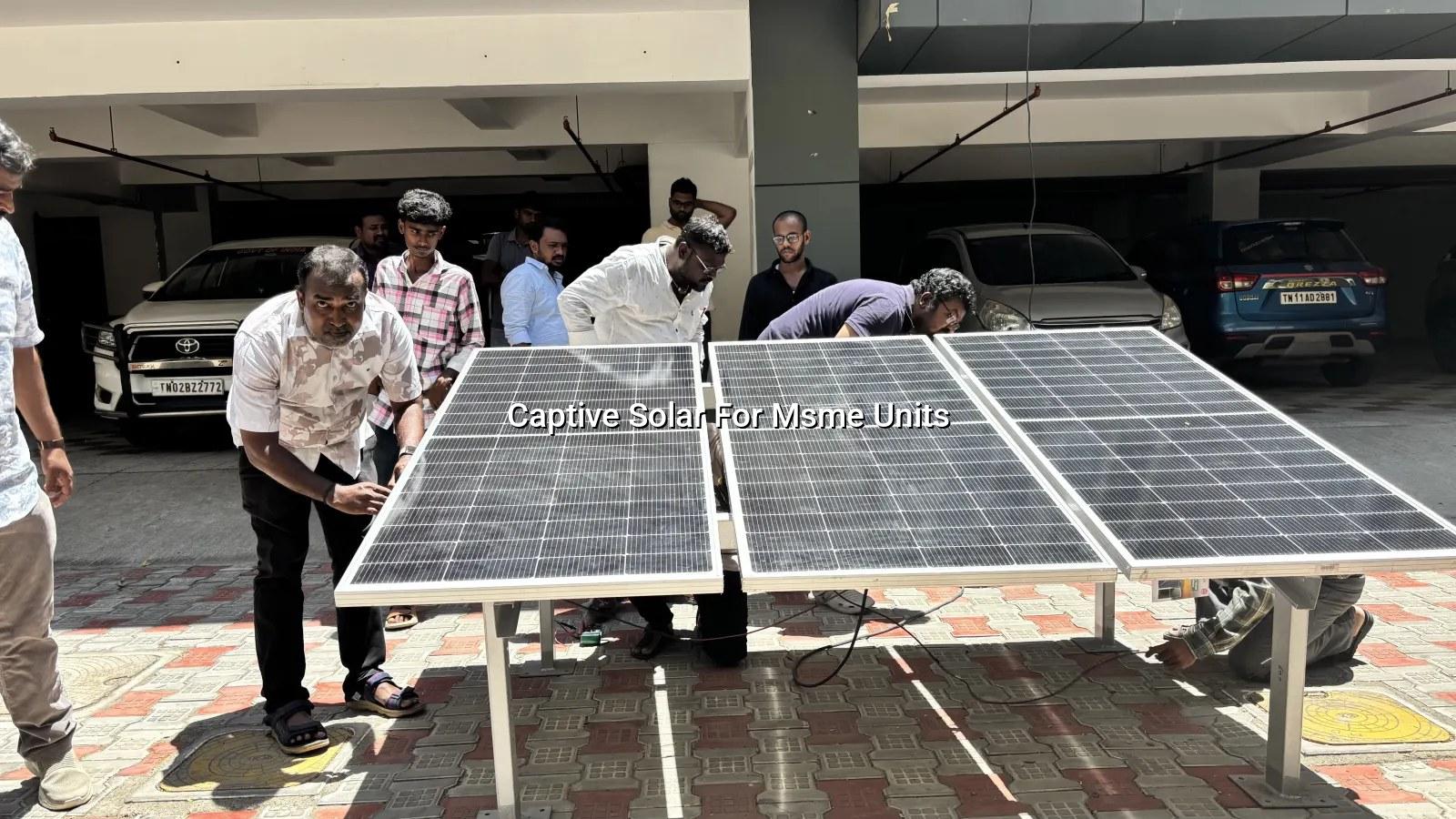
Start with the site
What we check before recommending captive solar
Most owners ask for a capacity first. We prefer to look at the site first, because that usually avoids the expensive guesswork.
The EB bill shows the pattern, not just the number
A captive solar proposal should start with your EB history, because the 60-day cycle tells a more honest story than a rough estimate. If the unit draws power steadily during the day, solar can replace a meaningful share of the energy that would otherwise come from the grid. If the machines run in short bursts or mostly after closing hours, the layout needs to be adjusted around that. We also look at how the load changes through the week, since some MSME units run in a very different rhythm on market days than they do on regular workdays.
Roof, orientation and shade decide how useful the system will be
In places like Vadasery and Ozhuginasery, small industrial and service units often have compact RCC roofs, tight access paths and a few unavoidable shadows from nearby walls or trees. Other sites use sheet roofing with mixed heights, which changes the fixing method and the way the wiring is routed. Near the coast, we pay extra attention to mounting hardware and cable ends because salt-laden air can be rough on metal fittings and loose connections. Small details, yes, but they decide whether the installation stays neat through the monsoon.
| Checkpoint | What we look at | Why it matters |
|---|---|---|
| EB bill pattern | Units used in the 60-day cycle and daytime load | Shows how much solar can actually be used by your own unit |
| Roof condition | RCC slab, sheet roof or mixed structure | Decides panel layout, fixing method and cable routing |
| Shade and orientation | Tree cover, nearby buildings and roof direction | Helps avoid weak generation from avoidable shade |
| Weather exposure | Wind, monsoon drainage and coastal air | Changes the mounting and sealing details |
| Electrical condition | Inverter location, connections and earthing points | Supports safer commissioning and easier maintenance |
- Share your EB bill. We check the units used and the timing of your business load.
- Take the free survey. Our team visits the site, looks at the roof and checks shade, structure and cable paths.
- Review the design. We explain the recommended capacity, equipment choice and the practical limits of the site.
- Install and test. We complete the work, check the electrical connections and commission the system.
- Handle the follow-up. We guide the EB and documentation steps and remain available after the handover.
What unit owners should watch
Signs that the solar plan is practical, not just attractive
A good captive solar design for an MSME should feel as if it was made for the building you own, because that is exactly what it should be. If the machine line runs during daylight, the system can work with your existing routine. If the load is mostly after hours, we say so plainly and adjust the expectation. That honesty helps more than a glossy proposal ever could.
We also think about the kind of roof the district gives us. In Nagercoil, Kottar and nearby market streets, many units have compact roofs and tight service spaces, so the panel arrangement must stay neat and accessible. In open industrial yards, the structure can be different, but then wind loading gets more attention. A design that ignores either one usually comes back to us later for rework, and nobody likes that.
Checks that save trouble later
- Use a roof survey, not only phone photos, before you finalise the system.
- Check where water collects during the south-west and north-east monsoon periods.
- Keep enough access for cleaning, inspection and inverter checks.
- Ask how the structure will handle district wind conditions, especially on exposed sites.
- Confirm that the electrical route is sensible before panels go up.
- Make sure the inverter position will stay easy to reach if a service visit is needed.
One thing we tell many owners in Marthandam is that captive solar should not fight the way the unit already works. If your production starts late, we adjust the thinking. If your roof is shaded for part of the morning, we look at the usable section rather than forcing the full slab into service. That sort of planning is usually better than chasing a neat-looking estimate, and it feels more natural once the system is live.
How the work moves
The path from first call to commissioning
We keep the process simple, and we tell you where the useful decisions actually are.
The first conversation is about your site, your EB connection and the way your unit operates through the day. After that we move into survey and design, because a captive solar project should be built from facts, not guesses. That is the part customers usually appreciate once they see the site notes and the layout sketch. It explains why the system is being shaped one way instead of another.
Our working method
First comes contact, then a free site survey, then system design and quotation. Once you are comfortable, we move to installation, EB and documentation support, commissioning and after-sales help. The sequence matters because it keeps the work clean. If we spot a roof issue or a wiring concern during the survey, we say it before materials are fixed in place.
In Boothapandi and the nearby inland areas, we sometimes find units with more open roof edges and stronger wind exposure than the owner expected. Coastal sites bring a different set of checks. Either way, the point is the same: captive solar for MSME units should fit the site conditions, not just the business category. And if the roof asks for a different structure or a different cable path, we change the plan rather than forcing it.
What changes from site to site
A panel array on a tiled shed is not the same as one on a wide RCC slab. The inverter location, cable length, drainage path and even the cleaning access can change the final design. That is why we keep saying the EB bill is only one part of the picture. Real planning needs the roof in front of us, plus a quick look at how the unit operates during a normal workday.
If a site is crowded, we may choose a layout that leaves the access path clear. If a roof is open and windy, the structure gets extra attention. If the electrical line is already crowded, we plan the routing so the panel side, inverter side and existing supply all remain easy to inspect later.
How JRS SunTech Energy can help
Guidance that fits an MSME unit, not a generic sales pitch
We work from Kottar, Nagercoil and travel across Kanyakumari District for surveys, planning and installation. If your unit needs a rooftop solar solution, an inverter-backed system or a practical review of the roof and EB pattern, our team will look at the site first and tell you what makes sense.
We can also guide you through the applicable documentation, the general subsidy procedure where it applies and the post-installation support. If you already have a site in mind, send us the EB bill and a few roof photos, then we can start from there.
JRS SunTech Energy, Door No. 227, First Floor, Cape Road, St. Xavier's Church Junction, Kottar, Nagercoil, Kanyakumari District, Tamil Nadu - 629002. Phone: 9787775999, Email: jrssuntechenergy@gmail.com.
Frequently asked
Questions businesses ask before they start
It usually means setting up solar so the power is mainly used inside your own unit, instead of treating the site like a one-size-fits-all job. We look at the EB bill, the load pattern and how the building actually works during the day. For many units in Nagercoil and nearby town areas, that gives a cleaner fit than copying someone else’s setup.
We start with your EB consumption over the 60-day billing cycle and ask when the machines run. Then we look at roof size, tilt, shade, wind exposure and the condition of the existing electrical line. That is usually more useful than guessing from the business type alone.
Yes, in many cases it can. We check the available RCC roof, sheet roof or any open structure, then compare that with the daytime load and the shade pattern. If the roof is tight, we may suggest a different system layout or a phased plan.
Usually yes, but the mounting structure and cable sealing need more attention. In places closer to the coast, we think about corrosion, salt-laden air and loose fasteners. The design changes more than people expect, even when the panel count stays similar.
Yes. We guide customers through the EB process, the applicable documentation and the general subsidy procedure where it fits the project. We do not promise amounts, and we keep the paperwork side clear so the customer knows what to prepare.
We commission the system, check the electrical connections and explain the daily operation in plain language. After that, we provide one year of free service support after installation, with continued technical help afterwards based on the product and installation.
Why the details matter
Small site choices change the result
A captive solar system for an MSME unit sounds simple until the roof, cable route and daily work pattern come into view. That is why we ask questions about the unit, not just the bill. It keeps the plan honest and helps you avoid buying a setup that looks fine on paper but feels awkward after installation.
We have seen this in enough roofs around Kanyakumari District to say it plainly. A compact workshop near Kottar may need a different layout from a larger shed on the outskirts of Thuckalay, and neither should be judged by the same picture. If the site needs a cleaner electrical route, we say that. If a battery-backed option is better, we say that too. No drama, just the right fit.
The same applies when the business is growing and the load is likely to change later. We prefer to think ahead a little, so the chosen layout still makes sense if the unit adds machines or changes its operating hours. That way the system supports the business instead of getting in its way.
Hurry up!Subsidy ends 31 March 2027 · 134 days left
Next step
Ready to check your MSME roof and EB load?
Send us your EB bill, roof photos and a short note about your work hours, and we will tell you what looks practical for captive solar.
- Your electricity requirement and 60-day EB bill
- Property type — home, shop, office, farm or institution
- Backup requirement and available roof space
Related: Solar Solutions · Solar Finance & EMI · Contact
Free site survey · Kottar, Nagercoil