Solar for healthcare
Solar for Hospitals and Clinics
A practical look at how we plan solar for healthcare buildings, backup needs and EB coordination in and around Nagercoil.
Healthcare solar planning
Solar for hospitals and clinics starts with the building, not the panels
Solar for hospitals and clinics has to be planned around people, equipment and the way the site actually runs. A healthcare building is rarely a simple day-load property. Some rooms stay active almost all the time, others need a backup path for selected circuits, and a few areas are too sensitive to be treated like a normal office block.
That is why we begin with the EB bill, the roof, the structure and the loads you want to keep running. In Kanyakumari District the sunshine is strong for much of the year, but wind exposure and coastal air can change the way a system is fixed and wired. A clinic in Kottar may be straightforward, while a larger facility near Thuckalay or a roof with more open wind in Aralvaimozhi can need a different approach altogether.
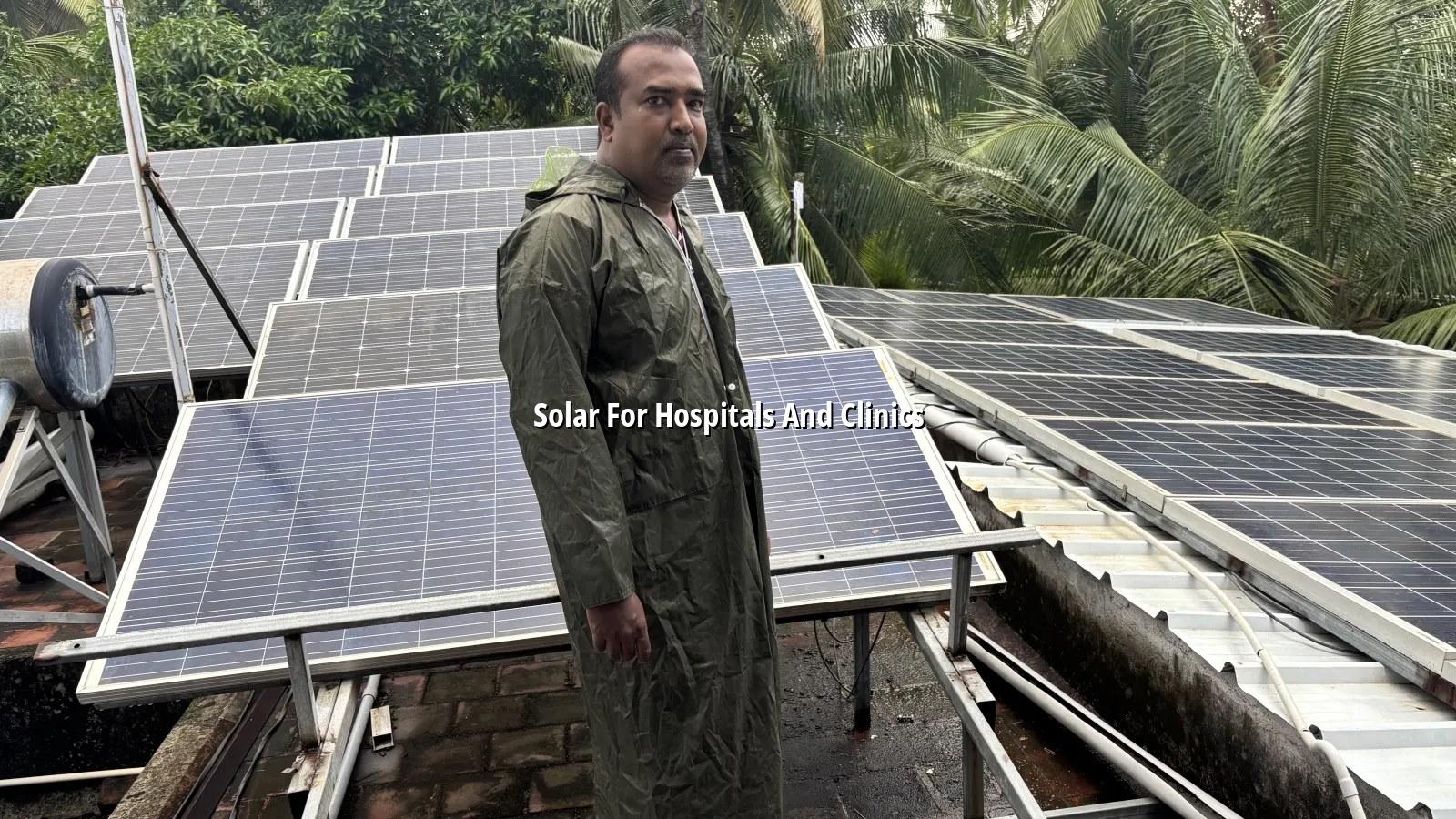
What changes in healthcare sites
The questions we ask before we recommend a system
Not every hospital or clinic needs the same solar setup. A consultation centre with steady daytime use may be a good match for on-grid solar, while a building that wants limited backup during supply cuts may need hybrid solar or battery support. The real job is to sort out those choices before anybody starts talking about panel count or inverter brands.
Loads come first
The first thing we look at is the 60-day EB bill and the way the building uses electricity through the day. Fans, lights, air movement, vaccine storage, lab units and office equipment do not all behave the same. If the site is mostly daytime use, on-grid solar may be enough. If you need certain circuits to ride through a cut, then the design changes, because the system has to separate what matters from what does not.
The roof is part of the design
We see RCC flat roofs, sloped tiled roofs and sheet roofs in this district, and all of them need different handling. A near-coastal building in Colachel or Manavalakurichi can face salt-laden air, so hardware and connections need a little more care. In a windier stretch such as Aralvaimozhi, mounting strength matters even more, and the monsoon months make drainage and cable sealing matter in a very real way.
- Look at the actual bill. We start with the EB connection and recent consumption so the design follows real usage, not a guess.
- Walk the roof carefully. Shade, parapet height, tank positions, access routes and cable paths all get checked before any layout is fixed.
- Choose the right system type. A clinic may be fine on-grid, while a hospital block may need hybrid support for selected loads.
- Check the structure and fixings. Roof condition, wind loading and corrosion risk are part of the decision, not an afterthought.
- Finish the EB side properly. After installation we help with documentation and commissioning so the project does not end halfway through.
System choices
Which solar setup suits a clinic, diagnostic unit or hospital block?
The answer depends on continuity, roof space and how much of the building you want to support. A small clinic and a larger healthcare campus both use solar, but they rarely need the same layout. This table gives a simple way to compare the options before you start a site visit.
| Option | Best fit | What it does well | What we check carefully |
|---|---|---|---|
| On-grid solar | Clinics, consultation rooms, offices and day-use healthcare buildings | Uses sunlight during the day and reduces units bought from the EB connection | Roof shade, panel direction, electrical connection and site load timing |
| Hybrid solar | Sites that want solar plus battery support for selected circuits | Combines solar, grid and battery in one planned system | Backup circuits, inverter choice, battery placement and ventilation |
| Off-grid solar | Remote health-related sites, service buildings or field locations with weak supply | Works with battery storage where a normal grid connection is not dependable | Autonomy needs, battery sizing and daily usage pattern |
| Maintenance and inspection | Existing systems at clinics, labs and small hospitals | Finds faults, loose connections, poor output and inverter issues | Condition of modules, cables, earthing, inverter and roof fixtures |
In practice, the first question is often not about the brand at all. It is about which circuits must stay live. A pharmacy fridge, a small lab and a waiting area do not all carry the same importance, and if the team wants those loads protected, the whole layout changes. That is where the conversation becomes real, because the right answer for a hospital in Nagercoil is not always the same as the right answer for a smaller clinic in Kuzhithurai.
Before installation
What matters on the roof before any panels go up
The roof is only one part of the job. We also check waterproofing, parapet height, shadow from stair blocks or water tanks, and the way people move through the building. On a clinic roof in Kottar, a cable run can be in the way if it crosses a maintenance path, and on a sloped roof in Thuckalay the fixing detail may need to change to suit the surface.
Coastal and near-coastal conditions are not just a theory here. Across much of the district, salt-laden air can affect metalwork and connectors over time, so the mounting hardware and electrical joints need proper thought from the start. The south-west and north-east monsoon periods also mean drainage and cable sealing have to be right, otherwise water finds a way in and turns a tidy job into a nuisance.
The checks we like to make early
- Roof strength and whether the structure can safely take the proposed mounting layout
- Shade from tanks, lift rooms, walls and nearby building blocks
- Cable path, inverter position and how the wiring will stay protected
- Need for battery support on selected circuits or for the full building
- Access for cleaning and later inspection without disturbing daily work
- Corrosion control for sites close to the coast or exposed to damp air
Our process
How JRS SunTech Energy handles a healthcare project
We keep the process simple because healthcare teams already have enough to manage. The work starts with your actual site and your actual usage, then we move step by step so you can see what happens next.
From first call to commissioning
You contact us, we arrange a free site survey and we look at the roof, loads and the EB connection. After that we prepare the system design and quotation, then we move to installation, EB and documentation work and commissioning. The final part is after-sales support, and we provide one year of free service support after installation, with continued technical assistance afterwards depending on the product, manufacturer warranty and installation.
What we say plainly
If a roof needs cleaning before a solar job, we say so. If a poor connection is the real problem, we say that too. We have seen sites in Marthandam and Suchindram where people were blaming panels when the real issue was a loose electrical point or an inverter setting that needed attention. It saves time to be straight about it.
We also guide customers through subsidy documentation where the applicable government solar programme allows it. The paperwork side can feel bigger than the installation itself, but most of it becomes manageable once the steps are laid out in order. If the site already has a system, we can inspect it and tell you whether it needs a repair, a replacement or simply a clean.
Day-to-day realities
Why two healthcare buildings rarely get the same answer
A small clinic in Vadasery with a neat RCC roof can be easy to plan, but a larger building near the centre of Nagercoil may need extra thought around terraces, access and cable routing. A care unit in Ozhuginasery may have a different roof line again, and the right system depends on where the shade falls, which direction the roof faces and what the team expects from the solar side. We do not sell one standard system, because that would leave too many details untouched.
The same logic applies when the site has equipment that must keep running. If selected circuits need backup during a cut, we isolate those loads properly. If the roof is more exposed to wind, we may change the mounting structure before we talk about panel brands. Solar for hospitals and clinics works best when the design reflects the place you actually run, not a stock estimate.
Products and equipment we may discuss
Depending on the site, we may talk about solar panels, solar inverters from brands such as Sungrow, Deye, Growatt, Polycab or Eastman, home and office inverters, lead-acid batteries, lithium batteries, solar water pumps from CRI Pumps or Shakti Pumps, solar water heaters from V-Guard or Racold, solar DC cables from Polycab and complete hybrid solar power system packages. The list changes with the building, which is exactly how it should be.
How we help locally
How JRS SunTech Energy can help with healthcare solar
What we handle for you
JRS SunTech Energy works from Kottar, Nagercoil and we plan healthcare solar around the roof, the EB usage and the continuity you need from the building. We handle site survey, system design, installation, EB and documentation support, commissioning and the follow-up that comes after the panels are up.
What happens after installation
Our support does not stop when the system is switched on. We provide one year of free service support after installation, and we continue with technical assistance afterwards based on the product and installation terms. If you want a clean answer for a clinic, hospital block or diagnostic unit, send us the details and we will keep the next step simple.
JRS SunTech Energy, Door No. 227, First Floor, Cape Road, St. Xavier's Church Junction, Kottar, Nagercoil, Kanyakumari District, Tamil Nadu - 629002. Phone: 9787775999. Email: jrssuntechenergy@gmail.com.
Frequently asked
Questions we hear from hospitals and clinics
Yes, and in many buildings it makes a lot of sense. The key is to match the system with how the site runs through the day, because a consultation unit, a small lab and a ward block all ask for different things. We start from the EB bill, roof space and the circuits you care about most, then shape the system around that.
A lot of clinics do well with on-grid solar because daytime use is steady and the roof usually gets good sun. If you need selected lights, fans, medical equipment or other circuits to stay live during a cut, then a hybrid setup may be the better conversation. We do not push one option for every building, because that would be the wrong way to do it.
We check the roof type, cable path, waterproofing, shade from tanks or lift rooms and the way staff move around the building. In Kanyakumari District we also pay close attention to wind exposure and the salty air near the coast, since both can affect mounting hardware and connections. It is a basic roof check, but for a healthcare site it has to be careful.
Yes. We guide customers through the EB and documentation side and explain the steps for the applicable government solar programme. If you want the current subsidy position, the safest place to check is the subsidy page or ask us directly, because those details can change.
We can. If a system was installed by another company, we can still inspect the inverter, check the electrical connections, look at performance and tell you honestly whether the issue is cleaning, repair or replacement. That is often the quickest way to stop guessing.
We plan around the building schedule and keep the work in phases. That may mean surveying after visiting hours, checking roof access in smaller sections and timing the electrical work for the least busy part of the day. The point is to keep the place running while the solar work moves ahead.
Hurry up!Subsidy ends 31 March 2027 · 134 days left
Next step
Thinking about solar for your clinic or hospital?
Send us your EB bill, roof photos and a short note about the loads you want to keep running, and we will tell you what fits.
- Your electricity requirement and 60-day EB bill
- Property type — home, shop, office, farm or institution
- Backup requirement and available roof space
Related: Solar Solutions · Maintenance · Contact
Free site survey · Kottar, Nagercoil