Solar safety
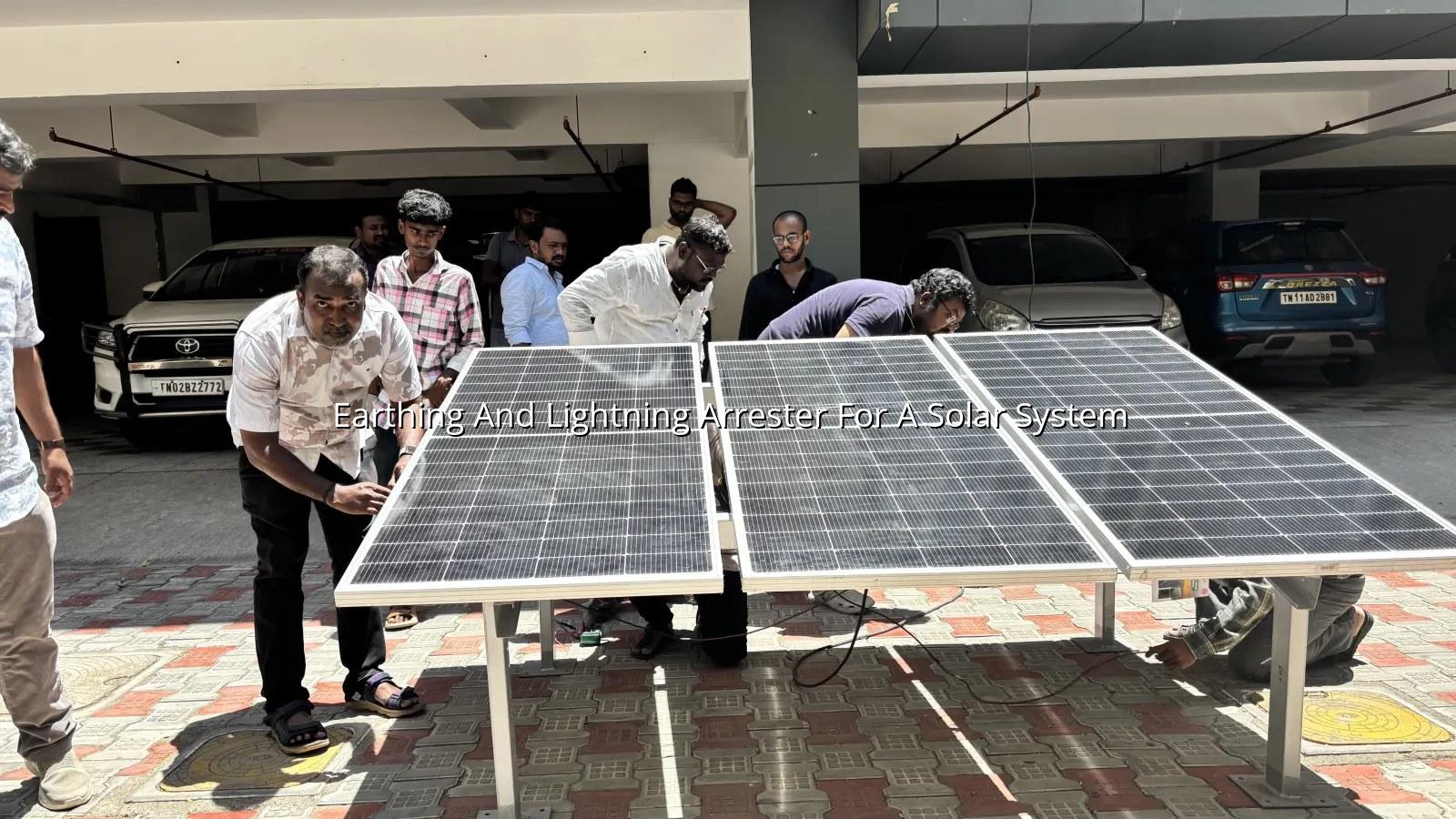
Earthing and Lightning Arrester for a Solar System
A solar roof needs more than panels and an inverter. Grounding, surge protection and the mounting layout all have to suit the roof, the weather and the way the system will be used.
Solar safety basics
Why the protection layer matters before the first panel goes up
Earthing and lightning arrester for a solar system is one of those topics people usually ask about after they have already picked panels, inverter and batteries. That order is backwards. If your roof is exposed, the structure is metal and the EB connection is feeding a real home, shop or office, then the grounding and surge path need to be part of the design from the start.
We see this all the time in Kottar and Vadasery. A customer wants the installation moving quickly, but the roof also has wind pressure, monsoon runoff and, in many places, salt in the air. Good earthing gives fault current a clear way out, while a lightning arrester helps keep a sudden surge from finding its own route through the inverter or the panel frame. They do different jobs, and both of them have to be right.
What goes into a safe layout
How we decide what the roof needs
There isn’t a single layout that fits every roof. A flat RCC roof, a sloped tiled roof and a sheet roof can all need different cable runs, different clamp points and sometimes a different lightning protection approach.
Earthing is the base line
Earthing gives stray current and fault current a place to go. That matters for the inverter, the module frames, the metal structure and any exposed equipment near the roof edge. On a house in Suchindram or a small office in Thuckalay, we look at the route so the earth conductor isn’t left where foot traffic, rainwater or a future repair can damage it. If that path is weak, the system may still run for a while, but the weak point is there from day one.
The connection also has to be easy to understand later. When a technician comes back after rain or during service, they should be able to trace the path without opening half the roof. Hidden fixes become hard fixes.
Lightning protection has its own job
A lightning arrester isn’t just a rod placed near the array. It has to suit the roof height, the surrounding structures and the likely path a strike or surge might follow. In a district like ours, where wind and coastal exposure are part of everyday life, you cannot treat that hardware like an afterthought. A badly placed arrester can look fine and still leave the important parts of the roof exposed.
That’s why we plan it with the roof, not after the roof. If the point of collection or the down conductor ends up in the wrong place, the system still has a hole in it even though everything looks tidy from the ground.
- Survey the roof: we check RCC, tile or sheet roofing, the cable route and the space around the inverter.
- Study the exposure: wind, monsoon water paths, nearby heights and salt air all affect the plan.
- Plan the bonding: module frames, metal structure, inverter body and the main earthing line need to be tied together in one layout.
- Decide on lightning protection: the arrester position and down conductor path should suit the roof instead of just the catalog.
- Test after work: we verify the connections and then recheck after commissioning so the system starts clean.
District conditions
Why the same solar roof gets wired a little differently here
Kanyakumari District gets strong year-round sunshine, which is excellent for generation, but the roof still has to live through wind, dampness and near-coastal air. Those conditions change the choice of hardware and the way each connection is sealed.
On a house near Colachel, the salt-laden air makes us look twice at lugs, clamps and any exposed metal on the roof. In an inland home at Boothapandi, the conversation can be more about wind loading and how the mounting structure transfers stress into the slab. Same district, different details. If you ignore those details, the system may look neat on handover day but cause trouble later during heavy rain or after a lightning event.
For agricultural sites around Thovalai, we often see long cable runs, pump panels and exposed earth paths that need cleaner planning than a simple rooftop array. A solar water pump is not the same as a house roof, but the grounding idea is similar: keep the fault path short, visible and testable. That is the sort of thing we explain before work starts, not after a problem shows up.
The south-west and north-east monsoon periods also matter. Water finds weak sealing fast, and once moisture enters a cable entry or a loose joint, the trouble can show up later as a nuisance fault or a corroded connection. So we plan drainage, sealing and cable supports together.
The pieces that deserve a second look
If you only ask for panels and an inverter, the protection layer can get treated like a small extra. It isn’t. The earthing conductor, earth electrode, inverter bonding and arrester route are part of the system’s normal life. We like to keep them easy to inspect because people do come back after the first heavy rain and ask what changed. Often, the answer is just a connection that should have been cleaner from the beginning.
Before installation day
Questions to settle with the installer
Most customers don’t need a textbook. They need a short checklist they can use while the system is being planned, especially when the roof is already busy with tanks, cables or parapet walls.
- Where will the grounding point be placed, and can it be inspected later without opening the roof?
- Will the module frames, structure and inverter body all be bonded in one plan?
- Is a lightning arrester needed for the roof height and exposure, or does the layout call for a different arrangement?
- How will cable entries be sealed during the monsoon, especially where water flow gathers near the parapet?
- Will the hardware suit coastal air if the house is close to the shore or in a windy corridor?
- Can the electrician show the earthing route before the panels cover the roof?
| Item | What it does | What we check | What goes wrong if it is missed |
|---|---|---|---|
| Module frame bonding | Connects the panel frames into the earth path | Clean metal contact and proper lugs | Loose frames and a weak fault path |
| Inverter earthing | Helps the inverter body stay safely referenced | Correct terminal and sound cable route | Nuisance faults and an unsafe casing |
| Lightning arrester | Gives surge energy a controlled route down | Position, height and down conductor path | Unprotected roof points |
| Earth electrode | Connects the grounding system to the soil | Accessible location and proper connection | Hard to test and hard to maintain |
What we look for on site
A practical inspection is better than a guess
We don’t start from a fixed package and hope it fits. We look at the roof, the EB connection, the surrounding structures and the route the cable has to take.
Roof type changes the answer
A flat RCC roof in Meenakshipuram is not treated the same as a sloped tiled roof in Ozhuginasery. The fixing method, the point where the conductor runs and the place where the arrester sits can all change. On sheet roofs, we are extra careful with fixing points and cable support because the metal surface can make a small issue turn into a bigger one faster than people expect.
The environment changes it too
Near the coast, corrosion is a real thing. Inland, wind loading can be the bigger concern. Around agricultural land, long cable paths and open exposure mean the connection plan needs to be simpler to inspect and easier to maintain. And because the district gets both monsoon seasons, water sealing matters just as much as the metallic parts you can see.
We also keep the service side in mind. If another company installed the system, we can still inspect it and tell you what needs attention. Sometimes the answer is a repair. Sometimes it’s replacement of one corroded piece. Sometimes it’s just a cleanup and a better route for the earth wire. We we can say that plainly because the roof tells the story if you look long enough.
How the work usually proceeds
The sequence from first visit to commissioning
This is the part most people ask for once they understand the safety side. They want to know what actually happens on the roof and who checks what.
- Contact us: you share the roof type, location and whether the property is a home, shop, office or farm site.
- Free site survey: we visit the property, look at the roof and study the route for grounding and surge protection.
- System design and quotation: we decide how the protection layer fits with the rest of the solar equipment.
- Installation: the team fits the structure, inverter side work and the earthing and arrester arrangement.
- EB and documentation: we handle the connection steps and the paperwork that goes with the installation.
- Commissioning: the system is checked, started and reviewed so it’s ready for normal use.
- After-sales support: you get one year of free service support after installation, and technical help continues after that depending on the product, manufacturer warranty and installation.
That sequence matters because a rushed roof often means a rushed conductor route. In our experience, the second visit is where people relax and ask the useful questions, the ones they were too busy to ask during the first conversation.
How JRS SunTech Energy helps
We handle the roof as a working system, not just a set of parts
Our team looks at the whole site: roof type, cable route, local exposure and the way your EB connection is used. That is how we decide whether the earthing needs a cleaner path, whether the lightning arrester should be repositioned, or whether the current setup just needs inspection and preventive work. We also guide customers through subsidy procedures and the required documentation for eligible rooftop solar under the applicable government programme, and we do that without making claims we can’t stand behind.
The office is at Door No. 227, First Floor, Cape Road, St. Xavier's Church Junction, Kottar, Nagercoil, Kanyakumari District, Tamil Nadu - 629002. If you want to talk through a new installation, a repair or a maintenance check, call 9787775999, WhatsApp 919787775999, or email jrssuntechenergy@gmail.com.
Where protection links to the rest of the system
Earthing and lightning protection sit next to the rest of the solar design, not outside it. If your setup is an on-grid roof, a hybrid package or a solar water pump, the same basic thinking applies: keep the path clear, keep the joints visible and choose hardware that fits the site. If your existing plant is acting odd after rain, solar service & maintenance is often the right place to start, and for a new build you may want to compare it with on-grid solar or hybrid solar.
Frequently asked
Questions we hear about solar earthing and lightning protection
In most installations, yes. We plan the earthing with the structure, inverter side and any lightning protection together so the fault path is clear and easy to test later.
It gives surge energy a safer route to ground instead of letting it travel through the inverter, frames or cable routes. On exposed roofs, that simple path matters a lot during stormy weather.
Yes, and we do that often. We inspect the roof layout, cable route and inverter location, then tell you plainly whether the present earthing is usable or needs new work.
We look at the physical bonding, the state of the cable run and the condition of the grounding point. If the roof is damp-prone or the hardware has started to corrode, that usually shows up during inspection.
Ask where the grounding point will sit, how the metal structure will be bonded and whether a lightning arrester is needed for your roof shape and exposure. That question is worth asking before the panels cover the roof.
It can. A roof in one part of the district may need different hardware and a different cable route than another, especially where salt air and wind exposure are higher.
Related solar topics
What to read next if you are planning a full system
Grounding is one part of the job. The rest of the system still has to be matched to the roof, the use case and the local conditions.
If the system is meant to work with the grid, start with on-grid solar. If you need backup during supply cuts, inverters & batteries and lithium batteries may be part of the same conversation. For water pumping, solar water pumps are designed around a different set of practical needs. And if the roof has started showing odd behaviour, solar service & maintenance is often where the fix begins.
Hurry up!Subsidy ends 31 March 2027 · 134 days left
Next step
Need a proper earthing check for your solar roof?
Send us your roof type, location and a photo of the inverter side if you have it. We’ll tell you what the system needs and what can stay as it is.
- Your electricity requirement and 60-day EB bill
- Property type — home, shop, office, farm or institution
- Backup requirement and available roof space
Related: Solar Maintenance · Subsidy Guidance · Contact
Free site survey · Kottar, Nagercoil