Solar structure guide
Mounting Structure for Rooftop Solar
How the frame, roof fixings and layout affect safety, generation and day-to-day upkeep on real rooftops in Kanyakumari District.
Roof structure advice
Start with the frame, not the panels
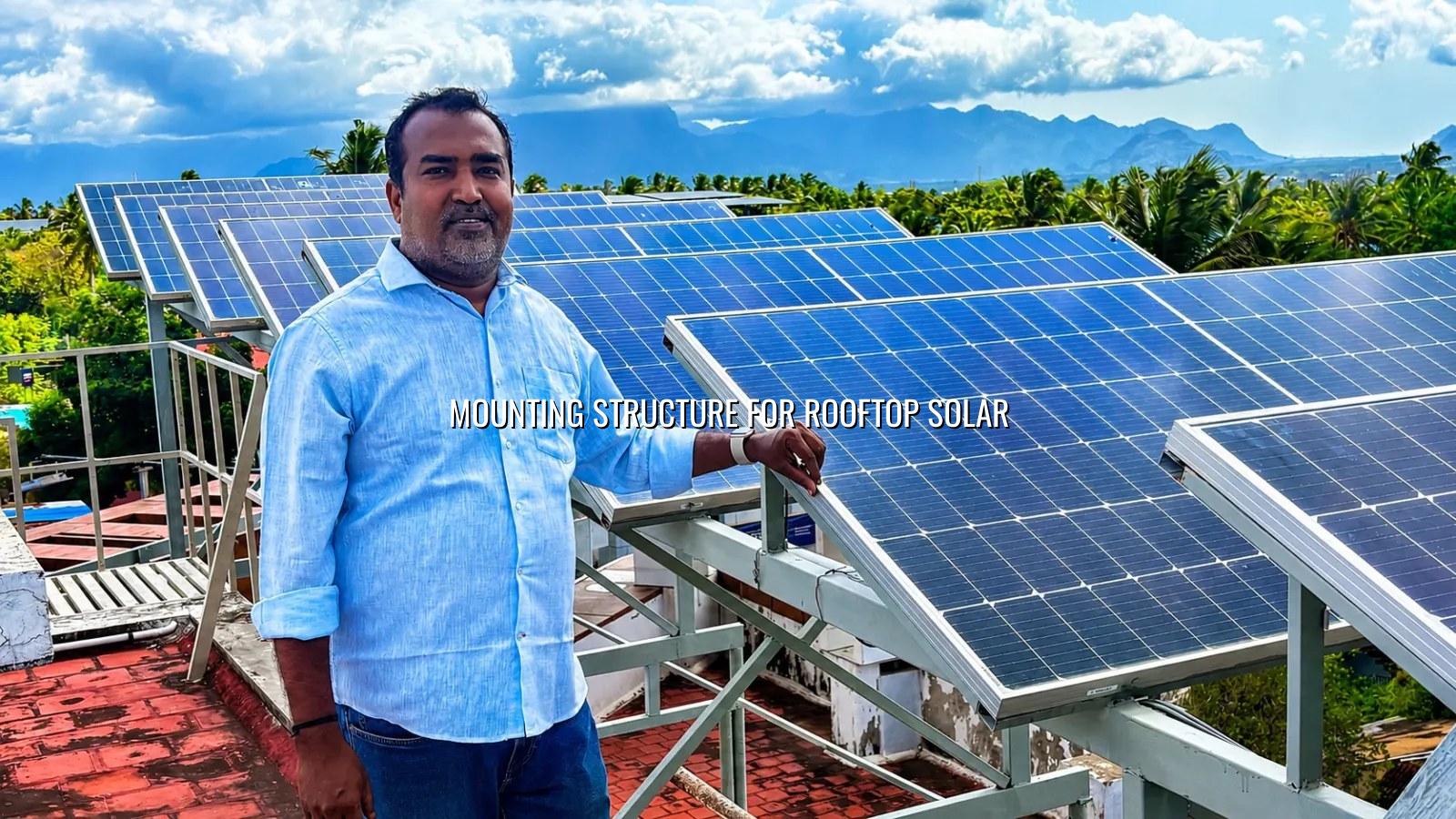
A mounting structure for rooftop solar does more than hold panels in place. It decides how the array sits in wind, how rainwater clears after the monsoon and how easy the system is to clean and inspect later. In Nagercoil and the rest of Kanyakumari District, that matters because roofs here deal with strong sunlight, coastal air and building surfaces that were never designed for random drilling.
We don’t treat every roof the same. An RCC flat roof in Kottar needs a different anchor pattern from a sloped tiled roof in Suchindram, and a sheet roof in Vadasery needs care around heat, grip and vibration. Once the frame is matched to the roof, the whole solar system tends to stay tidier, steadier and much easier to live with.
What the structure must do
More than support: tilt, spacing and long-term access
People usually ask about panels first. We start with the structure because that is what carries the system every day. A sensible frame keeps the modules at a usable angle, leaves air moving underneath them and stays firm when the district gets a windy spell.
Strength, grip and roof condition
The structure has to fit the roof it sits on. On a concrete roof, we check where anchors can go without disturbing drainage lines, waterproofing or weak edges. On a sheet roof, support points and purlin spacing matter more than most people guess, and we’d rather say no to a bad fixing than pretend it will be fine.
If the building is older, we look for cracks, soft spots, rusted sheets and awkward patches where previous repairs have left the roof uneven. The frame should follow the roof, not fight it. That sounds simple, but it saves a lot of trouble when the first heavy rain arrives.
Angle, spacing and access
Tilt is not chosen by habit alone. We think about the roof size, the panel size, the shading line from a nearby wall and how someone will clean the array later. In a coastal home near Colachel, for example, access and corrosion protection become just as important as the angle itself.
Row spacing matters too. If the rows are packed too tightly, cleaning gets awkward and one row may shade another at the wrong time of day. If the gap is too wide, you lose usable roof space. The right answer sits in the middle, and it changes with the roof geometry.
- Use fixings that match the roof type, not a one-size-fits-all clamp.
- Keep the frame clear of drainage paths and cable sealing points.
- Allow enough space under the panels for air movement and cleaning.
- Choose corrosion-aware hardware for salt-laden areas near the coast.
- Check that the structure can handle local wind loading before installation begins.
Before anything gets drilled
How we plan the structure before installation starts
The best time to think about the mounting structure is before any drilling begins. Our survey looks at the roof, the EB connection and the way the building is actually used, because a home roof and a shop roof do not behave the same.
- Inspect the roof. We check the roof cover, slab condition, available space, parapet height and the likely cable route. If the surface has weak points or repair patches, we mark them early.
- Read the shade pattern. Nearby water tanks, walls, trees and antenna poles can change the layout. In Boothapandi, a small morning shadow can affect where the rows should begin.
- Choose the frame type. RCC roofs, tiled roofs and sheet roofs need different supports and different fastener choices. We keep the structure simple enough for maintenance and strong enough for the site.
- Plan tilt and spacing. The frame angle and row spacing are set to suit the roof size, wind exposure and cleaning access. We don’t force extra rows into a roof if it makes the system messy.
- Check cable and earthing paths. The structure must leave safe routes for cables, earthing and inverter connections. A neat frame makes the whole electrical side easier to finish properly.
| Roof type | Typical structure approach | What we check first | Why it matters |
|---|---|---|---|
| RCC flat roof | Fixed frame with anchor planning and row spacing | Slab condition, waterproofing, drainage slope | Keeps the array stable and avoids roof damage |
| Sloped tiled roof | Support fixed to structural members below the tiles | Rafter lines, tile condition, leak risk points | Helps the panels sit safely without stressing tiles |
| Sheet roof | Light but secure support with careful fastening | Sheet thickness, purlins, rust and vibration | Reduces movement and keeps the roof usable |
| Coastal or near-coastal site | Corrosion-aware hardware and tidy cable support | Salt exposure, fastener choice, junction protection | Helps the structure age better in salt-laden air |
Local roof conditions
Why the district changes the way we build the frame
Kanyakumari District gets strong sunshine through the year, but the roof still has to deal with wind, salt air and the monsoon cycle. A house near Manavalakurichi does not face the same corrosion pressure as an inland roof, so the structure hardware and cable support need to be chosen with that in mind. We see the difference most clearly when we inspect older systems that were installed quickly and left with loose clips or rough sealing.
In Aralvaimozhi, the wind can influence not just the mounting angle but the spacing between the support legs and the way the base is fixed. On a commercial roof in Marthandam, the structure has to leave room for maintenance access as well, because nobody wants a cleaner stepping around loose pipes or a badly placed junction box. That kind of practical detail is what keeps a rooftop system from becoming a nuisance.
Monsoon periods also change the conversation. During the south-west and north-east monsoon months, drainage and cable sealing become a bigger issue than many people expect, and a small gap at the wrong point can lead to repeated trouble. We think about those points before the first hole is made.
A few practical things we keep an eye on
- Roof edges that catch stronger wind and may need a different anchor layout.
- Salt-laden air near the coast that can shorten the life of weak hardware.
- Water paths on flat roofs so the frame does not block drainage.
- Loose sheet-roof sections that can vibrate if the fixing pattern is careless.
- Cleaning access for homes and small businesses that use the roof every day.
Matching the system
How the mounting structure changes with the kind of solar system
The frame is not identical for every solar solution. On-grid, off-grid and hybrid systems all need the same basic discipline, but the battery layout, inverter position and service access can change the roof plan.
Homes and small shops
For residential rooftops in Kottar or Suchindram, the structure usually needs to stay neat and low-profile. Homeowners want the roof to remain usable, and they also want the installation to look sensible from the street. That means clean cable routing, predictable row spacing and a frame that does not make every future visit a headache.
Commercial roofs and larger setups
On a shop or office roof in Thuckalay, the structure can become part of a larger layout that has to account for service access, inverter location and any future additions. If the frame is laid out badly, later expansion becomes painful. We try to think ahead, even when the first order is only for one phase of work.
The same logic applies to agricultural sites too, though the roof may be replaced by a pump platform or a support frame near the borewell. In those cases we link the structure to the actual duty of the site, not to a picture in a brochure.
Inspection and upkeep
What to check after the structure is in place
Once the installation is done, the structure should still be easy to inspect. We look at the clamps, fasteners, alignment, cable clips and the roof sealing points because the smallest loose part usually shows up later as a bigger complaint. A quick check after the first rain is a very good habit.
If the system is in an exposed place, wind can slowly work on the structure over time. That doesn’t mean every roof has a problem, but it does mean the connections should be checked during routine service. We also pay attention to rust stains, water marks and any movement where the frame meets the roof.
How JRS SunTech Energy Can Help
We survey the roof, study the shading, choose the mounting structure, install the solar system and guide you through the EB and documentation side if your rooftop solar work needs it. We also handle maintenance and can inspect systems installed by other companies when the frame, clips or cable support need a proper look. If you want honest advice for your roof, send us the details and we’ll tell you what fits.
JRS SunTech Energy, Door No. 227, First Floor, Cape Road, St. Xavier's Church Junction, Kottar, Nagercoil, Kanyakumari District, Tamil Nadu - 629002. Phone: 9787775999. Email: jrssuntechenergy@gmail.com.
Frequently asked
Questions we hear about mounting structure for rooftop solar
For most RCC roofs, we look at a fixed aluminium or hot-dip galvanised steel structure that keeps the panels at the right tilt and leaves enough gap for airflow. The right answer depends on roof strength, parapet height and how the cable route will run back to the inverter.
Yes, but the fixing method changes because the tiles and the under-support matter more than the visible roof cover. We check the rafters or structural members under the tiles, then choose fittings that hold well without putting random stress on the sheet or tile line.
We look at roof edges, building height and the way wind catches the site, especially on exposed houses and commercial roofs. A stronger bracing pattern and careful anchor placement usually matter more than people expect, and the gap near the edge is often changed after the survey.
It does. If the rows are too tight or the structure sits awkwardly against a parapet, cleaning becomes a nuisance and water can collect in bad spots. A good layout keeps access sensible so the panels, fasteners and cable clips can be checked later without disturbance.
Yes, we do. If a system is already there and you are worried about loose clamps, rust, cable support or roof leaks, we can inspect the structure and tell you what needs attention. Sometimes the issue is only a small fix, sometimes the layout needs proper correction.
Yes. We can start from your EB connection, roof space and site condition, then recommend a structure style that suits the building instead of forcing one standard arrangement. That first check saves a lot of trouble later.
Next step
Talk to us about your roof
If you are comparing structure options or want us to inspect an existing setup, send the roof type, location and a few photos if you have them. That helps us give a sensible answer without guessing.
A rooftop solar system is only as good as the frame holding it. When the mounting structure suits the roof, the panels sit better, service is easier and the whole job feels like it was thought through instead of rushed. We work that way because most roofs deserve better than guesswork.
Hurry up!Subsidy ends 31 March 2027 · 134 days left
Next step
Need the right mounting structure for your roof?
Send us the roof type, EB connection details and a few photos, and we’ll suggest the frame style that suits your site.
- Your electricity requirement and 60-day EB bill
- Property type — home, shop, office, farm or institution
- Backup requirement and available roof space
Related: Solar Solutions · Solar Maintenance · Contact
Free site survey · Kottar, Nagercoil