Solar guide
Elevated Solar Structure Over a Terrace
A practical look at when an elevated frame makes sense, what we check on the roof, and how we plan it for homes in Kottar and nearby parts of Nagercoil.
Roof planning
Why an elevated frame changes the whole roof layout
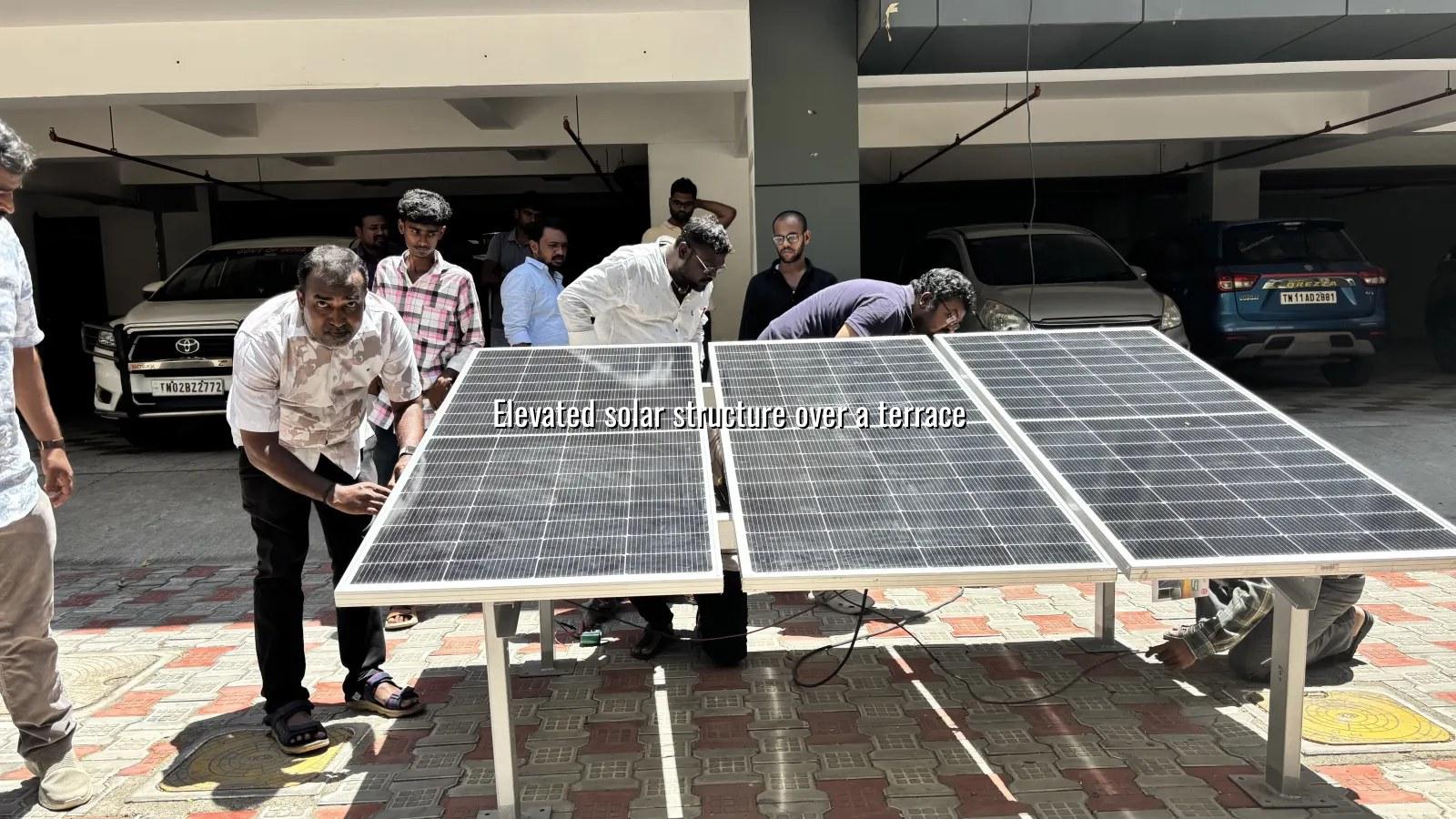
An elevated solar structure over a terrace is not just a taller stand. It changes how sunlight reaches the panels, how air moves under them, and how the roof stays usable for daily life. For many homes in Nagercoil, the roof is already carrying a lot: tanks, antenna lines, drying space and access paths all end up sharing the same slab.
We start by looking at the EB connection, your 60-day units, the terrace shape and the shade pattern through the day. That matters here because Kanyakumari District gets strong sun for much of the year, but it also sees wind exposure and monsoon periods that expose weak fixing points. A good raised frame should suit the roof, not fight it.
Roof fit
How we decide if a terrace really needs elevation
Every roof behaves a little differently. The right answer depends on slab condition, parapet height, shadow lines and where the cable route can run without trouble.
When a low mount is enough
If the terrace is open, level and clear of obstructions, a low mounting layout can work very well. It keeps the panel row close to the roof and may be simpler to install on some RCC slabs. But when the roof has tank stands, uneven patches or places where a person still needs to walk, a raised frame gives more breathing room.
When elevation becomes the smarter option
We usually lean toward elevation when the home has hard shade from another block, a parapet that steals early or late sunlight, or a roof line that needs better cleaning access. On some houses near Marthandam and Thuckalay, the roof set-up is fine but the surrounding buildings create shade angles that only show up when we stand on site. That is the sort of thing a phone call will never tell us.
| Mounting choice | Best use | What we check first | Common roof concern |
|---|---|---|---|
| Low terrace mount | Simple open RCC roof | Slab level and basic shade | Limited access around the array |
| Raised terrace frame | Rooftops needing airflow and clearance | Wind load and fixing points | Parapet shadow and service space |
| Tilted elevated structure | Homes needing better sunlight angle | Roof orientation and available space | Water drainage and cable sealing |
| Custom mixed layout | Roofs with tanks, vents and walk paths | All obstructions on the terrace | Patchy usable area |
- Contact us first. Share your EB connection details and a photo of the roof if you have one. That gives us a starting point before we visit.
- Free site survey. We measure the terrace, check the slab condition, look at shade and note where the structure can sit without blocking access.
- System design and quotation. We match the solar capacity to your actual units, roof space and budget, then suggest whether a raised frame is needed.
- Installation. Our team fixes the structure, mounts the panels and keeps the cable route neat. On coastal-facing properties in Colachel or Manavalakurichi, we pay extra attention to hardware and connections.
- EB and documentation. If the project involves subsidy or approval steps, we guide the paperwork and keep the process moving.
- Commissioning and after-sales support. Once the system is live, we test it properly and then stay available for support, cleaning checks and troubleshooting.
Practical checks
What matters most on a terrace in this district
In our experience, terrace solar problems usually begin with small design shortcuts. A frame that is a little too low can trap dirt and make cleaning awkward. A frame that is too tall without the right fixing can feel exposed when the wind picks up. And a cable run that looks neat on day one can become a problem later if the sealing around the slab is weak.
Kanyakumari District gives us strong sunlight, yes, but also the kind of weather that tests a roof. The south-west and north-east monsoon periods can push rainwater into corners, so drainage matters. Salt-laden air near the coast is another reason we choose hardware and connection practices carefully, especially for roofs not far from the sea side of the district.
The roof details we keep asking about
We want to know if the house has an RCC flat roof, a sloped tiled roof or a sheet roof section, because the support method changes. A terrace with enough open space is simpler, but many homes are not that simple. Some have a parapet wall, some have a water tank line, and some have a solar water heater already in place, which means the new structure needs its own clear path.
- Check whether the terrace surface is level enough for a steady frame.
- Keep access open for cleaning and future inspection.
- Plan the cable path so rainwater does not sit around the entry points.
- Use structure height only where it solves a real shading or access issue.
- Think about wind direction and roof edges before final fixing.
System fit
Matching the structure to the solar system itself
We do not start with a standard rack and force the house to accept it. The structure should fit the system type, the roof and the way you use the building.
On-grid homes
Many terrace installations in Nagercoil are on-grid systems because the home still has a regular EB connection and the goal is to reduce purchased units during the day. Here, the elevated frame helps if the roof has uneven clearance or a parapet shadow that would cut into morning or evening generation. For shops and office buildings in Thuckalay or Karungal, a similar logic applies when the terrace carries more equipment than just the panels.
Off-grid and battery-backed layouts
If the roof is part of an off-grid or hybrid setup, the support structure has to work with the battery and inverter placement too. The cable route, shade behavior and maintenance access all matter. We see this often in places where the roof supports more than one function, like a home that also stores water tanks or a small business that wants backup power after hours.
When a customer asks for an elevated solar structure over a terrace, the real question is usually about fit. Will it shade the right parts of the roof, stay stable in wind and still leave room for the family to use the terrace? That is the sort of planning we do before anyone starts drilling holes.
We also consider maintenance later on. A design that looks fine on the first day can become annoying if the cleaner cannot reach the back row, or if the inverter cable is buried behind a support. A little more thought at the design stage saves a lot of back-and-forth later, and it keeps the system easier to live with.
How we work
What happens after you call JRS SunTech Energy
We begin with a site survey and a plain conversation about what you want the roof to do. If the terrace in Kottar can take a direct layout, we say so. If it needs a raised frame because of shade, access or roof clutter, we say that too. No drama. Just the honest version.
Our team handles solar panels, inverters from brands like Sungrow, Deye, Growatt, Polycab and Eastman, plus the related hardware and cabling. For families who want backup power, we also work with home and office inverter options, lead-acid batteries and lithium batteries. If the roof needs a solar water heater or pumping system instead of a plain panel array, we can point you in the right direction.
How JRS SunTech Energy Can Help
If you want a raised terrace structure that is safe, tidy and suited to your roof, we can inspect the site, suggest the right mounting layout and guide the installation from start to finish. We also help with EB documentation and subsidy-related steps where they apply, and we provide one year of free service support after installation with continued technical help afterwards. Call us at 9787775999 or email jrssuntechenergy@gmail.com.
Frequently asked
Common questions about elevated terrace solar structures
It is a raised mounting frame that lifts the solar panels above the terrace surface instead of keeping them flat and low. We use it when the roof needs more airflow, better access for cleaning, or a fixing layout that suits the slab and parapet. On some homes in Vadasery and Ozhuginasery, the terrace shape itself makes a raised frame the cleaner option.
Not always, but it can be the right choice when the roof has water tank lines, uneven slabs, shade from nearby structures, or drainage paths that you do not want blocked. A good design keeps the panels clear of standing water and leaves space for maintenance. We look at the actual roof, not just the bill or the kW target.
Often yes, but the structure has to be checked properly. In Kanyakumari District, wind exposure and salt-laden air matter, so the mounting hardware, cable routing and fasteners need more care than a simple generic install. For homes closer to the coast, we pay extra attention to corrosion points and how the frame is anchored.
The approval path depends on the system type, the EB connection, and the rooftop solar programme steps, so we guide you through the documentation rather than asking you to figure it out alone. If your home is in Kottar, Nagercoil, we can check what papers are needed and what needs to be submitted for the installation process.
Mostly normal cleaning and inspection, but the frame should be checked for loose hardware, cable wear and dirt build-up around the supports. After monsoon periods, we also look at drainage and the cable sealing points. A quick service visit can prevent the kind of small issue that turns into a bigger one later.
A well planned elevated solar structure over a terrace should feel natural once it is in place. The roof still works, the panels sit safely, and the system does its job without getting in the way of daily life. That is the standard we try to meet on every site we visit across Nagercoil and the rest of Kanyakumari District.
If you want the roof checked properly before you decide, we are ready to help. JRS SunTech Energy will look at the actual site, not guess from a distance, and we will tell you straight what the roof needs.
Hurry up!Subsidy ends 31 March 2027 · 134 days left
Next step
Need help deciding on a terrace frame?
Send us a few roof photos, your EB connection details and the location of the house, and we will tell you whether a raised structure makes sense.
- Your electricity requirement and 60-day EB bill
- Property type — home, shop, office, farm or institution
- Backup requirement and available roof space
Related: Solar Solutions · Subsidy Guidance · Contact
Free site survey · Kottar, Nagercoil