Solar guide
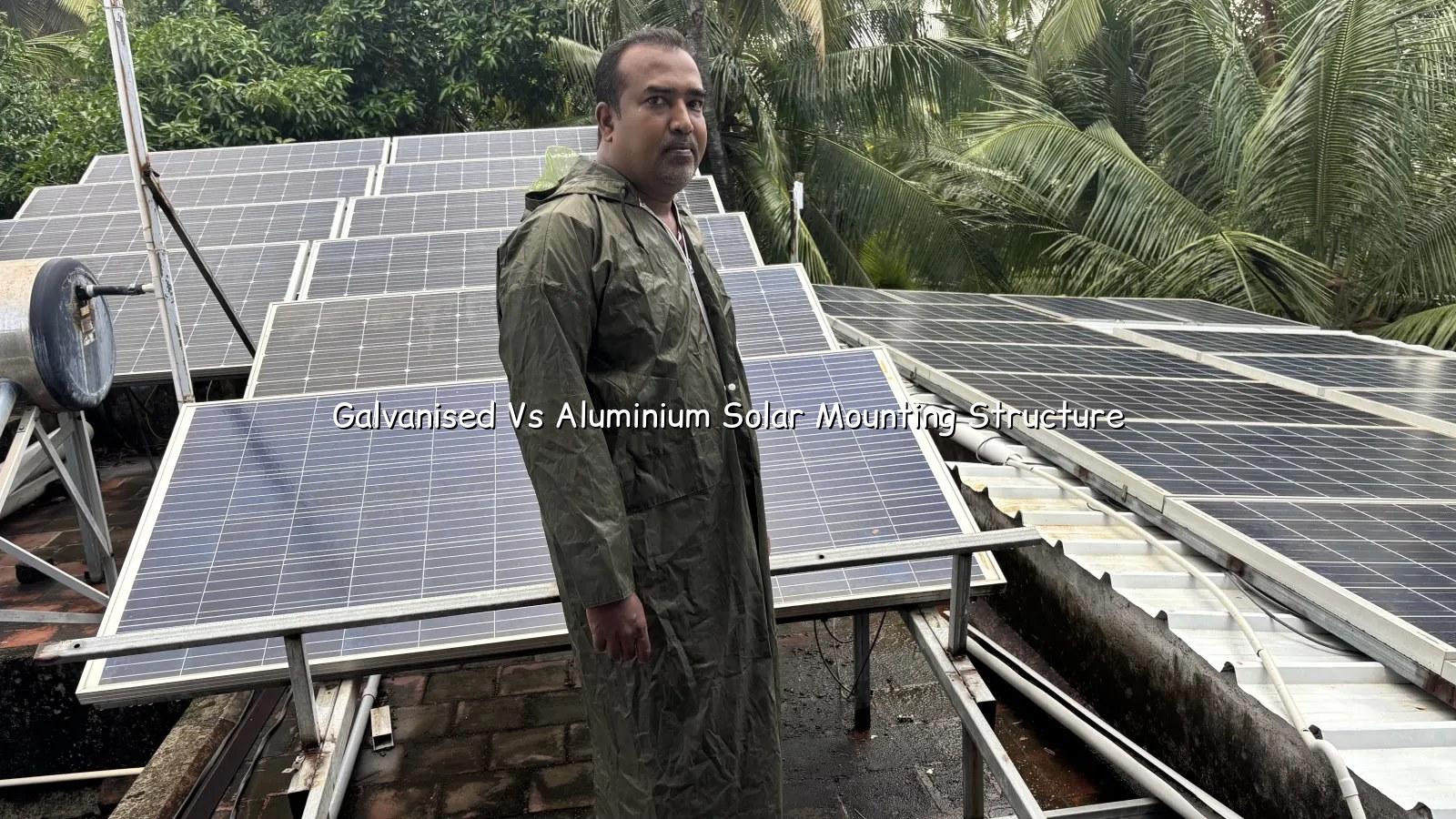
Galvanised Vs Aluminium Solar Mounting Structure
A practical comparison for roofs, ground frames and coastal sites in Kanyakumari District, based on real installation conditions and what actually matters after the metal is fixed down.
Mounting comparison
What this choice really means on your roof
The galvanised vs aluminium solar mounting structure question sounds simple until you stand on a real roof and look at the wind, the cable path, the parapet height and the way the sheets or tiles are fixed. That is when the differences start to matter. One material is not a magic answer for every site, and we say that plainly because it saves people from buying the wrong frame first and thinking about the roof later.
In Kanyakumari District, the roof decides a lot. You get strong year-round sun, but you also get wind, sea air in some pockets and monsoon rain that tests drainage and sealing. A structure near the coast behaves differently from one inland, and a house in Kottar is not the same as a shop in Thuckalay or a workshop around Marthandam. The point here is to help you compare the two metals in a way that matches your site, not a brochure.
Material basics
Galvanised vs aluminium solar mounting structure: how to compare them fairly
The right comparison is not just about the raw metal. It is about roof type, exposure, hardware, service access and the way the frame is assembled on site. We see a lot of confusion when people compare only the material name and ignore the rest.
Galvanised steel and what it brings to a project
Galvanised steel is usually chosen because it gives a strong, familiar frame for rooftop and ground-mounted solar work. The zinc coating helps protect the steel beneath it, and that makes it a practical option for many homes and businesses. On a RCC roof in Nagercoil, for example, it can be a sensible choice when the design is neat, the coating is handled properly and the hardware is selected with the site in mind.
It also handles load well, which is why some installers prefer it where the panel layout needs a firm feel and the roof geometry is a little awkward. But the coating and exposed joints need attention. If water collects around a fixing or cable hole and nobody seals it well, the trouble starts there, not in the showroom sample.
Aluminium frames and where they fit best
Aluminium is light, clean to handle and naturally resistant to corrosion, so people often ask for it when they live close to the sea or want a neat-looking frame. That lightness can help on some roofs, especially where lifting and handling are an issue. For a sloped roof in Rajakkamangalam or a coastal home around Muttom, it can be a strong option when the design and fastening method are correct.
But lighter does not mean automatic victory. You still need the right profile thickness, the right clamps and a proper anchoring method, and the installer has to know how the pieces work together. In our work, the small details are where a good roof job either stays quiet or turns into repeated service calls.
- Check the roof first. RCC flat roof, tiled roof or sheet roof each needs a different mounting approach.
- Look at the wind load. Aralvaimozhi and the surrounding windier stretches need stronger thought around structure, anchoring and spacing.
- Review corrosion risk. Salt air near the shore changes what kind of hardware and fasteners make sense.
- Plan the cable route. The cleanest structure is the one that lets wires stay protected through monsoon and summer heat.
- Think about service access. You want a frame that can be inspected, cleaned and tightened without turning every visit into a roof puzzle.
Quick comparison
A simple reference table for site planning
This is not a lab test. It is a field-level comparison that helps you see which material tends to suit which kind of project. The final call still depends on your roof, the build quality and the environment around the building.
| Point | Galvanised steel | Aluminium |
|---|---|---|
| Typical feel on site | Heavier and firm, with a solid installed feel | Lighter, easier to handle during positioning |
| Corrosion behaviour | Depends heavily on coating quality and joint protection | Generally good resistance, especially where air is salty |
| Best fit by location | Useful for many inland or mixed-condition roofs | Often preferred where coastal exposure is a bigger concern |
| Service access | Can be strong and dependable when installed neatly | Often chosen where a lighter, tidy frame is preferred |
| What matters most | Coating, fastening, sealing and workmanship | Profile quality, fastening and proper design for the roof |
Local conditions
Why the same frame can behave differently from roof to roof
A solar structure does not live in isolation. It sits in wind, sun, dust, rain and sometimes salt-laden air, and those things change how the metal ages. In a coastal pocket like Colachel, for instance, exposed connections need more attention than they would inland. In a wind-sensitive area near Boothapandi, the mounting angle and anchoring are just as important as the material itself.
Roof type matters too. RCC flat roofs let us work differently from sloped tiled roofs or sheet roofs, and the mounting choice follows that reality. On a shed roof in Karungal, we may think hard about uplift and fixing points. On a house roof in Kottar, the more common challenge is often simply making the layout neat without blocking access to the tank, parapet or service path.
What people usually miss when comparing metals
They compare the name of the material and skip the rest. But the frame is only one part of the job. If the clamps are wrong, if the roof penetrations are sealed badly, or if the cable is left exposed where rainwater can sit, even a good structure can become a maintenance headache. We we can tell you honestly when the issue is the structure and when it is something simpler, like an installation detail that needs correction.
That is why our surveys start with actual measurements and roof conditions instead of a standard package. We look at the EB connection, the route of the DC and AC cables, the shape of the roof and the likely service access. Then we recommend a structure that suits the site, not the other way around.
How we compare it
The way we decide between galvanised and aluminium
If you ask us to compare the two for your property, we do not jump straight to a material name. We look at the site in order, because that is the only way the answer makes sense.
Step-by-step site check
First, we see how the roof is built and whether the surface is sound enough for the panel load and fixing method. Then we check shading, orientation and the place where the structure will sit through the day. After that, we consider the local conditions around the building, including sea air, wind and drainage. Only then do we compare the two metals in a useful way.
A home in Suchindram may not need the same setup as a shop in Marthandam, and that is normal. The same goes for a farm-related site near Thovalai where a different mounting angle or frame type could suit the work better. The decision belongs to the site, not a generic spec sheet.
Things we tell customers to check
- Whether the roof has any leak history or loose sections.
- How close the site is to the coast and open wind.
- Whether the structure will need frequent service access.
- If the cable route can stay protected and tidy.
- How easy it will be to inspect clamps, joints and connections later.
How JRS SunTech Energy Can Help
We help you choose a structure that fits the roof, not just the catalogue
At JRS SunTech Energy, we compare galvanised and aluminium mounting options after we see the actual site, because the wrong frame choice can cause trouble later even if the panels are fine. We handle the survey, system design, installation, EB and documentation work, and we keep the explanation plain so you know why one option suits your roof better than another.
If your building is in Nagercoil, Kottar or a nearby town in the district, send us your roof details and EB connection information and we will guide you honestly. For homes, shops, offices, agricultural sites and mixed-use buildings, we aim for a structure that stays easy to maintain and matches local conditions.
Contact JRS SunTech Energy, Door No. 227, First Floor, Cape Road, St. Xavier's Church Junction, Kottar, Nagercoil, Kanyakumari District, Tamil Nadu - 629002. Phone: 9787775999, WhatsApp: 9787775999, Email: jrssuntechenergy@gmail.com.
Frequently asked
Questions people ask before they choose a mounting structure
For many homes, the answer depends on the roof type, wind exposure and the way the panels sit on the structure. A RCC flat roof close to Nagercoil may suit one choice, while a sloped tiled roof in a windier pocket may need a different approach. We look at the site first, then tell you what fits the roof and the budget.
Not always. Aluminium resists corrosion well, but the final result also depends on design, fasteners, cable management and how the joints are put together. In coastal parts of the district, the wrong fixing detail can cause trouble even if the main frame metal looks good.
Yes, they can be used when the coating, hardware and installation practice are right for the site. On a roof near Colachel or Muttom, we pay extra attention to salt-laden air, joint points and exposed hardware because those are the places that usually age first.
Check roof condition, shading, wind exposure, the slope of the roof and whether the system is on a house, shop or farm site. It also helps to know where the EB connection is, how cables will run and whether drainage around the roof stays clear during monsoon.
Yes, and this is where people get surprised. A structure that is easier to inspect, tighten and clean usually saves time during service visits, especially on buildings in Kottar, Vadasery and other busy residential areas where access around the roof is tight.
We start with the site survey, roof measurements and the system size you need, then we compare the mounting options against wind, corrosion risk and the way your building is built. After that, we explain the trade-offs in plain words so you can choose with confidence.
Practical notes
Other things that change the answer
A solar structure lives with heat every day, so thermal movement matters. Long exposed runs, roof expansion and the way fasteners are tightened all affect how tidy the installation stays over time. That is one reason a structure that looks identical in a quotation may not behave the same after installation.
In monsoon periods, drainage and cable sealing become more noticeable. Water that sits around the base of a fixing or runs along a badly routed cable can create future service work. For that reason, we prefer simple layouts that a technician can inspect without disturbing the whole array.
On the utility side, we still have to think about the EB connection and the way the system is tied in, especially for on-grid setups. It is not just a metal frame question. The structure, inverter placement and cable route should all make sense together, and that is why a proper site survey beats guesswork every time.
Hurry up!Subsidy ends 31 March 2027 · 134 days left
Next step
Not sure which structure fits your roof?
Send us your roof type, photos of the site and a quick note about your EB connection, and we will compare the options for you clearly.
- Your electricity requirement and 60-day EB bill
- Property type — home, shop, office, farm or institution
- Backup requirement and available roof space
Related: Solar Solutions · Solar Maintenance · Contact
Free site survey · Kottar, Nagercoil