Commercial solar guide
Solar for Shops Offices and Showrooms
A practical guide for business owners who want to trim daytime EB use, use the roof properly and keep the installation neat for staff and customers.
Commercial rooftop power
Solar for shops offices and showrooms that fits real business use
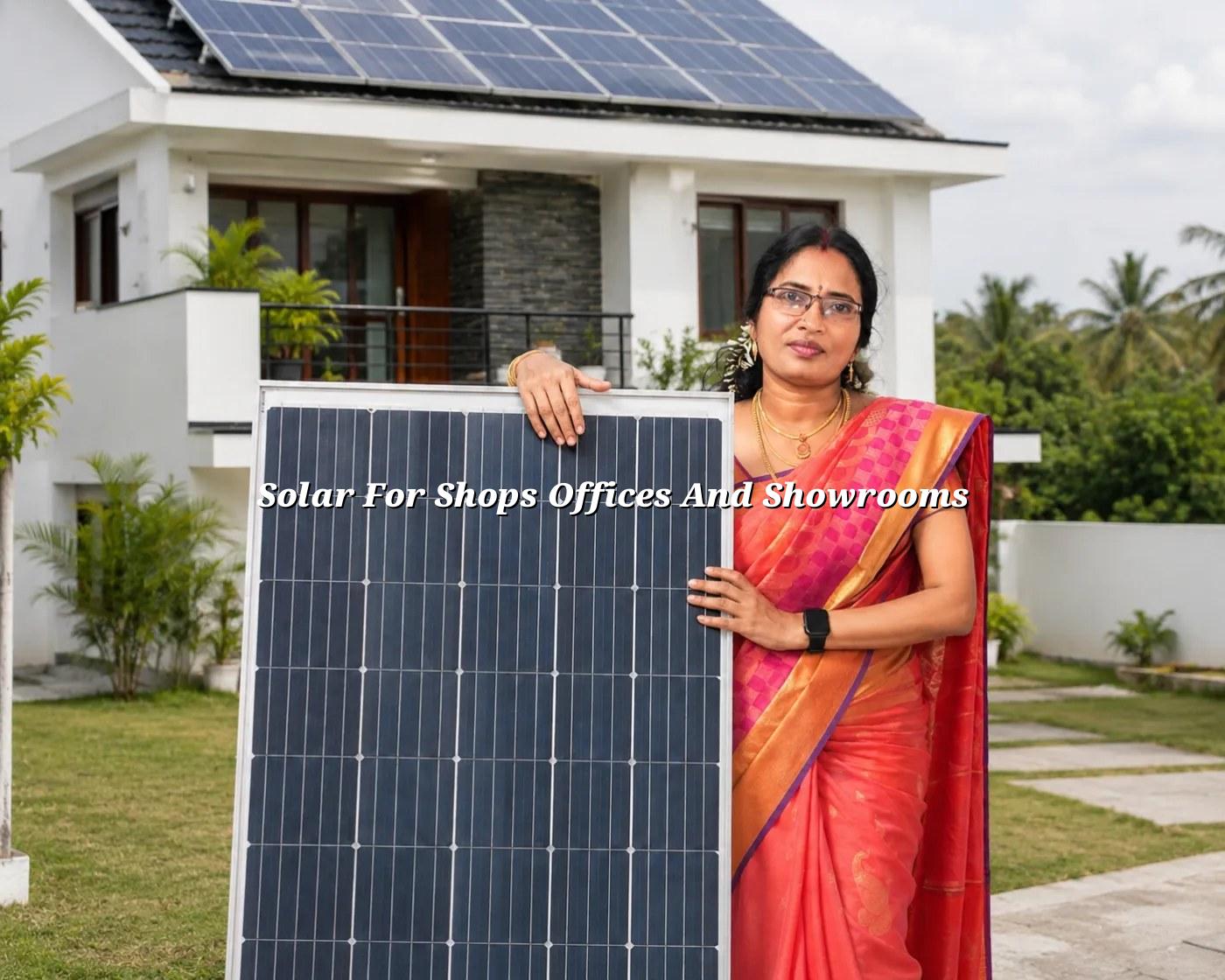
Solar for shops offices and showrooms works best when the system follows the actual working day, not a guessed average. If your lights, billing counter, computers, fans or display units stay on through business hours, rooftop solar can take a real load off the EB connection while the building still feels tidy and customer-friendly.
At JRS SunTech Energy, we do not begin with a standard package. We start with your EB bill, the roof structure, the usable shade-free area and how the building is used from opening time to closing time. In Kanyakumari District that matters a lot because roof types vary widely, from RCC flat slabs in Nagercoil to tiled and sheet roofs in town properties, and the wind across open stretches is not gentle either.
How the sizing works
What we check before a business rooftop system is designed
Commercial rooftops are not all the same. A retail shop in Marthandam, an office in Thuckalay and a roadside showroom near Kuzhithurai can all use solar very differently, even when the buildings look alike from the road.
Load pattern first, then panel count
We look at when the building uses power. A shop that opens in the morning and stays busy till evening often has a useful daytime load, so more of the solar generation gets used on site. An office may have computers, printers, lights and air-conditioning in different blocks of time, while a showroom may see heavier demand around display lighting and customer hours. That difference changes the system design, and it changes the inverter choice too.
The EB bill tells us the units over the billing cycle, but the bill alone does not tell the whole story. We still ask who is on site, when machines run, and whether the building needs backup for billing, billing software, lighting or CCTV. If the roof has patchy shade from a nearby block or a water tank, we factor that in before any quotation leaves our desk. Sometimes the second visit is where the real picture shows up.
Roof, wind and the local environment
Kanyakumari District gets strong sunshine through the year, which is the first reason solar makes sense here. But the district also sees wind exposure in open stretches and salty air in coastal pockets, so mounting structure quality and electrical termination work cannot be casual. On a shop near Colachel or a showroom around Manavalakurichi, we pay extra attention to corrosion resistance and how the array is anchored.
Monsoon periods matter too. During the south-west and north-east monsoon stretches, drainage paths, cable sealing and roof access become part of the design conversation. A neat installation is easier to maintain later, and maintenance matters because business owners do not want a messy rooftop that becomes another job for staff.
- Check the EB bill. We review the units, the connection type and the 60-day pattern before recommending anything.
- Measure the usable roof area. Tanks, lifts, parapets, ducts and shade lines all reduce the real space available.
- Match the system to the business hours. A daytime user gets a different design from a site that needs evening backup.
- Choose the right structure. RCC, tiled and sheet roofs need different mounting and cable routing methods.
- Plan the paperwork early. EB documentation and any subsidy-related steps are simpler when we prepare them in order.
Compare the options
Which commercial solar setup suits your building?
Most business owners ask for one simple answer. The truth is a little more practical. The right setup depends on whether you need grid support, battery backup, or both.
| Setup | Best for | What it does | Typical site note |
|---|---|---|---|
| On-grid solar | Shops, offices and showrooms with regular EB supply | Generates power during the day and reduces units drawn from the grid | Works well where daytime use is steady and the roof is clear |
| Hybrid solar | Businesses that want grid support with battery backup | Combines solar, grid and batteries in one system | Useful where billing, computers or display systems cannot stop suddenly |
| Off-grid solar | Remote sites or special commercial locations | Runs with solar and batteries without depending on the grid | Needs careful load planning because storage is part of the design |
| Solar with maintenance support | Existing systems that need inspection or troubleshooting | Checks performance, inverter condition and electrical connections | Helpful for older rooftops and systems installed by other companies |
If you run a shop in Kottar or an office in Vadasery, the solar path is often simpler than people expect. We look at the real roof, the actual working hours and the connection on site, then we suggest the route that makes sense. No forced package. No standard answer for every building. And if the site is cramped, we say so plainly.
Before the work starts
Practical things business owners should ask before they sign off
A commercial rooftop project goes better when the first discussion is honest. We usually ask whether the building is owned or rented, whether the roof is strong enough for the proposed structure, and whether there are any planned changes to the frontage. That last one gets missed often, especially in showrooms where signboards and canopy layouts change over time.
Another point is cable routing. In an office or shop, cables should not cut across customer areas or create awkward trips for staff. We also think about how the building will be cleaned later, because dusty rooftops and neglected panels reduce the value of the system far quicker than most people expect. If the inverter ends up in a hot back room, we discuss that too before the work begins.
Useful checks from the start
- Ask how the array will be fixed to the roof, especially on sheet roofs and older RCC slabs.
- Confirm where the inverter will sit, because heat and dust matter in back rooms and service corridors.
- Look at the shade from nearby buildings, water tanks and parapet walls at different times of day.
- Keep the EB paperwork ready so commissioning does not stall at the end.
- Plan for access during cleaning and inspection, because rooftop systems need normal care.
In some locations, the roof is clear but the parking shade or signboard line causes trouble. In others, there is enough roof area but the building owner wants the array hidden from the front. We work through those constraints one by one. That is usually the difference between a tidy installation and one that becomes a headache for the staff later.
Typical process
How the project moves from first call to commissioning
Most people want to know what happens after they contact us. The steps are straightforward, but each one matters because a commercial site has more moving parts than a normal house roof.
The seven stages we follow
First, you contact us with the building details and the EB bill. Then we do a free site survey and check the roof, shade, structure and electrical arrangement. After that, we prepare the system design and quotation, followed by installation, EB and documentation work, commissioning and after-sales support. That process is how we keep the job ordered instead of letting paperwork and site work collide at the end.
The document stage is often where commercial jobs slow down if someone waits too long to gather details. We keep it moving by asking for the things we need early. In our experience, that is the part that saves the most time for owners in places like Nagercoil and nearby town properties, because it prevents repeated trips for the same paper.
What the site visit actually looks at
The survey is not just a quick look from the stairwell. We check the roof surface, the access path, the likely panel layout, the inverter location, cable runs and where maintenance will happen later. If the building uses an RCC flat roof, a sloped tiled roof or a sheet roof, the mounting approach changes. If there is dust from a busy road or sea air near the coast, that changes the detail work too.
We also talk to the person who runs the building day to day. They usually know where the load spikes happen, where staff need light, and which back rooms are off limits during business hours. That practical information helps us avoid surprises during installation.
What to expect after installation
Support, checks and the kind of follow-up that matters
Once the system is commissioned, the work does not disappear. Panels need normal cleaning, the inverter needs watching, and the electrical connections should be checked from time to time. That is even more true for commercial properties because the roof sees more heat, more dust and more foot traffic than people realise.
We provide one year of free service support after installation, and after that we still offer technical help as needed. Specific service terms vary by product, manufacturer warranty and installation, so we talk through that clearly before the job starts. If there is a fault, we want to know about it early, because small issues are easier to deal with than a stalled business day.
Common follow-up calls we get
Sometimes the issue is simple, like a dirty panel line or a loose connection after weather and vibration. Other times the business has added a new load, such as extra lighting or equipment, and the system needs a check to make sure it still suits the site. A good follow-up call is not a nuisance. It is part of keeping the roof working the way it should.
Our approach
How JRS SunTech Energy Can Help
We handle commercial solar in a way that keeps the site usable while the work is going on. Our team surveys the building, designs the system to fit the roof and load, installs the equipment, handles the EB and documentation steps, then commissions the system and stays available after installation. In places like Nagercoil and Thuckalay, that practical handling saves time because the details are sorted before they turn into problems.
You also get one year of free service support after installation, with continued technical help afterwards as needed. If you want us to look at a shop, office or showroom, send us the EB bill and a few roof photos and we’ll tell you the honest next step. We’d rather tell you what fits than push something that doesn’t.
JRS SunTech Energy
Proprietor: Mr. Pious Antony Rajan
Phone: +919787775999
WhatsApp: Chat on WhatsApp
Email: jrssuntechenergy@gmail.com
Address: Door No. 227, First Floor, Cape Road, St. Xavier's Church Junction, Kottar, Nagercoil, Kanyakumari District, Tamil Nadu - 629002
Frequently asked
Questions business owners ask about commercial solar
Yes, that is often the best case for rooftop solar. Shops, offices and showrooms usually use power while the sun is available, so the system can cover real daytime demand instead of sitting there waiting. We still size it from the EB bill, roof area and the way the building is actually used.
The latest EB bill helps most, along with rough roof access details and a sense of where the heavy equipment sits inside the building. If the roof is RCC, tiled or sheeted, that changes the mounting and cable route. A shop in Marthandam and an office in Thuckalay may look similar from the street, but the working pattern inside usually tells us more.
Usually yes, but we need to see the usable space properly. Signboards, tanks, parapet walls and nearby buildings all create shade or get in the way of panel placement. We try to keep the array tidy and practical because that roof is part of your building, not a separate field.
We guide customers through the EB process, the paperwork and the general subsidy procedure where it applies. The exact steps depend on the site and the programme rules at that time, so we do not guess. If you want current details, we point you to the right documents and the subsidy page.
We start with the actual load pattern and what the business needs during the day. A shop with steady daytime use often suits on-grid solar, while a place that needs backup for billing counters, computers or display lights may need hybrid solar. If the supply is unreliable, we look at batteries and the inverter setup as well.
Yes, but the hardware choice matters more close to the coast. In places like Colachel or Manavalakurichi, salt-laden air can affect mounting parts and terminations, so we pay more attention to the frame material, cable sealing and connection points. The system still needs regular cleaning and inspection because dust and sea air both leave a mark.
A lot of owners ask the same thing in different ways: will the system fit, will it look neat, and will it be easy to deal with later. Those are the right questions. If you run a showroom in Padmanabhapuram or a busy office near Kuzhithurai, the answer depends on your roof, your load and how much spare space you really have.
We do not sell one standard system. We look at the actual site and tell you what works there, not what sounds good in a brochure.
Ready to begin?
Start with the roof and the EB bill
If your business uses power through the day, solar can be a sensible way to make that load work better for you. The important part is to match the system to the roof, the building use and the local conditions instead of forcing a generic design onto the site.
Send us the EB bill, a few roof photos and the address, and we’ll take it from there. A quick survey can tell you more than a long phone call ever will.
Hurry up!Subsidy ends 31 March 2027 · 134 days left
Next step
Want solar on your shop, office or showroom?
Send us your EB bill, roof photos and the building location. We will check the site and suggest the right system type for your business.
- Your electricity requirement and 60-day EB bill
- Property type — home, shop, office, farm or institution
- Backup requirement and available roof space
Related: Solar Solutions · Subsidy Guidance · Contact
Free site survey · Kottar, Nagercoil