Farm pumping guide
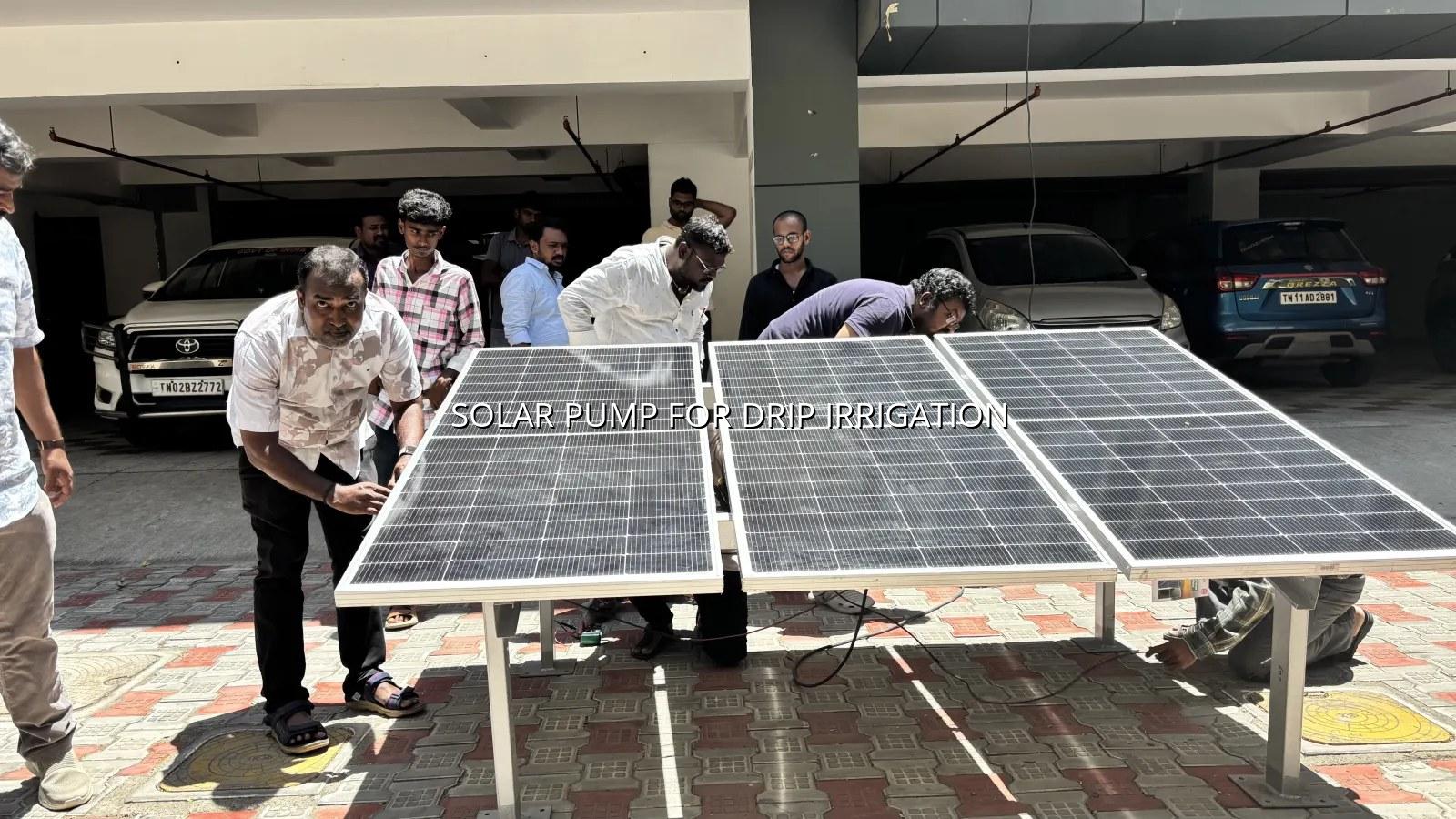
Solar Pump for Drip Irrigation
A proper farm pump starts with the water source, the drip layout and the way the field is actually used.
Solar pumping on farms
Set up a solar pump that suits drip irrigation, not just the label
A solar pump for drip irrigation has to do a very specific job. It must lift water from the source, hold enough pressure for the emitters and match the way the farm is watered during the day. We start from the field, not from the brochure, because a system that looks neat on paper can still disappoint once the lines are laid and the water starts moving.
In Kanyakumari District, the sunlight is strong for much of the year, which is why farm pumping works well here. But the district also has wind, salt-laden air in coastal pockets and monsoon spells that test cables, joints and mounting structures. A site near Rajakkamangalam does not call for the same hardware as a more sheltered farm at Aralvaimozhi, and a plot in Munchirai can need extra care with exposed fittings. That is the kind of local difference we keep in mind from the first visit.
How the system works
What the field needs before the pump is chosen
Drip irrigation is precise work. Water has to reach the crop in the right amount, through the right pipework and at the right pressure, or the first rows and the last rows behave very differently. We look at the water source, the crop spacing, the drip zones and the daily watering habit before we speak about pump capacity.
Source first, pump second
The source tells us a lot. A borewell, open well or sump does not behave in the same way, and each one changes the lifting head and the pipe route. On a farm near Boothapandi the structure and cable route may be straightforward, while an exposed site closer to Colachel can make us think harder about corrosion, bracket strength and how the electrical joints are sealed. We check those things before anything is ordered.
Drip lines need even pressure
A drip system is only as good as its pressure balance. If the pump is too weak, the far end of the line suffers. If the filters are awkward to clean, the system gets messy fast. We look at the pump curve, the diameter of the pipes, the filter position and the number of zones that run together so the water reaches the crop evenly instead of only looking good near the source.
| What we check | What it tells us | Why it matters |
|---|---|---|
| Water source type | Borewell, open well or sump | Changes the lifting head and the way the pump has to work through the day |
| Pipe and lateral layout | Row length, number of zones, emitter pattern | Shows how much pressure loss may happen before water reaches the last row |
| Site conditions | Wind exposure, shade, salt air, drainage | Affects mounting choice, cable sealing and how the system holds up through monsoon months |
| Field access | Filter cleaning point, valve access, controller location | Makes day-to-day maintenance easier and avoids awkward repairs later |
| Crop pattern | Spacing, watering hours, seasonal need | Helps us avoid recommending a system that is too small or more than the field needs |
- Confirm the source. We check the borewell or well depth, the water level and the route from source to field before we speak about pump size.
- Study the drip network. We want to know how many lines run at one time, where the filters sit and how the zones are grouped.
- Match the pump to sunlight. The pump and solar array need to work together during usable daylight, not only in a perfect test moment.
- Plan for weather. Cable sealing, earthing, structure strength and drainage matter a lot during the south-west and north-east monsoon periods.
- Check the farthest row. If water reaches the last emitters cleanly, the rest of the system usually tells a better story too.
Local factors
Why farms in this district need a careful design
Kanyakumari District has strong sunshine, but that does not mean every farm can take the same setup. Along coastal stretches, salt-laden air can attack fittings and frames, so we look closely at the mounting hardware and the connection points. In places such as Muttom or Manavalakurichi, that matters more than people expect, especially when the system sits in the open and gets wind as well as spray.
Drip irrigation is a good match for farms that need controlled watering, but control only works if the parts are treated as a single system. A filter that is hard to reach, a pipe run with too many bends or a pump chosen by habit can create uneven watering. And once a field starts showing dry patches at the far end, the problem is usually deeper than the motor itself.
What we ask before we size the pump
We ask about the crop, the watering schedule, the current EB connection if there is one, and whether you want direct daytime pumping or storage in a tank before the drip line. We also ask what the land itself is like, because agricultural plots, RCC platforms and sheet-covered utility areas all bring different mounting and routing choices. A simple answer from the owner often saves a second visit, though we still prefer to see the site ourselves.
- How deep is the source, and does the level change through the season?
- How long are the drip lines, and how many zones run together?
- Is the farm exposed to wind, dust or salt air?
- Will the pump feed the drip system directly or fill a tank first?
- Who will clean the filters, and how easy is it to reach them?
Our process
How we handle a farm pump job from first call to support
We keep the process simple because farm work is already busy enough.
The first call is usually short and practical. You tell us the crop, the water source and the problem you want solved, then we arrange a free site survey. That visit matters, because the field often shows things a phone call leaves out, like the route of the pipe, the shade from nearby trees or the way the land falls after rain.
The steps we follow
- Contact us. Share the crop type, field location and water source.
- Free site survey. We visit the farm, check the source and study the drip layout.
- System design and quotation. We suggest a suitable capacity and explain the parts plainly.
- Installation. Our team fits the solar array, pump and related electrical work.
- EB and documentation. We guide the paperwork that applies to the installation and connection side.
- Commissioning. We test the flow, check pressure and make sure the system is behaving as planned.
- After-sales support. You get one year of free service support after installation, with continued technical help afterwards.
Farmers around Thovalai and Pechiparai sometimes ask whether an existing drip line can simply be tied to a solar pump and left alone. Sometimes that works, sometimes it does not. The answer depends on the pipe size, the head, the filter condition and how the lines were laid in the first place. We would rather give you a straight answer than pretend every field can be rescued with one quick change.
Things that change the result
Small site details make a bigger difference than most people expect
The installation area matters. On agricultural land, the mounting has to stay steady through wind and rain, and the cables need to be routed where they will not get damaged by tools, water flow or regular movement around the plot. If a site has a mixed setup with a tank, a pump house and a line feeding the drip network, we plan the layout so the system is easy to understand later.
Maintenance matters too. Dust builds up, filters need cleaning and connections deserve a second look after the first stretch of use. That is especially true on farms near the coast or on open sites that get a lot of dry air. When we inspect a job, we we can usually tell very quickly whether the problem is in the pump, the water source, the wiring or the pipework, because those four parts tend to show their own signs.
Common signs the setup needs attention
If the first rows are wet and the far rows are struggling, pressure may be dropping somewhere along the line. If the pump runs but the water output feels weak, the source or the electrical side may need checking. If the filters are dirty again and again, the field may need a better cleaning routine or a different arrangement. These are the sorts of things that turn into repeated call-backs if nobody looks at the whole picture.
How JRS SunTech Energy Can Help
Talk to us if you want the farm checked properly
We supply solar panels, solar water pumps, inverters, batteries and complete hybrid solar power system packages, and we install with the site conditions in mind. For a solar pump for drip irrigation, we begin with the water source, the actual drip layout and the EB connection if one is part of the setup, then recommend what suits the field. If a pump is already in place and not performing well, we can inspect it and say honestly whether repair, adjustment or replacement is the better path.
JRS SunTech Energy is based at Door No. 227, First Floor, Cape Road, St. Xavier's Church Junction, Kottar, Nagercoil, Kanyakumari District, Tamil Nadu - 629002. Call 9787775999 or email jrssuntechenergy@gmail.com, and we will help you take the next step without overcomplicating it.
Frequently asked
Questions farmers ask before choosing a solar pump
We usually need the water source type, the depth or level, the crop, the drip zone layout and a rough idea of how long the lines run. Photos help too, because a field near Kottar with a short pipe route can need a very different setup from a wider plot with longer runs and more pressure loss.
Yes, many farms can run that way. The pump and solar array are matched to the water lift and the drip demand, then we check filtration, pressure and the route the water takes before we say it is a good fit.
Usually no. Most farm pumping is planned for daylight hours, so a battery bank is often not part of the design. If a site needs water at odd times or the work pattern is unusual, we review the whole setup first and keep the answer practical.
The pump is only one part of the story. We also look at filters, flushing points, electrical protection and how easy it will be to clean the system, especially on dusty farm land around Thovalai or on exposed plots closer to Pechiparai.
Yes, we can inspect it. We look at the electrical side, the water source, the pump condition, the pipe run and the drip demand, then tell you whether it needs repair, adjustment or replacement.
We guide customers through the documentation that applies to their case and explain the steps clearly. We do not make promises we cannot verify, but we do help you understand what needs to be collected and how the installation record should be kept.
Hurry up!Subsidy ends 31 March 2027 · 134 days left
Next step
Need a solar pump checked before the next watering cycle?
Send us the crop type, water source details and a few photos of the field, and we will tell you what kind of solar pumping setup makes sense.
- Your electricity requirement and 60-day EB bill
- Property type — home, shop, office, farm or institution
- Backup requirement and available roof space
Related: Solar Water Pumps · Off-Grid Solar · Contact
Free site survey · Kottar, Nagercoil