Solar solutions
Solar for Hotels and Lodges
A practical way to reduce EB units, steady backup power and shape the system around your roof, your load and your guest profile.
Hotel solar planning
Start with the way the property actually runs
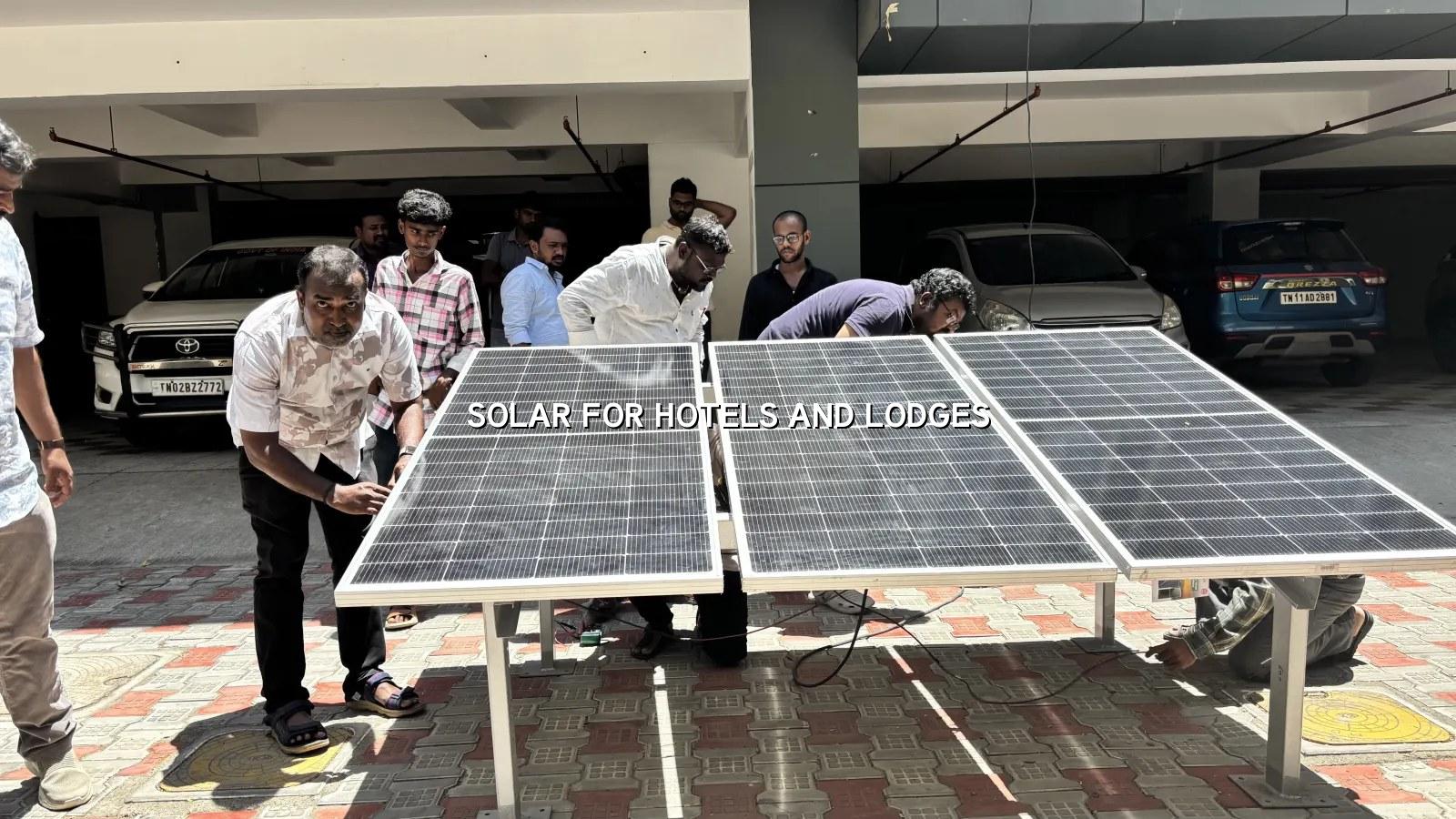
Solar for hotels and lodges works best when the design follows the real load pattern, not a generic brochure idea. A small lodge with a few AC rooms, a reception desk and a kitchen behaves very differently from a larger stay property with laundry, pumps and common-area lighting. We look at the EB bill, roof area, shading, wiring condition and the backup setup already in place before we suggest a system.
That first check matters in Kanyakumari District more than many owners expect. Around Nagercoil, roofs are often RCC slabs, but we still see tiled sections, sheet sheds over kitchens and service blocks that affect layout. Near Colachel or Manavalakurichi, wind and salt air add another layer, so the mounting structure and cable route need proper thought right from the beginning.
What owners ask first
The practical questions behind the project
Most hotel owners do not begin with a technical spec. They ask about daytime EB units, how to keep rooms comfortable when guests are using air-conditioning and hot water, and how much roof space can be used without disturbing the building. Those are the right questions.
Load is the real starting point
A hotel or lodge uses power in layers. Lights, fans, pumps, kitchen equipment, laundry and cooling do not all pull the same way through the day. So when we plan solar for hotels and lodges, we check which loads run in daylight and which loads need backup support later. That tells us whether an on-grid system, a hybrid system or a different mix fits best.
If a property in Nagercoil has regular daytime occupancy, solar can help with the units that the EB meter would otherwise record during the 60-day billing cycle. If the lodge is closer to the coast and the supply is a bit shaky, we may recommend a hybrid setup so the building has battery support for selected loads. We do not force one model on every site.
Roof shape and weather change the design
The roof decides more than people think. RCC flat roofs are common, but sloped tiled roofs and light sheet roofs need different support and fixing details. In Kottar, where many business properties are tight on space, we often have to work around water tanks, stair headrooms and shadow from nearby walls. That is fine, but it needs careful surveying.
The district gets strong sun through the year, yet the monsoon months still matter. Drainage, cable sealing and the location of the inverter box become important when rainwater runs hard across a roof or a service ledge. If those details are rushed, you get maintenance trouble later and no one wants that on a property with guests checking in every day.
| Property type | Main daytime load | Planning focus | Best fit often starts with |
|---|---|---|---|
| Small lodge with a few rooms | Fans, lights, limited AC, reception equipment | Roof space, shading, compact wiring routes | On-grid solar or a small hybrid layout |
| Mid-size hotel | Guest rooms, pumps, kitchen, laundry | Load grouping and backup priority | On-grid solar with selected backup support |
| Coastal stay property | Rooms, lighting, water handling, common areas | Salt exposure, mounting hardware, connection sealing | Durable mounting and careful electrical design |
| Property with unstable supply | Critical lights, reception, selected room loads | Backup continuity and battery logic | Hybrid solar |
- Check the actual 60-day EB usage, not just one busy month.
- Keep the inverter location dry, shaded and easy to service.
- Use mounting hardware that suits wind exposure and roof material.
- Leave enough access space for cleaning, inspection and cable checks.
- Plan for kitchens, pumps and laundry separately from guest room loads.
How the work moves
The steps we follow on a hotel or lodge site
There is a steady pattern to the work. It changes with the building, but not by much. The aim is to keep the property running while the system is being planned and installed.
- We start with the bill and the roof. The EB consumption tells us the load pattern, and the roof tells us what can physically fit without crowding vents or service areas.
- We check shade and structure. Nearby walls, water tanks, parapets and trees matter. On a lodge in Thuckalay or a hotel block in Marthandam, even one bad shadow can change the layout.
- We match the system type to the property. Some sites only need grid-tied solar to offset units, while others need hybrid support for selected backup loads.
- We prepare the installation and EB documentation. That includes the practical paperwork, the wiring checks and the coordination needed before commissioning.
- We commission, explain and support. Once the system is live, we show your staff what to watch, how to read the basic indicators and when to call us if something seems off.
Owners usually like the fact that we do not rush this part. A hotel roof is not a showroom roof, and a guest property cannot afford random cable runs or messy maintenance access. We keep the install neat because staff have to live with it every day, not just look at it on handover day.
On-grid, hybrid or something else?
For many hotels and lodges, on-grid solar is the first sensible option because it helps reduce units during the day without changing the way the building already operates. If you have a backup problem too, hybrid solar can be a better fit since it combines solar, grid and battery support. For remote sites or properties with weaker supply, we may point you toward another route after the survey. The honest answer depends on the load and the building, not on a sales script.
Local conditions
What changes in Kanyakumari District
The district has strong year-round sunshine, which is the obvious plus. But there are local details that matter just as much. In Midalam or Rajakkamangalam, salt-laden air can be rough on exposed metal over time, so the mounting structure and connection finishing deserve more care than a casual rooftop job would get. In Aralvaimozhi, wind exposure is a real design factor, so the structure has to be anchored properly and laid out with common sense.
For hotels, the main worry is usually not whether solar can work. It can. The question is whether the system has been designed for a roof that gets regular foot traffic, a kitchen that runs hot, a pump room that nobody wants to revisit twice, and monsoon water paths that should never be ignored. We see this in Nagercoil more than people imagine. A neat system ages well; a rushed one starts calling for help early.
Maintenance is part of the plan
A hotel or lodge should treat maintenance as ordinary property care. Panels need visual checks, mounting points need inspection, and the inverter area should stay clear. If you notice lower output or a fault message, we can inspect the system and tell you whether it needs a repair, a replacement or simply a clean. That straight answer matters when the front desk is already busy.
How JRS SunTech Energy Can Help
We size the system around your building, not a guess
JRS SunTech Energy plans solar for hotels and lodges by starting with your EB usage, roof condition and guest load pattern. We handle site survey, system design, installation, EB documentation, commissioning and the follow-up support that comes after handover. If your property is in Kottar, Nagercoil or anywhere else in Kanyakumari District, we can visit, inspect and recommend a practical route.
We also guide eligible customers through the applicable government solar programme paperwork and subsidy procedure, and we keep the advice plain. If you want a direct answer about what fits your property, send the EB details and a few photos of the roof. We’ll take it from there.
Contact JRS SunTech Energy, Door No. 227, First Floor, Cape Road, St. Xavier's Church Junction, Kottar, Nagercoil, Kanyakumari District, Tamil Nadu - 629002. Phone: +91 97877 75999, Email: jrssuntechenergy@gmail.com.
Frequently asked
Questions hotel owners ask us about solar
We begin with the EB bill, the room mix, kitchen use, laundry, pumps and whether AC runs in the day. That gives a real picture of demand, so we can suggest a size that suits the property instead of forcing one standard package on it.
Yes, and that is a common setup. Solar can reduce the units you draw from TNEB while your existing backup covers the loads you want to keep alive, so the two systems can work together without conflict.
Usually yes, but the fixing method changes with the roof. We check the structure, roof slope, drainage and cable route, and on a coastal property near Colachel or Manavalakurichi we pay extra attention to exposed metal and connection sealing.
We guide the full sequence from site survey and system design to installation, EB documentation and commissioning. If the project comes under the applicable government solar programme, we also help with the subsidy-related paperwork and the documents that the process asks for.
It can if the design is careless, which is why we plan for drainage, cable sealing and inverter location from the start. Kanyakumari District has both south-west and north-east monsoon periods, so those details are part of the job, not an afterthought.
Yes. We handle solar inspection, performance checking, inverter troubleshooting, electrical connection inspection and preventive maintenance for other systems too. If the issue is dirt, a loose connection or a part that has failed, we will say so plainly.
Hurry up!Subsidy ends 31 March 2027 · 134 days left
Next step
Planning solar for a hotel or lodge?
Send us your EB bill, roof photos and a short note on the loads you want to support. We’ll check the site and tell you what fits the property.
- Your electricity requirement and 60-day EB bill
- Property type — home, shop, office, farm or institution
- Backup requirement and available roof space
Related: Solar Solutions · Products · Contact