Solar guide
What Is Net Metering in Solar
A plain-English look at how rooftop solar interacts with your EB connection, what the meter is doing, and what customers in Kottar or nearby areas should check before they apply.
Net metering basics
What the meter is actually doing on a solar roof
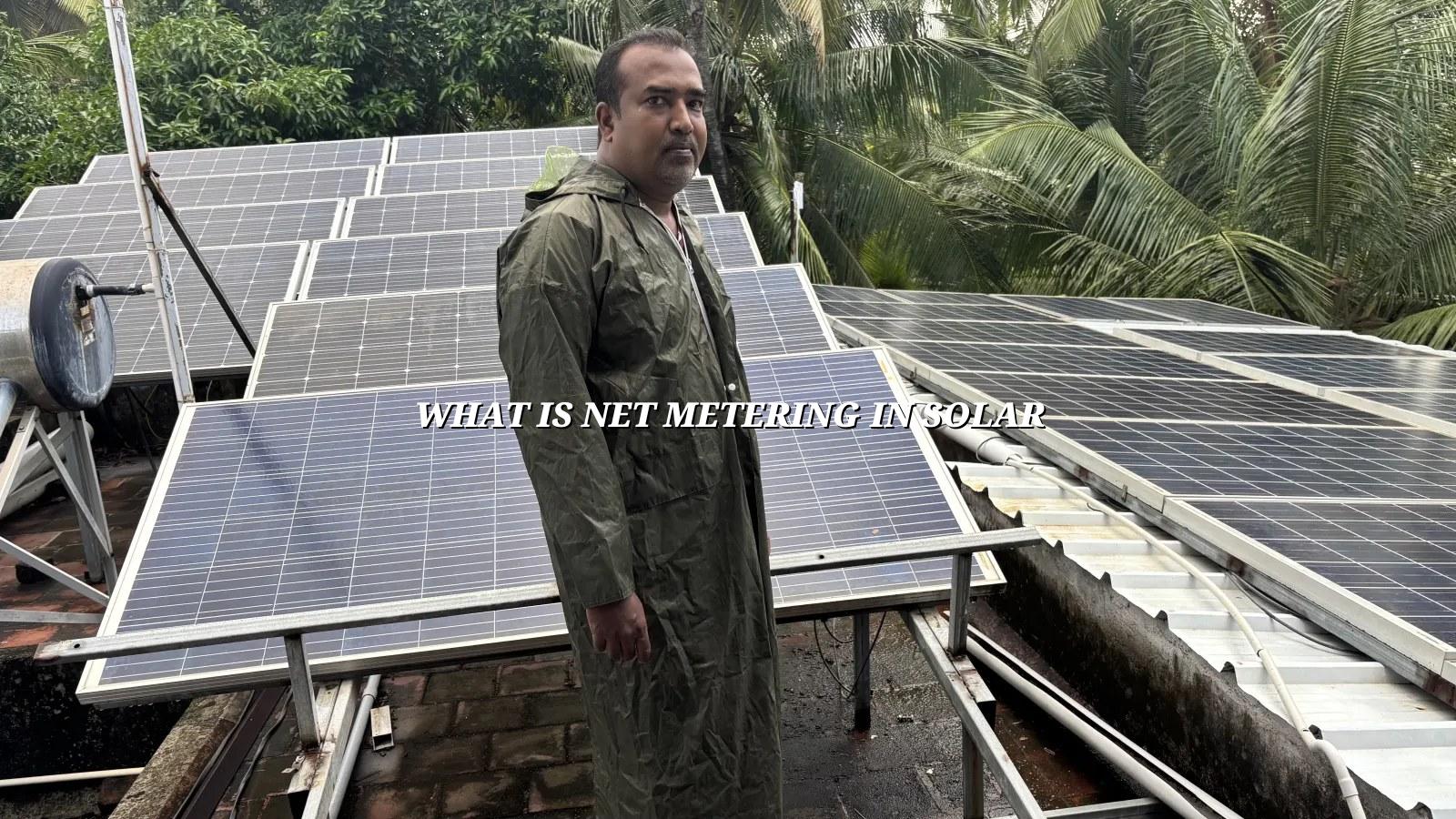
What is net metering in solar? It is the billing arrangement that lets a rooftop solar system and the EB connection work together instead of fighting each other. During the day, your panels supply the site first, and any extra power can flow to the grid when the system is set up for that process.
People ask this question for a simple reason: they want to know where the units go. In our work around Kottar and nearby homes, the confusion usually starts with the meter display, because the meter can seem to show movement in both directions and that looks odd the first time you see it. Once you understand import, export and the billing cycle, it becomes a lot easier to read what is happening.
How it works
Why rooftop solar and the EB connection are connected
Net metering is not a separate solar product. It is the way the system is tied to your regular EB connection so the site can use solar power first and interact with the grid when there is extra generation. For a home in Vadasery or a shop in Marthandam, that means the solar system has to match the roof, the load pattern and the utility process, not just the panel count.
Import, export and the bill
When your site uses more power than the panels are making, the balance comes from the grid. That is import. When the panels make more than the site needs at that moment, the extra can flow out to the grid if the setup is approved for net metering. The bill then reflects those movements through the applicable utility method, so you are not treating every solar unit as if it sat in a separate box.
Why the bill cycle matters
Most people think only about sunny hours. The real picture is a 60-day EB cycle, different usage patterns, and the fact that a family may cook, pump water, run a fridge and charge devices at different times. In a house with daytime occupancy, the solar system behaves one way; in a shop that shuts by evening, it behaves another. That is why we never sell one standard system.
- Contact us first. We start by asking about your EB connection, roof type and what the site actually uses through the day.
- Do the free site survey. We check roof space, shade, orientation, structure and whether the mounting plan needs to suit wind exposure or coastal conditions.
- Prepare the design and quotation. The system size is matched to the real roof and load, not a guess from a brochure.
- Install and connect. Our team handles the electrical and mounting work, then we move into EB and documentation steps.
- Commission and support. After the system is live, we explain the operation, share the basic dos and donts, and give one year of free service support after installation.
Local checks
What changes in Kanyakumari District
The district has strong year-round sunshine, but the roof still has to be treated honestly. Near the coast at Colachel or Manavalakurichi, salt-laden air makes hardware choice and connection quality more important than people expect. In inland homes at Boothapandi, the bigger issue may be wind loading on the mounting structure rather than corrosion alone.
Monsoon weather also changes the way we plan the work. During the south-west and north-east monsoon periods, drainage around the roof, cable sealing and safe routing matter more than they do on a dry day, and a tiled roof needs a different fix from a flat RCC slab. We see the same pattern again and again: a neat-looking roof is not always a simple roof.
Where the question usually comes from
People in Nagercoil ask about net metering when the EB bill feels higher than expected and they want to know whether the roof can help. Shop owners in Marthandam usually ask a different version of the same question because their load pattern is daytime-heavy and they want to know how much of that can be matched by solar. The answer depends on the site, not a slogan.
What to check
The practical things before you apply
A good net metering setup starts with a few checks that sound boring but save trouble later. We look at the roof, the connection, the usage pattern and the physical space for the inverter and protection gear. If any of those are weak, the process gets messy.
Roof and structure
RCC flat roofs are common in residential streets around Kottar, while sloped tiled roofs and sheet roofs need more careful mounting choices. The structure has to handle wind, the cable path has to stay neat, and the fixings should suit the material instead of forcing one method everywhere. A tidy roof job looks simple after it is done; before that, there is a lot to think about.
Connection and load
We check the EB connection details and the units consumed over the billing cycle because that helps us size the system sensibly. A home with a few fans and lights is not the same as a business with refrigeration or a pump. If your site uses power in bursts, the design should reflect that pattern instead of pretending every hour is identical.
- Check whether the roof gets shade from nearby walls, water tanks or tall trees.
- Keep cable runs short and sealed where they pass through the roof or wall.
- Use mounting hardware that suits coastal air when the site is near the shore.
- Match the inverter and protection devices to the actual load pattern.
- Keep the EB account and ownership papers ready before paperwork starts.
Reference table
A simple comparison of common rooftop situations
This table is not a rulebook. It is the kind of quick reference we use when explaining why one site suits net metering neatly and another needs a little more thought. Real roofs do not all behave the same.
| Site type | What we check first | Net metering note |
|---|---|---|
| Homes with flat RCC roofs | Roof space, shade and mounting points | Usually the easiest to plan if the EB connection and load details are ready |
| Sloped tiled roofs | Fixing method, tile condition and cable path | Can work well, but the structure and waterproofing need careful handling |
| Sheet roofs | Frame strength, fastening and wind exposure | Good planning matters because vibration and heat movement need attention |
| Shops and offices | Daytime use, inverter location and load pattern | Often suitable because many units are used when the sun is out |
| Farm and pump sites | Supply pattern, structure and weather exposure | May need a different solar arrangement if the site is remote or not a normal grid load |
Our view
What people usually misunderstand about net metering
The first misunderstanding is that every extra solar unit disappears into a private bank somewhere. It does not. The grid is part of the arrangement, and the meter arrangement is what lets the utility account for it. The second misunderstanding is that a bigger system is always better. It isnt. If the roof is small, shaded or awkward, the better answer may be a more modest design that fits the site well.
Another common issue is expecting the paperwork to be the same everywhere. Around Kanyakumari District, the sequence and supporting documents can vary with the utility process, so we stay close to the current steps and help the customer prepare the file properly. That is one of the reasons people call us before they buy panels on their own.
If you are comparing solar options
Net metering is most closely tied to on-grid solar, because that is the setup where the grid and rooftop system work together. If your site has unreliable supply, a different answer may be better, and for that we look at hybrid solar or off-grid solar after the survey. The right choice depends on what your roof and your connection can actually support.
How JRS SunTech Energy Can Help
We handle the solar side and the paperwork side together
We start from your EB bill, roof space and site conditions, then recommend a system that makes sense for the place you actually have. Our team handles the free site survey, the design, installation, EB documentation and the follow-up support, and we guide customers through the subsidy paperwork where applicable without promising figures we cant stand behind. If your roof is in Kottar or you're looking at a site in nearby streets of Nagercoil, we'll tell you plainly whether net metering is a good fit.
Contact JRS SunTech Energy, Door No. 227, First Floor, Cape Road, St. Xavier's Church Junction, Kottar, Nagercoil, Kanyakumari District, Tamil Nadu - 629002. Phone: 9787775999. Email: jrssuntechenergy@gmail.com.
Frequently asked
Questions we hear about net metering
Net metering lets a rooftop solar system send extra daytime power to the EB grid while your home or business still uses the regular connection. The exported units and imported units are adjusted through the billing process, so your meter has a record of both flows.
Your solar panels generate power first for the site load, and any extra goes through the grid connection when the system is configured for net metering. In a place like Nagercoil, we also look at roof direction, shade, and the EB paperwork before recommending the right setup.
Usually, yes, the utility needs the right metering arrangement to measure import and export properly. The exact meter and approval process depends on the EB connection and the current local process, so we guide customers through that step instead of guessing.
No, not every site is a neat fit. The roof condition, sanctioned load, type of EB connection and the utility process all matter, and some sites are better suited for a different solar arrangement after a proper survey.
People normally need connection details, identity and ownership papers, system particulars and the paperwork tied to the utility process. We help customers organise the documents and keep the submission sequence clear, which saves a lot of back-and-forth.
It varies with the site, the utility process and how complete the documents are. A clean file moves faster than a half-finished one, so we start with the survey and then prepare the paperwork in the right order.
Hurry up!Subsidy ends 31 March 2027 · 134 days left
Next step
Thinking about net metering for your roof?
Send us your EB details, roof photos and a short note about your usage, and we will tell you what fits before you spend anything on equipment.
- Your electricity requirement and 60-day EB bill
- Property type — home, shop, office, farm or institution
- Backup requirement and available roof space
Related: Solar Solutions · Subsidy Guidance · Contact
Free site survey · Kottar, Nagercoil