Solar guide
What Is Inverter Clipping in Solar
A plain explanation of clipping, what it looks like on a rooftop system, and how we judge it on homes and businesses around Kottar and nearby areas.
Solar basics
What you're really seeing when inverter clipping shows up
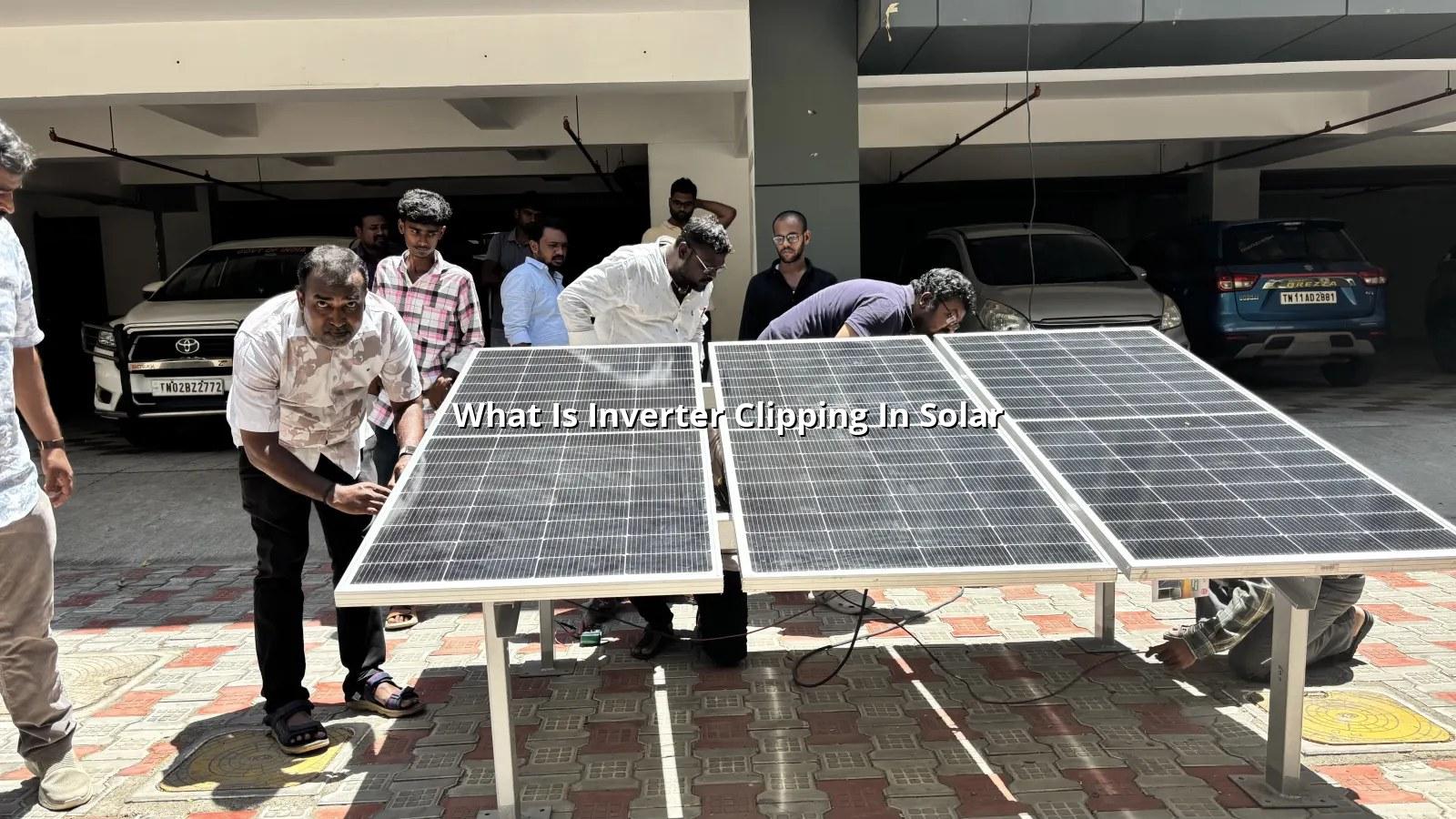
What is inverter clipping in solar? It is the point where the panels are ready to send more power, but the inverter caps the output because that is its rated limit. On paper that can sound like lost energy, yet on a real rooftop it is often just how the system was shaped to fit the roof, the budget and the daytime load. The graph flattens because the inverter can only process so much AC at one time.
We hear about this most often from homeowners who watch the app every day and from shop owners who only notice the curve once the noon sun gets strong. The worry is usually the same: “Am I wasting too much?” Sometimes the answer is yes, sometimes the flat top is only a small slice of the strongest sun hours. To judge it properly, we have to look at the array size, inverter size, roof layout and how the EB units are actually used over the 60-day billing cycle.
How clipping starts
Why the inverter caps output even when the panels can do more
The idea is simple once you separate the parts. Solar panels make DC power, the inverter turns it into AC power for the home or for export through the EB connection, and the inverter can only convert up to its own limit at any instant. When the panels are producing more than that, the top of the curve is trimmed.
What the flat top means
A flat top on the generation graph does not mean the panels suddenly stopped working. It usually means the sun is strong, the array is doing its job and the inverter has reached the ceiling it was built for. On clear days in Kanyakumari District, that can happen for a stretch around late morning or noon, before heat and angle start changing the output later in the day.
When the design is deliberate
A lot of rooftop systems are planned with a panel array that is slightly larger than the inverter rating. That can make sense when the roof is limited and the customer wants better output during ordinary daylight hours instead of chasing only the strongest noon reading. On an RCC terrace in Nagercoil or a sloped tiled roof near Suchindram, that kind of match can be the practical choice.
| Situation | What you may observe | What it usually points to | What we check first |
|---|---|---|---|
| Very bright midday sun | Graph reaches a ceiling and stays there for a while | The inverter has hit its AC limit | Array size, inverter rating and roof orientation |
| Hot roof surface | Afternoon output falls even when the sky stays clear | Heat is reducing panel output along with any clipping | Ventilation gap, mounting height and spacing |
| Shade from nearby structures | One string behaves differently at certain times | Shading is affecting the array before the inverter ceiling is reached | Trees, parapets, water tanks and neighbouring walls |
| Larger panel array | Strong morning curve, trimmed noon peak | Design was aimed at stronger total day energy | EB usage pattern, roof space and inverter model |
- Clipping is about the AC side being capped, not the panels failing all of a sudden.
- It shows up most clearly on clear, strong-sun days with very little cloud cover.
- Heat, dust and cable loss can make the graph look worse than it really is.
- Good design looks at the full day, not just the top noon reading.
- On coastal roofs, salt-laden air can matter for mounting hardware and electrical connections too.
Local roof realities
How roof type, sunshine and wind change the way clipping looks here
This district gets strong sunshine through most of the year, so clipping can show up more often than people expect when they first open the monitoring app. The real question is not whether the curve ever flattens, but whether the system was matched to the roof and the EB connection in a sensible way. In Kottar, a small home load may make a little clipping harmless, while a shop in Thuckalay using power later in the day might need a different balance.
Wind matters too. Parts of Kanyakumari District are known for wind exposure, and that changes the mounting structure, rail spacing and fastener choice. On a tiled roof in Boothapandi or a more open site near Aralvaimozhi, we pay attention to uplift, edge loading and cable fixing before we talk about output graphs. A system that looks good on the app but is badly fixed to the roof is the wrong system.
What the monsoon months change
During the south-west and north-east monsoon periods, the sky pattern changes and generation can move around from month to month. That does not change the meaning of clipping, but it does change how the daily curve behaves and why drainage and cable sealing matter. If water sits near junction points or the roof slope carries runoff badly, the app data can mislead you. We see that on older sheet roofs and on jobs where the roof details were not checked carefully enough.
Our checking method
How we decide whether clipping is fine or needs a fix
We never guess from one screenshot. Inverter clipping in solar only makes sense when you see the roof, the inverter, the EB load and the way the family or business actually uses power.
- Start with the EB bill: We look at the 60-day consumption pattern and ask when the main loads run, because a system that clips a little at noon can still be a good fit if the home uses more power earlier or later in the day.
- Check the roof and shade: Then we inspect the roof type, orientation, parapets and any shade from tanks, trees or nearby walls. A roof in Ramanputhur does not behave the same way as one on a wider open terrace.
- Review the inverter rating: We match the panel array against the inverter's AC limit and see whether the clipping is expected or excessive. Sometimes the inverter is simply too small for the way the panels were laid out.
- Look at the live graph: If the app is available, we study the curve across a few clean-sky days, not one random afternoon. That helps separate clipping from temperature drop or a wiring issue.
- Decide the next step: If the system is healthy, we leave it alone. If the pattern points to a poor match, we discuss the practical fix, which may be a design change, string revision or a different inverter approach.
What to watch
Signs that the clipping is normal, and signs it deserves a closer look
A little clipping by itself is not a red flag. In fact, some owners prefer to use roof space more fully and accept a trimmed noon peak because the rest of the day looks strong. The worry starts when the graph looks flat for too long, the inverter runs hotter than expected, or the output feels much lower than the system size would suggest.
Pay attention to how the inverter behaves on clear days. If the display keeps hitting the same ceiling while the sun is still intense, the cap is likely real. If the output changes in odd steps, or one string behaves differently from the others, then the issue may be shade, a loose connector or a configuration problem. We would check that before talking about replacement.
Practical things to check first
Clean panels, neat cable management and a stable mounting structure all help the system tell the truth. Dust does build up here, and coastal air can be hard on exposed hardware, so we often inspect both the electrical side and the physical side together. If the array was installed by another company and you are not sure whether the clipping is acceptable, we can still review it and give you a straight answer.
Quick reference
Clipping versus other common solar issues
People often mix clipping up with other things that only look similar on the app. A quick side-by-side check saves time, and it stops a small, normal design effect from being treated like a fault.
| Issue | What the graph often does | Usual cause | What we look at |
|---|---|---|---|
| Inverter clipping | Rises well, then flattens at the top | Inverter reached its AC limit | Panel-to-inverter match and daytime load pattern |
| Shading | Uneven curve or sudden dips at set times | Tree, parapet, tank or nearby building blocking sun | Roof view, string layout and time of day |
| Heat loss | Higher morning output, softer afternoon numbers | Panel temperature rising through the day | Ventilation, mounting clearance and roof colour |
| Electrical fault | Unexpected drop or repeated error behaviour | Loose connection, damaged cable or inverter issue | Wiring, connectors, error logs and site inspection |
How JRS SunTech Energy can help
We check the system the way a real rooftop needs to be checked
At JRS SunTech Energy, we start from your actual EB bill, your roof space and the way your site really works. That is the only sensible way to judge inverter clipping, because a home in Kottar and a shop in Nagercoil won't use power in the same pattern. We handle free site survey, system design, installation, EB documentation, commissioning and after-sales support, and we also guide customers through subsidy procedures where applicable.
If you want us to look at your inverter graph, your current roof setup or a new proposal, send us the details and we will tell you plainly what is happening and what should happen next. JRS SunTech Energy, Door No. 227, First Floor, Cape Road, St. Xavier's Church Junction, Kottar, Nagercoil, Kanyakumari District, Tamil Nadu - 629002. Phone: 9787775999. Email: jrssuntechenergy@gmail.com.
Frequently asked
Questions people ask about inverter clipping
Inverter clipping is what happens when the panels can produce more DC power than the inverter can convert to AC at that moment, so the extra is held back. The inverter is not failing; it is simply staying within its rated limit. You usually notice it on bright late-morning or noon hours.
Not always. A small amount can be part of the design, especially when the roof space is tight and the panel array was planned to make the best use of daylight. The real check is whether the level of clipping fits your roof, your EB usage and the inverter size.
The daily graph is the easiest clue. If the line rises strongly and then flattens at the top while the sun is still good, clipping is likely part of what you are seeing. We also look at shade, heat, wiring and the inverter app before saying that with confidence.
Not by itself. Some systems are designed with a panel array that is a little larger than the inverter rating because the owner wants better output through the day instead of chasing a higher noon peak. The concern starts when the clipping is heavy, frequent or clearly out of line with the design.
Yes, it can. RCC flat roofs often catch strong sun for a long stretch, and many homes are planned to use the available terrace space well. That is why we check roof layout, nearby shade and the EB load pattern before we call the clipping normal or not.
Not automatically. Sometimes the system is doing exactly what it was built to do and the graph just looks strange if you are seeing it for the first time. We would review the panel count, inverter rating and actual use first, then decide whether a change is really needed.
Hurry up!Subsidy ends 31 March 2027 · 134 days left
Next step
Want us to check your solar graph?
Send your inverter model, a screenshot of the daily generation graph and your EB usage details, and we will tell you whether the clipping looks normal or needs attention.
- Your electricity requirement and 60-day EB bill
- Property type — home, shop, office, farm or institution
- Backup requirement and available roof space
Related: On-Grid Solar · Solar Maintenance · Contact
Free site survey · Kottar, Nagercoil