Solar guide
Solar Net Meter Vs Gross Meter
A clear look at how the two billing styles behave on a real rooftop, and what customers in Kottar, Marthandam and Thuckalay usually want to know before they commit.
Metering basics
solar net meter vs gross meter, in the way customers actually ask it
When someone calls us about solar net meter vs gross meter, they are usually trying to answer one thing: which setup will make their EB connection behave the way they expect after rooftop solar is installed. The words sound similar, but the billing effect is not the same. That matters on a home roof in Kottar, a shop in Marthandam or a commercial building in Thuckalay because the usage pattern changes the result.
We hear the same confusion all the time. One installer says net metering, another says gross metering, and the customer is left wondering if they are choosing the wrong thing before the system even starts. The truth is simpler: the right answer depends on how your building uses units during the day, how much roof you have, and what kind of EB arrangement fits the site.
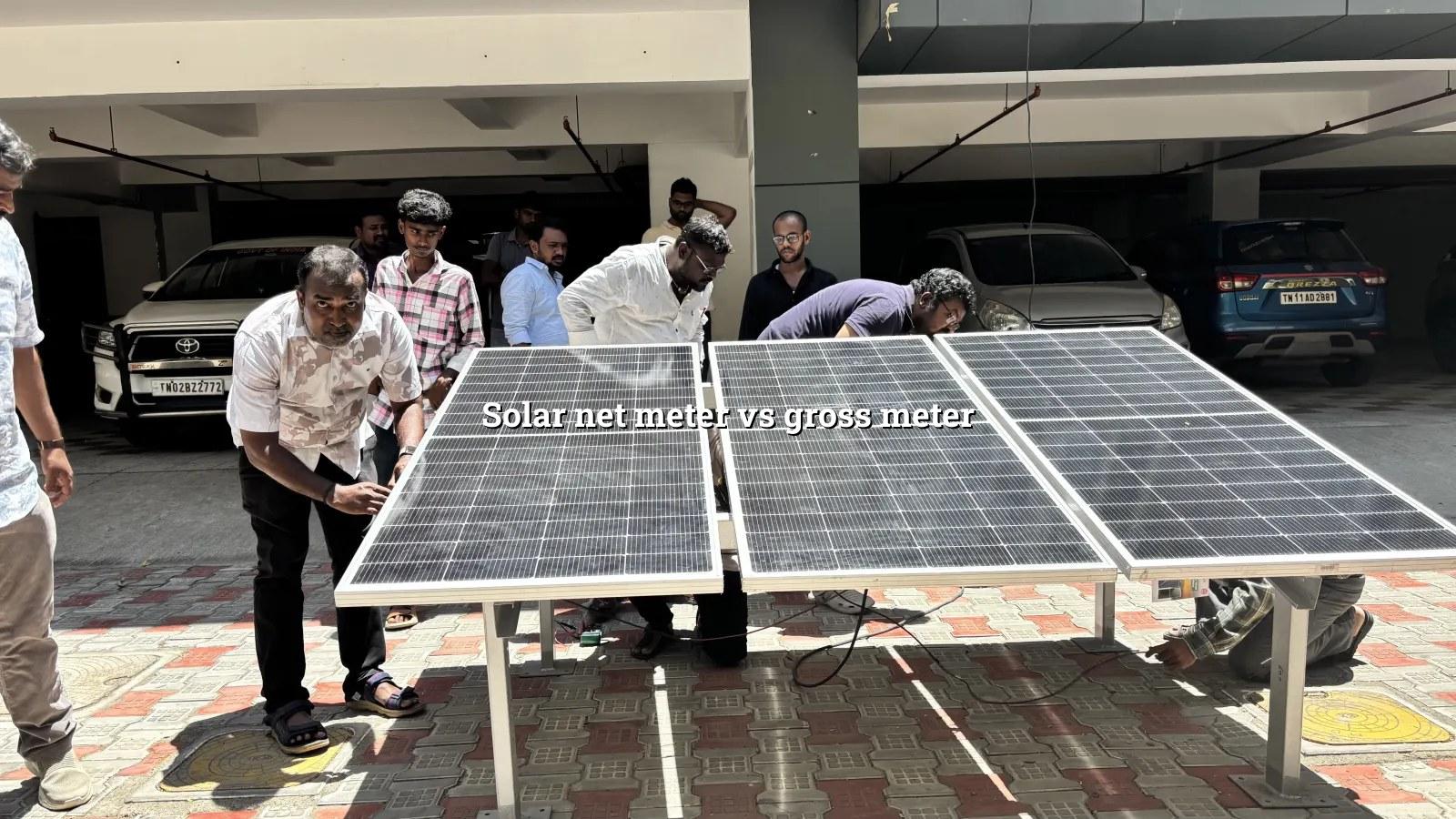
The billing picture
What changes between the two metering methods
Both options still begin the same way at our end: site survey, design, quotation, installation, EB paperwork and commissioning. The difference only shows up once the solar system starts producing power and the meter has to decide how that generation is read. For a house, shop or office, that detail can change what the customer feels on the monthly EB side.
How net metering feels day to day
Net metering is the route most people mean when they say they want solar to cut the units they buy from the EB connection. The solar power first serves the building's own loads, and the meter arrangement tracks what is used and what is sent out. If you run a small office in Kuzhithurai or work from home in Vadasery, this is often easier to understand because the system is tied to your own consumption.
It also makes planning more honest. If the building uses very little power while the sun is up, then you only get the benefit of the solar output that can actually be used on site. That is why we ask about the 60-day bill, not just the roof photo, because the bill tells us when the units are really being used.
What gross metering changes
Gross metering works differently. The generation and the consumption are treated more separately in the billing process, so the solar output does not sit in the same place as it does under net metering. That can fit certain commercial or institutional situations, but it is not the first option we suggest for a normal house roof.
People often think gross metering is just a different name for net metering. It isn't. Once we see the EB pattern, the roof area and the intended use, the difference becomes obvious. And the structure matters too, because a windy site near the coast needs a different mounting approach than an inland terrace where the wind is calmer.
| Point | Net Metering | Gross Metering |
|---|---|---|
| How the power is read | Your own use is offset first, then export is handled through the meter arrangement | Generation and consumption are treated more separately in the bill |
| Best fit | Homes, shops, offices and mixed daytime loads | Sites where the billing method is planned around separate export handling |
| What we check first | EB units, roof space, daytime use, shading and the structure | Load pattern, site design and how the generated power will be treated |
| Common local examples | RCC homes in Kottar and office roofs in Marthandam | Special cases where the connection style needs a different billing approach |
Choosing the right setup
How we decide which metering option fits your site
We don't sell one standard system. We start from your EB bill, roof space, structure, shade and budget, then work out what is actually practical. That keeps the advice grounded in the building in front of us, not in a brochure idea that sounds fine until the monsoon or the wind tells a different story.
- We review your EB bill. For most homes and small businesses, the 60-day unit pattern tells us more than a rough estimate. It shows whether your usage is mostly in daylight or mostly after sunset.
- We look at the roof and structure. RCC flat roofs are common in Kottar and Meenakshipuram, while tiled and sheet roofs need different mounting and waterproofing. In exposed places we check the frame strength carefully.
- We check shade and direction. A tank stand, parapet or tree can change the layout more than people expect. Even one shaded row can alter the way the strings are planned.
- We match the system to the billing method. If your aim is to reduce your own EB units, we usually discuss net metering first. If the site is a special commercial setup, we study the gross route too.
- We explain the paperwork before installation. You should know what documents are needed, who signs what, and what happens after commissioning. That avoids the usual last-minute rush when the EB process begins.
Why local roof conditions matter so much
In Kanyakumari District, the sun is strong for much of the year, but the wind and coastal air are real factors too. Near Colachel or Manavalakurichi, hardware choice and connection protection matter more than people think. A roof that looks fine from the lane can still need stronger mounting, neater sealing and a more careful cable path once the system is up.
Why the bill pattern matters more than a guess
A customer in Nagercoil who uses power during office hours has a different solar story from a household that only comes alive after dinner. That's why solar net meter vs gross meter can't be answered with one line. We need the actual load shape, not just a roof photo, because the meter choice has to match how the building lives.
Before you decide
Practical checks that keep the choice sensible
A good solar decision is never only about the panel brand. The metering method, roof condition and usage habits all pull together, and if one of those is ignored the system can feel wrong later. We see that often with first-time buyers who start by asking only for panel count and nothing else.
If your roof is on a sheet structure in one of the more exposed parts of the district, we also think about wind uplift and how the fixing points are protected. If the building is closer to the sea, salt-laden air can affect metal parts and terminations, so we choose hardware with that in mind. Little things like this decide whether the install still looks neat after the monsoon season.
- Check whether most of your units are used in daylight or after sunset.
- Ask how much free roof area you really have after tanks, ducts and shadows are counted.
- Make sure the mounting style suits RCC, tile or sheet roofing.
- Look at wind and salt exposure before choosing hardware.
- Ask for the EB steps in writing so you know what comes next.
For commercial rooftops in Thuckalay or Marthandam, the answer can change if the shop is busy in the day and quiet at night. In that case the system may align neatly with on-grid solar, while a battery-backed layout may suit an office that needs backup as well as generation. The point is to match the method to how the building really works, not how the brochure says it should work.
A quick way to think about it
Situations that usually point one way or the other
People tend to overcomplicate this. Once we look at the site, the answer often becomes fairly plain. The real job is to read the building properly before anyone signs a form or places equipment on the roof.
When net metering usually makes more sense
If the building uses power while the sun is out, net metering is usually the first option we discuss. That covers many homes, small offices, shops and mixed-use buildings where fans, computers, refrigeration or pumps are already running during the day. The solar output can then meet a bigger share of the site's own demand.
It is also the more familiar setup for many first-time solar buyers. They want to see their roof work against their own bill, and that is the basic idea behind the method.
When gross metering might come up
Gross metering tends to enter the discussion when the site is not a simple home roof or when the billing arrangement is being planned differently from the start. That can happen with some commercial or institutional roofs, or with projects where the usage pattern is not the usual home pattern.
We still check the same things: roof, structure, load and shade. If the site in Kuzhithurai or another town has an unusual operating pattern, we do not force a net-meter answer just because it sounds friendlier.
| Site factor | What we look at | Why it matters |
|---|---|---|
| Daytime use | Fans, lights, computers, pumps and other loads running while solar is available | Shows how much of the solar output can be used directly on site |
| Roof type | RCC, tiled or sheet roofing, plus the available space around tanks and obstructions | Decides the mounting style and cable routing |
| Local exposure | Wind, salt air and monsoon drainage | Affects hardware choice, sealing and long-term neatness |
| EB paperwork | Documents, approvals and the order of the steps | Sets the time line for commissioning and connection changeover |
How the job is handled
What happens from first call to commissioning
Our process is the same whether you are asking about a home roof or a small commercial building. We keep the steps simple, because solar only becomes stressful when the paperwork or site details are left vague. The customer should know what is happening next.
Step by step, without the fog
First we speak to you and collect the basic details. Then we visit for a free survey, check the roof, look at the EB bill and understand the load pattern. After that we design the system and send the quotation.
Once you approve the plan, installation starts. After the hardware is fitted, we handle the EB and documentation side, then move toward commissioning. This is the stage where many customers feel the process becomes clearer, because the system is in place and the remaining steps are mostly paperwork and verification.
After commissioning, we provide one year of free service support after installation, and we continue to give technical help later too. The exact service terms depend on the product, the manufacturer warranty and the installation, so we explain that plainly when we hand over the job.
A few things we always tell customers
- Don't choose the meter method before checking the actual load pattern.
- Don't ignore shade from tanks, trees or nearby walls.
- Don't assume every roof can take the same mounting arrangement.
- Don't treat paperwork as an afterthought, because the EB side matters.
- Do ask for the site survey before finalising the system.
How JRS SunTech Energy Can Help
How JRS SunTech Energy Can Help
We handle rooftop solar the way real sites need it handled: survey, design, installation, EB and documentation support, commissioning and after-sales help. If you are comparing solar net meter vs gross meter, we'll tell you honestly which route suits the building instead of pushing one answer for every roof.
Our office is at Door No. 227, First Floor, Cape Road, St. Xavier's Church Junction, Kottar, Nagercoil, Kanyakumari District, Tamil Nadu - 629002. Call 9787775999, use +919787775999 on WhatsApp, or email jrssuntechenergy@gmail.com and share your EB bill and roof details.
When the site needs a closer look
Sometimes the decision shifts after the survey. A roof in Ramanputhur with a tricky shade line, a structure near Aralvaimozhi that catches more wind, or a commercial unit with odd daytime use can change the answer once we see the site properly. That is normal, and it is better than pretending every building behaves the same.
Frequently asked
Questions customers ask about solar net meter vs gross meter
Net metering lets your solar generation work against your own consumption first, so the EB connection records import and export in a combined way. Gross metering treats the solar output more separately in the bill. If your main goal is to reduce the units you buy from the grid, net metering is the one most people ask about first.
For a typical home, the answer depends on when you use power, how much roof space you have and how the EB bill looks over a 60-day cycle. If the house uses more power in daylight hours, net metering usually fits the way people expect solar to behave.
No, you can still use the solar power at the site. The difference is in how the meter and bill treat the generation and the export, so the arrangement is not read the same way as net metering. We check the load pattern before saying which side makes more sense.
We begin with the site survey, then move to system design, quotation, installation, EB paperwork and commissioning. Many people find the forms more confusing than the hardware, so we stay involved through that part and guide the documents needed at each stage.
Yes, and in practice we always look at that first. Shade, roof type, cable routing and the structure all affect the final layout, and a flat RCC roof near Nagercoil is not treated the same as a windy sheet roof in a more exposed pocket.
We guide eligible customers through the subsidy procedure and the paperwork under the applicable government solar programme. We do not quote an amount, because the current scheme rules and the case itself decide what applies.
Sometimes, yes, but the better choice depends on how the building uses power through the day. A busy shop with daylight load may suit one setup, while another commercial site may need a different billing approach after we look at the actual EB pattern and roof layout.
Hurry up!Subsidy ends 31 March 2027 · 134 days left
Next step
Not sure which meter fits your roof?
Send us your EB bill, roof photo and site location, and we will tell you which solar setup makes sense for the building.
- Your electricity requirement and 60-day EB bill
- Property type — home, shop, office, farm or institution
- Backup requirement and available roof space
Related: Solar Solutions · Subsidy Guidance · Contact
Free site survey · Kottar, Nagercoil