Solar maintenance guide
Solar System Annual Maintenance Checklist
A practical year-by-year check for rooftop solar owners who want to keep the system safe, clean and ready for daily use.
Annual upkeep
Your rooftop system works better when someone checks the small things
A solar system annual maintenance checklist is the easiest way to keep a rooftop plant from slipping into small, costly faults that nobody notices until the EB bill changes or the inverter starts acting odd. If you own panels on a home, shop or office in Nagercoil or nearby Kottar, this page shows what a proper yearly check should cover and why each item matters.
We see a lot of systems where the panels are still fine, but the cables have started to age, the structure has loosened a little or the inverter room has become dusty and hot. In Kanyakumari District that matters more than people think, because strong wind, coastal air and the monsoon season all leave their mark on a roof. A good check is not just cleaning. It is the whole system, looked at with care.
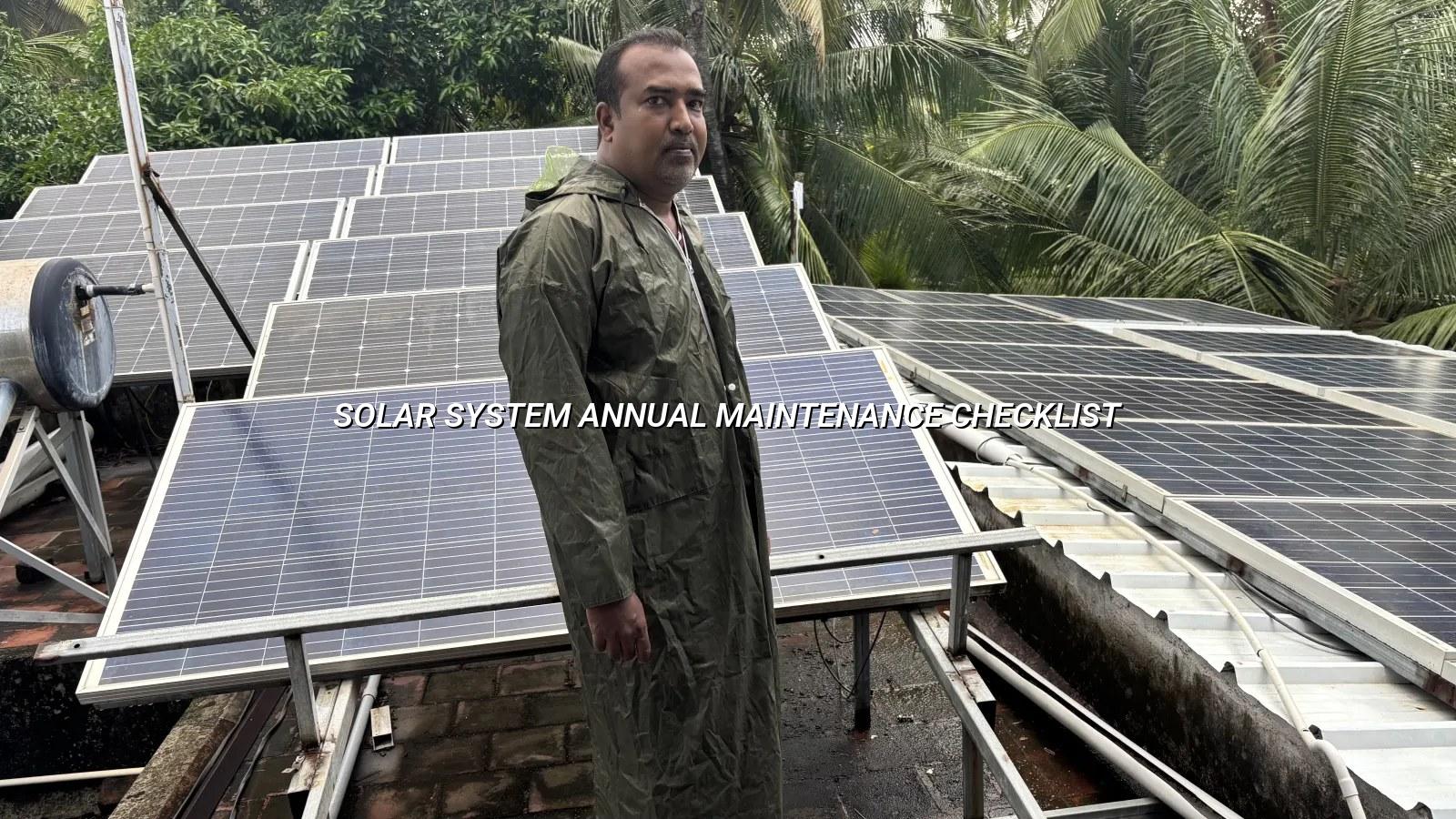
What the check should cover
What a real solar system annual maintenance checklist includes
We keep the checklist practical. No theatre, no vague promises, just the points that actually affect safety and output on a working rooftop solar system.
Panels, frame and roof surface
Start with the panels themselves. Look for dust buildup, bird droppings, cracked glass, loose clamps and any shade that has changed since the last visit. On tiled roofs and sheet roofs, the support points matter too because a small shift in one bracket can turn into vibration during heavy wind. In places like Vadasery and Ozhuginasery, where homes often have mixed roof conditions, we usually pay close attention to the fixing points and water flow around them.
Cables, inverter and protections
Then move to the electrical side. Cable jackets should be intact, conduit should still be clipped properly and junctions should be dry and neat. The inverter should be checked for warning lights, error messages and cooling fan noise, because those are often the first signs that something is off. If the system is on a coastal property near Manavalakurichi, we also inspect corrosion on terminals more carefully than we would inland.
- Clean the modules only with methods that won’t scratch the glass or disturb the mounting.
- Check whether the inverter display shows any fault, warning or low-output condition.
- Inspect all visible cable routing for cuts, heat marks, sagging or loose clips.
- Confirm that earthing points and protection devices are still in place and accessible.
- Look at roof drainage so water does not pool near mounting feet, especially before monsoon periods.
Step by step
How we usually run the annual check
Every site is a little different, but the order stays mostly the same because it keeps the inspection clean and easy to verify.
- Confirm the system type. We first see whether it is on-grid, off-grid or hybrid, because the checklist changes a bit with batteries, backup wiring and the inverter layout.
- Walk the roof and look for wear. We check panel frames, clamps, seals, shading changes and signs of water entry. A roof in Kottar will not age exactly like one in a more open site near the Aralvaimozhi side of the district.
- Read the inverter and note any alarms. This tells us whether the issue is electrical, thermal or related to communication and settings. A simple warning is better caught early than ignored for months.
- Inspect cable runs and earthing. We look for loose sleeves, exposed joints, corrosion and anything that could become a fault during rain or wind.
- Test the output against the site conditions. We compare what the system is doing with the roof state, shade and the EB connection pattern. If something does not match, we keep digging until it makes sense.
Timing and checks
What to check before the monsoon, after hot months and during daily use
| Check point | What you look for | Why it matters locally | Who should handle it |
|---|---|---|---|
| Panel surface | Dust, bird droppings, cracks, shading changes | Kanyakumari District has strong sun and dusty periods, so dirty glass can build up faster than people expect | Owner or service team |
| Mounting structure | Loose fasteners, corrosion, movement and rust | Wind exposure and coastal air can stress the hardware, especially near sea-facing locations | Service team |
| Cables and conduits | Wear, cuts, sagging, loose clips, poor sealing | Monsoon rain can find weak points fast if cable sealing was never checked properly | Service team |
| Inverter and protection | Warnings, fan noise, heat, display faults, tripped protection | Heat buildup is a common issue in closed utility spaces and small inverter rooms | Service team |
| Earthing and connections | Corrosion, looseness, damaged lugs, unsafe touch points | Salt-laden air around the district can make terminals age sooner than expected | Service team |
A yearly visit is usually enough for many homes, but the best time is not the same for every roof. If your panels are near the coast, if the mounting system is exposed to wind or if the inverter sits in a hot enclosed corner, we often suggest checking sooner after heavy monsoon spells. On a large RCC flat roof in Thuckalay, for example, the cleaning and cable inspection may be straightforward, while a sloped tiled roof in Ramanputhur may need a slower look at the fixings and routing.
People often ask if they can just wash the panels and call it done. You can, but that only covers one part of the story. The real value of a solar system annual maintenance checklist is that it catches the things you do not see from ground level: a loose connector, a rubbed cable, a shaded corner, or a frame that moved a little when the roof took a hit in a storm.
Things we do not skip
We do not skip the boring bits. That means checking the inverter room for dust, looking at the cable entry points, confirming that the roof drainage still works and reading the system properly instead of guessing from appearance alone. If a homeowner in Kottar calls us because the units bought from the EB connection have not changed much, we start with the basics first, not with assumptions. That saves time and avoids repeat visits.
Local conditions
Why the district changes the checklist a little
Solar panels are the same technology everywhere, but roofs in this district live under very different conditions from inland places.
In Kanyakumari District, the year-round sun is a gift, but it comes with wind, humidity and in some places salt carried in the air. That means the yearly check cannot be only about cleaning. It has to include the mounting structure, the cable sealing and the points where metal meets metal. Near Colachel, for example, we are usually more alert about corrosion than we would be on a sheltered inland roof.
The southwest and northeast monsoon periods bring another issue: water. If drainage is poor, water sits where it should not, and once that starts, seals and cable entries age faster than the owner expects. On agricultural sites around the district, especially where pumps are tied to long cable runs, we also look at cable protection more carefully because the environment is harder on the system.
How JRS SunTech Energy Can Help
We handle the inspection, the cleaning and the follow-through
If you want us to check your solar system annual maintenance checklist properly, we start with the site as it really is: roof type, roof height, shade, inverter location, the EB connection and any small history of faults you have already noticed. We also inspect systems installed by other companies, which is often where the useful work begins because the original paperwork may be missing or the previous installer has stopped responding.
Our team at JRS SunTech Energy, Kottar, Nagercoil, can guide you through the annual service, any EB documentation questions and the right follow-up if a part needs attention. We provide one year of free service support after installation, and after that we continue with technical assistance based on the product and the installation condition. If you want to speak with us, call 9787775999 or email jrssuntechenergy@gmail.com.
For customers comparing service options, related pages like Solar Service & Maintenance, Subsidy Guidance and Products can help you understand the full picture before you book a visit.
What to keep ready
Simple things to have before the service team arrives
- Recent EB bill details if the system output or units pattern feels different than usual.
- Any past inverter error message, even if it cleared on its own later.
- The date of the last cleaning or service visit, if you remember it.
- Access to the inverter room, roof ladder or terrace point so the inspection starts smoothly.
- A note about leaks, rust patches or shade from nearby trees or new construction.
Those small details save time. They also help us tell the difference between a simple cleaning issue and a genuine maintenance problem. Most owners know when something feels off, but they do not always know where to point us first. A short note is enough.
If your roof is in a denser housing area such as Parvathipuram, or your home has a flatter RCC roof that catches dust from nearby roads, we may suggest a slightly different service rhythm than a more sheltered house. That is normal. Solar work should fit the site, not the other way around.
Frequently asked
Questions people ask before yearly solar maintenance
For a rooftop solar system, we suggest checking the full list once a year and doing lighter visual checks in between. Dust, loose conduit clips and inverter alarms can show up long before a serious fault does.
Start with the panels, mounting structure, cables and inverter display. Those are the parts most likely to show wear from heat, rain, wind and simple ageing, especially on RCC and sheet roofs around Nagercoil.
Yes, we do that often. Some systems only need cleaning and minor tightening, while others need a clearer look at cable routing, earthing points or inverter faults.
We can look at the connection side and the basic paperwork trail where needed. If something needs follow-up with the EB or subsidy documentation, we guide you through the next step instead of leaving it half done.
Very much so. Salt-laden air and wind can affect frames, fasteners and connectors over time, so homes toward places like Colachel or Manavalakurichi often benefit from a closer inspection of metal parts and sealing.
We first read the fault or warning properly and then decide if it is a simple setting issue, a loose connection or a part that needs replacement. We don’t guess, because that usually wastes time and causes repeat trouble.
Hurry up!Subsidy ends 31 March 2027 · 134 days left
Next step
Is your solar system due for its yearly check?
Send us your roof type, inverter details and any issue you have noticed, and we’ll tell you what the inspection should cover.
- Your electricity requirement and 60-day EB bill
- Property type — home, shop, office, farm or institution
- Backup requirement and available roof space
Related: Solar Maintenance · FAQ · Contact