Solar service
Solar Water Pump Maintenance
Practical care for solar pumping systems, from weak output and wiring faults to panel cleaning, pump checks and field-ready inspections.
Solar pump care
What solar water pump maintenance really means on a working farm
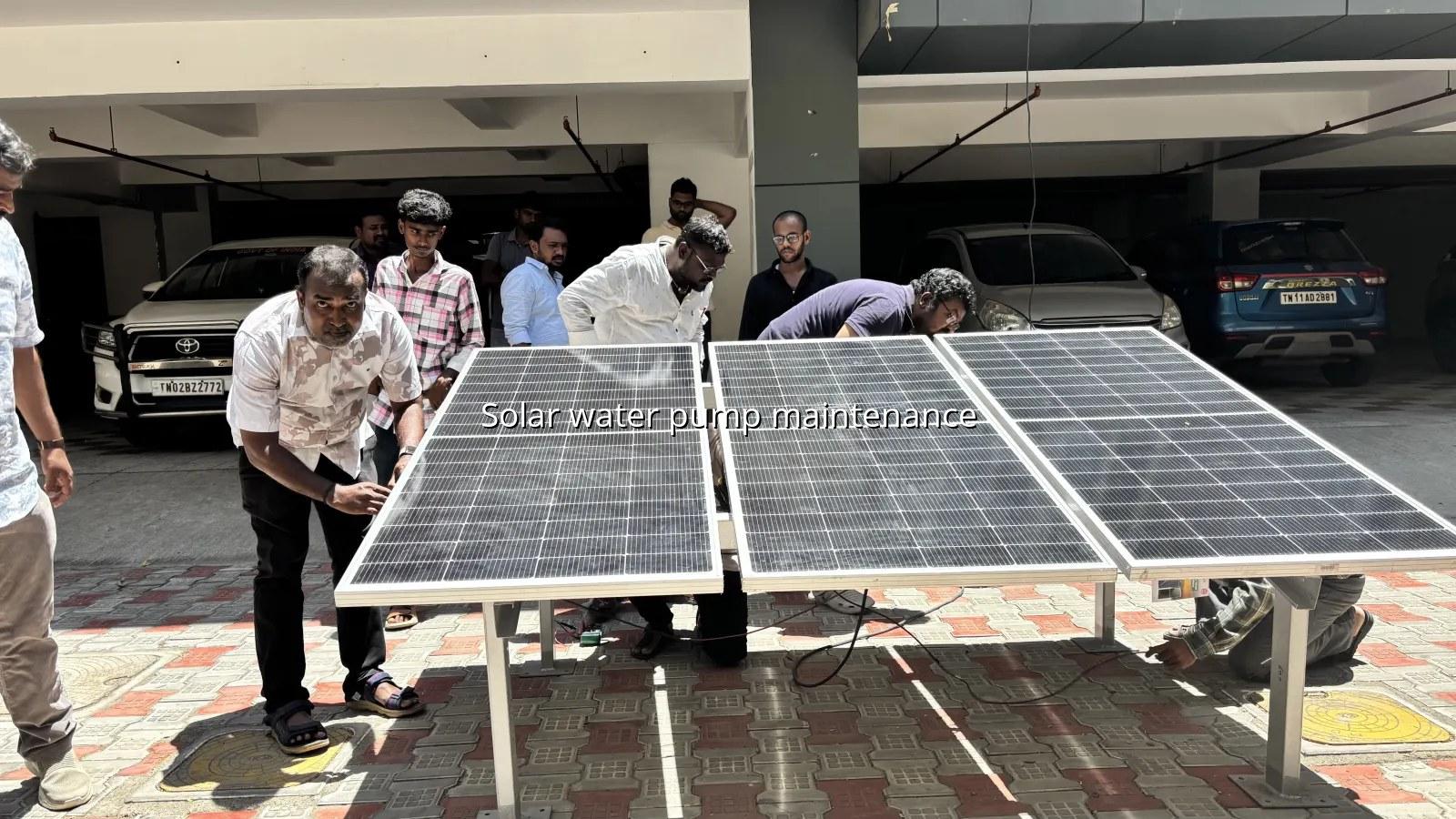
Solar water pump maintenance is not just a quick wipe on the panels. It means checking the pump, controller, wiring, mounting, water line and the way the system responds through the day so the field does not lose water when the crop needs it most. On a real site, one loose joint can look like a panel issue, and one dirty filter can look like a motor problem.
In Kanyakumari District we see the same pattern again and again. A pump works well for a while, then output drops during windy weeks, or after heavy rain the connections begin to act up, or the installation starts tripping because the cable route was never sealed properly. Around Thovalai and Boothapandi, where many pump sites sit on open land, dust and spray build up faster than people expect, and near Pechiparai the terrain can make inspection a bit slower but more necessary.
Service checks
What we inspect before a solar pump is handed back to work
Good maintenance is part observation, part testing. We look at the system as a whole, because the water you get at the outlet depends on every piece between the sunlight and the borewell. That is why a visit to a pump site in Aralvaimozhi is not handled the same way as a house roof in Kottar; the conditions are different, and so are the faults.
Electrical side first
We start with the solar array, cable joints, earthing points, controller and protection parts. If the site has a voltage drop, loose connector, damaged DC cable or a wrong setting in the controller, the pump may underperform even when the weather is bright. We also check whether the cable sealing is holding, because water entry is a quiet troublemaker and it tends to show itself late.
Then the water path
Once the electrical side looks right, we move to the pump, pipe line and discharge route. Sediment, partial blockage or a strained motor can make a system look weak when the real issue is elsewhere. On borewell and irrigation sites, especially around open agricultural land, that kind of fault can waste a full working day before anyone realises what is happening.
- Clean panels gently, without forcing dirt into cable openings or frames.
- Check cable insulation, connector tightness and signs of heat on joints.
- Inspect the controller for warning lights, error codes or abnormal cut-offs.
- Look at pump sound, starting behaviour and discharge consistency during testing.
- Review mounting hardware, because wind exposure in the district can loosen weak structures over time.
Typical faults
Common reasons a solar water pump slows down or stops
Most people call us after one of three things happens: the pump stops, the flow becomes weak, or the system trips now and then and nobody can tell why. The answer is not always the same. Sometimes the panels are the issue, sometimes the pump itself, and sometimes the installation details are what need attention. A site near Munchirai with open exposure to wind can show mounting strain sooner than a more sheltered plot inland, so the same fault pattern does not mean the same fix.
We also see trouble from poor drainage around the array base, especially when monsoon water stays longer than it should. That can lead to corroded fittings, sloppy cable runs and water-stained junction boxes. And if the pump has been running hard for a long season without a proper look-over, the motor may start sounding different before it actually fails.
| Symptom | Likely area to check | What we normally look for |
|---|---|---|
| Pump not starting | Controller, wiring, protection parts | Loose joints, wrong settings, damaged cable, power interruption |
| Weak discharge | Panels, pump, water line | Soiling, shading, worn pump, partial blockage, voltage drop |
| Frequent tripping | Electrical connections and controller | Heat at terminals, moisture entry, unstable input, fault codes |
| Noise or vibration | Pump body and mounting | Mechanical wear, poor fixing, line strain, sand or sediment load |
A quick note on coastal air
In places that sit closer to the coast, like Colachel and Manavalakurichi, salt-laden air can age fittings and hardware faster than many owners expect. It does not mean a solar pump system cannot work well there. It just means the inspection has to be a little more careful, and the hardware choices have to be sensible from the start.
Maintenance routine
How we handle a service visit, step by step
A proper service visit follows a pattern, because guessing wastes time. For a pump that serves a farm near Thiruvattar or a borewell line near Kulasekharam, the same method saves repeat visits and helps us spot the real fault instead of chasing noise.
- We start with your description. You tell us what the pump is doing, when the issue started and whether the problem is full stop, weak output or repeated tripping.
- We inspect the site carefully. Panels, structure, cable route, controller and water line all get checked in one visit, because the trouble can sit in more than one place.
- We test the system under actual conditions. A dry bench check is not enough for most agricultural pumps, so we watch how the unit behaves when it is asked to work.
- We explain the finding in plain language. If the issue is cleaning, repair or replacement of a part, we say so directly. No drama.
- We help with the next step. That might be preventive maintenance, a wiring correction, controller work or a larger system review if the setup has outgrown the field load.
People sometimes think a solar pump only needs attention when it has failed. That is the expensive way to think about it. A short maintenance check before the heavy season often catches the kind of thing that turns into a full day of lost pumping later. And if your system was installed years ago, the second look is usually the one that tells the truth.
What to watch
Small signs that tell you the pump needs attention
These are the signs people tend to ignore until the system stops completely. A change in sound, a slower start, a breaker that trips once in a while, or a discharge that feels uneven from morning to afternoon. If the site is in an open agricultural patch, even a bit of dust on the panels can change what you see at the outlet.
- Panel surfaces look dull, dusty or streaked after wind or rain.
- Connector boxes show moisture marks, rust or loose covers.
- The pump starts later in the day than it used to.
- Output falls off quickly even when sunlight is still strong.
- The structure shifts slightly after a storm or strong gusts.
- The controller shows a warning, then clears and comes back again.
That last one is a classic. It tempts people to ignore the issue because the system comes back on its own, but the fault is still there. In our experience, small repeating warnings usually mean the system is asking for a proper look before the weather or the load makes things worse.
After the visit
What happens once the pump is checked and cleaned
A service call should leave you with a clear picture, not a pile of guesses. If the system only needed cleaning or a loose connection tightened, we say that. If the pump has wear or the controller is showing signs of trouble, we explain what that means and what to watch next. Sometimes the answer is simple, and sometimes it is a sign that the setup needs a more serious review.
We also look at the surrounding conditions because a pump system is not floating in isolation. A field in Nagercoil with a sheltered layout behaves differently from one on open land near Aralvaimozhi, where wind can work on the mounting structure and cable supports for months before anyone notices. That is why we never treat all sites the same.
If the same fault keeps returning, the issue may sit in the installation layout rather than in one part alone. Cable route, mounting height, water line handling and panel orientation all matter, and a repair that ignores those details usually buys only a short pause.
How JRS SunTech Energy can help
Solar water pump maintenance done by a local team that works on real sites
We handle solar water pump maintenance, troubleshooting and preventive service for agricultural systems across Kanyakumari District. If your pump site needs a check, we can inspect the array, controller, wiring, mounting and pump set, then tell you what actually needs attention and what does not. We also support related work on solar pumping systems through our wider service range, including solar service & maintenance and solar water pumps.
If your existing setup needs a fresh review, or if you are trying to decide whether the issue sits with the pump, the structure or the electrical side, send us the details and we will guide you from there. We work from our office in Kottar, Nagercoil, and we travel to sites across the district when the job calls for it.
JRS SunTech Energy, Door No. 227, First Floor, Cape Road, St. Xavier's Church Junction, Kottar, Nagercoil, Kanyakumari District, Tamil Nadu - 629002. Phone: 9787775999. Email: jrssuntechenergy@gmail.com.
FAQ
Questions we hear about solar water pump maintenance
For most agricultural sites, a visual check every few weeks helps catch dirt, loose clamps and cable wear early. A fuller inspection is worth doing before and after the monsoon, since rain, wind and mud often change how the system behaves.
Weak flow can come from dirty panels, a tired pump, voltage drop in the cable run or a partially blocked line. We usually start by checking the electrical side, then the pump and water path, because the cause is not always where the symptoms show up.
Yes, we can. Many calls we get are from sites where the system was installed earlier and now needs inspection, troubleshooting or preventive maintenance, and we will tell you honestly whether it needs repair, cleaning or a replacement part.
It does. In Kanyakumari District the south-west and north-east monsoon periods can affect drainage, cable sealing and mounting hardware, so a quick check after heavy rain often prevents avoidable downtime at the field.
Send us the pump type, location, any fault you noticed, and whether the issue is full stop, weak discharge or frequent tripping. If you can share a photo of the array, controller and pump set, it helps us come prepared with the right tools.
That happens a lot. Sometimes the panels are fine and the fault sits in the controller, wiring, cable sealing or the water line, so we check the full setup instead of guessing from one symptom.
Hurry up!Subsidy ends 31 March 2027 · 134 days left
Next step
Is your solar pump not giving steady water?
Send us the pump location, the fault you see and a photo if possible. We will help you figure out the next step and arrange a site check.
- Your electricity requirement and 60-day EB bill
- Property type — home, shop, office, farm or institution
- Backup requirement and available roof space
Related: Solar Water Pumps · Solar Maintenance · Contact
Free site survey · Kottar, Nagercoil