Solar guide
Do Solar Panels Work on Cloudy Days
See how rooftop solar behaves when the sky turns grey, what that means for your EB use, and how we size systems around real local weather.
Cloudy day solar
What really happens to solar on a grey day?
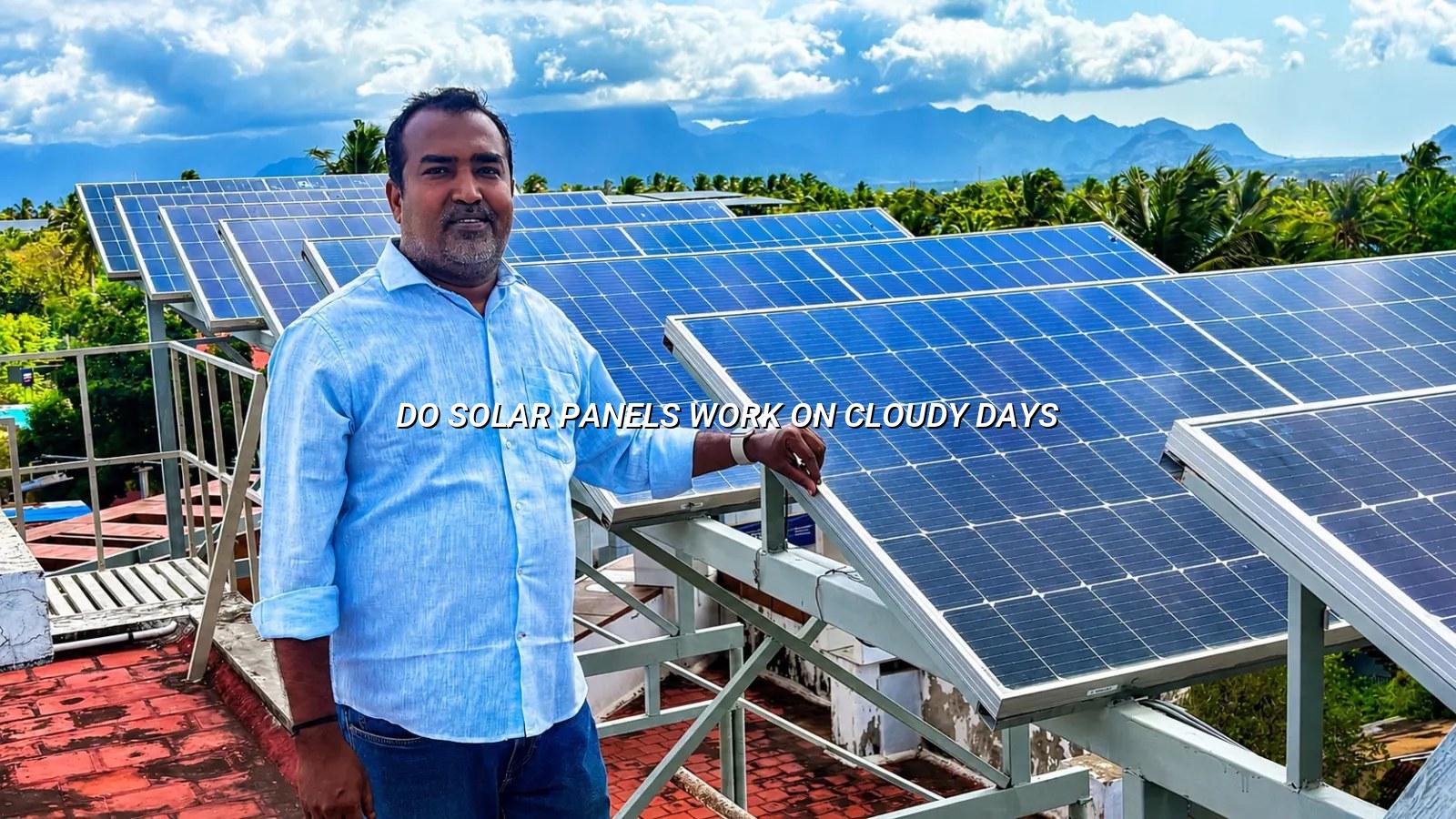
Do solar panels work on cloudy days? Yes, they do, and that is the first thing we tell most customers who ask after a gloomy morning. The panels do not stop just because the sky turns dull. They still pick up daylight, convert it to electricity and feed that power into your home or business as long as there is enough light for the cells to respond.
In Kanyakumari District, cloudy weather is part of the year, not a surprise. Some days are bright from early morning, some turn soft and grey under the monsoon, and a few stay covered for hours. That does not make solar a poor choice. It simply means the system works like a solar system should, with the EB connection standing by whenever sunlight is weaker than usual.
Cloud cover and output
Why cloudy skies change the numbers without killing the system
Most people expect solar to behave like a light bulb. It doesn't. Panels respond to light, and cloudy weather still gives them some light to work with.
Thin cloud and heavy cloud are not the same
A thin layer of cloud usually softens the light but leaves enough daylight for useful generation. Thick overcast is different, because it cuts the stronger sunlight more sharply and leaves the panels working mostly from diffuse light. So two grey days can look completely different on the inverter display, and the same roof can seem lively one morning and plain quiet the next.
The clock matters too
A cloudy morning in Nagercoil can improve by lunch if the cloud breaks up, while a late afternoon spell may give very little because the sun is already lower. That is why we never tell someone to judge the system by a single hour. You need to look at the day as a whole, and in many cases at several days together, before the pattern makes sense.
| Sky condition | Light reaching the panels | What the system usually does |
|---|---|---|
| Clear sky | Strong direct sunlight | Highest daytime generation |
| Light cloud | Direct sun with scattered light | Lower than clear weather, still useful |
| Heavy overcast | Mainly diffuse daylight | Noticeably reduced output |
| Rainy stretch | Weak light for long periods | Grid support matters more |
- Panels still produce power from scattered daylight on cloudy afternoons.
- An on-grid setup keeps using the EB connection when solar generation dips.
- Shade from a wall, tank or tree can matter more on grey days than people expect.
- Salt-laden air near Manavalakurichi or Rajakkamangalam makes hardware choice and cable sealing matter.
- Monsoon rain puts drainage and fixing detail under more pressure than a dry season does.
Local roof conditions
Why the district still gets strong value from solar
Kanyakumari District gets strong sunlight through much of the year, so cloudy days are a change in output, not a reason to dismiss solar. A terrace in Kottar with open sky behaves differently from a sheet-roof shop in Thuckalay with a wall shadow across one corner, and that difference matters when we plan the system. We don't sell one standard system, because roofs are not standard and neither are the people using them.
Wind is another thing locals know well. On open roofs or near exposed stretches, the mounting structure needs proper thought so the panels are not sitting there like they are on a quiet inland site. Near the shore at Kanyakumari or Muttom, salt in the air can also affect hardware and connections over time, so we look at the roof with that in mind before we ever talk about panel count.
What cloudy weather changes, and what it does not
Cloudy weather changes how quickly the panels produce electricity. It does not change the usefulness of the system. If your home uses power through the morning, again after school, and later in the evening, the solar setup still trims the units you draw from TNEB across the 60-day billing cycle. That is the real point for most families: steady help, not perfect numbers every minute of the day.
How we size it
How JRS SunTech Energy plans for cloudy days from the start
We size from the bill, the roof and the actual site. Not from a guess and not from a showroom pitch.
The way we actually work
- We begin with your EB bill. That tells us the 60-day usage pattern and helps us see whether solar should cover part of the load or a larger share of it.
- We inspect the roof layout. RCC terraces, sloped tiled roofs and sheet roofs all need different mounting and spacing choices.
- We check shade and orientation. Nearby walls, water tanks, trees and roof edges can all change the way cloudy-day light falls on the panels.
- We plan for the weather we actually get. Monsoon drainage, cable sealing and fixing strength matter because wind and rain travel with the clouds.
- We explain the result before work starts. You should know what to expect on clear days, grey days and rainy stretches before anyone drills the first hole.
What usually changes the recommendation
A roof in Parvathipuram with wide open sky can support a different arrangement from one in Vadasery where nearby buildings cast shade for part of the day. That sort of detail affects panel placement, inverter choice and the string layout. It can also shift the discussion between on-grid solar and hybrid solar, because the right answer depends on how you use power, not just on how many panels you can fit.
For businesses the pattern is different again. A shop in Marthandam or an office in Kuzhithurai may use power through daylight hours, so even reduced solar output on cloudy days can still help while lights, fans and computers stay on. We look at that usage pattern carefully. That's where the honest recommendation starts.
Useful checks
What to keep an eye on when the weather turns dull
A cloudy day is not a fault by itself. If the system seems quieter than expected, start with the sky and then work through the basics. We we can usually tell quite quickly whether the weather is the main reason or whether something else needs attention, because weak daylight and an actual problem do not look the same once you know where to look. And sometimes the fix is simple.
- Keep panels clean, because dust and salt film make weak light perform even worse.
- Check whether a new tree branch or building edge has started to cast shade.
- Look at the inverter display for warning lights, odd readings or a tripped status.
- Make sure rainwater is not pooling around wiring, junction boxes or cable routes.
- If the output looks odd for several days, book an inspection instead of guessing.
In coastal parts of the district, a grey sky can hide another problem too: corrosion at the mounting points or cable ends. Near Kanyakumari and Manavalakurichi, that is something we take seriously because the air itself works on metal over time. It is not dramatic. It is steady wear, and that is exactly why the first hardware choice matters so much.
Maintenance and next steps
What happens if cloudy days keep showing low output?
If the weather has been poor for a spell, low generation may be completely normal. If the numbers stay low after the sky clears, then we start checking the system itself. That can mean looking at the panels, the inverter, the connections or the way the roof sits in shade through the day. A good site survey saves a lot of guessing.
We also see a fair number of calls after dust, salt or a light maintenance miss. A system that was fine last month can begin to underperform if the panels are dirty or a connection has loosened. That is one reason customers in Ozhuginasery or Suchindram often ask for a check before they assume anything major has gone wrong.
A short way to think about it
Cloudy days lower output. They do not cancel solar. If your roof is suitable, your usage is well matched and the system is installed properly, the panels still do useful work through mixed weather, and the EB connection fills in the rest without any drama.
How JRS SunTech Energy Can Help
Practical advice for cloudy-weather solar planning
We help you decide whether rooftop solar makes sense for your actual site, not for a perfect brochure roof. If you are in Nagercoil, Kottar or anywhere else in Kanyakumari District, we can visit, check the roof, look at the EB bill and tell you what cloudy days mean in your case. Sometimes the answer is on-grid solar, sometimes hybrid solar, and sometimes the roof needs a bit of repair or cleaning before anything else.
We also guide customers through EB documentation and the subsidy process where applicable, and after installation we give one year of free service support. If you want a straight answer about your own roof, send us a message or call us and we'll take it from there.
JRS SunTech Energy, Door No. 227, First Floor, Cape Road, St. Xavier's Church Junction, Kottar, Nagercoil, Kanyakumari District, Tamil Nadu - 629002. Phone: +91 97877 75999. Email: jrssuntechenergy@gmail.com.
Frequently asked
Questions people ask about cloudy day solar output
Yes, they do. Panels still make electricity when daylight gets through cloud cover, just at a lower level than on a clear day. In Kottar and nearby parts of Nagercoil, that is exactly what people notice during monsoon weather.
Clouds block part of the sunlight and change strong direct light into weaker scattered light. The panels still receive usable light, but the inverter has less energy to work with. That is why the reading falls even though the system is still alive.
Yes. An on-grid system is built to use the EB connection whenever solar output is low. That happens on dull mornings, rainy afternoons and other periods when the panels simply are not getting enough light.
Not always. Sometimes the real answer is better roof layout, a suitable inverter and a capacity matched to your 60-day EB usage. We look at the bill, roof space, shade and structure before we talk about size.
Clouds themselves do not damage the panels. What needs attention is the weather that comes with them, like wind, rain, drainage and cable sealing. That matters more on open roofs and near the coast, where hardware choice and fixing detail count.
Then we check more than the weather. Dust, shading, a breaker issue, inverter status, loose connections or a maintenance need can all sit behind weak generation. If the numbers stay odd, it is better to inspect the system instead of guessing.
No, and that is the honest answer. Thin cloud, heavy overcast and rain clouds all behave differently, and the time of day changes the result too. A cloudy morning can still turn into a decent solar day if the light opens up later.
Cloudy weather changes the output, not the value of solar. A good system still helps, still works through mixed skies and still trims the units you buy from the grid over time.
If you want a real answer for your own roof, JRS SunTech Energy can check it properly and tell you what makes sense without dressing it up. That is usually the most useful place to start.
Hurry up!Subsidy ends 31 March 2027 · 134 days left
Next step
Still wondering what cloudy days mean for your roof?
Send us your EB bill, roof type and a couple of site photos, and we will tell you what kind of solar setup fits best.
- Your electricity requirement and 60-day EB bill
- Property type — home, shop, office, farm or institution
- Backup requirement and available roof space
Related: On-Grid Solar · Hybrid Solar · Solar Maintenance