Solar guide
Do Solar Panels Work During the Monsoon
A clear answer for homes, shops and farms in Kottar, Nagercoil and across Kanyakumari District.
Monsoon answer
What a rainy season actually does to rooftop solar
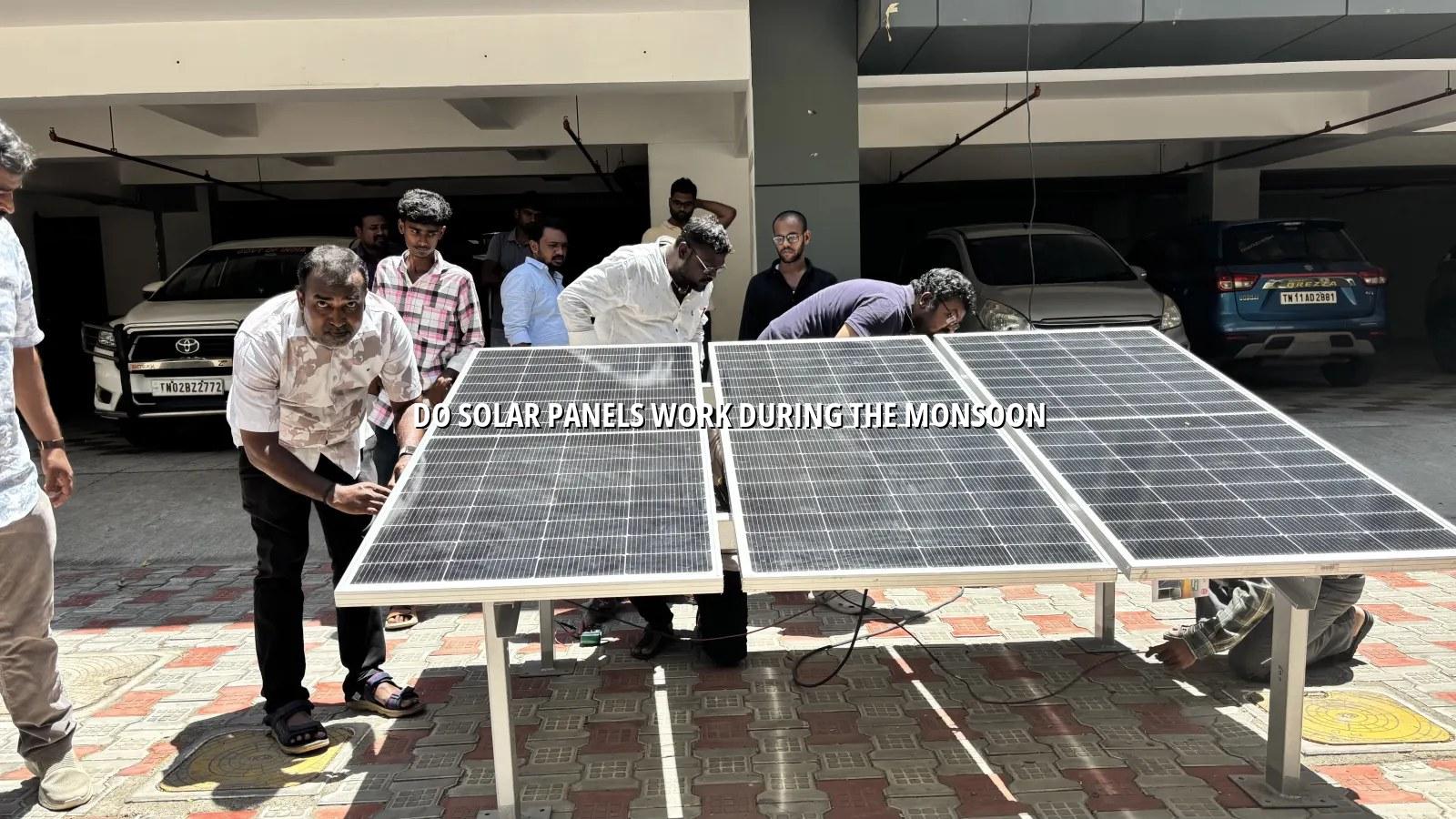
Do solar panels work during the monsoon? Yes, and the honest answer is that they keep producing whenever there is daylight, even when the sky stays grey for hours. The output falls on cloudy days, but the system does not switch itself off just because the rain arrives.
That matters in Kanyakumari District because the weather changes in a very real way through the year. We get strong sun for much of the time, then the south-west and north-east monsoon periods bring cloud, rain and gusty wind, sometimes all in the same stretch. A roof in Kottar or Vadasery may behave differently from a shed roof inland, so we start with the roof, the EB bill and the site conditions rather than with a fixed package. We do not sell one standard system.
What changes in wet weather
Clouds, rain and wind all affect the system in different ways
Most people ask this after seeing the inverter display look quieter than usual. That reaction makes sense. In monsoon weather the sunlight is softer and more spread out, so the panels still generate, just at a lower level than on a bright dry morning. The weather changes the amount of daylight reaching the module face, not the basic working of the system.
Cloud cover lowers output, it doesn't end generation
Solar panels need light, not heat, and they work on dull days because daylight still reaches them. The output is lower when the sky is heavy with cloud, but a home that uses fans, lights and a television through the day can still see solar helping in the rainy season. It may feel less dramatic, yet the roof is still doing useful work.
When the numbers dip more than expected, we look beyond the weather. Shade from a nearby wall, dirt that has been sitting on the glass, a loose connector or a tired inverter setting can all make monsoon performance seem worse than it is. That is why we never guess from a phone call alone.
Rain can clean, but only in a limited way
A shower can wash away loose dust, which is why some rooftops look better after a good spell of rain. It won't remove oily film, bird droppings or dirt stuck around edge frames, and it does nothing for standing water if the roof has poor drainage. On a tiled roof in Suchindram or an RCC roof in Kottar, the difference between a clean array and a soggy one can come down to a very small installation detail.
Cable entries matter too. Water always looks for the weakest seal. If the conduit, junction or mounting point was rushed, the monsoon will find it sooner rather than later, and then the fault is no longer a mystery.
- Solar panels still produce power through daylight in overcast weather.
- Output drops with cloud cover, shade and heavy rain, but it does not disappear.
- Mounting strength matters because wind loads become more obvious in monsoon months.
- Good drainage helps keep water away from places where it can cause trouble.
- Coastal air can age poor-quality hardware and electrical connections faster than expected.
Before the rains set in
The checks that save time later
Monsoon weather does not create every solar problem, it usually reveals one that was already there. Loose fasteners, poor cable routing, cracked roof work, water pooling and weak earthing all become easier to notice once the rain starts hitting the roof every day. In our work around Marthandam and Thuckalay, we have seen systems stay steady for years because the original installation details were handled properly from the start.
If you already have a rooftop array, this is the time to look at it with fresh eyes. The panels themselves are only one part of the story. The structure under them, the seal around the roof, the way the cables are tied and the way water drains off the surface all matter just as much.
A simple pre-monsoon checklist
- Check the mounting frame. Look for looseness, rust, tilt mismatch and any sign that wind has shifted the structure.
- Inspect the roof surface. On RCC roofs, find low spots where water sits; on tile roofs, check for slipped or cracked tiles near the fixing points.
- Seal cable entries properly. Rain often enters through a small gap and then travels along the cable path.
- Watch the inverter. Repeated faults during damp weather should be checked early, not after the next storm.
- Clean with care. A light clean helps, but don't use rough tools or force water into the panel edges.
For homes in Ozhuginasery or Parvathipuram, we often suggest a quick visual check before the heavy spell and another after the first strong round of rain. That is not because the system is fragile. It is because a tiny issue is much easier to fix before water has had time to travel into a corner and sit there.
Reference table
What monsoon conditions usually affect
The same weather does not act the same way on every roof. This table gives a practical way to think about the factors we look at during a site survey.
| Factor | What it tends to change | What we check on site | Why it matters |
|---|---|---|---|
| Cloud cover | Reduces the intensity of daylight and lowers output through the day | Roof shade, panel direction and daytime load pattern | Helps set the right expectation for rainy-day generation |
| Heavy rain | Can rinse loose dust, but also brings drainage and sealing concerns | Water flow, cable entry points and roof slope | Prevents water from lingering where it can cause damage |
| Wind exposure | Can stress the mounting structure and loosen poor fixings | Frame strength, anchor points and hardware choice | Useful in a district that gets strong seasonal wind |
| Coastal air | Can affect metal parts and electrical joints over time | Material quality, corrosion signs and finish condition | Important near the shore where salt-laden air is common |
| Roof type | Changes installation method and maintenance access | RCC flat roof, sloped tiled roof or sheet roof details | Different roofs need different fixing and service access |
Why local weather matters so much here
Kanyakumari District gets strong year-round sunshine, but it also deals with wind and coastal moisture that inland places do not face in the same way. That means a solar installation here has to be planned for more than just peak sunlight. A roof near the coast in Colachel needs different hardware thinking from a more sheltered home inland, and that difference shows up most clearly once the monsoon starts pressing on the structure.
What changes for farms and open sites
Solar water pumps and off-grid systems on farmland need extra care because wind, mud splash and cable routing are part of daily use. Around Thovalai and Boothapandi we look closely at ground conditions, borewell placement and any tree shade before recommending a setup. If a pump works in dry weather but struggles once the rain arrives, there was usually a site issue from the beginning.
How to think about your own roof
The real question is not just whether solar works, but how your site behaves
The first thing we ask for is your EB bill and a look at the roof. That tells us how many units you use over the 60-day billing cycle and whether your daytime use fits on-grid solar, hybrid solar or a system with batteries. If you are a home in Kottar, a shop near Vadasery, or a worksite on the edge of the district, the roof shape and the load pattern matter more than a brochure promise.
During monsoon months, a good system design has to be honest about shade, drainage and mounting strength. We don't push a larger setup just because there's room on the roof. We match the system to the actual conditions, then explain how rainy-season weather will affect generation so you know what to expect. That sounds simple, but it saves a lot of regret later.
What JRS SunTech Energy does on a real job
We start with the roof, the bill and the structure. Then we look at shading, orientation, available space and what kind of load you actually run through the day. After that comes system design and quotation, installation, EB and documentation support, commissioning and after-sales help. There is a clear sequence, because solar works best when the steps are handled in order.
- Contact us. Share your location, bill and a few roof photos so we can understand the site.
- Free site survey. We visit, inspect the roof and check the conditions that affect performance.
- System design and quotation. We suggest a suitable capacity based on actual use and roof space.
- Installation and commissioning. The system is fitted, checked and brought into service carefully.
- EB and documentation. We guide you through the paperwork and the required steps for the connection process.
- After-sales support. You get one year of free service support after installation, with continued technical assistance afterwards.
We also guide customers through the applicable government solar programme where eligible rooftop solar is involved, and help with the documentation that goes with it. If the topic is maintenance, we can inspect and service systems installed by other companies too. Some calls end with a repair, some with a clean, and some with a replacement recommendation; we say which one it is after looking at the facts.
A few things worth remembering
Small habits make a big difference in wet months
- Daytime appliances can still use solar power in rainy weather.
- Loose connections show up faster when moisture gets into the system.
- Mounting hardware should be chosen for wind as well as panel weight.
- Drainage around the roof and cable path should be checked before heavy rain.
- Salt in coastal air can age poor-quality metal parts more quickly than people expect.
- Battery-backed systems behave differently from plain grid-tied systems, so the design has to fit the use case.
A rainy season can make a badly planned system look worse than it really is, and it can make a properly built one look a bit ordinary. That doesn't mean the roof is failing. It usually means the weather is doing exactly what weather does, and the system is just being measured against a tougher backdrop.
Frequently asked
Questions we hear every rainy season
They keep working. Solar panels make power from daylight, so a cloudy sky lowers output but does not shut the system off. In Kanyakumari District we see that every year, and even steady rain usually leaves some generation through the day.
Because the sunlight reaching the panels is weaker and more diffused. That is normal, not a fault. If the drop feels extreme, we check shade, dirt, wiring and inverter status before blaming the weather.
Not if the system was installed properly. The things that usually cause trouble are poor sealing, weak mounting, bad drainage and hardware that was never suited to the roof in the first place. Coastal air can also expose weak metal parts faster than people expect.
Yes, a light clean and a quick inspection are sensible before the heavier rain sets in. You do not want loose dust, cracked tiles or open cable entries sitting there waiting for the first downpour. Use care, because rough cleaning can do more harm than the dirt.
Yes, especially if your loads run during the day. Lights, fans, office equipment and pumps can still use some of the solar power coming off the roof. The system will not produce the same amount as in bright weather, but it still offsets part of the EB connection.
Yes. We inspect, test output, troubleshoot inverters, check electrical connections and carry out preventive maintenance on systems we did not install too. If the issue is a repair, a replacement or simply a clean, we will tell you plainly.
Both matter, but the mounting structure is often the part people forget. Kanyakumari District gets wind as well as rain, so the frame, anchors and cable routing must be built for that kind of weather, not just for a sunny afternoon.
How JRS SunTech Energy can help
What we do when you want a roof checked properly
We handle site survey, system design, installation, EB and documentation support, commissioning and after-sales service. If your question is about an existing rooftop array, we can inspect it, check the inverter, look at the wiring and tell you whether it needs a repair, a replacement or simply a clean. That is the sort of straight answer most people want before the next spell of rain arrives.
JRS SunTech Energy, Door No. 227, First Floor, Cape Road, St. Xavier's Church Junction, Kottar, Nagercoil, Kanyakumari District, Tamil Nadu - 629002. Phone: 9787775999 | WhatsApp: Chat on WhatsApp | Email: jrssuntechenergy@gmail.com
Quick practical advice
What owners should remember during the rainy months
- Rainy weather doesn't stop solar generation, it just lowers it.
- Loose fasteners and poor cable routing are easier to spot in wet conditions.
- Mounting hardware should be chosen with wind exposure in mind, not only panel count.
- Drainage around the array is worth checking before the first heavy spell.
- Coastal air can age weak hardware and connectors faster than owners expect.
- On-grid solar, hybrid solar and off-grid systems all need different thinking in monsoon months.
A small point, but a useful one: a rainy season can make a badly designed system look worse than it is, and a well-built one look a bit ordinary. That's normal. If your roof and wiring were planned properly, the monsoon is a test, not a disaster, and a good installation should keep doing its job through it.
More questions people ask
Common follow-ups about monsoon solar performance
Only partly. Rain can rinse off loose dust, but it won't remove stubborn grime, bird droppings or the film that builds up near the edges. A light manual clean is still useful when the roof is safe to access.
You should worry about the installation quality, not the panels alone. Wind load, fixings, roof type and cable routing matter a lot in Kanyakumari District because the monsoon often brings gusts with it. If the structure is right, the system usually handles the weather quite well.
Yes, provided the roof condition is sound and the design suits the site. We look at roof slope, drainage, shade and the EB usage before suggesting a system, because wet weather changes the way the roof behaves and the way the cable runs need to be protected.
Do not ignore it. Sometimes it's only a temporary condition, but repeated alarms can point to moisture, loose connections or a fault that needs service. We check inverter trouble carefully, and we don't pretend every alert means the same thing.
Hurry up!Subsidy ends 31 March 2027 · 134 days left
Next step
Want a straight answer for your roof in the monsoon?
Send us your EB bill, roof type and a few photos of the site, and we will tell you what type of solar setup makes sense.
- Your electricity requirement and 60-day EB bill
- Property type — home, shop, office, farm or institution
- Backup requirement and available roof space
Related: Solar Solutions · Solar Maintenance · Subsidy Guidance