Solar safety
Can Solar Panels Withstand Cyclones
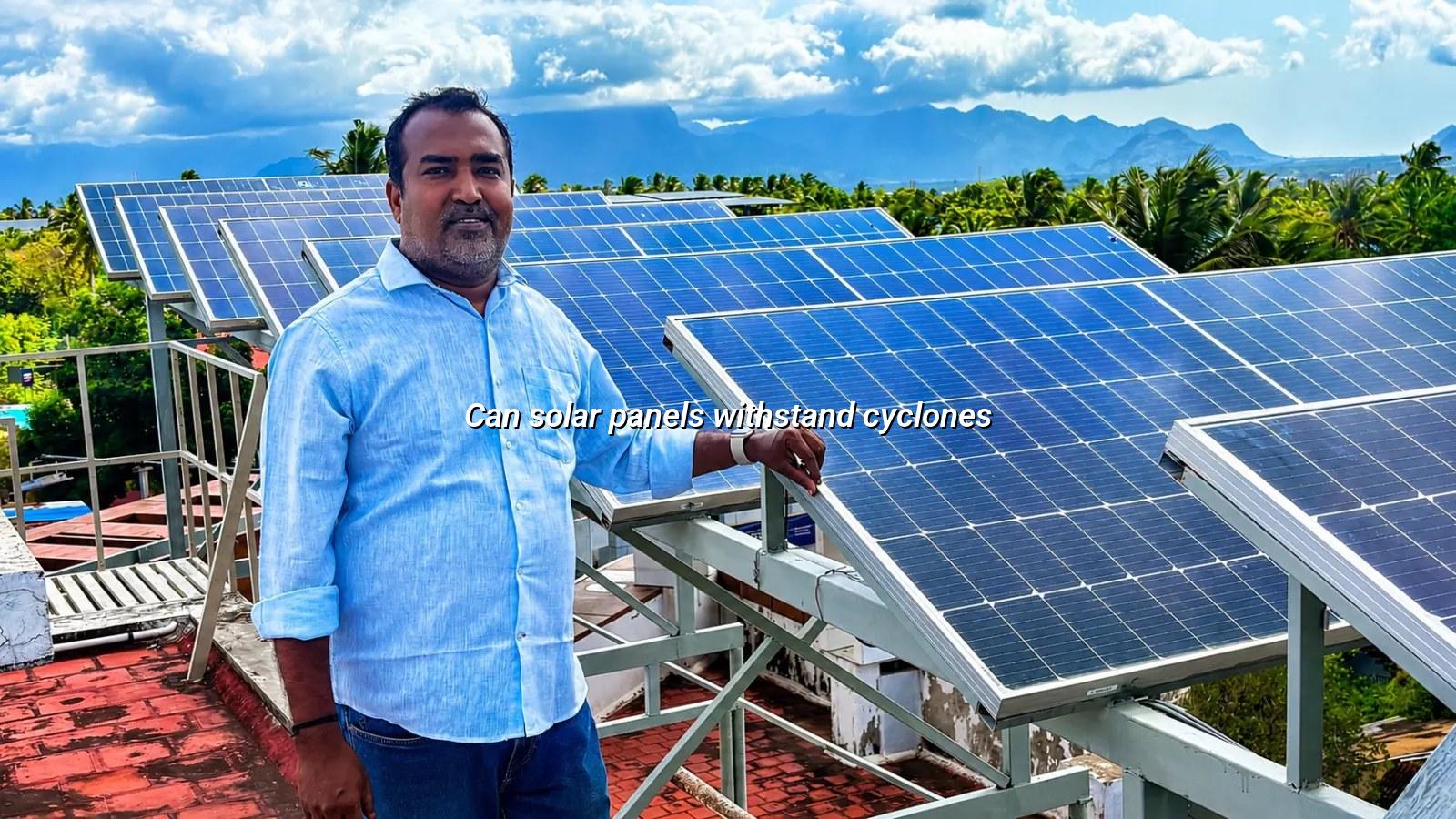
What keeps a rooftop solar system steady when strong wind, rain and flying debris hit a roof in Kanyakumari District.
Cyclone roof safety
What really keeps a solar roof steady in strong weather
Can solar panels withstand cyclones? Yes, they can, but the honest answer is that the panel itself is not the thing you rely on. The full rooftop system has to be planned around wind, rain, roof type and fixing details, or you end up trusting a beautiful panel on a weak frame.
In Kanyakumari District, the question comes up for a reason. We get strong sunshine, but we also get wind, long monsoon spells and homes built with different roof styles, from RCC terraces to tiled slopes and sheet roofs. That means a solar layout has to be built for the site, not copied from the last one we saw.
Wind and structure
Why one rooftop solar system survives and another moves
Most wind damage stories start long before the weather turns rough. A system that was fixed casually, or never checked against the roof shape, can start to loosen in the first serious spell of wind. The same plan can behave differently in Kottar, Vadasery or a coastal home near Colachel because exposure changes how wind gets under the array.
The mounting structure carries the load
The mounting frame is the backbone. If the rails are too light, if the anchor points are chosen without thinking about uplift, or if the installer ignores the roof edge where wind pressure gets sharper, the whole array can begin to flex. That movement is where stress starts building, and once it reaches the clamps or module frame, the problem grows quickly.
On RCC terraces, we look at slab quality, anchor placement, parapet height and where wind sweeps across the roof. On sloped tiled roofs, the issue changes because hook placement, waterproofing and the support under the tiles need equal attention. If one of those is rushed, you may get leaks after the first heavy rain and then the system becomes everybody’s headache.
Panel build matters, but it can't do the whole job
A strong module frame helps, and good glass helps too, but a solar panel is not a roof by itself. Its job is to make power. The mounting structure’s job is to keep that panel in place when the weather is pushing against it, and people often forget that difference until they see a loose array after a storm.
In a district where salt air and wind often travel together, even the small parts deserve attention. Fasteners, clamps, cable glands and exposed joints need the right material and neat installation, or they age faster than the shiny parts of the system. We notice that a lot on homes near Muttom and Manavalakurichi.
- Roof corners and outer edges feel more uplift than the middle.
- Loose cable runs can whip in wind and damage insulation.
- Corrosion on bolts and clamps can weaken holding strength over time.
- RCC, tiled and sheet roofs all need different fixing details.
- Drainage and sealing matter most during the south-west and north-east monsoons.
Roof types
How different roofs respond to strong wind
If you're planning solar in a windy district, the roof type changes the design more than most people expect. Before any quote is made, we look at the roof style, the edge exposure and the place where the mounting points can safely sit.
| Roof type | What we check first | Cyclone-related concern | Design focus |
|---|---|---|---|
| RCC flat roof | Slab condition, parapet height, anchor points | Uplift at corners and long roof edges | Frame angle, fixing method, drainage and cable sealing |
| Sloped tiled roof | Tile condition, hook placement, timber or support structure | Tile movement, water ingress and hook pull-out | Careful hook layout, waterproofing and load spread |
| Sheet roof | Purlin spacing, sheet thickness, corrosion signs | Sheet vibration and fastener fatigue | Appropriate clamps, rust-resistant hardware and bracing |
| Agricultural site | Open exposure, soil condition, equipment location | Wind sweep and debris impact | Strong frame planning and safe cable routing around pumps or sheds |
How we assess
What we check before we say a roof is ready for solar
We don't sell one standard system. The right answer depends on the EB bill, roof space, roof type, shading and how exposed the building is to wind. That is why the first site visit matters so much.
- We start with the roof itself. We look at the slab, tiles or sheet structure, the age of the roof and any cracks, rust or weak points that are already visible.
- We study the wind exposure. A home in Thovalai with an open approach can need a different structure than a more sheltered house in Kottar, even when the roof size looks similar.
- We plan the panel layout. The goal is to keep the array neat, reduce overhang and avoid positions where the wind catches the edges too hard.
- We match the fixing method to the roof. That includes anchor choice, rail spacing, clamp placement and corrosion-aware hardware selection.
- We check cable routes and drainage. Water should move away cleanly during heavy rain, and cable entries need proper sealing so moisture doesn't creep in later.
- We explain the EB and documentation steps. For systems that need it, we guide the paperwork and process without turning it into a guessing game.
Local conditions
Why the district needs a careful solar design
Our district gets strong sunshine almost all year, which is why rooftop solar makes sense here, but the same stretch of coast also sees wind and salt-laden air that punish sloppy work. A roof in Aralvaimozhi may need heavier thought on wind loading, while a house near the shore needs more attention to corrosion. Those are different problems, and they should not get the same answer.
The monsoon changes the picture again. During the south-west and north-east monsoon periods, drainage paths and cable sealing suddenly become more important because water always goes after the weak point first. We pay close attention to that on RCC roofs in Nagercoil and on sheet roofs where water can run along joints and into places nobody notices until later.
Signs a layout may need correction
If an existing system rattles in wind, if the rails sit too close to the roof edge, if cables hang loose or if the hardware shows rust, we treat that seriously. Sometimes the fix is simple. Sometimes it calls for reinforcement or a better layout. We we can tell you which is which after a site visit, and we would rather be direct than polite about it.
After a storm
What to look for once the wind has passed
A homeowner doesn't need to be a technician to spot the first signs of trouble. A quick visual check can tell you a lot before a small issue becomes a bigger repair.
Signs on the roof
Look for tilted panels, shifted rails, loose clamps and cracked tiles around the mounting points. If the system sits on a sheet roof, check whether any fasteners have moved or whether the sheets are vibrating more than they used to. A tiny change can point to movement underneath that needs attention.
Signs on the electrical side
Watch for water staining near cable entries, inverter warnings, unusual tripping or a smell that suggests moisture got into the wrong place. Near the coast, even small openings can let salty damp air in, and that may show up later as trouble at connectors or terminals. In a house at Vadasery or Suchindram, that sort of check is worth doing after a serious spell of wind.
- Never ignore a rail that looks slightly out of line.
- Keep tree branches and loose tin away from the array.
- Make sure water can drain off the terrace without pooling near cable runs.
- Check that clamps and bolts show no visible rust or white corrosion.
- Ask for inspection if the system makes a new noise after a storm.
How we help
How JRS SunTech Energy Can Help
We help you decide if your roof can take solar safely, what kind of mounting will suit it, and whether the site needs reinforcement before installation begins. Our team handles rooftop solar for homes, businesses and agricultural sites, and we also guide EB paperwork, subsidy-related documentation and the installation sequence from the first survey to commissioning.
If you're in or around Kottar, Nagercoil, Thovalai or Colachel and you're not sure about cyclone exposure, send us a message with your roof type, a photo if you have one, and your EB connection details. We'll look at it properly and tell you what makes sense.
Contact JRS SunTech Energy, Door No. 227, First Floor, Cape Road, St. Xavier's Church Junction, Kottar, Nagercoil, Kanyakumari District, Tamil Nadu - 629002. Phone: 9787775999. Email: jrssuntechenergy@gmail.com.
Frequently asked
Questions people ask about solar panels and cyclones
Yes, if the whole system is built for the wind load and fixed the right way. The panel is only one part of it. The rails, anchors, roof condition and cable routing matter just as much, and that is what we look at first.
Most of the time the weak point is the fixing, not the glass. Loose rails, badly placed clamps, thin hardware and poor anchoring can let the array move a little, and once that starts the stress spreads quickly. So we start with the structure and the roof edge zones, not with the module brochure.
They do. Sloped tiled roofs need the hook positions, waterproofing and load spread checked carefully, while RCC terraces usually need a different frame angle and anchoring method. Near the coast, the hardware choice matters too because salt air can age small parts faster than people expect.
Look for loose clamps, shifted rails, broken tiles, water seepage near cable entries and any odd sound from the structure. If the inverter trips or a panel looks tilted, switch the system off and call for inspection. Often the real fault is small, like a brittle tie or a gland that was never sealed properly.
It can, but the design should respect that exposure. A house closer to the shore may need better corrosion resistance, stronger anchoring and cleaner cable routing than an inland site. The goal is not to avoid solar, it is to build it for the place it sits in.
We inspect the roof, suggest the right system style, explain the mounting choices and then guide installation, EB paperwork and post-installation support. If the site needs a repair, a reinforcement or simply a better layout, we say so plainly. That kind of check prevents more trouble than a sales pitch ever will.
Not always. Even within the district, roof exposure changes from one street to the next, and an open terrace in Nagercoil can behave very differently from a sheltered site with more wall protection. We check the actual roof, not just the pin on the map.
Hurry up!Subsidy ends 31 March 2027 · 134 days left
Next step
Worried about cyclone wind on your roof?
Send us your roof type, EB bill and a few clear photos, and we will tell you what the site needs.
- Your electricity requirement and 60-day EB bill
- Property type — home, shop, office, farm or institution
- Backup requirement and available roof space
Related: Solar Maintenance · On-Grid Solar · Contact