Solar finance
How Solar EMI Works
A plain look at the EMI route for rooftop solar, from the first roof check to installation and follow-up support.
Solar finance help
How solar EMI works when you want to begin now
If you're trying to understand how solar EMI works, the simple version is that it lets you move ahead with a rooftop system and spread the payment across planned instalments instead of arranging the full amount at once. We help you match the finance plan to the actual system size, your roof, and the EB units you use in a normal 60-day billing cycle.
Around Kottar and the wider Nagercoil side, most people who ask about EMI want the same thing: they want solar now, not after months of waiting. That makes sense. In Kanyakumari District the roof might be a plain RCC slab, a sloped tiled roof or a sheet roof, and the finance plan should fit the project rather than forcing the project into a bad shape.
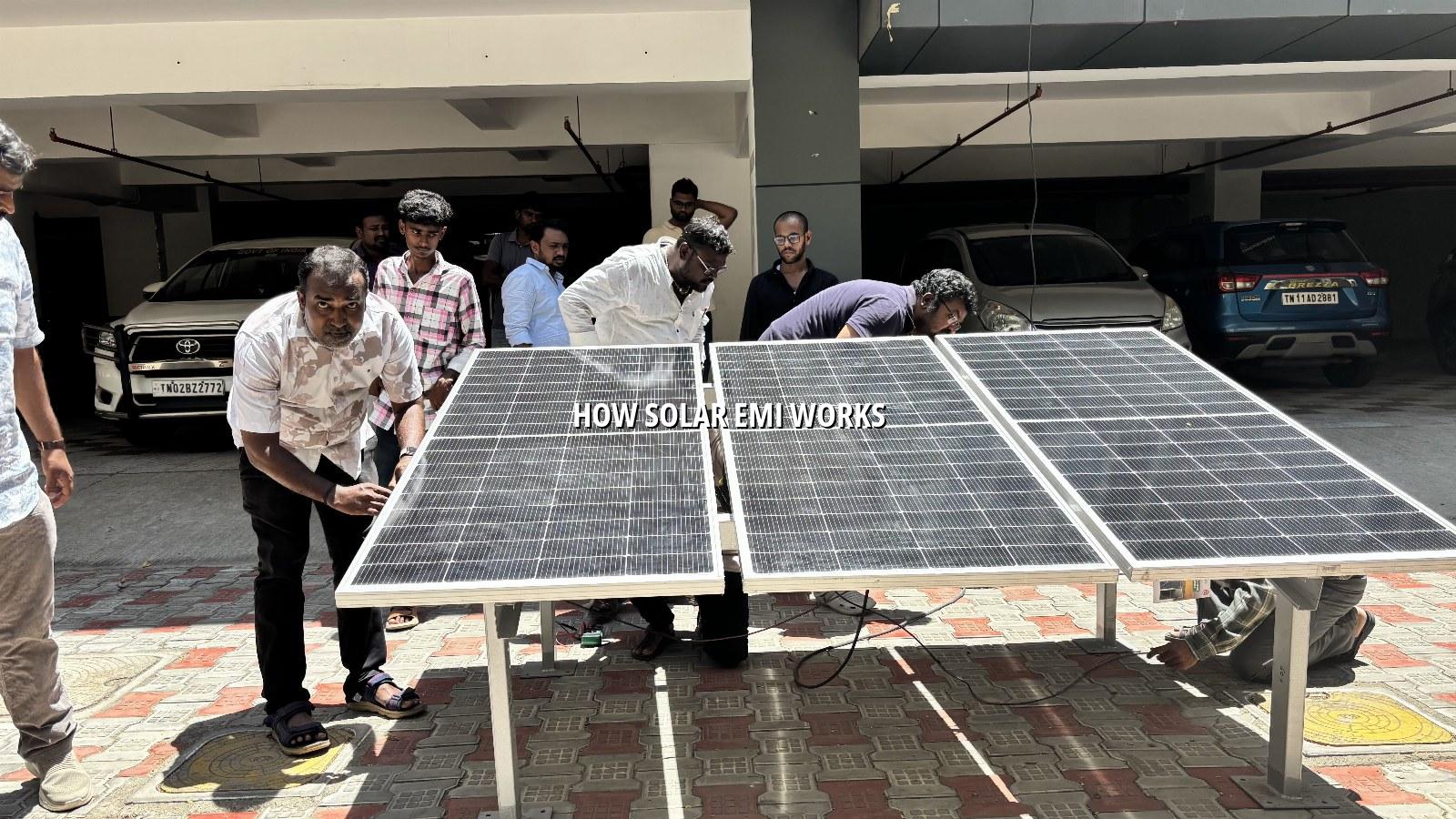
What comes first
The EMI conversation starts with the roof and the bill
People often think EMI begins with a loan form. In practice, it begins earlier, with the site and the system design. That is what keeps the monthly plan sensible, because the system size should come from your real usage, roof space and the EB connection you already have.
We look at the roof before we talk numbers
We start with the latest EB bill and a proper look at the site. A house in Kottar may have a neat flat roof with easy access, while a shop in Marthandam may need a tighter layout because of parapet height, cable runs or shade from nearby buildings. We do not guess capacity from a brochure. We check what the roof can take, where the sun reaches through the day, and what kind of load the structure can safely support.
For EMI, this matters because a smaller, well-matched system is easier to finance than a random size chosen before the roof was checked. It also helps avoid rework later, which nobody enjoys. If a site has wind exposure or salt-laden air, the mounting and wiring choices change too, and that changes the project plan as well.
Then the finance route follows the design
Once the design is clear, we talk through the finance route that suits it. Some customers want on-grid solar because they have a regular EB connection and just want to reduce the units they buy each month. Others ask for hybrid solar because they want battery support during outages. A few prefer off-grid or a pump setup for agricultural work, especially where the site is in a farming area and the use is tied to water movement rather than household supply.
We explain the paperwork, the order of steps and the kind of documents the lender may ask for. No drama, no sales pressure. If the plan does not suit the site, we say so. That saves everyone time.
- EMI is planned after the site survey, not before it.
- The latest EB bill helps us size the system around your actual units.
- Roof type matters because RCC, tiled and sheet roofs behave differently.
- Shading, wind and salt exposure can change the mounting and wiring spec.
- The finance plan should fit the design, not the other way round.
Step by step
A practical route through the solar EMI process
If you want a clean process, this is the order we normally follow. It keeps the project clear for the customer and keeps the paperwork from getting messy later.
- Share your EB bill and site details. We use the bill to understand your monthly use in units, and the photos help us see roof access, shading and the kind of structure we are dealing with.
- We carry out a free site survey. The survey tells us whether the roof is better suited to on-grid solar, hybrid solar or another option. In places like Thovalai, where wind can matter a lot, structure choice becomes part of the first discussion.
- We prepare the system design and quotation. The design includes the components, the layout and the installation approach. If the site is near the coast, such as around Colachel, hardware selection and connection protection get extra attention.
- We explain the EMI route and the documents. Some customers already have the papers ready, some need a little time. Either way, we keep the explanation plain so you know what each document is for.
- Installation starts after approval and agreement. Once the paperwork is in place, we schedule the work, install the system and then move to EB and documentation steps where required.
- Commissioning and follow-up come last. We test the system, check the output and make sure you understand the basics before handover. After that, one year of free service support is part of our normal service support after installation, with terms depending on the product and warranty structure.
What changes the plan
Why one EMI setup feels easy and another does not
Roof, shade and connection details
The same finance plan can feel very different depending on the property. A flat RCC roof in Nagercoil is often straightforward, but a tiled roof in Suchindram may need a different mounting approach and a more careful cable route. If the roof has trees or nearby walls casting shade, that affects generation and therefore the capacity we recommend.
We also check the EB connection status and the layout near the meter board. A neat electrical path is a small thing, but it makes the whole job cleaner. It can save a lot of back-and-forth later, especially if the site has old wiring or the inverter point is far from the main board.
Coastal air, monsoon and structure choice
Kanyakumari District has year-round sunshine, but it also has wind exposure and salt-laden air in many pockets. That means hardware and connections need to be chosen with care. In a place like Muttom, for example, we would think differently about corrosion and fastening than at an inland home closer to Boothapandi.
The south-west and north-east monsoon periods are another reason we pay attention to cable sealing and drainage. Water should not sit where it should not, and sheet roofs need a careful plan for run-off and fixing points. This is the kind of detail that keeps the monthly finance decision tied to a system you can live with, not regret.
| Check point | Why it matters | What we look for |
|---|---|---|
| EB bill pattern | Helps match the system to your real usage | Units used in the usual 60-day cycle |
| Roof type | Affects mounting and cable routing | RCC, tiled roof or sheet roof |
| Shading | Changes generation through the day | Tree cover, parapets and nearby structures |
| Site exposure | Influences corrosion and fixing choices | Wind, salt air and drainage conditions |
| Usage goal | Decides whether grid-tied or battery backup makes sense | Lower EB dependence or backup power support |
Practical checklist
What to keep ready before you ask for EMI guidance
A good first call is usually a short one because the useful details are simple. If you have them ready, we can speak about the site instead of spending the whole time hunting for basics. Most people already have at least half of what is needed.
Bring these things if you can:
- Your latest EB bill, so we can read your normal units and connection details.
- Clear photos of the roof from a few angles, especially where shade falls during the day.
- The property location and a quick note on whether the roof is RCC, tiled or sheet.
- If there is an old solar or backup setup, photos of the inverter, battery bank and wiring area.
- Any roof issue you already know about, like leakage, weak sheets or a stubborn cable path.
And if the site is a bit unusual, say that right away. A farm edge near Aralvaimozhi, for example, is not the same as a home roof in Vadasery, and it helps us explain the right route from the start.
Service types
Which solar setup usually fits EMI planning best?
The finance side is easier to discuss once the system type is clear. Different properties need different solutions, and the wrong fit is where most confusion starts.
Homes, shops and offices
On-grid solar is common when the property already has a steady EB connection and the goal is to reduce daytime units bought from the grid. That suits many homes in Kottar, but it also works for shops and offices where daytime use is the real load. If backup matters, hybrid solar may be a better fit because it combines solar, grid and battery support.
For commercial places in Thuckalay or Kuzhithurai, the roof layout and working hours can make a bigger difference than people expect. A shop that runs all day may need a different mix of modules, inverter and battery support from a quiet home roof.
Farms and remote sites
Off-grid solar is often discussed for farm use, borewell work and places where the grid supply is weak or the site needs to stand on its own. In those cases, the battery and load pattern matter more than the usual house-bill conversation. Solar water pumps sit in that same practical family, because the system is built around water movement and field use, not a living room socket.
If the project is mainly about backup power, inverters and batteries may be the cleaner answer. We also supply lithium batteries and lead-acid batteries, so the recommendation can be matched to the site instead of squeezed into one template.
How we support you
How JRS SunTech Energy Can Help
We help you understand how solar EMI works in real life, not just on paper. That means we start with your EB bill, roof space and site conditions, then recommend a suitable capacity and the right solar solution for your home, shop or farm. If the project needs subsidy guidance, documentation support or a check on the electrical side, we guide you through that too.
Our office is at Door No. 227, First Floor, Cape Road, St. Xavier's Church Junction, Kottar, Nagercoil, Kanyakumari District, Tamil Nadu - 629002. You can call 9787775999, reach us on WhatsApp at +919787775999, or email jrssuntechenergy@gmail.com and we'll take it from there.
A sensible next step
If you're comparing EMI options for on-grid solar, hybrid solar or a battery-backed setup, send us your latest EB bill and a few roof photos. We can usually tell you quickly whether the site is ready or whether it needs a little work first.
Frequently asked
Questions people ask before they apply for solar EMI
It starts with the site, not the paper. We look at your EB bill, roof space and the kind of solar system that suits the property, then we guide you to the finance route that fits that design.
Lenders usually ask for standard identity, address and income papers, and sometimes property or roof-related details too. If you keep your latest EB bill ready, it helps us size the system around your actual usage before anything moves ahead.
Yes, those are the two setups many people ask about first. On-grid is common for homes and shops with a regular EB connection, while hybrid makes sense when you want battery backup as well.
That depends on the lender and how complete your papers are. A clean site, matching EB details and a full document set usually keeps things moving better than a half-ready file.
No, we can also talk through upgrades or replacement work where the project still makes technical sense. If the inverter, batteries or wiring need checking first, we will say that before you commit to finance.
Yes. Bring your latest EB bill and a few roof photos, and we can tell you what kind of monthly plan is realistic for the site.
Related reading
Useful pages to check next
If you're still comparing options, these pages may help you narrow the right direction before you ask for a site visit.
Some customers first compare system types and then think about finance. That is usually the right order, because a rooftop in Kottar, a shop in Marthandam and a farm site near Thovalai do not all need the same setup. A little clarity now saves time later.
The cleanest way to think about how solar EMI works is this: the finance follows the right system, not the other way round. If the site is checked properly and the paperwork is kept tidy, the whole process becomes a lot easier to handle.
We keep the advice plain, because that is what people ask for when they call us from Nagercoil or drive in from nearby towns. If you want honest guidance on the roof, the system and the payment plan, JRS SunTech Energy is ready to help.
Hurry up!Subsidy ends 31 March 2027 · 134 days left
Next step
Ready to see what EMI looks like for your roof?
Send us your latest EB bill, roof photos and the address, and we will help you work out the right solar plan for the site.
- Your electricity requirement and 60-day EB bill
- Property type — home, shop, office, farm or institution
- Backup requirement and available roof space
Related: Solar Finance & EMI · Subsidy Guidance · Contact