Solar pumping guide
How Does A Solar Water Pump Work
A plain explanation of the parts, the power flow and the site checks that matter on farms in Kanyakumari District.
Solar pumping basics
What actually happens when sunlight reaches the pump system
How does a solar water pump work sounds like a technical question, but the working idea is simple. The panels make electricity from sunlight, that power passes through the control unit, and the motor turns the pumping element so water moves from the source to where you need it. On a farm, that usually means water going into a tank, a pipe network or direct irrigation during the day.
In Kanyakumari District, the answer always begins with the site in front of us. A borewell in Thovalai can behave very differently from an open source in Munchirai, and the pump has to suit the actual water level, lift height and pipe route. We also think about the district's wind exposure and the salty air in some coastal stretches, because the mounting frame and cable protection matter just as much as the pump body.
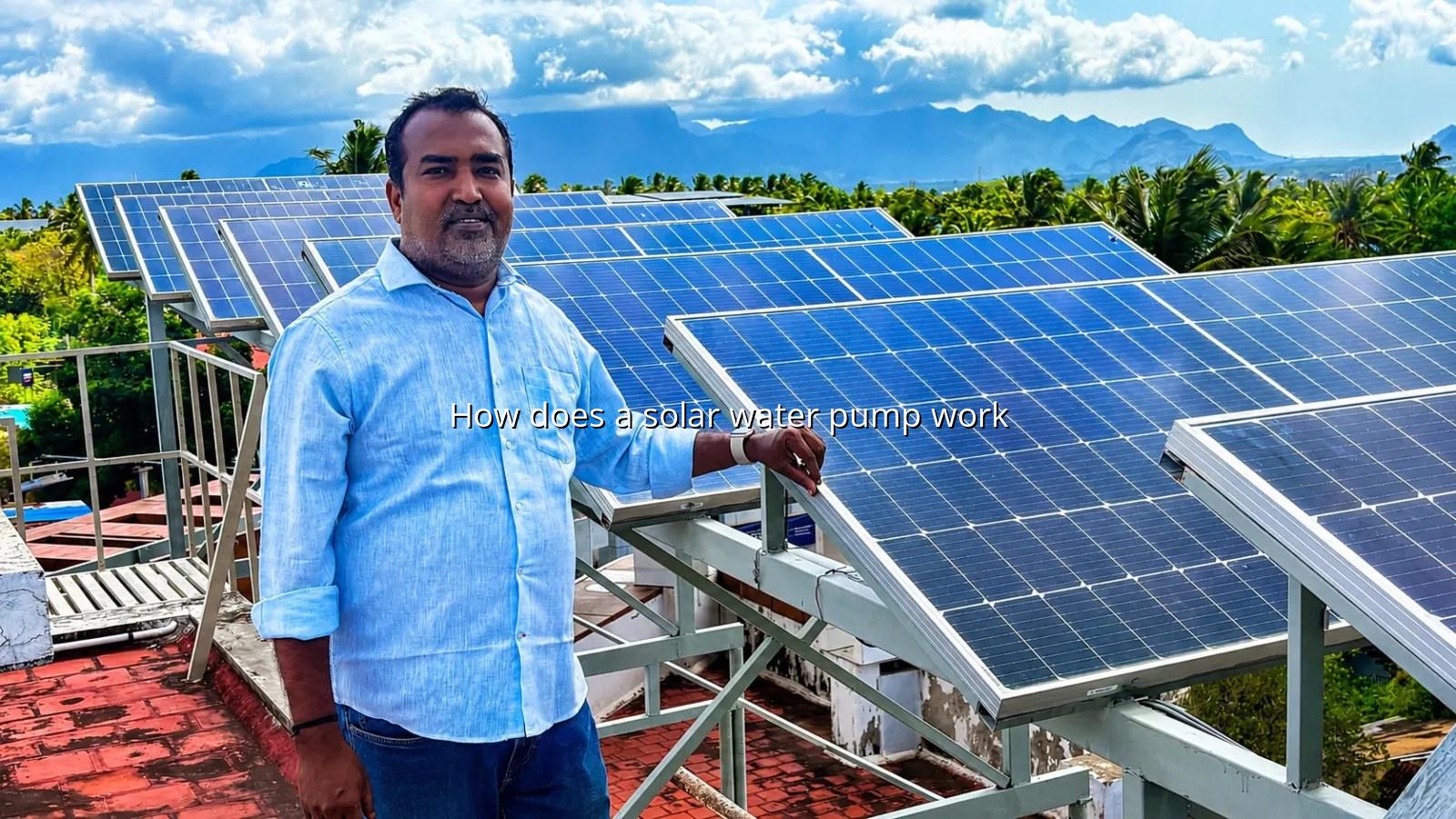
Inside the system
The parts that work together to move water
A solar pumping setup is a chain of parts, not just panels on a frame. If one link is wrong, the whole system feels weak. So we check the water source, the electrical side and the water path together before we recommend anything.
Panels, control unit and motor
Solar panels create DC power when sunlight falls on them. That power goes to a controller, inverter or pump drive depending on the pump model, and that unit helps the motor start and stay within the right working range. If the panels sit in shade or the angle is poor, the output drops quickly, especially on mornings after the south-west monsoon when the sky can stay hazy for longer than people expect.
Source, pipe line and discharge point
The pump never works in isolation. It must lift water from a borewell, sump or open source, push it through pipes and deliver it where irrigation or use is planned. In the windier stretches near Aralvaimozhi, we pay close attention to the mounting base and pipe fixing so vibration does not become a problem later.
- Sunlight reaches the panels. The panels convert that light into electricity during the day, so the system has its own source of power.
- The controller conditions the power. It helps match what the motor needs and protects the pump from unstable input.
- The motor starts the pump. The impeller or pumping mechanism begins moving water from the source.
- Water rises through the pipeline. Flow depends on head, pipe length, bends and the actual source level.
- The water reaches storage or irrigation. Some farms fill a tank first, while others send water straight into field lines.
Before we size anything
What we check so the pump fits the farm, not the other way round
We don't sell one standard system. That matters a lot here, because a small field near Boothapandi may need a very different solution from a deeper borewell at Thiruvattar. The real question is not just whether the pump can run. It is whether it can do the job on your site, with your pipe route and in your actual working hours.
First we look at the water source. Bore depth, water level and source type decide how much lift is needed. Next we check the crop or land use, because a coconut plot, a vegetable bed and a mixed farm don't ask for the same flow pattern. Then we look at panel space, cabling, access for maintenance and how the structure will handle local wind.
The practical details that change the result
- Sun hours on the actual site, not only the district average.
- Shade from trees, tanks or nearby buildings.
- Pipe length, bends and the height the water has to rise.
- Motor type and whether the pump is built for direct solar use.
- Mounting strength for windy and near-coastal conditions.
- Drainage and cable sealing for monsoon periods.
What people compare
Common solar pumping setups and how they behave
The right design depends on how you use water during the day. A garden plot, a borewell-fed farm and a remote field with no dependable EB connection can all lead to different answers, so we explain the trade-offs plainly.
| Setup type | How it works | Best fit | Main site check |
|---|---|---|---|
| Direct solar pumping | Panels feed the pump during sunlight hours with no battery bank in the middle. | Farms that can pump while the sun is available and store water in a tank. | Water level, pump head and the daily pumping pattern. |
| Solar pumping with storage tank | The pump fills a tank first, then irrigation happens from stored water later. | Plots that need water in a different time window from pumping. | Tank location, pipe routing and discharge height. |
| Solar pumping for borewells | The motor lifts water from below ground and pushes it through the discharge line. | Deeper sources where the lift calculation matters a lot. | Bore depth, water recovery and motor match. |
| Solar pumping for open sources | The pump draws from a pond, sump or open well and moves it into the field system. | Land with a usable open water source and shorter pipe runs. | Source level, debris risk and pipe protection. |
How the work moves
The usual path from first call to commissioning
Most people want to know what happens after they contact us. The short answer is that we keep it simple and keep it tied to the site, not to a generic brochure. For farms around Kulasekharam or inland plots near Thovalai, that means a real survey first and a design only after the ground picture is clear.
After the first call, we visit the site and check the water source, available area and the route for cabling and piping. Then we suggest a pump type, panel arrangement and mounting approach that fit the land and the water need. Once you agree, installation starts and our team handles the electrical connections, mechanical fitting and final checks. If the system needs EB-related documentation or subsidy guidance under the applicable programme, we help with that part too.
A simple seven-step flow
- Contact us. Tell us what you're trying to pump and where the site is.
- Free site survey. We inspect the borewell or water source, the plot and the mounting area.
- System design and quotation. We match the pump and panel layout to the site.
- Installation. The team fits the panels, pump, wiring and pipe connections.
- EB and documentation. We guide the paperwork that needs to be in place.
- Commissioning. We test flow, connections and basic working stability.
- After-sales support. You get one year of free service support after installation, and we stay reachable after that too.
Small details that matter
What helps a solar water pump keep working well
A solar water pump can be very steady when the site is prepared properly. A lot of trouble comes from the small things, not from the panels themselves. Loose cable glands, poor pipe support, weak mounting and the wrong head calculation cause more calls than people expect.
In the coastal side of the district, salt-laden air can creep into connections if they are left exposed. Near the windier stretches, a light frame is a bad idea. And when the monsoon stays on for days, drainage and sealing matter more than a fancy brochure ever will.
A few habits that save trouble
- Keep shade away from the panels as much as practical.
- Check cable joints after heavy rain or strong wind.
- Make sure the pump has a clean water source with low debris.
- Support long pipe runs so the pump isn't fighting extra strain.
- Wash panel surfaces when dust or salt film starts to build up.
How JRS SunTech Energy can help
Site-first solar pumping advice for real farms
If you want to know how does a solar water pump work on your own land, we can look at the borewell, the pipe route and the pumping need in one visit. We serve farms and agricultural sites across Kanyakumari District from our office in Kottar, Nagercoil, and we keep the advice tied to your actual site conditions. That means honest sizing, careful installation and support after the system is running.
JRS SunTech Energy, Door No. 227, First Floor, Cape Road, St. Xavier's Church Junction, Kottar, Nagercoil, Kanyakumari District, Tamil Nadu - 629002. Phone: 9787775999 | Email: jrssuntechenergy@gmail.com
Frequently asked
Questions we hear about solar water pump systems
The panels make DC power from sunlight and that power runs the pump through a controller or inverter, depending on the model. When the sun is strong enough, the motor turns and water is lifted from the borewell into a tank, line or irrigation network. On sites around Thovalai and Boothapandi, we also check the water level, pipe run and actual head before we say which pump type fits.
Yes, many farm pumping systems are built without batteries. The pump runs while there is enough sunlight, so water is usually pumped in the daytime and stored for later use. That keeps the system simple and it suits farms that can plan watering around daylight hours.
We look at the water source, bore depth, pipe length, total head, motor type, shade and the way the land is used. A field at Thiruvattar is not the same as a shallow open source near Aralvaimozhi, so we never assume one size will suit every site. If those details are ignored, the flow can be weak or the pump may keep stopping.
Yes, it can work well with drip lines when the pump and controller are matched properly. Drip needs a steady pressure pattern, so the design has to suit the crop, the line layout and the water storage arrangement. We usually ask what you grow and how many hours of water your field really needs.
That depends on the site, the civil base, the cable route and the model selected. After the survey and design, the work moves through installation, electrical checks and final commissioning. Easy-access sites move faster, while remote agricultural land can take longer because the logistics are different.
Yes, we travel across Kanyakumari District for site surveys and farm work. A place like Munchirai often needs a close look at borewell condition, pipe routing and mounting strength before any pump is chosen. We match the pump to the site instead of forcing the site to fit the pump.
Hurry up!Subsidy ends 31 March 2027 · 134 days left
Next step
Need help choosing the right solar pump?
Send us your borewell depth, crop type and site location, and we’ll tell you what suits the land best.
- Your electricity requirement and 60-day EB bill
- Property type — home, shop, office, farm or institution
- Backup requirement and available roof space
Related: Solar Water Pumps · Off-Grid Solar · Contact
Free site survey · Kottar, Nagercoil