Solar guide
How to Size a Solar Battery Bank
A practical way to choose the right battery bank by looking at your loads, backup need, solar input and the way your site actually runs.
Battery sizing help
Start with the load, then choose the battery bank
How to size a solar battery bank begins with a simple question: what do you need to keep running when the grid drops or when the sun is gone. We hear that from homeowners in Kottar, shop owners around Thuckalay and farm users near Thovalai, and the answer is never the same twice.
The battery bank should fit the way your site actually lives. That means looking at the appliances, the backup hours, the inverter, the charging source and the roof or battery room where everything will sit. In Kanyakumari District, the sunshine helps a lot, but wind, salt air and monsoon rain still shape the layout, especially on exposed roofs and near the coast.
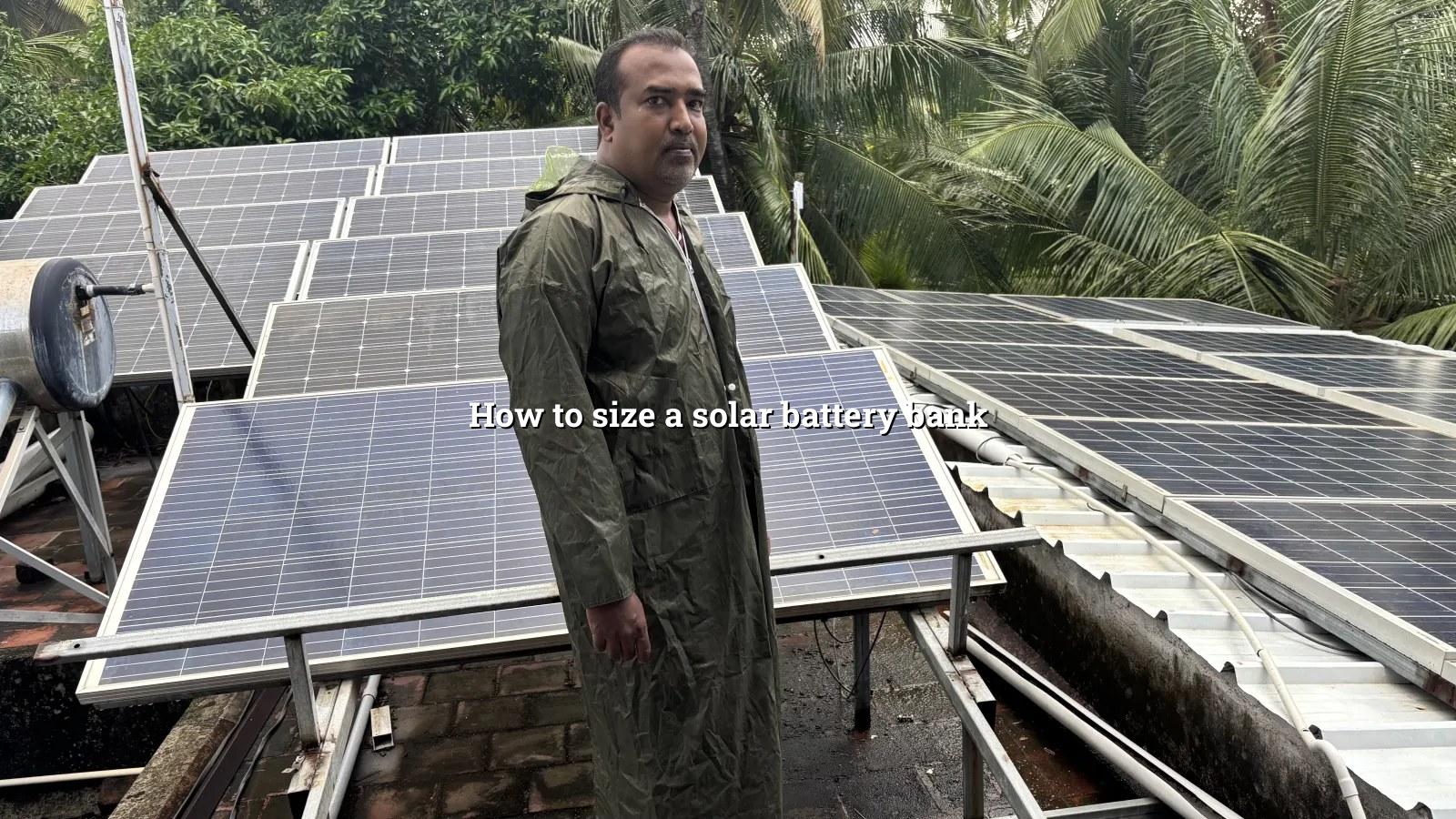
The sizing method
What we check before we recommend storage
We don’t start with a standard battery package. We start with your loads, your EB connection if you have one, roof space, site conditions and the actual number of hours you want backup for.
List the loads first
People often ask for a battery size before they’ve written down the loads. That usually leads to the wrong answer. We begin with lights, fans, computers, refrigeration, pumps or anything else you want on backup. A house in Vadasery may need a short list, while a shop in Marthandam with billing counters and printers needs a different pattern altogether.
Once the load list is clear, we estimate the energy needed through the day and compare that with the backup target. That is the point where the battery bank starts to make sense. It also helps us decide whether an on-grid solar setup, a hybrid system or an off-grid arrangement is the better fit for the site.
Match storage to real use
A battery bank that only carries lights for a few hours is not the same as one that has to keep the whole site alive through an outage. Some customers mainly want evening support for fans and internet, while others need the full load to stay up for much longer. If the roof sits in a windy place like Aralvaimozhi, the mounting and cable routing matter almost as much as the batteries.
We also check inverter compatibility, charging current and the room or wall space available for safe installation. If the battery bay is cramped, the plan changes. Good sizing is part maths and part field sense, and honestly the field part matters more than most people expect.
- Write the load list. Note every appliance you want on backup, with its wattage and how long it stays on.
- Set the backup target. Tell us if you want night support, outage support or full off-grid running.
- Check the inverter fit. The inverter has to match the battery voltage and the load pattern you actually use.
- Choose the battery type. Lead-acid and lithium storage behave differently, so the same load can call for a different bank.
- Allow for the site conditions. Heat, salt air, monsoon damp and cable run length all shape the final layout.
At a glance
The main sizing factors we compare
Every site in Kanyakumari District asks for a slightly different answer. This simple reference shows the parts we look at before recommending a battery bank.
| Sizing factor | What we check | Why it matters |
|---|---|---|
| Daily load | Lights, fans, computers, pumps or refrigeration that must run on backup | Sets the base storage requirement |
| Backup hours | How long you want the system to carry the load without grid support | Longer backup means more storage and smarter charging planning |
| Battery type | Lead-acid or lithium, chosen for usage style and site fit | Each type has a different usable capacity pattern |
| Charging source | Solar array output, grid charging, or both in a hybrid setup | The bank has to recharge within the time available |
| Site conditions | Roof type, heat, wind, salt exposure and cable routing | Affects the installation style and hardware choice |
Local factors
Why the district changes the answer
Kanyakumari District gets strong sunshine through much of the year, so solar charging is not the hard part. The hard part is making the battery bank suit the roof and weather. A tiled house roof in Kottar is handled differently from an RCC flat roof in Nagercoil, and a near-coastal site in Manavalakurichi needs more care with hardware and electrical protection. We’ve seen people focus only on battery size and ignore cable path, which is usually where trouble starts.
Monsoon periods matter too. Water ingress at a junction box, poor sealing on a sheet roof or loose routing near a gutter can create nuisance faults later. So when someone asks how to size a solar battery bank, we also ask where the system will live, who will use it and what the roof looks like after a hard rain.
Things worth checking before you finalise the design
- Count the real backup loads, not every appliance in the building.
- Note whether the site is on-grid, off-grid or meant for hybrid use.
- Check roof space, shade and the direction the panels can face.
- Look at the cable run from panels to inverter and from inverter to battery.
- Ask if the site is exposed to strong wind or salt-laden air.
If the battery bank is for a farm, we also think about pump timing and whether the site in Thovalai or nearby land can get enough daytime charging. That kind of detail changes the answer a lot. On office roofs the load pattern is steadier, while homes usually draw more in the evening, and that changes what we prioritise.
And yes, even the battery room matters. A tidy, shaded, well-ventilated space makes maintenance easier later, especially when the system has to be checked after the first few weeks of use.
Step by step
The way we size a battery bank before installation
We keep the process simple, but not shallow. A battery bank can look straightforward from the outside, then one wrong guess about inverter size or daily load throws the whole plan off. So we work through the details in order and keep the customer in the loop at each stage.
What happens during a proper site visit
First we speak with you and gather the basic use case. Then we do a free site survey, look at the roof or battery location, check the EB connection where it applies, and note the equipment already in place. After that we prepare the system design and quotation, then we move to installation, EB and documentation support, commissioning and after-sales support. If the system is at a shop in Kuzhithurai or a house near Suchindram, the steps stay the same even though the details change.
This is where a local solar team helps. We know the buildings here, the heat, the wind, the salt air and the way monsoon water finds weak joints. We also know when a battery bank is the right answer and when it’s smarter to improve the panel layout, inverter choice or maintenance first.
We also check whether the chosen storage works with the rest of the system. If the battery bank is too small, you end up short on backup. If it’s oversized for the site, you pay for capacity you may never really use. Neither one is a good fit.
Battery types and use cases
What changes between lead-acid and lithium storage
Battery type changes the way we size the bank. The loads may stay the same, but the storage pattern doesn’t.
Lead-acid batteries
Lead-acid batteries are still used in many homes and small backup systems because the setup is familiar and the layout is easy to understand. They need proper spacing, regular inspection and a charger that suits the battery behavior. When the site is simple and the backup need is moderate, they can still be a practical choice.
Lithium batteries
Lithium batteries are chosen when the customer wants a more modern storage option and a tighter installation footprint. The sizing logic still starts with loads and backup hours, but the battery behavior is different, so the bank layout changes too. We look at the inverter, the charging profile and the site use before recommending that route.
- Lead-acid and lithium are sized differently, even for the same load list.
- The inverter must suit the battery voltage and the way the site uses power.
- Charging time matters if you want the bank ready for the next evening.
- Ventilation, cable layout and access for checks should be planned from day one.
How JRS SunTech Energy Can Help
Battery sizing for homes, shops and solar backup systems
We size battery banks for on-grid backup, off-grid sites and hybrid solar systems, and we do it from the real load pattern rather than a guess. Our team serves Nagercoil and Kanyakumari District from the Kottar office, and we can inspect older setups too if your inverter or battery bank is already in place. If you need help with products, installation, subsidy guidance or documentation, we’ll talk you through it without pushing one standard package.
Contact JRS SunTech Energy, Door No. 227, First Floor, Cape Road, St. Xavier's Church Junction, Kottar, Nagercoil, Kanyakumari District, Tamil Nadu - 629002. Phone: 9787775999 | Email: jrssuntechenergy@gmail.com.
If your setup is leaning toward inverters & batteries, lithium batteries or off-grid solar, we can help match the storage to the rest of the system.
Frequently asked
Questions people ask about how to size a solar battery bank
Start with the loads you want to run during backup and write down their watts and the number of hours you use them. Then look at whether the system is for night use, outage backup or full off-grid running, because those are very different needs.
The first step is always to list the appliances you want to support, not the battery brand. Once that is clear, we can match the battery bank to the inverter, solar array and expected daily use.
No, that usually gives the wrong result. The inverter matters, but the real sizing depends on your energy use, backup hours and how much solar charging you can get from the roof or site.
Yes, it does. Lead-acid and lithium batteries behave differently, especially in usable capacity and charging pattern, so the same load may need a different bank layout depending on the storage type.
A roof in Kottar, a shop in Thuckalay or a farm near Thovalai will not run the same way, and the battery bank should match that pattern. We also look at local sunshine, wind exposure and whether the site is on-grid or more dependent on backup.
Yes, we can check the present setup and tell you if the battery bank, inverter and wiring are matched properly. If the system was installed by someone else, we can still inspect it and suggest the right next step.
Hurry up!Subsidy ends 31 March 2027 · 134 days left
Next step
Need help sizing your battery bank?
Send us your load list, roof type and whether you want backup for night use or outage support. We’ll tell you the practical next step.
- Your electricity requirement and 60-day EB bill
- Property type — home, shop, office, farm or institution
- Backup requirement and available roof space
Related: Solar Inverters & Batteries · Hybrid Solar · Contact
Free site survey · Kottar, Nagercoil