Solar water heating
How Does a Solar Water Heater Work
A practical look at the collector, tank and plumbing, with the roof and weather points that matter in Kottar and across the district.
Hot water basics
What actually happens inside a solar water heater?
How does a solar water heater work is usually the first question people ask when they want hot water without depending on a switch every morning. The answer is simple enough: the system catches sunlight, turns that heat into usable hot water, and stores it for later. The detail that matters is how the collector, tank and pipes are matched to the home, because the wrong fit can leave a family disappointed even when the sun is doing its part.
Around Kanyakumari District, that detail matters a lot. We get plenty of sunshine, yet we also have monsoon periods, salt-laden air in coastal stretches and stronger wind exposure than many people expect. A house in Kottar may need a different frame, pipe route or service access than one in Vadasery or Suchindram, so we always look at the roof before we talk about a system.
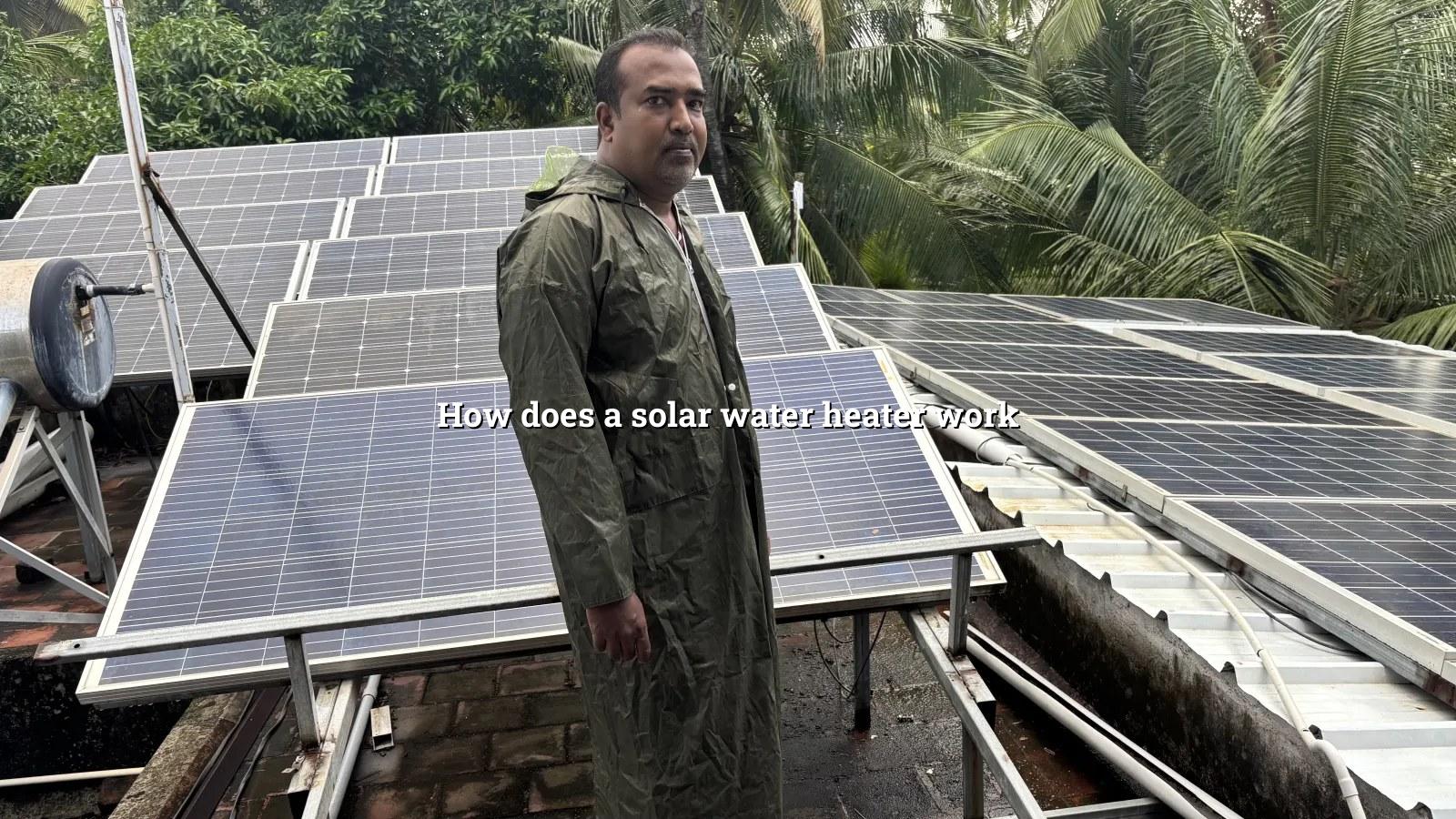
The heating process
From sunlight to stored hot water
When a customer asks how the system works, we start with the sequence. Once you see the order of events, the whole setup becomes easier to understand and easier to plan on your roof.
The collector is where the heat begins
The collector sits on the roof in the part that gets the best sun. Its job is to absorb solar energy and pass that heat into the water or into a heat-transfer medium, depending on the design. If the collector is shaded, badly angled or loosely mounted, the system cannot perform the way it should. In coastal spots such as Colachel or Manavalakurichi, we also think about salt air because the fittings and support hardware need the right protection.
The tank keeps the heat ready for use
The storage tank does exactly what its name says. It holds the hot water until the family needs it, and the insulation slows down heat loss after sunset or on a dull morning. Tank size has to suit the household use pattern, because a small tank may run short too early, while a bigger one than needed spends more time holding water than it should. Most families just want the bath routine to feel normal, not technical.
- Sunlight reaches the collector. The absorber surface gathers heat from the sun.
- The water warms up. Heat transfers into the water or the circulating medium inside the system.
- Hot water moves upward. In many systems the natural rise of hot water does the job, while some setups use a pump or controller.
- The tank stores the hot water. Insulation helps keep the temperature steady after sunset or early next morning.
- You draw water at the tap. The heated water travels to the bathroom or utility point when you open the line.
What the site changes
Why the same system behaves differently from one roof to another
A solar water heater is simple in principle, but the site decides how well it behaves. Roof direction, nearby shade, pipe length, roof material and wind exposure all affect the final result. We look at the actual house, not a brochure picture, because a sloped tiled roof in Thovalai does not behave like a flat RCC roof in Nagercoil.
Water quality matters too. If the supply carries scale or if the existing plumbing has older valves and tight bends, the layout needs more care and better access for service. During the south-west and north-east monsoon periods, drainage and sealing around roof penetrations become more important than people expect. Small leaks can turn into larger repairs if they are ignored.
Things we check before we say yes to a layout
- Roof area that gets direct sun through the day
- Support for the collector and tank frame
- Pipe route from the roof to bathrooms or utility points
- Shade from trees, water tanks or taller nearby buildings
- Wind loading on exposed roofs and sheet structures
- Space for cleaning, inspection and future servicing
System choices
Direct, indirect, natural circulation, pumped
People hear these terms and assume they need to memorise them. You don't. What matters is which type fits your water source, roof layout and daily use pattern.
| Type | How it works | Best fit | What we watch for |
|---|---|---|---|
| Direct system | Water is heated and stored through a simple flow path. | Homes with clean water and straightforward plumbing. | Scaling, pipe routing and roof placement. |
| Indirect system | A heat-transfer medium carries warmth to the stored water. | Sites where water quality or temperature control needs more care. | Heat exchanger design and service access. |
| Natural circulation | Hot water rises on its own and moves between collector and tank. | Many homes with a practical roof layout. | Height difference, tank position and pipe slope. |
| Pumped circulation | A small pump helps the fluid move between parts of the system. | Layouts that need controlled flow or special positioning. | Power supply, controls and maintenance access. |
This is only a starting point. We still size and place the equipment based on the home, the bathing pattern and the roof conditions we actually see. A family in Padmanabhapuram that uses hot water at different times may need a different layout from a small commercial setup in Thuckalay, even if the buildings look similar from the street.
How we work
The way we plan a solar water heater job
The working principle is only part of the story. The other half is placing the system where it can do its job properly and making sure the plumbing is sensible from the start. Here is the way we usually handle it.
Our step-by-step approach
- We start with the family’s use pattern. We ask who uses hot water, when they need it and how many points are involved.
- We inspect the roof and plumbing. We check shade, roof strength, access and the route from the tank to the bathrooms.
- We suggest a fitting system. That may be a direct, indirect or pumped setup depending on the site.
- We install with weather in mind. Support brackets, pipe sealing and insulation matter in the district’s wind and monsoon conditions.
- We test the flow and temperature. Before handover, we make sure water reaches the outlet properly and the tank behaves as expected.
And once the system is running, the first few days tell you a lot. People notice the morning routine changing, and they stop thinking about the switch they used to keep checking. That quiet change is the point.
If the roof is awkward, we say so. If the plumbing needs rework, we say that too. It saves time later, and it avoids the kind of installation that looks neat on day one but feels annoying a month after use.
Practical care
What keeps the system working properly over time?
A solar water heater does not ask for much, but it does ask for basic care. Keep the collector clean, check for loose fittings after heavy weather and look at the insulation on visible pipes from time to time. If dust, leaves or bird droppings build up on the collector, it may lose some of its ability to absorb heat.
In coastal stretches, fittings and connections need a closer look because air near the sea can be hard on metal parts. In rainy stretches, drainage and waterproofing matter as well. If something feels off, a quick inspection is better than waiting for the next bath time to expose the problem.
Small habits that help the system
- Keep the collector surface free from dirt and leaves
- Check that the tank area is clear and safe to reach
- Look for drips around joints after long rain
- Ask for inspection if hot water flow suddenly drops
- Notice early if new shade from trees begins to cover the roof
We we can usually spot trouble early when a customer calls about a slow flow or a sudden temperature drop. It saves time. It also keeps the issue from spreading into the plumbing line or the roof seal.
Local use cases
What a home owner usually wants to know before installation
Most people are not asking for theory. They want to know whether the system will fit their roof, whether it will be easy to use every day and what sort of support is needed after fitting. That is the practical side of the job, and it is where good site checking matters most.
A house in Kottar with a clear RCC roof may give us one kind of layout, while a family home in Suchindram with different shading or a sloped roof may call for another. The same idea applies in Vadasery when the roof carries other equipment or when the hot-water line has a long route to the bathrooms. We adjust to the site instead of forcing the roof to fit a one-size plan.
How JRS SunTech Energy Can Help
What we do for a solar water heater enquiry
We start with the roof, the plumbing and the way your family uses hot water, then we tell you plainly what type of solar water heater makes sense. If the site in Kottar has good sun access, the plan may stay simple; if the roof is windier or the pipe run is longer, we factor that in from the beginning instead of pretending it doesn't matter.
Our team handles survey, system design, installation, EB-related documentation where needed and after-sales support. You also get one year of free service support after installation, with continued technical help after that depending on the product and the installation. If you want a proper site visit, reach us at JRS SunTech Energy, Door No. 227, First Floor, Cape Road, St. Xavier's Church Junction, Kottar, Nagercoil, Kanyakumari District, Tamil Nadu - 629002. Phone: 9787775999. Email: jrssuntechenergy@gmail.com.
Frequently asked
Questions people ask before they put one on the roof
Sunlight heats the collector, the heat moves into the water, and the hot water is stored in the tank until you need it. Once the tap is opened, that stored water moves through the plumbing to the bathroom or utility point. The exact movement depends on the system type, but the working idea stays the same: collect heat, hold it, and use it later.
Yes, it can still work, though the output will be lower when the sun is weak. In Kanyakumari District we get strong daylight for much of the year, but the monsoon months can slow things down, so sizing and insulation matter. Many homes keep a backup heater for stretches of dull weather.
RCC flat roofs are common and usually straightforward, while sloped tiled roofs and sheet roofs need a careful look at support and pipe routing. We check roof strength, access, shade and the path for the hot-water line before we suggest a setup. The collector also needs to sit securely in wind.
Most basic systems do not need electricity to heat water. Some pumped or controller-based setups may use a small amount for circulation or backup features, but the heating itself comes from sunlight. That is why many families ask about it when they want lower running effort.
That depends on the water quality, the roof layout and the pipe path from the tank to the bathrooms. We look at the actual site instead of guessing. Homes near the coast or homes with older plumbing can need a different arrangement, so a survey helps before installation.
Yes, in many cases it can. The main things are roof space, safe placement, pipe routing and whether the family has enough regular hot-water use for the system to make sense day to day. A site survey usually clears up the answer quickly.
Hurry up!Subsidy ends 31 March 2027 · 134 days left
Next step
Thinking about solar hot water for your home?
Send us a photo of the roof, your area and how many bathrooms need hot water so we can suggest the right setup.
- Your electricity requirement and 60-day EB bill
- Property type — home, shop, office, farm or institution
- Backup requirement and available roof space
Related: Solar Water Heaters · Products · Contact