Solar troubleshooting
How to Check if Your Solar Panels Are Working
Simple checks for output, inverter messages and roof-side clues, so you know what is fine and what needs a proper look.
Solar troubleshooting
Start with the inverter, not with guesses
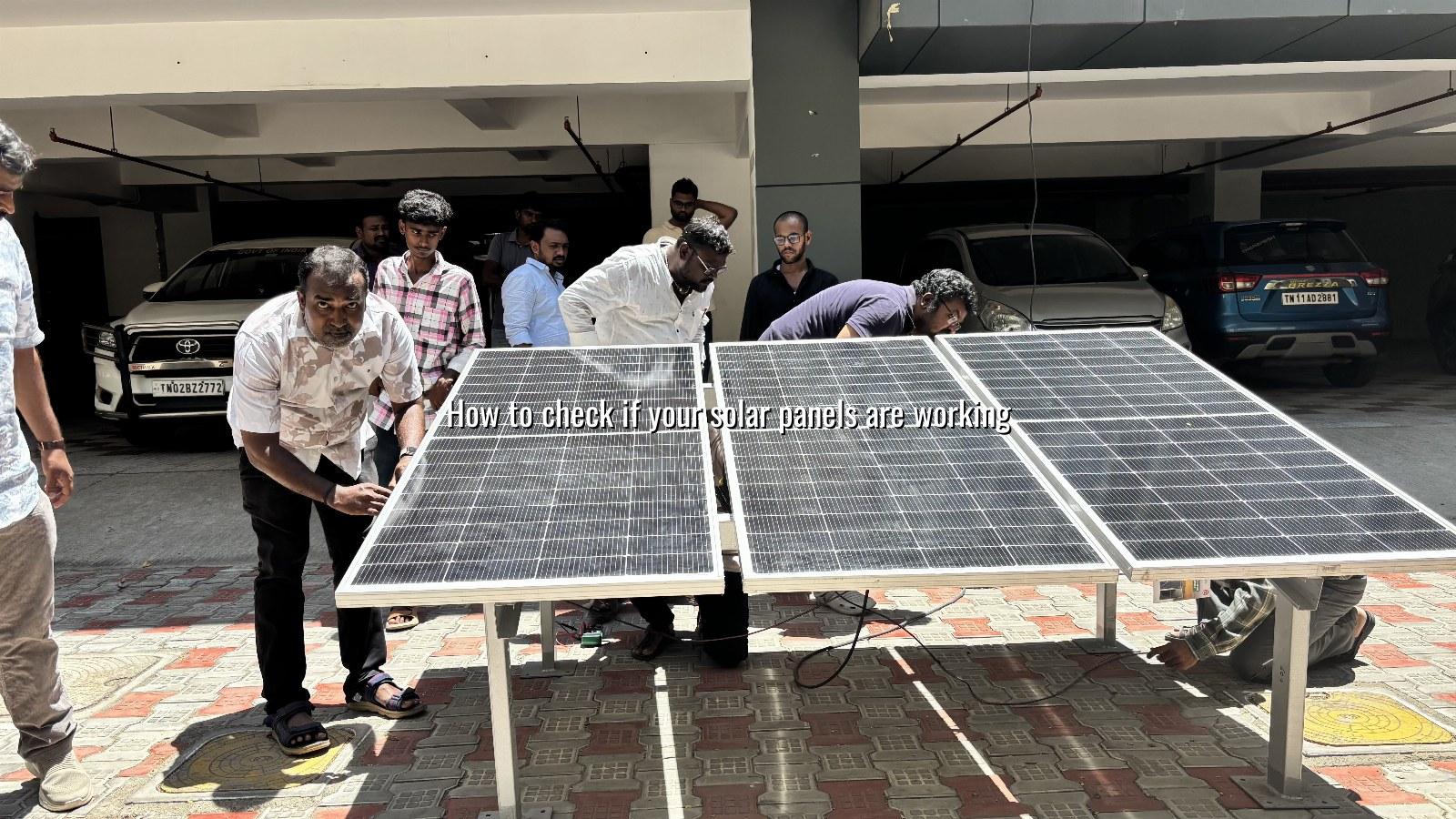
How to check if your solar panels are working is usually simpler than people think. The first clues are already on the system itself: the inverter display, the app if there is one, and the way the EB connection behaves while the sun is up. Once you know what those signs mean, you can separate a real fault from a bad weather day or a little dirt on the glass.
We get this question often from homeowners in Kottar after they notice the bill, the daytime load or the inverter light looking different from usual. Around Kanyakumari District, strong wind, salt-laden air and monsoon rain can all affect the same system in different ways, so the check has to be practical. You do not need to climb onto the roof first. Most of the useful clues are visible from ground level.
What to watch
The quickest way to read a solar system without tools
A solar system tells you a lot if you know where to look. Begin with the inverter, then check what the roof looks like from the ground, then compare both with the weather and the EB connection. A system can be alive and still underperforming because of shade, loose wiring, a dirty module, or a fault that only appears when the unit gets warm.
Read the inverter before anything else
For most homes, the inverter is the clearest signboard in the whole setup. If it has a screen, look for generation figures, charging activity, export signs, battery status or a warning code. A blank display, repeated restart, or a fault light that keeps coming back means you should stop relying on assumptions. Don't keep resetting it over and over, because that can hide the pattern you need to show the technician.
Judge the conditions of the day
Output changes through the day, and it changes for real reasons. Cloud cover, the sun angle, heat on the roof, dust, and a branch that has grown a little too far can all change the reading. In places like Thovalai and Boothapandi, where wind can move loose fittings or shift light items near the roof, the problem is often a small change outside the panels rather than a failure inside them.
What you can spot from the ground
Stand back and look at the array as a whole. You are checking for obvious shade, dirt streaks, broken glass, a loose cable, an off-angle panel, or a structure that no longer sits as straight as it used to. On RCC flat roofs, it is easier to notice a shifted frame; on sloped tiled roofs, the first clue may be a cable route or clamp that moved after a rain spell. If you have a sheet roof, listen for rattling when the wind picks up because that can point to a fastening issue.
Then compare what you see with the inverter and the EB side. On an on-grid system, the daytime behaviour of the inverter and the EB connection should make sense together. If the sky is clear and the roof is bright but the output is flat, you have a real clue, not just a feeling. We explain it plainly because most people only want to know one thing: is it a small issue, or something that needs repair.
- Check the inverter display. Note any fault light, warning code, restart cycle or blank screen before touching anything.
- Compare the reading with daylight. Bright mid-day should usually look stronger than early morning or a cloudy patch of weather.
- Look for new shade. A tree, tank, wall, scaffold or even a seasonal branch can take a system down more than people expect.
- Inspect visible wiring. Discoloured connectors, hanging loops or damp-looking points need attention, especially near the coast.
- Notice the pattern. If the same thing happens every afternoon or only after rain, that pattern matters more than one random reading.
- Check what changed on the property. New construction, roof work, bird activity or a shifted tank stand can all affect output.
Why output slips
When the panels are not the only thing to blame
A solar system can look perfectly normal and still perform badly. That is usually because the weak point is not the glass, it is one of the other parts: a loose connector, a breaker, a fuse, earthing, the inverter, or a cable route that is letting in moisture. A quick guess from the roof rarely shows that whole picture.
In Kanyakumari District, the weather and the location of the home matter as much as the equipment. Salt air near the coast can make a small connection issue show itself sooner. During the south-west and north-east monsoon periods, drainage and cable sealing become more important, because water can travel along paths you would not notice in dry weather. A system that was fine in one season may need a check after a long wet stretch.
What changes from roof to roof
On RCC flat roofs in Nagercoil, we usually look at ventilation under the modules and whether the mounting structure is still sitting properly. On tiled roofs, especially where the roof work has been touched up a few times, cable entry and tile movement are common trouble spots. In a house near Muttom, corrosion and salt build-up can matter more than a cosmetic mark, because a small bit of rust at the wrong point can affect the whole string.
| What you notice | What it may point to | Next sensible step |
|---|---|---|
| Inverter warning or fault light | Wiring, grid, battery, or inverter-side issue | Write down the code and request inspection |
| Dust streaks or bird marks on panels | Lower generation, especially in strong sun | Arrange safe cleaning and compare output again |
| Good morning reading, weak afternoon reading | Heat, shade, or a connection problem appearing later in the day | Check shade changes and visible cable points |
| Panels look normal but the EB side still feels off | The issue may sit beyond the modules | Check the whole path from panel to load |
Simple checks
Small things worth checking before you call for help
A quick home check can answer a lot. It can also save you from sending someone onto the roof when the issue is actually obvious from the ground. Start with the easy things, then stop if you find a clear sign. There is no prize for guessing your way through it.
- See whether the inverter shows the same message every time you look at it.
- Notice if a new branch, water tank, wall or scaffold has started to throw shade on the array.
- Check whether the problem happens only after rain, or only when the roof is very hot.
- Compare one clear day with another clear day, not a cloudy afternoon with a bright morning.
- Look at the cable entry points for dampness, movement or signs of birds pulling at them.
- If batteries are part of the setup, note whether charging starts and stops in the way it normally does.
If the setup is off-grid or hybrid, the battery side matters just as much as the panel side. A weak battery can make a healthy array look guilty because the stored energy runs out too soon or the inverter starts behaving differently when the load rises. In farms around Thiruvattar and Pechiparai, we often see this after long periods of heavy use, when the answer is an inspection of the whole system rather than one quick look at the roof.
When the issue is not on the roof at all
Sometimes the modules are fine and the fault is somewhere else, such as the inverter, a breaker, a fuse, the AC side, or a protection device. That is why a proper check should follow the whole path from panel to load, not just the shiny part on top. If the system was installed by another company and you are not sure what was used where, that is still okay. We can inspect it and tell you, in plain words, what needs attention.
Step by step
How to narrow the problem down without making it worse
If you are doing your own first check, keep it calm and organised. Do not open sealed parts. Do not touch live wiring. Just collect enough clues so the next person does not have to start from zero. That makes the visit faster and the diagnosis cleaner.
- Look at the display. Take note of the exact light pattern, message or number you see on the inverter.
- Watch the system for a few minutes. See whether the numbers rise, stay flat, or keep dropping even when the sun is steady.
- Check the roof from the ground. Look for anything new that could block light or disturb the frame.
- Compare one clear day with another. If the behaviour changes only with weather, that points in a different direction than a constant fault.
- Collect the details before calling. A photo of the inverter screen and a short note about what changed helps a lot.
That simple sequence is usually enough to separate a minor adjustment from a real service need. And if the system is showing a repeated fault, stop there and call. Pressing buttons ten times in a row never makes a real issue clearer, it just makes the history harder to read.
How we approach it
How JRS SunTech Energy Can Help
We check solar systems the way a customer would want it done: start with the symptom, trace the full path, and explain the result without jargon. Whether it is a rooftop in Kottar, a shop in Marthandam or a home close to Rajakkamangalam, we look at the modules, inverter, mounting, wiring and site conditions together. If the problem is cleaning, repair, replacement or just a small adjustment, we will tell you honestly.
Our team handles solar service and maintenance for systems we installed and for systems installed by others. We also guide customers through the EB connection side, documentation and the steps linked to the applicable government solar programme when that applies. To speak with us, call 9787775999, email jrssuntechenergy@gmail.com, or visit Door No. 227, First Floor, Cape Road, St. Xavier's Church Junction, Kottar, Nagercoil, Kanyakumari District, Tamil Nadu - 629002.
If you want us to take a look, send a photo of the inverter display and a short note about what you noticed.
Frequently asked
Questions people ask when solar output looks wrong
The fastest check is the inverter display. If the sun is out and the unit shows generation, charging, or export activity, the array is doing something useful. If you have an app, compare that with what the EB connection is doing over the same hour.
Start with the inverter status, then look for new shade, heavy dust, or a fault light. In Kottar and nearby residential streets we often find the problem is not the panels themselves but a connector, a breaker, or something that started shading the roof after the installation.
Yes, and that is usually the right first step. You can read the inverter, watch for alarms, compare daytime behaviour, and look from the ground for obvious shade or loose wiring. Roof access should only happen when it is safe and when there is a real reason to go up.
That often happens when heat, partial shade, dust or a wiring issue starts showing up as the roof warms up. In coastal stretches such as Manavalakurichi and Colachel, salt and fine dust can make a weak connection show itself sooner than people expect.
A quick self-check every few weeks is sensible, especially after wind or rain. If output changes, or if the inverter keeps warning you, it is better to book a proper inspection instead of waiting and hoping it settles by itself.
No, usually they are still working, just not as well as they should. A dirty array can still make power, but the drop can be noticeable on tiled roofs and on properties where dust settles fast. The better question is whether the reading has changed from what you normally see on a clear day.
That points you away from the panel surface and toward the wiring path, protection devices, or the inverter itself. A healthy system should not leave you guessing for long. If the display is blank, cycling, or showing a fault code, write that down before you call.
If you have been staring at the inverter and still can't tell what is happening, that's normal. Most people need one calm look at the whole system, not three different guesses from three different people. A proper inspection usually answers the question quickly.
Hurry up!Subsidy ends 31 March 2027 · 134 days left
Next step
Not sure your solar system is doing what it should?
Send us a photo of the inverter display and a short note about what you are seeing, and we will help you figure out the next step.
- Your electricity requirement and 60-day EB bill
- Property type — home, shop, office, farm or institution
- Backup requirement and available roof space
Related: Solar Service & Maintenance · On-Grid Solar · Contact