Solar planning
Solar Generation Through the Year in Kanyakumari District
See how sunshine, monsoon weather, roof layout and local site conditions shape solar output across the year.
Solar output by season
What solar generation through the year in Kanyakumari District really means on a real roof
Solar generation through the year in Kanyakumari District is steady enough to make rooftop solar worthwhile, but it is never identical from one month to the next. A roof in Nagercoil may give a very different pattern from a shop roof in Marthandam, even when both seem to have plenty of sunlight. The roof shape, the EB units you use in a 60-day billing cycle and the way shade moves across the site all matter.
We get asked about this all the time by people who want a simple answer. The truth is a bit more practical. This district has strong sunshine for much of the year, yet the south-west and north-east monsoon periods bring cloud cover, wet roofs and days where production drops a little. Near the coast, salt-laden air adds another layer, because the mounting structure and electrical terminations need proper attention instead of a quick guess. That is why we start with the roof, the bill and the actual site conditions.
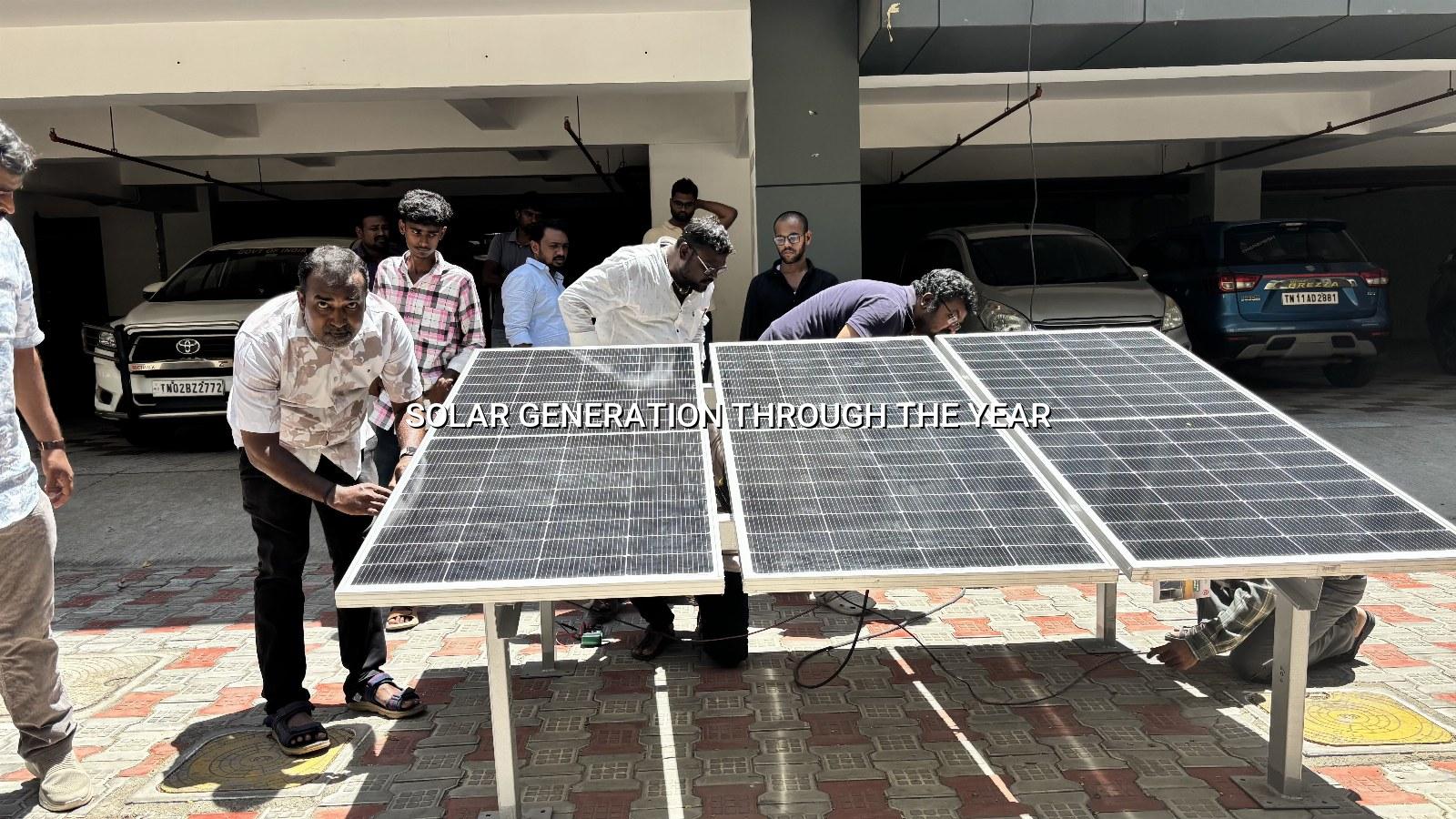
Year-round pattern
How the seasons change output, and why the roof decides the rest
The useful question is not whether solar works here. It does. The better question is how the same system behaves through drier months, cloudy spells and the monsoon stretch in between. Once you can picture that rhythm, you can make a better call on system type, mounting and maintenance.
Sunshine is strong, but the layout still sets the pace
Kanyakumari District gets enough sunlight for homes, shops and offices to benefit from rooftop solar. Even so, the roof layout can make a real difference. A flat RCC roof in Kottar usually gives us a cleaner arrangement, while a sloped tiled roof in Suchindram needs a different fixing method and more care around water sealing. Sheet roofs can work too, but the bracket spacing and cable route need to be planned properly, not rushed.
We also watch the moving shade. A water tank, parapet wall or nearby tree can trim output more than people expect, especially in the early morning and late afternoon. That effect repeats every day, so by the time you add up the season, it becomes a real part of solar generation through the year in Kanyakumari District. Small shadows matter here, even when the roof looks bright at noon.
Rainy weeks do not shut the system down
During the monsoon, solar still runs whenever there is usable light. What changes is the amount of light reaching the panels. Heavy rain also makes drainage, cable sealing and inverter placement more important than usual. If water pools around the array or runs where it should not, maintenance gets awkward later and the problem tends to repeat.
In coastal stretches such as Colachel and Manavalakurichi, we think about corrosion resistance from the start. That does not mean we overdo the structure. It means the hardware, fasteners and installation method should fit the air, the wind and the roof. The aim is simple: the system should still feel normal after the first season has passed.
- Check the EB units first. We begin with the 60-day bill history because that shows real use, not a rough estimate.
- Measure usable roof space. A roof can look large from the ground and still leave only one sensible zone for panels.
- Follow the shade path. Morning, noon and late-afternoon shade are not the same thing, and each one cuts output differently.
- Match the system to the site. On-grid, off-grid and hybrid systems behave in different ways, so the building and EB connection have to suit the choice.
- Plan for wind and rain. The district gets both, so structure and sealing deserve proper attention.
Practical comparison
What changes solar output across the year
This is the sort of thing we talk through during a survey. There is no single number that explains every roof. What matters is the set of conditions that push output up or down from season to season.
| Factor | What it does | What we check on site |
|---|---|---|
| Sun path | Changes the angle and intensity of light across the year | Roof orientation, tilt and free exposure |
| Monsoon cloud cover | Reduces the amount of direct sunlight on dark days | Seasonal access, drainage and shading patterns |
| Wind exposure | Decides how strong the mounting structure should be | Roof type, edge distance and fixing method |
| Salt-laden air | Can affect metal parts and electrical connections near the coast | Hardware choice, cable route and termination quality |
| Daily shade | Can reduce useful output even on bright days | Tanks, trees, walls, parapets and nearby buildings |
Site realities
Why one district can still have very different solar behaviour
A district with year-round sunshine still has its own quirks. The wind loading around the Aralvaimozhi gap is a real design issue, so mounting strength matters even when the roof looks calm on a still morning. Near the shore, the question shifts again because the air carries more salt and the hardware has to cope with that over time. In places such as Muttom and Rajakkamangalam, the roof may be fine, yet the connection details need more care than people expect.
Agriculture adds another layer. Borewells and pump sets in areas such as Boothapandi or Pechiparai are not chasing the same output pattern as a residence. A farmer wants water when it is needed, and the system must suit that job, especially when the weather turns mixed and cloudy. That is why solar pumping and off-grid planning need a different conversation from a simple home rooftop installation.
If you already have a system and the output feels off, we can inspect it too. Sometimes it only needs cleaning or a connection check. Sometimes one panel string gets shaded at the wrong hour. And sometimes the answer is that the roof has changed around the system, which happens more often than people admit.
A few practical points worth watching
- Panel cleaning matters more after dusty spells and after long rainy stretches.
- Waterproofing around cable entry points should be checked before and after the monsoon.
- RCC, tiled and sheet roofs need different fixing choices.
- Inverter placement should stay away from splash zones and awkward heat pockets.
- Any change to the roof later can affect the annual output pattern, even if the solar parts stay the same.
System planning
Choosing the right solar setup for the year ahead
The answer depends on the building. A home in Kottar with a regular EB connection often suits an on-grid setup because daytime solar can reduce the units you draw from TNEB. A farm, borewell or remote site may need an off-grid or hybrid arrangement because pumping and backup power behave differently from a house. If the roof is small or partly shaded, the first question may be whether the available area can carry the capacity you want without forcing awkward panel placement.
We can usually tell within the first site visit where the weak points will be. That might be a sloped tiled section, a cable path that is too exposed or a shadow line that only appears in the afternoon. In Thovalai, for example, wind can be a bigger design factor than a customer expects, while in Marthandam a shop roof may have enough area but not enough clear time around the water tank and signboard. Those are the details that decide whether the system feels easy to live with or becomes another thing to worry about.
What a proper survey should answer
A proper survey should tell you how much usable roof space you really have, what kind of mounting structure suits the roof, and where the inverter and cables should go. It should also say plainly if a repair, a cleaning or a small layout change is needed before installation. Honest answers save time. Nobody wants to find out later that the roof access is awkward or that the best panel face was left unused.
Typical year-round checks we make
- Look for shade at morning, noon and late afternoon, not just when the roof looks bright.
- Check the roof surface for cracks, loose sheets or water paths before fixing anything.
- Choose mounting hardware that suits coastal air, wind exposure and the roof material.
- Keep drainage clear so rainwater does not sit around the array after a heavy spell.
- Plan cable sealing and inverter placement so monsoon water does not become a nuisance.
- Match the system type to the EB connection, battery need and usage pattern, not to a brochure.
How we work
The seven-step process we follow from first call to commissioning
People often think the tricky part is the panels. In practice, the planning is where most of the value sits. Once the plan is right, the rest becomes much cleaner.
Our seven-step approach
- Contact us. You share your location, usage and a few roof details, and we decide how to proceed.
- Free site survey. We visit the property, check shade, roof type and electrical condition, then take the real measurements.
- System design and quotation. We recommend a suitable capacity and explain what fits your building, not a standard package.
- Installation. Our team fixes the structure, panels, inverter and wiring according to the site.
- EB and documentation. We guide the paperwork and the required steps with the local utility side of the work.
- Commissioning. We test the system, verify the connection and make sure the basic functions are in place.
- After-sales support. You get one year of free service support after installation, with continued technical help afterwards.
In our experience, customers in Padmanabhapuram and Kuzhithurai usually want the same thing: clear answers, not sales talk. They want to know how the roof will behave in monsoon weather, what happens if a shaded corner cannot be used, and how the EB process is handled. Those are fair questions, and we answer them plainly.
How JRS SunTech Energy Can Help
Practical help for homes, shops and farms in the district
JRS SunTech Energy plans rooftop solar, off-grid systems, hybrid systems, solar water pumps, inverters and batteries based on the actual site, not on a one-size setup. We also guide eligible customers through the subsidy paperwork and the EB connection steps, which makes the process less stressful. If you want a clear recommendation for your roof or your land, send us the bill details and a few photos and we will tell you honestly what makes sense.
Our office is at Door No. 227, First Floor, Cape Road, St. Xavier's Church Junction, Kottar, Nagercoil, Kanyakumari District, Tamil Nadu - 629002. You can call us at 9787775999 or email jrssuntechenergy@gmail.com. We do site visits across the district, and we do not guess when the roof needs a closer look.
Frequently asked
Questions customers ask about solar output across the year
It is usually steadier than many people expect because the district gets good sunlight for much of the year. The swings come more from cloud cover, rain spells, shade and how clean the panels stay than from any single dramatic seasonal change.
No, it does not stop it. The system still works whenever there is usable light, but output can soften on darker days, and roof drainage plus cable sealing matter more when the rain settles in.
Sun angle, nearby shade, roof tilt, dust and the inverter setup all play a part. A flat RCC roof in Kottar and a tiled roof in Vadasery can behave very differently even if they both look open from the street.
Neither by itself. We look at your EB units over the 60-day billing cycle, your roof space, your site conditions and how you actually use power through the year, then suggest a capacity that makes sense across seasons.
Salt-laden air can affect mounting hardware and electrical connections if the materials and sealing are not chosen carefully. That is why we pay attention to structure, fasteners and cable routes on houses and businesses close to the coast.
Yes. We guide eligible customers through the documents, the subsidy process and the EB side of the work so the job moves in the right order.
Local factors
Why the district behaves differently from an inland area
A district with year-round sunshine still has its own quirks. The wind loading around the Aralvaimozhi gap is a real design issue, so mounting strength matters even when the roof looks calm on a still morning. Near the shore, the question shifts again because the air carries more salt and the hardware has to cope with that over time. In places such as Muttom and Rajakkamangalam, the roof may be fine, yet the connection details need a bit more care than people expect.
Agriculture adds another layer. Borewells and pump sets in areas such as Boothapandi or Pechiparai are not chasing the same output pattern as a residence. A farmer wants water when it is needed, and the system must suit that job, especially when the weather turns mixed and cloudy. That is why solar pumping and off-grid planning need a different conversation from a simple home rooftop installation.
If you already have a system and the output feels off, we can inspect it too. Sometimes it only needs cleaning or a connection check. Sometimes one panel string gets shaded at the wrong hour. And sometimes the answer is that the roof has changed around the system, which happens more often than people admit.
A few practical points worth watching
- Panel cleaning matters more after dusty spells and after long rainy stretches.
- Waterproofing around cable entry points should be checked before and after the monsoon.
- RCC, tiled and sheet roofs need different fixing choices.
- Inverter placement should stay away from splash zones and awkward heat pockets.
- Any change to the roof later can affect the annual output pattern, even if the solar parts stay the same.
Hurry up!Subsidy ends 31 March 2027 · 134 days left
Next step
Want a clear view of your roof’s solar output across the year?
Send us your EB bill, roof photos and the site location. We will check the layout, shade and connection details before we suggest anything.
- Your electricity requirement and 60-day EB bill
- Property type — home, shop, office, farm or institution
- Backup requirement and available roof space
Related: Solar Solutions · Solar Maintenance · Contact
Free site survey · Kottar, Nagercoil