Solar maintenance
What to Check on a Solar System Before the Monsoon
A practical pre-rain checklist for rooftop solar owners in Nagercoil and Kanyakumari District, with the things we inspect before wind, rain and salt air start testing the system.
Monsoon checklist
Start with the things rain hits first
What to check on a solar system before the monsoon is really about catching small faults before wind, water and salt air turn them into bigger ones. In Kanyakumari District, a roof system can sit through months of bright sun and then suddenly get tested hard once the south-west monsoon starts pushing rain across the ridge lines. If you wait until water gets inside the inverter box or a connector starts heating up, the fix gets harder, and the weather usually does not wait for you.
We see the same pattern every year. A home in Kottar may have a clean-looking array, but one loose clamp, one cracked conduit bend or one cable tie that has gone brittle can be enough to cause a problem later. On a sloped tiled roof in Suchindram, the check is a little different from an RCC flat roof in Nagercoil, because water flow, access and cable sealing all matter in different ways.
And if your system is near the coast, the hardware needs a closer look than most people expect. Salt-laden air does not care that the installation still looks new from the road.
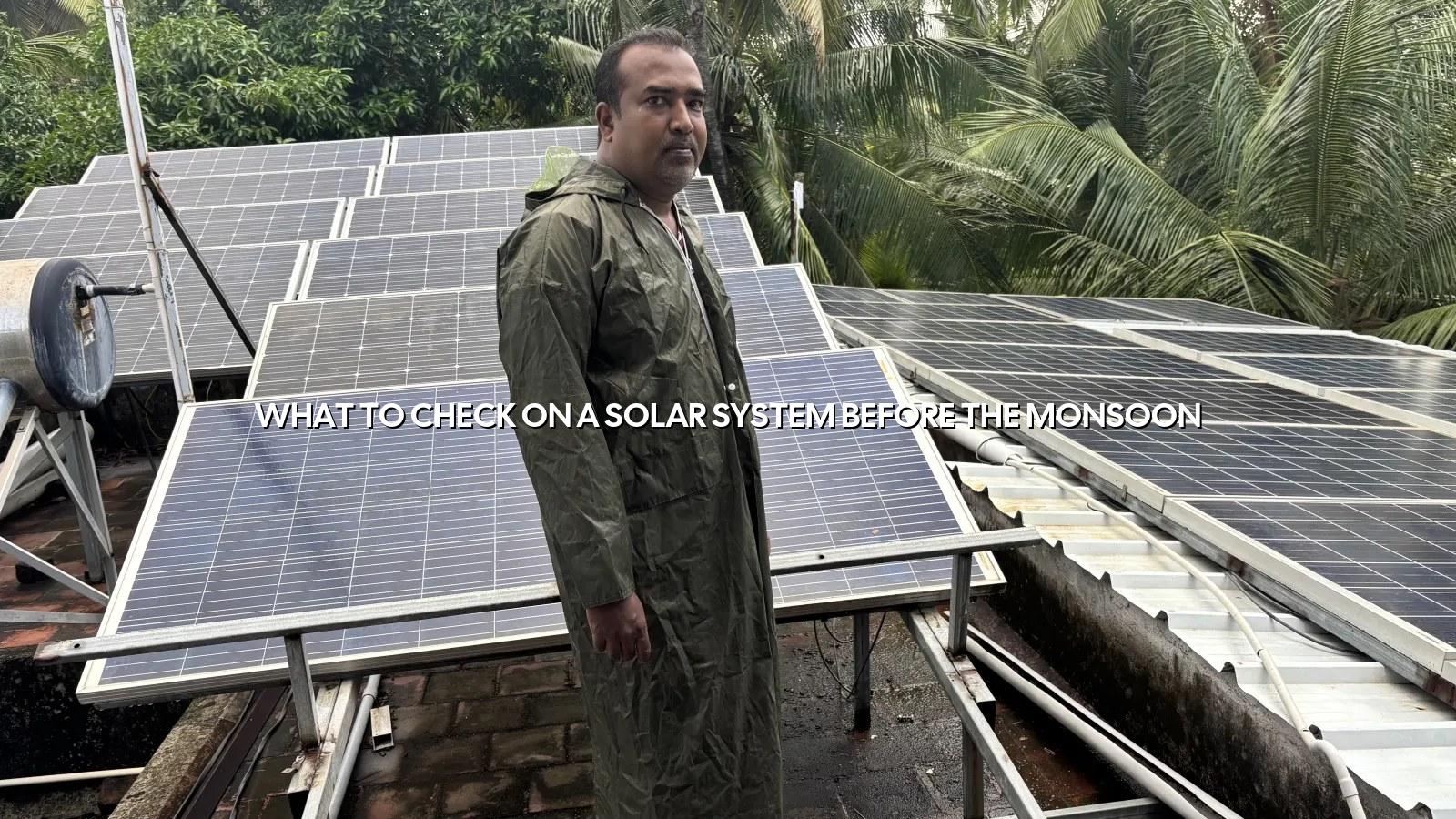
What to look at first
The pre-monsoon inspection should not be random
We usually start with the parts that are easiest to overlook. That sounds simple, but those are the same parts that cause trouble when rain and wind keep showing up every day.
Panels and glass surface
First, look at the panels themselves. Cracks, chipped corners, loose frames and heavy dirt build-up all deserve attention before the season changes. A panel that has a hairline crack may still seem to work, yet moisture and repeated thermal movement can make that fault show up later. We also check whether bird droppings, dust and salt film have been sitting on the glass for too long, because the first rains do not always wash everything away evenly.
If the array has spent the dry months under a tree edge or near a road that throws dust onto the roof, the glass can look worse than the owner thinks. That is the sort of thing a ground-level glance misses.
Mounting, clamps and roof fixings
Then we move to the mounting structure. In this district, wind exposure is not a theory, it is part of daily life in some stretches, and the Aralvaimozhi side can remind you of that very quickly. A loose clamp or a fastener that has started rusting needs a proper look before the monsoon, especially on sheet roofs where movement is more noticeable. On coastal roofs near Manavalakurichi, we pay closer attention to the hardware because salt-laden air can be hard on metal if the finish is already weak.
A system that feels steady in calm weather can start to sing, shake or shift once the first storm fronts arrive. That is the point where a small check saves you from a bigger repair later.
- Check the panels visually. Look for cracks, dirt, stains, broken glass edges and any sign of a hot spot or burn mark.
- Inspect the mounting structure. Make sure the frames, clamps and fasteners are tight and not bending, rusting or wobbling.
- Trace the cables. Follow the wiring from the array to the inverter and see that it is supported, sealed and not rubbing against sharp edges.
- Look at the inverter area. Keep the space dry, tidy and free from seepage, because rainwater does not belong near electrical equipment.
- Review drainage and roof slope. Water should move away from the array and not pool around junction boxes, conduits or roof penetrations.
Cables, seals and connectors
Why the wiring path deserves so much attention
Most people notice panels first. We pay a lot of attention to the cable path, because that is where moisture problems often begin.
A roof system can look neat from the ground and still have small gaps in the cable sealing. Once rainwater finds a weak point, it can travel along a conduit, sit inside a junction box or reach a connector that had already been under strain. In our work around Kanyakumari District, we have seen that a tidy cable route is not just about appearance, it is about keeping the system predictable when the weather turns rough.
We check whether the DC connectors are properly locked, whether the insulation is intact and whether the cable clips are still holding. If the installation sits on a flat RCC roof in Nagercoil, the cable run may be exposed to more direct water pooling during a heavy spell. On a sloped tiled roof in Thuckalay, the issue can be movement and access, because a slipped tile or a sharp ridge edge can wear a cable over time. Small detail, big effect.
The inverter side matters too. If there is any sign of seepage near the wall, or if the conduit entry was left open around a service point, rain can find it. It usually does.
A few things we always look for
- Any cable that hangs loose or touches a hot roof surface
- Cracked conduit bends, open joints or missing end caps
- Connector locks that do not feel firm when checked by hand
- Water stains near the inverter wall or on the underside of cable trays
- Signs of corrosion on terminals, especially near the coast
Reference check
What we compare during a monsoon readiness visit
This table is not about selling you anything. It is simply a quick way to show how different parts of the system are checked before the rains arrive.
| Item checked | What we look for | Why it matters before rain |
|---|---|---|
| Panels | Cracks, dirt, loose frame edges, staining | Moisture and debris can make a hidden fault show up faster |
| Mounting structure | Tight clamps, rust spots, movement, broken hardware | Wind load and vibration become more serious during storms |
| DC wiring | Sealing, insulation, connector lock, cable support | Water ingress often begins with a weak cable path |
| Inverter zone | Dry wall, clear airflow, no seepage, no loose terminations | The inverter is easier to protect than to repair after water entry |
| Roof drainage | Water flow, pooling, blocked channels, seal condition | Pooled water can stay around the array during a long monsoon spell |
A simple routine
How to check the system without missing the awkward bits
If you want a practical routine, use this order. It keeps you from missing the boring parts, which are often the ones that fail first.
Start by switching off the system only if you know the correct procedure and the installer has shown you where the isolators are. If you are not sure, leave the switching to a technician. Then take a slow walk around the array and look for anything that seems off: a tilted module, a wobbly clamp, a cable running too close to an edge, or a junction box sitting where rain splash could reach it.
After that, check the inverter display if your system has one. Any unusual warning, repeated trip or odd sound should be looked at before the weather changes. Then examine the roof surface around the installation, because drainage matters more than many owners realise. A clean roof that still holds water in one corner can create trouble during the south-west monsoon, and the same thing happens later in the season when the north-east monsoon keeps the roof wet for longer than expected.
We also like to review the structure beneath the array on sheet roofs, because movement there can be subtle. If the hardware has started to rust or if the roof fasteners have loosened, you may not notice it from inside the house. And if your home is near the coast, say around Colachel or Muttom, we would be extra careful about the condition of exposed metal parts and terminations.
One more thing: do not wait for a power cut to tell you something is wrong. A system can be under stress even when the EB connection is still live and the lights are on.
Local conditions
Why the same checklist changes from roof to roof
Kanyakumari District has strong sunshine through much of the year, which is good for generation, but it also has wind exposure and coastal air that change how we judge a system. A roof in Kottar may need different attention from a site closer to Manavalakurichi, and a farm pump setup in Thovalai brings its own wiring and weather concerns. That is why we do not treat every site the same.
On agricultural land, the check often includes pump wiring, controller placement and the condition of the cable route near the borewell or tank. On homes, it is usually the roof, the inverter wall and the panel mounting line that need the closest look. For commercial buildings in Marthandam or Kuzhithalai, we are often checking longer cable runs and roof access points, because those systems tend to have more exposed paths. Different roof, different habits.
A lot of owners think the first rain will clean the panels for them. Sometimes it helps a bit, but the real test is what the rain does to the seals, clamps and joints. That is where the trouble usually starts.
What a good monsoon-ready system should feel like
It should be tidy, dry and mechanically steady. The panels should not rattle, the wiring should not look forced, and water should have a clear way to leave the roof. That sounds plain, but plain is what you want when the rain starts coming down hard.
When to call us
How JRS SunTech Energy can help before the rains arrive
We inspect solar systems in and around Nagercoil, check the panel condition, tighten up the mounting line, review cable sealing and look at the inverter area for anything that could cause trouble during the monsoon. If we find a simple cleaning issue, we say so. If we find a repair that needs attention, we say that too. No guessing.
Our team also handles solar service and maintenance for systems installed by other companies, and we provide one year of free service support after installation, with continued technical assistance afterwards based on the product and the job on site. If you want a pre-monsoon inspection or you need help deciding what to check first, send us a message and we will take it from there.
Contact JRS SunTech Energy
Door No. 227, First Floor, Cape Road, St. Xavier's Church Junction, Kottar, Nagercoil, Kanyakumari District, Tamil Nadu - 629002
Phone: +91 97877 75999
WhatsApp: Chat on WhatsApp
Email: jrssuntechenergy@gmail.com
Frequently asked
Questions we hear before the monsoon
Start with the panels, the mounting structure, the cable routes and the inverter area. We also look at the roof drainage path, because standing water near the array or around conduits can cause trouble once the heavy rain starts.
If there is dust, bird droppings or salt film on the glass, clean it before the monsoon sets in. In Kanyakumari District, a quick inspection after a windy spell helps too, because debris can collect faster than people expect.
Loose clamps, a tilted module, discoloured connectors, intermittent inverter alarms or water marks near the junction box are common signs. If you hear crackling, see a tripping problem, or notice the output dropping, call for a check instead of waiting for the rain to expose it.
Yes, we do solar service and maintenance for systems installed by other companies as well. We will tell you honestly whether it needs a repair, a replacement or simply a clean, and we base that on what we actually find on site.
Yes, it matters a lot because salt-laden air, wind and rain can age the hardware faster if small issues are ignored. A roof that looks fine in dry weather can still have loose seals or corroded fittings once the monsoon really starts working on it.
Hurry up!Subsidy ends 31 March 2027 · 134 days left
Next step
Is your solar system ready for the next spell of rain?
Send us your roof type, system size if you know it, and a few photos of the panels, inverter and cable route. We will tell you what should be checked first.
- Your electricity requirement and 60-day EB bill
- Property type — home, shop, office, farm or institution
- Backup requirement and available roof space
Related: Solar Maintenance · FAQ · Contact
Free site survey · Kottar, Nagercoil