Solar finance guide
Solar Loan Eligibility Basics
A practical guide to the checks lenders usually make before they approve rooftop solar finance for a home, shop or office.
Solar finance help
What solar loan eligibility really means
Solar loan eligibility basics are mostly about whether the roof, the EB connection and the documents tell the same story. That is the part people worry about first, and it’s also the part we check every week for homes, shops and offices in Nagercoil. Once those pieces line up, the finance discussion gets much easier.
A lender is not looking for a clever pitch. They want a practical system size, a real property, and enough information to see that the repayment side fits the customer’s situation. If your house is in Kottar or your office is nearer Vadasery, the principle is the same: the proposal has to make sense both on paper and at the site.
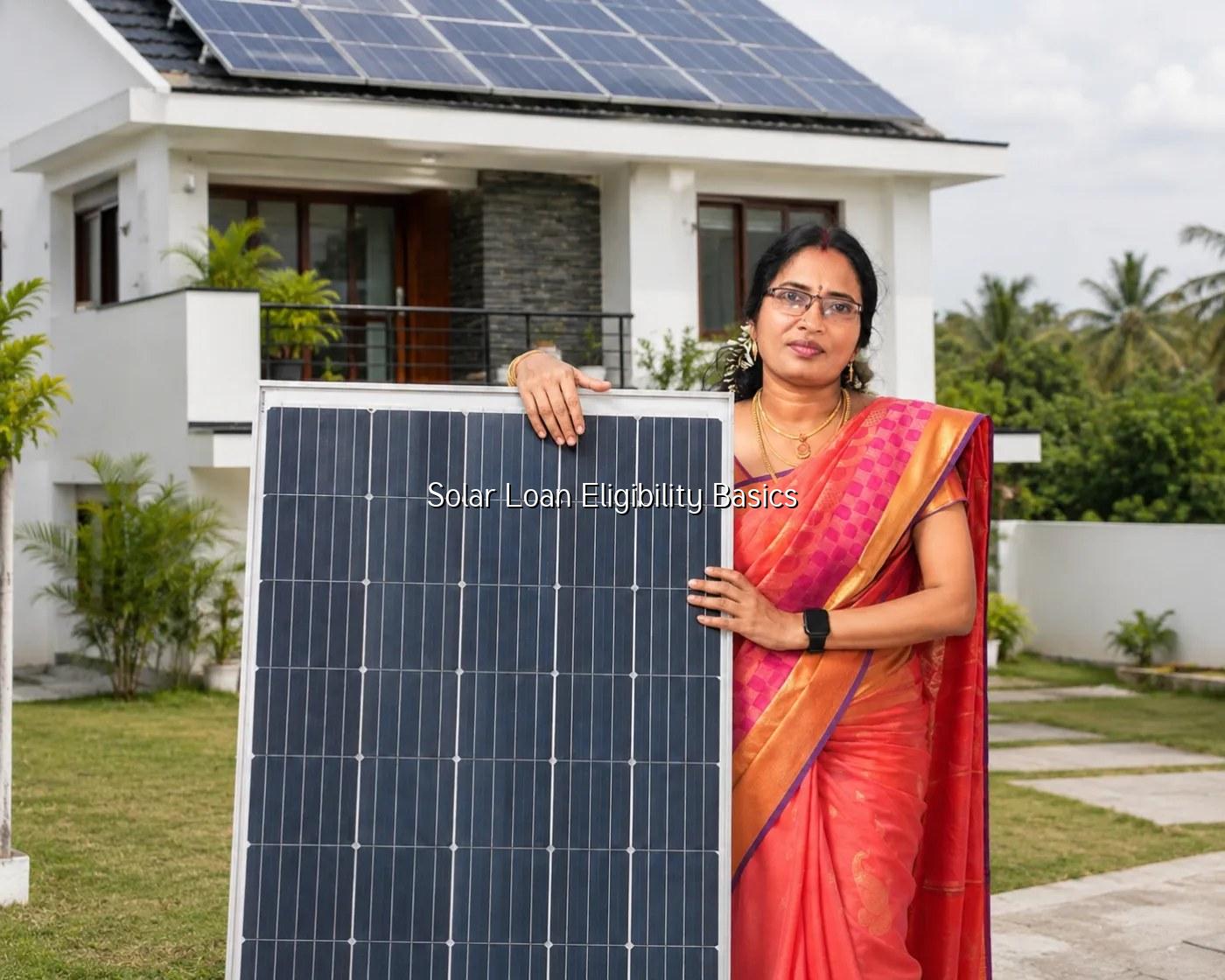
What lenders check first
What usually decides whether the finance file moves ahead
Most loan checks are practical. They start with the property, the bill and the identity papers, then move to the roof and the repayment picture. If those things fit together, the file usually feels clear instead of confusing.
Your EB connection and the units you use
The EB bill tells a lender a lot. It shows the connection, the billing cycle and the units used over a 60-day period, which helps everyone understand what kind of solar system is sensible. A low-usage home and a higher-usage shop won’t usually need the same design, and the finance file should reflect that difference.
Roof type and site conditions
Roof details matter more than many people expect. RCC flat roofs, sloped tiled roofs and sheet roofs each need different mounting thinking, and the wind exposure across Kanyakumari District affects how the structure is chosen. Near coastal stretches such as Colachel or Manavalakurichi, salt-laden air also matters for the mounting hardware and connections.
| Loan check | What the lender wants to see | Why it matters | How we help |
|---|---|---|---|
| Identity and address | Name and address that match the application | It keeps the file consistent | We help you keep the paperwork aligned |
| EB connection | Active connection and recent bill details | It shows the property can use rooftop solar properly | We read the bill and size the system around it |
| Roof or site suitability | Space, shade, orientation and access | The system must physically fit and work well | We do a free site survey before design |
| Repayment comfort | Income or business cash flow that supports the loan | The lender wants to see the EMI fit your situation | We share a practical quotation and design basis |
| Documentation for subsidy route | Correct forms and supporting papers if applicable | It avoids delays during the EB and scheme process | We guide the subsidy paperwork path too |
A simple way to read the approval side
If the roof, the EB bill and the documents all point to the same property, the conversation with the lender usually becomes easier. When one part doesn’t line up, extra questions start coming in and the file slows down. That is why we prefer to begin with the survey and the bill before anyone promises what the system should be.
How the process usually works
From first call to installation, step by step
We keep the order simple because a clean process makes the finance discussion easier. It also helps you see where the system design comes from, and why the lender asks for the papers it asks for. This is the same approach we use for homes and business roofs across Kottar, Thovalai and nearby places.
- Start with the EB bill. We look at the units, the billing cycle and the connection type so the proposal has a real base.
- Check the roof and shade. A flat RCC roof is handled differently from a tiled or sheet roof, and nearby trees or parapet walls can change the design.
- Match the system size to your need. We don’t force one standard package; the size comes from your actual use and the site.
- Prepare the quotation and papers. The lender wants a clear file, so we help keep the quotation, installation details and identity papers tidy.
- Review finance and EMI options. If finance is part of your plan, we point you to the right discussion so you can decide with a proper picture.
- Move to installation and EB steps. Once approved, we proceed with the work, then handle the connection and documentation side.
Why the survey comes before the loan paper
Some people try to ask for finance first and sort the roof later. That usually creates a messy file. A proper survey tells you whether the roof can take the system, where the inverter should sit, and whether the mounting structure needs extra care because of wind or coastal air. In a district like ours, those details are not small details.
What makes a file easier to read
A file feels stronger when the story is straight. The bill, the roof, the address and the system size should all point to the same house or business. If you run a shop in Marthandam or Thuckalay, the same rule applies. A lender can read a clear file quickly, and that is usually better than a thick file with half the information missing.
What to keep ready
Documents and site points that save time later
We see the same gaps again and again. Someone has the bill but not the matching address proof. Someone else has the documents but no idea what the roof actually measures. Fixing those gaps early is far easier than chasing them after the lender asks a question.
If your property is in Kuzhithurai or Karungal, the paperwork still follows the same basic pattern. What changes is the roof shape, the access around the house and the way the site is reached for installation. On agricultural sites, especially where solar water pumps are part of the plan, we also look at the land layout and the pump point so the proposal stays practical.
- Recent EB bill with the connection details visible
- ID and address proof that match the application
- Basic property details or ownership-related papers if asked
- Clear roof photos from more than one angle
- Any notes about shade, trees, nearby walls or sheet roof condition
What happens in real cases
How the same checks play out for homes, shops and offices
A home owner usually comes to us with a bill, a rough idea of the roof area and one question about whether the loan paper will be accepted. A shop owner often has a little more paperwork and wants to know whether the monthly repayment will suit the business cycle. The first meeting is where those differences show up, and it’s also where we can tell you honestly if the site is ready or if something needs to be fixed first.
In Nagercoil and nearby towns, we see a lot of RCC terraces where the structure is straightforward, but the paperwork still needs attention. In other cases the property is fine, yet the bill is in one name and the ownership paper in another, so the lender asks for clarification. That kind of mismatch is common, and it’s not a disaster, it just means the file needs to be arranged properly before you submit it.
For business roofs, the lender may pay more attention to cash flow and the use of the building. That is why we tell customers to think about the actual purpose of the system first. If the rooftop is meant to offset daytime use in an office, the design brief will look different from a home that uses more power after sunset.
Helpful checks before you apply
Small things that make the finance conversation easier
The little things matter here. A clear roof photo can save one visit. A bill that matches the address can save a day of back-and-forth. And if the site is on the coast, or on a roof that catches more wind than expected, the mounting details have to be discussed early instead of left for later.
- Keep the latest EB bill close at hand when you call
- Take roof photos in daylight from two or three angles
- Check whether the name on the bill matches the property papers
- Note shade from trees, walls, tanks or neighbouring buildings
- Tell us if the building is RCC, tiled, sheeted or a mixed roof
We also look at the local building pattern. In residential streets around Kottar and Vadasery, the roof is often the main question. In farm areas, the discussion can shift toward water pumping, land layout and whether an off-grid or hybrid setup suits the use better. The finance side should follow the actual use of the site, not the other way around.
How JRS SunTech Energy Can Help
How JRS SunTech Energy Can Help
We start with the real site, not a one-size-fits-all package. That means we check your EB bill, roof space, structure and the way the property is used, then suggest a solar setup that fits the finance discussion as well as the site. If you need subsidy guidance under PM Surya Ghar, we also help with the paperwork side so the file stays organized.
Our office is at Kottar, Nagercoil, and we travel within Kanyakumari District for surveys and installation. If you want help deciding whether finance is realistic for your home, shop or business, send us your EB bill and basic site details and we’ll take it from there.
JRS SunTech Energy, Door No. 227, First Floor, Cape Road, St. Xavier's Church Junction, Kottar, Nagercoil, Kanyakumari District, Tamil Nadu - 629002.
Frequently asked
Questions people ask about solar loan eligibility basics
They normally look at your EB connection, the recent bill, your roof, and the papers that prove who you are and where the property is. For rooftop solar, they also want the proposed system size to make sense for the site, not just for the loan application.
Yes, a small roof can still fit into a finance discussion. The size just has to match the available area, shade, and the units you actually use, so the design stays practical instead of forced.
It can change the paperwork flow, but not the basic idea behind the loan. If you plan to use the PM Surya Ghar route, we help keep the installation papers and subsidy documents in order so the file stays tidy.
Keep your ID, address proof, recent EB bill, bank details and any property-related papers the lender asks for. A neat file helps, especially when you want the work to move quickly after the survey.
Yes, many lenders do consider shop and office rooftops when the EB connection and basic documents are in place. The approval still depends on the property, the system size and whether the repayment plan fits the business cash flow.
Yes, we do. We start with your EB bill, roof type and site conditions, then prepare a practical design and quotation that you can use while discussing finance.
Hurry up!Subsidy ends 31 March 2027 · 134 days left
Next step
Ready to see if finance fits your roof?
Send us your EB bill, roof photos and address, and we’ll tell you what the site supports before you speak to the lender.
- Your electricity requirement and 60-day EB bill
- Property type — home, shop, office, farm or institution
- Backup requirement and available roof space
Related: Solar Finance and EMI · Subsidy Guidance · Contact
Free site survey · Kottar, Nagercoil