Solar guide
Commercial Rooftop Solar Explained
A practical look at how business roofs are checked, sized and installed across Kanyakumari District.
Commercial solar basics
What a business really needs to know first
Commercial rooftop solar explained in plain words: the right system starts with your EB usage, your roof, and the hours your business actually runs. That sounds simple, but once you look at a shop, office or warehouse roof in detail, the picture changes quickly because there may be water tanks, signboards, pipes, cable runs and service access to work around.
In Kanyakumari District, we also have to think about year-round sunshine, wind exposure and the salt in the air near the coast. A flat RCC roof in Kottar does not behave the same way as a sheet roof closer to Colachel, and a site in Nagercoil town may have a much cleaner electrical path than a more exposed property near Muttom. The design only makes sense when those details are checked on site, not guessed from a photo.
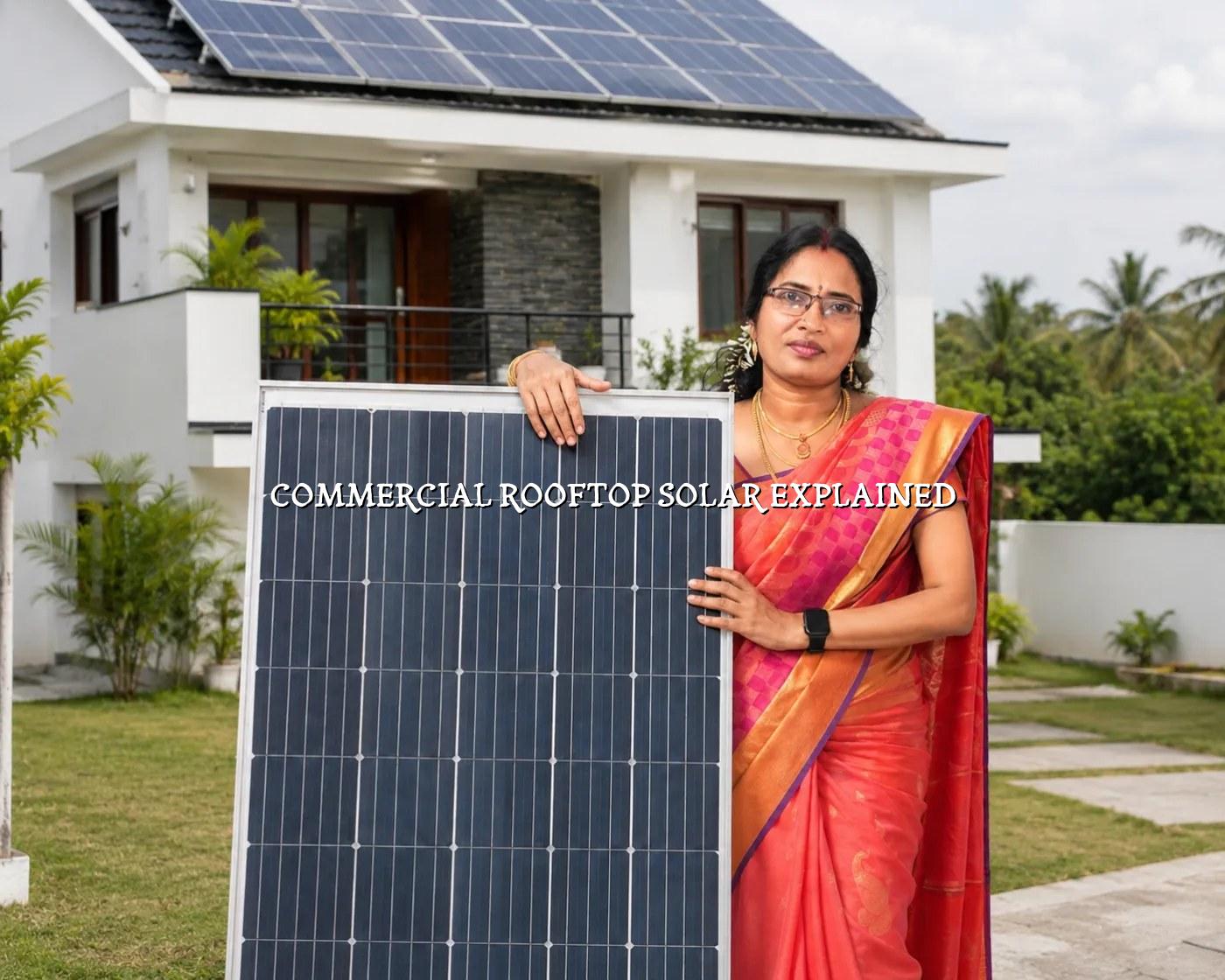
Start with the load
How we size a roof system for a business site
We don't begin with panel count. We begin with the building's EB connection, the 60-day usage pattern, the roof space available and the load that runs in daylight. That tells us whether an on-grid, hybrid or battery-backed approach makes sense for the property.
Daytime units tell the real story
A business that runs billing counters, fans, computers, lights or refrigeration through the day can usually make better use of rooftop generation than a place where most demand comes only at night. A retail building in Kuzhithurai may have a very different usage pattern from a service office in Padmanabhapuram, even if the roofs look similar from the road. The same capacity can be too much for one and too little for the other.
Roof shape changes the layout
RCC flat roofs offer more flexibility, but we still have to leave walking space, keep drains open and avoid shading from nearby structures. On tiled roofs or older sheet roofs, the mounting method and wind restraint matter more, and the waterproofing detail has to be handled carefully. If there are parapet walls, ducts or water tanks, the array is laid around them, not forced over them.
- Call or message us. Share the building type, EB connection details and any roof concerns you already know about.
- We survey the site. The team checks roof size, shade, access, cable routing and the present electrical condition.
- We design the system. Capacity, inverter choice and mounting style are matched to the site, not to a standard package.
- We install on the actual roof. Panels, structure, inverter and wiring are fixed with the roof conditions in mind.
- We handle EB and paperwork support. The needed documentation steps are guided from start to finish.
- We commission the system. After testing and checks, the installation is brought into service.
- We stay available. After-sales support continues, and the first year of service support after installation is included.
What the roof survey covers
The checks that shape the final recommendation
A proper survey does a lot of quiet work. The roof can look open from the ground, but once you're on top you may find shade from a nearby block, an old cable route that should not be reused, brittle tiles, corrosion on fixings or just not enough safe space for access and maintenance.
Structure, shade and service access
We look at where the sun falls through the day, where shade lands at different hours and how people will move across the roof after installation. In Marthandam and nearby commercial areas, roofs often carry extra sign frames, tanks and lines, so the available space may be less than it first appears. That changes both the array layout and the cable path.
Water movement and weather exposure
Kanyakumari District gets strong sunshine through the year, but the monsoon periods still matter because they reveal weak drainage, loose sealing and poor entry points for water. So we pay attention to cable glands, connection points, earthing and how the mounting hardware will hold up in coastal air over time. A neat job is not about looks alone. It helps the system stay dependable.
- Roof type: RCC, tiled or sheet, and whether the structure can support the planned layout.
- Shade pattern: walls, tanks, trees and adjacent buildings that may cut output.
- Wind exposure: edge conditions, parapet height and fastening needs for open rooftops.
- Salt air: mounting hardware and electrical protection that suit coastal conditions.
- Access: safe walk paths for cleaning, inspection and future maintenance work.
Choosing the setup
Which commercial solar option fits the building?
Not every property needs the same answer. Some sites want daytime offset only. Others need battery support because the work cannot stop when supply drops. A few roofs are part of a bigger power plan and need a mix of solar, grid and storage.
On-grid systems for normal business hours
On-grid solar is the most common fit for a business with a regular EB connection. It generates during the day and helps reduce the units taken from the grid. That makes sense for offices, shops and commercial buildings where most demand happens while the sun is up. If you want a cleaner explanation of that setup, see our on-grid solar page.
Hybrid and off-grid when backup matters
If the site needs support during outages or has equipment that cannot stop, a hybrid system may be the better shape. For farms, remote sites and places with unreliable supply, batteries become part of the design from the beginning. We often steer customers toward hybrid solar or off-grid solar when the business problem is really about continuity, not just bill reduction. If the site is agricultural, the fit may shift toward solar water pumps.
The building decides more than the brochure does
A commercial roof in Nagercoil town may have shorter cable runs and simpler routing than a multi-level building with a cluttered terrace. A property in Kanyakumari with heavier sea air exposure may need extra care with hardware and connection protection. We don't force the same setup everywhere, because that is how projects get complicated later.
Reference table
Factors that shape a commercial rooftop design
| Site factor | Why it matters | What we check |
|---|---|---|
| EB usage pattern | Shows how much daytime offset is realistic | 60-day bill history, operating hours, day load |
| Roof type | Changes mounting choice and access planning | RCC, tiled or sheet roof, surface condition, walk paths |
| Wind and exposure | Affects structure strength and fixing detail | Open edges, parapet height, roof height, restraint needs |
| Salt air | Can affect hardware and electrical points over time | Material choice, sealing, connection protection |
| Shade and obstructions | Can reduce generation if not planned for | Tanks, ducts, walls, trees, nearby buildings |
| Drainage and cable routes | Important through the monsoon and for maintenance | Water flow, gland sealing, route length, service access |
Project process
What the project looks like from your side
Most business owners want the plain version first: who visits, what gets checked, what papers matter and when the system can actually be switched on. That is fair. So we keep the process simple, step by step, and we tell you what we're doing as we go.
The normal sequence
First you contact us. Then we do a free site survey, study the roof and electrical condition, and prepare the design and quotation. After that comes installation, EB and documentation support, commissioning and after-sales support. One year of free service support after installation is included, and beyond that we still provide technical help, with terms that vary depending on the product, the manufacturer's warranty and the installation.
If you're asking about an older system that already exists, the conversation may move into solar maintenance first. We may need to inspect the inverter, the wiring, the mounting, the panel condition and the cleaning pattern before suggesting a repair, a replacement or simply a clean. Some sites only need a service visit. Others need more work. We will say which one it is.
Practical tips
What helps a commercial rooftop solar project go smoothly
- Keep the latest EB bill ready so we can read the present unit pattern.
- Tell us about future roof changes before the layout is fixed.
- Point out tanks, ducts, sheds and sign frames during the survey, even if they seem minor.
- Share any history of leakage, patching or cable trouble on the roof.
- Ask where the inverter will sit, because that affects cable length and maintenance access.
- If the site is close to the coast, say so early so the hardware and sealing can be planned properly.
Why some owners ask about finance
Some businesses want to spread the decision across time, especially when the project sits alongside a roof repair or electrical upgrade. We can talk through the basics and point you to solar finance and EMI if that helps the planning. We don't pretend there's one neat answer, because the right path depends on the roof, the load and the equipment you choose.
Why subsidy guidance still comes up
For eligible rooftop solar projects, people often ask about the documentation flow under the applicable government programme. We guide customers through the process and the paperwork, and we keep the explanation plain. If you want the current procedural overview, our subsidy guidance page is the right place to start.
Products and support
The equipment side still matters
A commercial rooftop system is only as good as the pieces that make it up. We supply solar panels, solar inverters from Sungrow, Deye, Growatt, Polycab and Eastman, home and office inverters, lead-acid batteries, lithium batteries, solar water pumps from CRI Pumps and Shakti Pumps, solar water heaters from V-Guard and Racold, solar DC cables from Polycab and complete hybrid solar power system packages. That matters because each site calls for a different combination of equipment, and the roof is only one part of that choice.
Some buildings in Aralvaimozhi need stronger mounting attention because of wind, while a coastal roof near Rajakkamangalam may need a different approach to hardware and sealing. We keep the equipment choice tied to the actual conditions instead of forcing a stock package onto every customer. That is the part people usually appreciate after the first survey.
How JRS SunTech Energy Can Help
Commercial rooftop solar explained by the team that sizes it on-site
We handle the full path from survey to commissioning, and we don't sell one standard system for every roof. If your business is in Nagercoil, Kottar, Thuckalay or nearby parts of Kanyakumari District, we look at the EB usage, roof condition and site exposure before we suggest anything. That includes installation, documentation support and the practical details that are easy to miss until the work begins.
If you want a straight answer on whether your roof suits on-grid, hybrid or another setup, send us the bill details and a few photos of the roof. We will tell you what fits and what doesn't, and we will say it plainly.
JRS SunTech Energy, Door No. 227, First Floor, Cape Road, St. Xavier's Church Junction, Kottar, Nagercoil, Kanyakumari District, Tamil Nadu - 629002. Phone: 9787775999 Email: jrssuntechenergy@gmail.com
Frequently asked
Questions businesses ask before they start
It means you can see the whole picture before you start. We match the system to your actual EB units, roof space, daytime load and site conditions, so the result is based on the building and not on a generic sales pitch.
We start with the roof type, the structure below it, shade, cable routes and the way the inverter can sit on the site. In a town like Marthandam the roof may be busy with sign frames and service lines, while a building in Thuckalay may have a simpler layout, so the survey decides the design.
Yes, they do. Parts of Kanyakumari District face strong wind loading and salt-laden air, so mounting strength, hardware choice and connection protection all need proper attention from the start.
Your latest EB bill, the building address, roof photos and any notes about leakage, shade or future roof work are a good start. If the project needs subsidy guidance, we also explain the paperwork path and the steps under the applicable government programme.
That is exactly how we work. We look at the 60-day bill pattern, your actual daytime use and the roof area, then we suggest a capacity that fits the site instead of forcing a fixed package.
It depends on the roof, the approvals involved and how much site work is needed. A clear RCC roof with good access moves more smoothly than a building with heavy shading, older wiring or awkward cable runs, so we explain the sequence after the survey.
Hurry up!Subsidy ends 31 March 2027 · 134 days left
Next step
Ready to check your commercial roof?
Send us your EB bill details and a few roof photos, and we will tell you what fits the site before you decide anything.
- Your electricity requirement and 60-day EB bill
- Property type — home, shop, office, farm or institution
- Backup requirement and available roof space
Related: Solar Solutions · Products · Contact