Solar water heating
Solar Water Heater Capacity for a Family
Choose a tank, collector area and roof layout that actually fits the way your family uses hot water.
Family sizing help
Start with the household routine, not the brochure
Solar water heater capacity for a family comes down to how your home actually uses hot water. People usually call us because they don't want to end up with a small tank that runs out too soon or a large one that spends half the day sitting there underused.
We begin with plain questions: how many people live in the house, when they bathe, whether the bathrooms are used one after another or at the same time, and if hot water is needed anywhere else in the home. Then we look at the roof, the plumbing path and the structure itself, because a flat RCC terrace, a sloped tiled roof and a sheet roof all need different thinking. In Kottar and Vadasery, we see those roof types every week, and the answer changes more from the roof than most people expect.
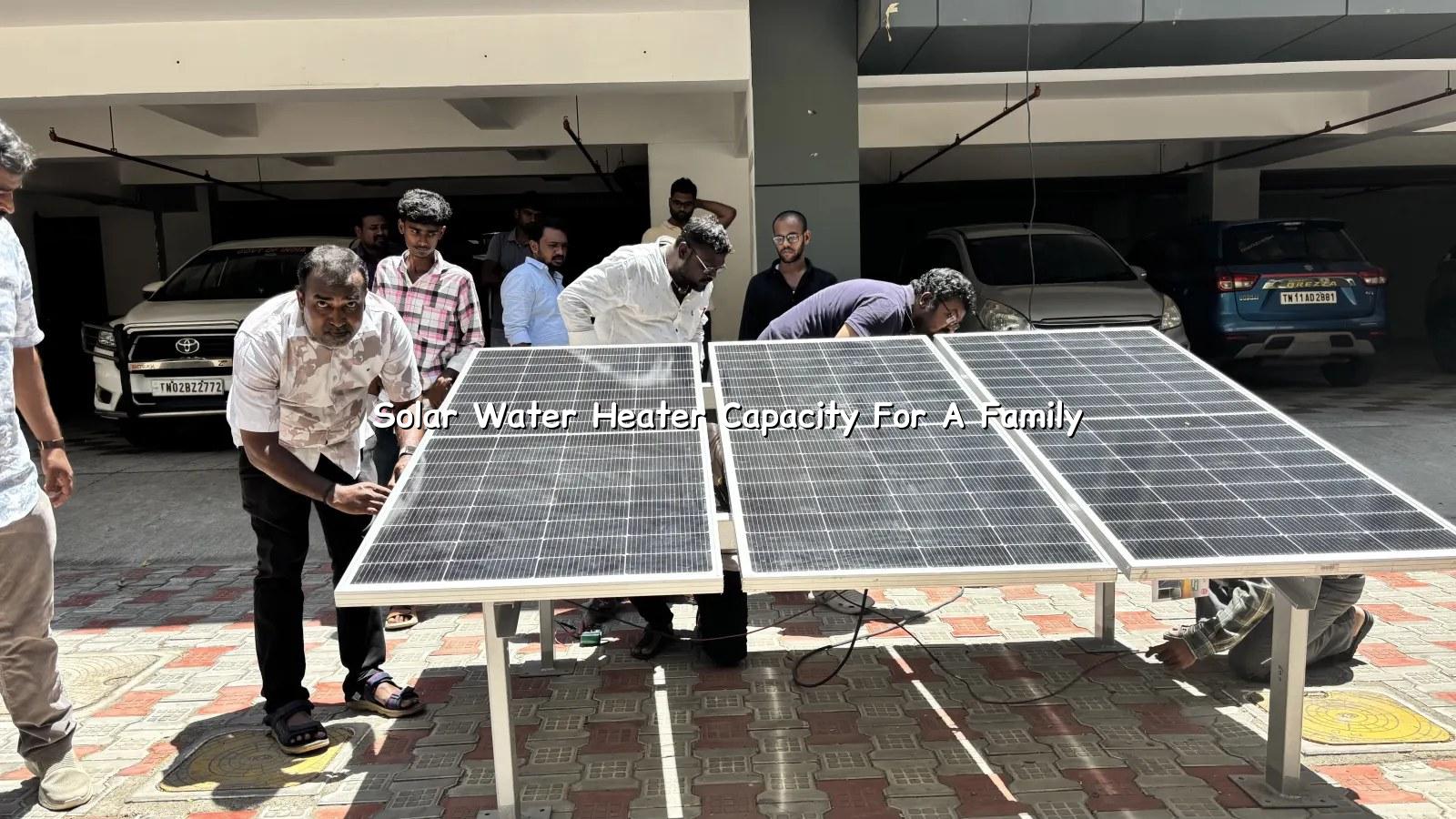
How sizing really works
What decides the right heater for a family home?
Tank size is only one piece. The number of users, the roof, the pipe run and the time of day hot water is needed all shape the final plan.
Daily use matters more than the raw headcount
Two homes with the same number of people can need different systems. One house may have everyone bathing in one tight morning window, while another spreads the use across the day and only needs a lighter setup. The family pattern is what tells us how much stored hot water should be available.
We ask about the rhythm of the house because a solar water heater stores heat instead of making instant hot water on demand. If the whole family showers between six and seven in the morning, the system should be planned around that rush. If use is spread out, the design can be more relaxed and the storage choice may change.
Roof style can narrow the choices fast
In Nagercoil homes, terrace space often decides whether the heater can be placed easily or whether the layout has to be compact. RCC roofs are usually straightforward for mounting and service access, while tiled roofs need more care with support points and sealing. Sheet roofs need a lighter and more exact plan.
Strong wind exposure across Kanyakumari District also affects the decision. On a coastal home near Rajakkamangalam or Muttom, salt-laden air can be hard on hardware and connections, so the fixing method needs to be chosen with care. That doesn't make the system unsuitable. It just means the mounting and connection details should be planned properly from the start.
- Count the regular hot-water users. Include the people who bathe daily and anyone who uses warm water for washing or kitchen work.
- Check the morning peak. A house that uses hot water in one short window needs a different size from a house with staggered use.
- Measure the usable roof area. Leave room for access, maintenance and pipe routing before you settle on the layout.
- Match the mounting method to the roof. RCC, tiled and sheet roofs all change the support and fixing plan.
- Choose the setup that fits the way you live. The right heater is the one that matches the family routine, not a showroom default.
Useful reference
Family size, roof condition and what we look for on site
If you want a practical first comparison, start here. We still inspect the house, because the final answer depends on the building, the usage pattern and the roof details.
| House situation | What matters most | What we check on site | Planning focus |
|---|---|---|---|
| Small household with steady morning use | How much hot water is needed before work or school | Roof space, shade and the pipe route | Simple layout with enough storage for the morning rush |
| Family with multiple bathrooms | Whether two or more bathrooms are used at the same time | Plumbing distance and simultaneous demand | Storage that can cover the busiest part of the day |
| Joint family home | Number of users and how the use is spread out | Usable roof area and structural support | Layout that keeps delivery steady without crowding the roof |
| Tiled or sheet-roof house | Fixing points and load handling | Mounting support, sealing and access for service | Safe installation with a neat pipe route |
| Coastal or near-coastal home | Exposure to salt-laden air and weather wear | Hardware choice and connection protection | Better long-term stability for the roof equipment |
That's the reason we don't sell one standard system. A home in Thovalai with a clear RCC terrace can take a different layout from a tiled house closer to the shore, and the same family size may still point to a different recommendation. Roof, usage and exposure all matter.
Signs to watch
When the first estimate needs another look
People often ask for a bigger tank just to be safe, but that can work against them if the family is small or the roof is tight. An oversized system may not be the best fit during weaker weather, and an undersized one will leave people mixing hot and cold water more often than they should.
Honestly, the better decision comes from a plain talk about daily life. How many showers happen before work? Does someone use hot water in the afternoon? Are elders, school children or guests part of the normal pattern? Those details are what make solar water heater capacity for a family a real sizing exercise instead of a catalogue choice. There are no shortcuts there.
A few signs the recommendation should be checked again
- The roof has only a small clear area after keeping access open.
- Two or more bathrooms are used in the same short time window.
- The hot-water line has a long run from terrace to bathroom.
- The house sits in a windy pocket and needs firmer mounting hardware.
- The family expects regular use through the monsoon months.
- The home is near Colachel, where salt exposure can affect fittings faster.
How we handle a family job
Our site-first method keeps the sizing honest
We work through the house step by step, so the recommendation fits the roof and the routine before anything is installed.
What happens from the first call to commissioning
First you contact us and tell us a little about the house. Then we schedule a free site survey, inspect the roof, note the tank position, look at the bathrooms and ask how many people use hot water every day. That gives us the practical picture we need before we suggest anything.
After that, we prepare the system design and quotation, explain the mounting method and talk through the trade-offs in plain language. If the home is in Manavalakurichi or Kanyakumari, we pay special attention to wind exposure and roof condition because the salt and weather can age hardware faster if the layout is careless. Once the plan is approved, we move to installation, inspection and commissioning, then stay available for follow-up support if needed.
What we usually check on a family roof
- How much clear roof area is available after keeping maintenance access open.
- Whether the roof is RCC, tiled or sheet, since each one needs a different support method.
- Where the bathrooms are and how long the hot-water line needs to travel.
- How much shade falls during the day from nearby walls, trees or water tanks.
- Whether the household mainly needs hot water for bathing or for several daily uses.
Other pages that help
When the heater is part of a larger roof plan
Some homes only need a solar water heater. Others are planning more than one change at the same time, and that is when the roof layout needs a bit of care. If you are also thinking about backup power or a different kind of solar setup, it helps to discuss the whole roof so the equipment doesn't crowd each other later.
For a customer who wants to compare options, we may point them to inverters and batteries or our solar solutions hub once the heater plan is clear. If the house has mixed roof sections, sketching the full roof first saves rework later and makes the installation neater. It also gives the plumber a cleaner route to work with.
How JRS SunTech Energy Can Help
We size the heater to the house, not to a guess
We handle solar water heater capacity for a family as a proper site job. That means we look at the roof, the daily usage, the plumbing route and the building condition before we say what fits. If the house is in Kottar, on a tiled lane near Suchindram, or on an open terrace in Vadasery, we'll tell you honestly what works and what doesn't.
Our team also helps with installation, customer guidance and the paperwork side where needed. If you want to talk it through, contact JRS SunTech Energy, Door No. 227, First Floor, Cape Road, St. Xavier's Church Junction, Kottar, Nagercoil, Kanyakumari District, Tamil Nadu - 629002. Phone: 9787775999, Email: jrssuntechenergy@gmail.com.
We give one year of free service support after installation, and after that we still help with technical questions as long as the product and installation terms allow. If you're ready, send us a quick note and we'll take it from there.
Frequently asked
Questions families ask before they buy a solar water heater
Start by counting the people who actually use hot water in the morning, then look at how tightly that use is packed into one short time. A family of four can need a different setup from another family of four if one house has two bathrooms running at once and the other does not. We check the roof and the usage pattern together, so the recommendation fits the house and not just the headcount.
There is no single tank size that suits every house with two bathrooms. In Kottar and nearby residential streets, the right choice often depends on whether both bathrooms are used at the same time and how far the hot-water line has to travel. We size it from your daily use, roof space and piping layout rather than from a fixed guess.
No, not always. If the tank is too large for the family, part of it may sit underused, and if it is too small you will keep running short when everyone wants a shower at once. The better fit is the one that matches your real morning pattern and the roof that is available.
Yes, it can still help, but the amount of hot water changes with the weather and the season. In Kanyakumari District, the south-west and north-east monsoons can affect generation, so the plumbing route, usage pattern and roof layout all matter. We explain those trade-offs before you place the order.
Check the slope, the fixing points and whether the roof structure can take the equipment safely. On homes around Suchindram or Vadasery, tiled and sheet roofs usually need a different mounting plan from a flat RCC terrace. Access for maintenance and the pipe route should also be clear before anything is finalised.
Yes. We handle the survey, sizing, installation and the follow-up work needed to get the system running properly. We also provide one year of free service support after installation, and after that we still help with technical questions, though the exact terms can vary by product and installation.
Hurry up!Subsidy ends 31 March 2027 · 134 days left
Next step
Need help choosing the right heater size?
Send us your family size, roof type and a quick note about how you use hot water. We’ll suggest a practical setup and explain the options clearly.
- Your electricity requirement and 60-day EB bill
- Property type — home, shop, office, farm or institution
- Backup requirement and available roof space
Related: Solar Water Heaters · FAQ · Contact
Free site survey · Kottar, Nagercoil