Solar service support
Taking Over Service of an Existing Solar System
If a system was installed by someone else, we can inspect it, identify what needs attention and continue service in a practical way.
Solar service support
Need taking over service from another installer?
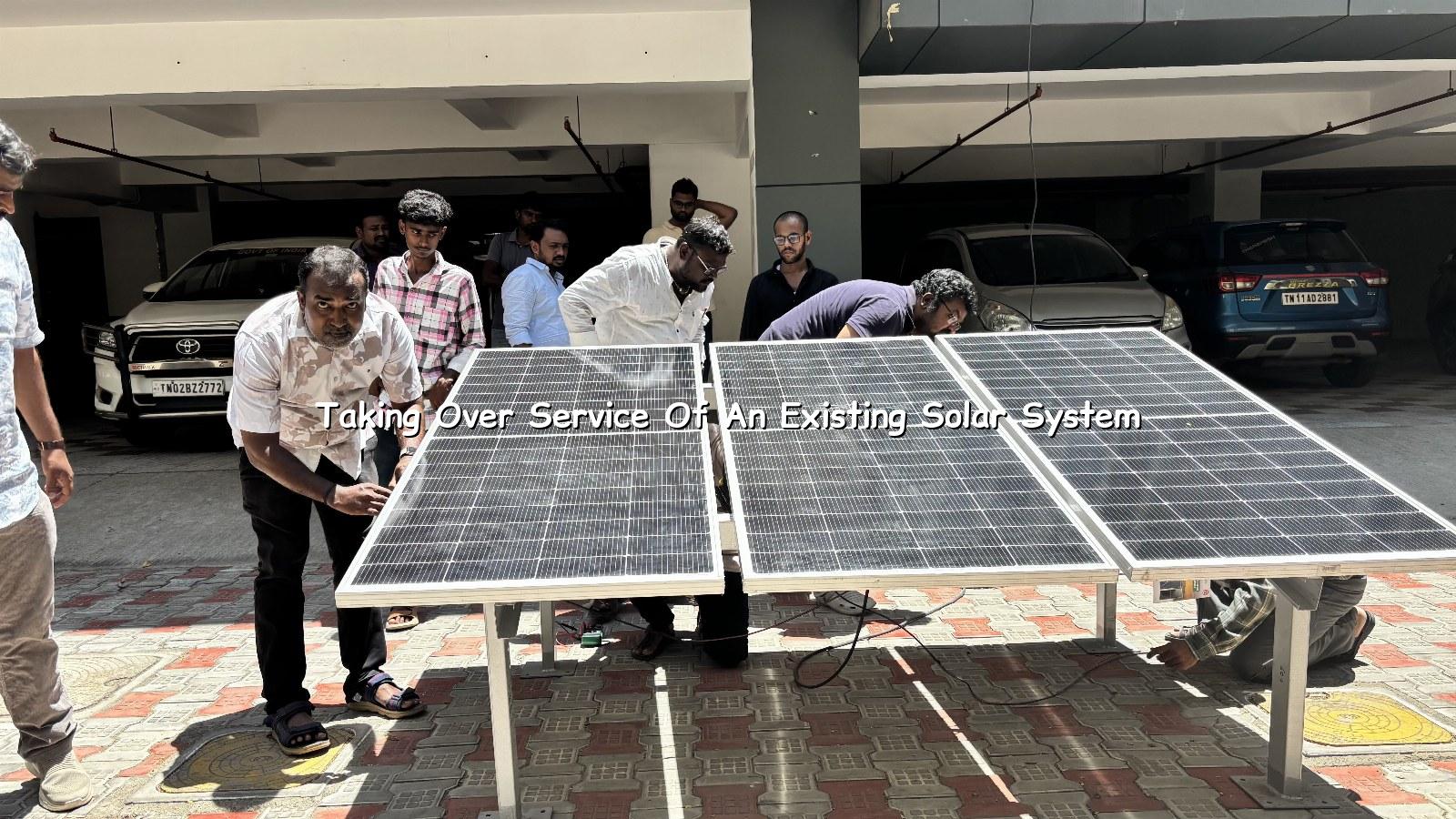
Taking over service of an existing solar system usually starts with one simple issue: the original installer is no longer around when you need help, or the system has begun acting up and nobody has a clear record of what was done earlier. We step in, inspect the whole setup and tell you plainly what is fine, what needs repair and what can wait.
In Kanyakumari District that kind of service needs a local eye. A rooftop in Kottar ages differently from a site nearer the coast, and a sheet roof in Manavalakurichi needs a different check than a flat RCC roof in Nagercoil. Strong sun is a gift here, but wind, monsoon rain and salt-laden air can expose weak mounting, poor sealing or tired connections. We start with the real site, not a guess. The EB connection, roof type, cable route and inverter location all matter, and small things like rust on clamps or a loose gland can be the reason a system keeps giving trouble.
How we begin
What a solar service takeover actually looks like
People usually want two things when they call us: a straight answer and no unnecessary replacement work. So we keep the process practical. When we take over service of an existing solar system, we look at the full picture instead of chasing one visible symptom and stopping there.
First, we hear the story of the system
We ask how the setup has been used, when the trouble began and whether anything has already been changed. Old service notes help, but they are not compulsory. A lot of customers in Marthandam and Thuckalay contact us with only a few photos and a short voice note, and that is enough for us to plan the visit.
Then we look at the roof, the mounting arrangement, cable routing and the position of the inverter or batteries. That matters because the reason for a fault is often somewhere other than where the customer first notices it. Shade from a new tree, water entering a junction point, or a fastener that has started to rust can all show up as the same complaint, which is low generation or unstable performance.
We test before we talk about parts
It is easy to blame the panels first, but that is not always where the real problem is. We check generation pattern, inverter status, visible wiring, earthing, protection devices and both AC and DC sides before we say anything about replacement. That order saves people from changing parts they did not need to change.
It also means the next step is easier to understand. When the original installer is unavailable, customers are already dealing with enough confusion, so we keep the language plain. No drama. Just the facts from the site and what we think should happen next.
- Contact us with the basic problem. Tell us what the system is doing, where it is installed and whether the issue is low output, inverter error, battery trouble or something else.
- We schedule a site visit. The system is checked on location, because rooftop issues often hide in wiring, mounting or shading.
- We inspect the full setup. Panels, inverter, batteries, structure, protection devices, earthing and the EB connection are all reviewed together.
- We explain the next move. You get a clear view of repair, maintenance, replacement or documentation work, depending on what the site needs.
- We continue support after the work. After installation or service work, we keep the communication open so the system is not left hanging if another question comes up.
What tends to fail
The usual trouble spots in an older solar setup
Most takeover jobs do not begin with one major breakdown. They begin with a few smaller issues building up together. A little moisture at a junction point, a weak clamp, a cable gland that was never sealed properly or a battery bank that has aged unevenly can make the whole system look far worse than it really is. People often think the panels have failed, but the cause is usually somewhere else.
The district weather adds its own pressure. The south-west and north-east monsoon periods can expose weak sealing, while strong winds on open roofs test the mounting structure. In places like Aralvaimozhi and Boothapandi, we pay close attention to structure strength because loose hardware shows up quickly there. That sort of detail matters when you are taking over service of an existing solar system, because a patch that works on one roof can be the wrong answer on another.
Signs the system needs attention
A drop in output, frequent inverter alerts, tripping, battery backup that falls off too fast, hot cable points or rust on the hardware are all worth checking. So is a roof area that has become much shadier than it was before. Sometimes the system still works, but not cleanly, and that is where regular service saves trouble later. We can inspect systems installed by other companies too, which helps when the original team is no longer available.
Quick reference
What we usually look at during a takeover inspection
Every site is different, yet the same checks come up again and again. These are the things that tell us whether the system needs a clean, a tightening, a repair or a larger change.
| Area checked | What we look for | Why it matters |
|---|---|---|
| Panels | Visible dirt, shading, cracks, loose mounting points | These affect how much usable generation the system can actually deliver |
| Inverter | Error display, cooling position, signs of overload or poor ventilation | Many service calls begin with the inverter, even when the real issue is elsewhere |
| Cables and connectors | Heat marks, loose ends, water entry points, cable support | Poor connections can create repeated faults and unstable output |
| Structure and roof interface | Rust, clamp tightness, tilt, drainage and seal condition | The roof and structure decide how well the system survives wind and monsoon weather |
| EB connection and protection | Breaker condition, changeover arrangement, earthing and visible safety points | This affects day-to-day safety and how smoothly the system works with the utility supply |
Why the old paperwork still helps
We can begin without a file bundle, but any earlier paperwork is useful. Model details, panel count, inverter make, service slips and previous application records help us see what was fitted and how it was meant to run. If you are also asking about subsidy paperwork, we can point you to the right documents and the current PM Surya Ghar guidance, without making up figures or claims.
The site tells its own story
A system in Kottar can have a very different wear pattern from one in a farm site near Thovalai. Roof access, shade, bird droppings, wind exposure and cable route all change the way service should be done. That is why a takeover is never just a file handover. The physical site decides most of the work, and the second visit is often where the real answer shows up.
Before you hand it over
What to keep ready before the visit
A little preparation makes the inspection easier. It keeps the visit focused and saves time on guesswork. We can work without paperwork, but it helps if you have a few details ready.
- Keep any old invoice, site photo or installation note if you have it.
- Tell us whether the issue is sudden or has been getting worse over time.
- Note any recent roof work, tree growth or change around the building that may have created new shade.
- If the site is near the coast, mention rust, moisture or salt dust you have noticed.
- Share the inverter make or a photo of the display if there is an error message.
- Let us know if the system was first installed for home use, office use or agricultural pumping.
In our experience, many service calls from Vadasery, Ozhuginasery and Suchindram turn out to be straightforward once the real fault is located. The trouble is usually not that the system is beyond help, just that it has not been looked at in the right order. And once that order is clear, the rest becomes a lot easier to handle.
What we help with
How JRS SunTech Energy can help
We handle solar service takeovers for homes, shops, offices and agricultural sites across Nagercoil and Kanyakumari District. If you need us to step in after another installer, we can inspect the system, identify the issue, guide repairs and continue maintenance without making the process messy.
Our team also helps with on-grid systems, off-grid systems, hybrid systems, solar inverters and batteries, solar water pumps and solar maintenance work for systems installed by other companies. If your setup needs attention, send us the basic details and we will tell you the next sensible step.
Contact JRS SunTech Energy, Door No. 227, First Floor, Cape Road, St. Xavier's Church Junction, Kottar, Nagercoil, Kanyakumari District, Tamil Nadu - 629002. Phone: 9787775999. WhatsApp: 919787775999. Email: jrssuntechenergy@gmail.com.
Frequently asked
Questions we hear about taking over service of an existing solar system
Yes, we can usually do that after a site visit. We check the panels, inverter, wiring, earthing, structure and the EB connection first, then tell you what is working well and what needs attention.
If you have the invoice, warranty papers, inverter model details or earlier service notes, keep them handy. Even if you do not have all of that, we can still inspect the system and start from the actual site condition.
We do. A lot of calls are about low generation, inverter faults, loose connections, water ingress or shade that was not a problem earlier. We look for the real reason instead of guessing.
Yes. We work on RCC flat roofs, tiled roofs and sheet roofs across Kottar, Vadasery and nearby areas in Nagercoil, so the mounting and cable routing are checked with the roof type in mind.
That is one of the most common reasons people call us. We can assess the system, explain the next steps clearly and continue with maintenance, repairs or replacement guidance as needed.
Yes, and coastal conditions matter a lot. In places like Colachel and Manavalakurichi, salt-laden air can affect hardware and connections faster, so we pay close attention to corrosion and sealing.
Hurry up!Subsidy ends 31 March 2027 · 134 days left
Next step
Need someone to take over the solar system cleanly?
Send us the site location, a short note about the issue and any old system details you have. We will come back with the next sensible step.
- Your electricity requirement and 60-day EB bill
- Property type — home, shop, office, farm or institution
- Backup requirement and available roof space
Related: Solar Service & Maintenance · Products · Contact
Free site survey · Kottar, Nagercoil