Solar guide
What Is Banking Of Solar Units
A clear look at how solar exports are adjusted against your EB connection, and what to check before you sign up for rooftop solar.
Solar billing basics
What banking means on your EB bill
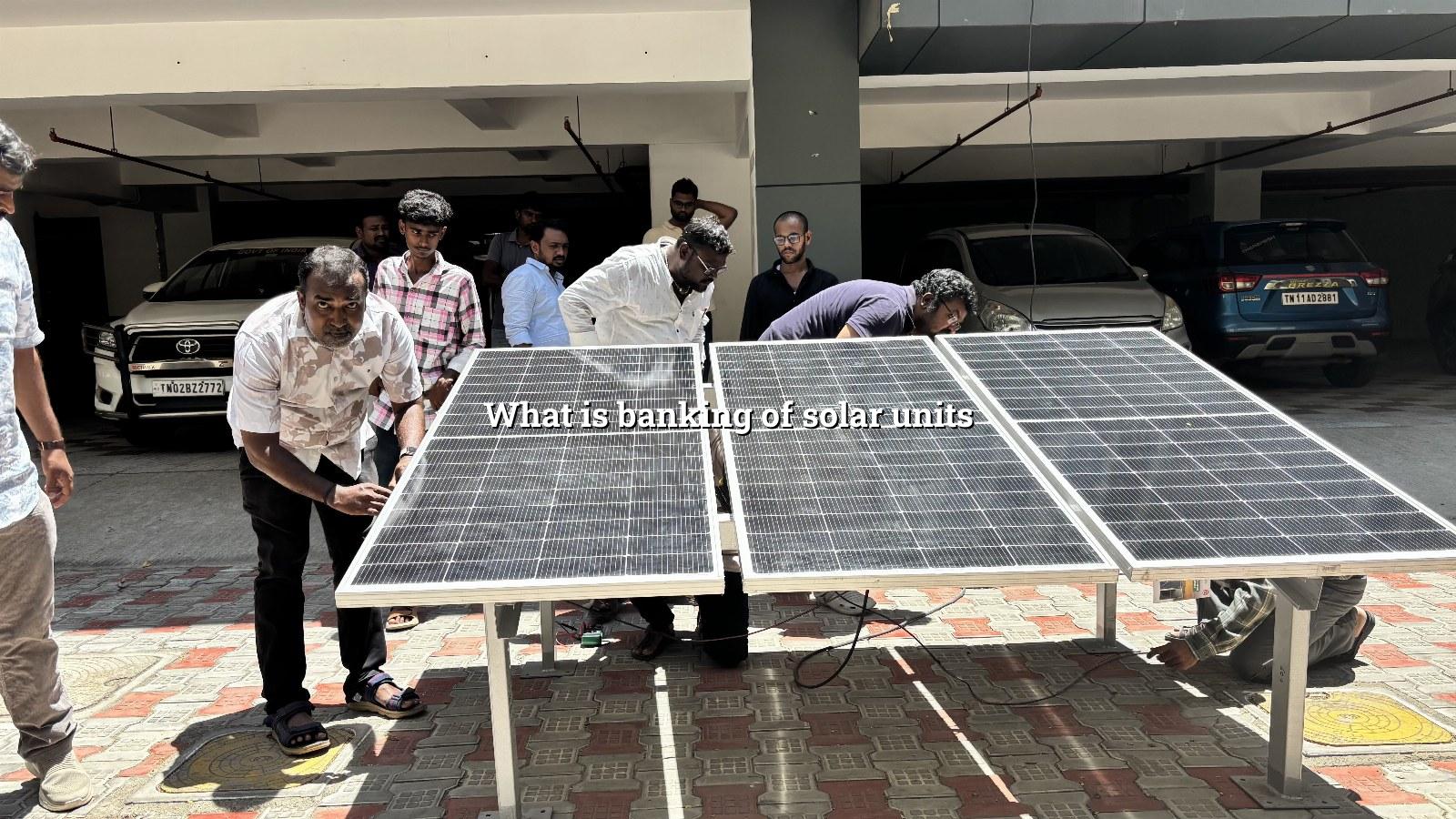
What is banking of solar units is a question we hear from homeowners, shop owners and even a few farm owners who want to know how rooftop solar ends up on the bill. The idea is straightforward once you strip away the jargon: the power your panels send out is recorded, then adjusted against what you take from the EB connection later. That adjustment is what people usually mean when they talk about solar unit banking.
In Kanyakumari District, the question comes up early because people want a system that fits the way they actually use power, not a neat idea on paper. A house in Kottar with daytime load behaves differently from a family home in Suchindram where most use happens after sunset. A shop in Nagercoil can look similar from the outside, yet the load pattern can be completely different once the lights, fans and billing cycle are considered.
How it works
The day-to-day logic behind the banking process
Most people do not want a rulebook. They want to know what actually happens from the moment the panels start producing power to the moment the EB bill lands at home. That is the part we can explain in normal language, and it is usually enough to clear the confusion.
Generation first, accounting later
During the day, your solar system produces electricity and the site uses what it needs first. If there is extra generation, it can go through the approved connection and be recorded by the meter arrangement. Later, when the house or shop needs power from the grid, those recorded units are adjusted against what was sent out earlier in the billing cycle.
That is why the conversation is never just about panels. It is also about the EB connection, the meter, the roof and the way the site is wired. If any one of those is off, the banking result can feel messy even though the solar side itself is working fine.
Building type changes the setup
An RCC flat roof in Vadasery usually gives a very different layout from a sheet roof on a small commercial building in Thuckalay. Roof space, the slope of the roof, nearby shade and the direction the structure faces all affect how much solar energy gets produced during the day. A standard design copied from somewhere else can miss those details completely.
We check the actual site first because there is no point pretending every roof behaves the same. If the building needs backup during outages, then a hybrid or battery-backed setup may come up in the discussion too. But for the banking question itself, the on-grid arrangement is the one where the meter and the EB side do the accounting work.
- Look at the last EB bill. We check the 60-day cycle, the units used and the times when your load is usually highest.
- Inspect the roof before you pick a system. RCC, tiled and sheet roofs need different fixing methods and cable routes.
- Match the setup to your use pattern. For many homes and shops, the first discussion is on-grid solar, and then we see whether hybrid makes more sense.
- Keep the connection papers ready. The EB details, ownership documents and site information should line up before the work begins.
- Commission the system carefully. The final check should confirm that the meter and connection are recording the exported units the way they should.
What changes the result
Why the same solar system can feel different from one site to another
When you use power matters
A home that uses more electricity in the daytime will usually consume a bigger share of the solar output as it is being made. That can make the banking cycle feel smooth because less power is sitting around waiting to be used. If most of the load starts after sunset, the system has to send more to the grid during the day and pull that value back through the EB process later.
Sunshine helps, but the roof still rules
Kanyakumari District gets strong sunshine for most of the year, which is one reason rooftop solar makes sense here. Even so, the south-west and north-east monsoon periods still matter because drainage, cable sealing and weather protection all need attention. On agricultural sites near Boothapandi and Thovalai, wind exposure can influence the mounting structure too, especially where the land is open and the panels catch more force.
- Exported units only matter if the meter and connection are approved and installed correctly.
- Shading from a parapet wall or a nearby tree can cut generation more than people expect.
- Loose joints and poor sealing can create trouble once the monsoon starts.
- Near-coastal air around Muttom makes mounting hardware and connection finishing more important.
- Roof area alone is never enough; the EB bill and the load pattern have to be checked too.
Process and records
What usually happens from survey to commissioning
The hardware is only one part of the job. The approval steps, the documents and the final commissioning matter just as much, and that is where a lot of confusion starts if nobody explains the sequence clearly.
| Stage | What happens | What you should keep ready |
|---|---|---|
| Site survey | We inspect the roof, shade, structure and connection point. | Latest EB bill, roof access and basic property details. |
| System design | We match the load, roof space and site conditions to a suitable setup. | Usage pattern and any special need like backup power. |
| Documentation | We help with the papers needed for the solar and EB-side process. | Ownership documents and connection information. |
| Installation | Panels, inverter, wiring and mounting are fitted and checked. | Roof access and a clear work area. |
| Commissioning | The system is tested, connected and verified for proper operation. | Someone available to review the handover details. |
This is usually the point where things become clearer for the customer. In most real homes the issue is not the term banking, it is whether the roof can carry the system, whether the connection is ready and whether the design actually matches the way the family uses power. We would rather say that plainly than dress up a poor fit.
Local examples
Why the answer changes from one neighbourhood to the next
A rooftop in Kottar with a clean RCC terrace and regular daytime use behaves differently from a house near Rajakkamangalam where sea air, wind and roof shape change the design conversation. Both can use solar well, but the hardware choice, cable route and banking outcome are not the same. We see a similar pattern in shops around Marthandam, where evening load, signage and backup needs often push the system in a different direction.
That is why the first call matters. If you send us your latest EB bill and a photo of the roof, we can already spot a few things: whether the roof space looks enough, whether shade will interfere and whether an on-grid or hybrid setup fits better. A quick answer is handy, but a correct one is better, so we check before we push ahead.
Mistakes that show up again and again
The biggest mistake is choosing a system by guesswork. Another one is forgetting that the bill reflects a full billing cycle, not one bright afternoon. And sometimes people expect the same outcome from two houses that only look similar from the street, even though one roof is shaded and the other is open to sun all day.
A third mistake is thinking that the roof alone decides everything. It does not. The EB connection, the cable route, the shape of the load and even the wind exposure on the site all matter before banking can feel smooth in real use.
Practical checks
Questions worth asking before you sign a solar proposal
- Ask how the roof will be mounted if the site is wind-exposed or close to the coast.
- Ask whether the design was made from your actual EB bill and not a guessed load.
- Ask how the cable route and junction points will be protected from rainwater entry.
- Ask what happens if the roof has shade in the morning or late afternoon.
- Ask how the system will be handled if you later want battery backup.
- Ask who will guide the EB documentation and commissioning steps.
A proper answer should sound specific, not polished. If someone speaks in only broad promises, chances are they have not looked at the roof closely enough. At our office in Kottar, we like to start with the facts and work from there.
How JRS SunTech Energy Can Help
We inspect the site, read the EB bill with you and explain whether banking of solar units makes sense for your home, shop or farm. Our team also handles installation guidance, EB documentation, commissioning and subsidy-related support where it applies, while keeping the recommendation tied to the roof and the actual load. If you want a straight answer without sales talk, send us your bill and a roof photo.
JRS SunTech Energy, Door No. 227, First Floor, Cape Road, St. Xavier's Church Junction, Kottar, Nagercoil, Kanyakumari District, Tamil Nadu - 629002. Phone: +91 97877 75999. Email: jrssuntechenergy@gmail.com.
Frequently asked
Questions customers ask about solar banking
Banking of solar units is the way the electricity your solar system exports to the EB connection is recorded and then adjusted against the units you draw later. In plain words, the daytime export is not lost; it is part of the bill math for the cycle. If you are looking at a home in Kottar or a shop roof in Nagercoil, this is one of the first things we explain before any capacity is fixed.
They are related, but they are not the same phrase. Net metering is the wider billing method, while banking is the adjustment of exported solar units against imported units through the meter and utility process. People often hear both terms together during a survey, so the language can sound mixed, but the idea is simple enough once the connection is checked properly.
No, not by itself. Your bill still depends on how much power your site uses, how much the system produces, and what the EB side records in that billing cycle. Fixed charges can still apply, and a house that uses more power after sunset may still draw from the grid even with a good solar setup.
You should have a proper EB connection, the latest bill, and the property details that match the roof where the system will go. The roof type, shade pattern and cable route also matter because a tiled roof in Suchindram needs a different approach from an RCC terrace in Vadasery. We check these points before we talk about the final design.
Yes. We guide the site survey, system design, EB documentation, commissioning and the subsidy-related guidance where it applies. We do not guess at the paperwork, and we do not skip the site check, because the connection details have to match the actual roof and load pattern.
Then the system has to export more during the day and bring that generation back into the bill later through the utility process. That is still fine, but the system size and the roof layout need to be chosen with that pattern in mind. A night-heavy load is one reason we sometimes suggest a different setup after the first survey.
If you are still trying to make sense of what is banking of solar units, the safest approach is to check the site first and size the system to the real EB bill. That is how we work, and it avoids a lot of second-guessing later. JRS SunTech Energy can help you compare the options and keep the process clear.
Hurry up!Subsidy ends 31 March 2027 · 134 days left
Next step
Need help figuring out solar unit banking for your site?
Send us your latest EB bill, a photo of the roof and your location, and we will tell you what looks suitable before you commit to anything.
- Your electricity requirement and 60-day EB bill
- Property type — home, shop, office, farm or institution
- Backup requirement and available roof space
Related: On-Grid Solar · Subsidy Guidance · Contact
Free site survey · Kottar, Nagercoil