Solar guide
What Is Solar Feasibility Approval
A plain explanation of the check, the roof and EB details it covers, and how we handle it from Kottar, Nagercoil.
Site check first
What the approval really tells you before solar starts
What is solar feasibility approval? It is the point where we check whether a solar system can actually work on your roof, with your EB connection and your site conditions, before anyone starts fixing equipment in place. That sounds simple, but it prevents a lot of trouble later because the roof, the shade and the wiring path all get tested against the real plan.
The answer is rarely the same from one property to the next. A flat RCC roof in Kottar behaves differently from a sloped tiled roof in Suchindram, and a sheet-roof shed in Vadasery needs another mounting approach altogether. We see people try to decide from the EB bill alone, then discover that the roof shape, shade from nearby structures or cable route changes the whole setup.
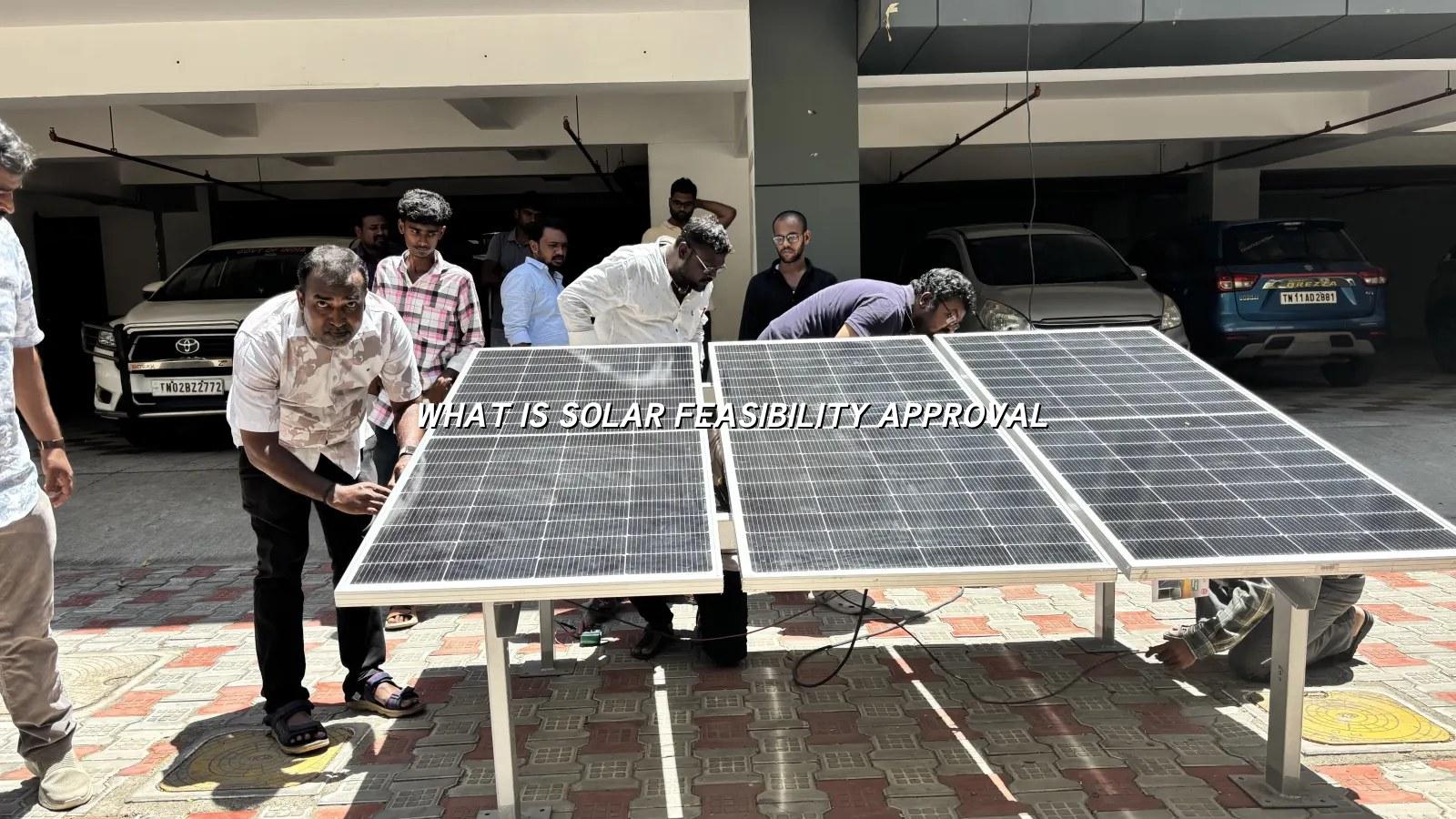
Before any drilling
Why the survey has to happen first
A proper solar project begins with facts from the roof, not guesses from a brochure. Feasibility approval helps us see how much usable area is actually there, whether the structure is ready for mounting, and how the wiring will move from the array to the inverter and then to the EB point.
What we check on site
We start with the roof itself. The team notes the shadow-free space, water tanks, parapet walls, vents and any old pipe runs, then studies how sunlight falls through the day. After that we look at the electrical side too — the EB connection, the board space, earthing points and the route the cables will take to reach the inverter cleanly.
Local conditions can change the answer
In Kanyakumari District, strong sunshine is only part of the story. Wind exposure near Aralvaimozhi and salt-laden air around Colachel affect the mounting hardware we choose, and monsoon drainage matters on roofs that hold water in one low patch. So the approval check is never just “yes, there’s space”; it has to look at the place the system will actually live in.
| Check item | What we review | Why it matters |
|---|---|---|
| Roof space | Usable area free from shade, tanks and obstructions | Decides how much solar can fit properly |
| Roof type | RCC flat roof, tiled roof or sheet roof | Changes the mounting method and fixing details |
| Electrical condition | EB connection, panel space, earthing and cable path | Affects safety, layout and commissioning |
| Site exposure | Wind, sea air, monsoon drainage and nearby shading | Helps us choose materials that suit the location |
- It shows early if the roof needs cleaning, a repair or a small civil change before work begins.
- It helps match the solar capacity to your real 60-day EB usage instead of a random package.
- It shows whether the inverter can sit near the main panel or needs a different location.
- It flags shaded corners from trees, tanks or extra floors nearby.
- It gives the documentation team a clean starting point for the later steps.
How it moves
A simple approval flow from first call to installation
Most people think approval means one single stamp. In real life it is a chain of practical checks, and each step answers a different question. We keep it clear so you know where the project stands and what happens next.
- Contact us. Share your location, the EB bill and what you want from the system. That lets us prepare for the visit instead of arriving blind.
- Free site survey. We inspect the roof, structure, shade and electrical side. If the house is in Nagercoil, Kottar or nearby, we can usually fix the visit without much delay.
- System design and quotation. Once the site is understood, we recommend a capacity that fits the roof and the actual usage. No one gets pushed into a standard size that doesn’t suit the place.
- Feasibility confirmation. We confirm the site can take the proposed system and note any changes needed before installation starts. If there is a roof issue, we say it plainly.
- Installation and documentation. After that, the team moves into mounting, wiring and the EB-related paperwork that applies to your project.
This is where many projects save time. If the first survey shows a problem, we catch it before anyone drills the wrong points or orders the wrong structure. That is the whole point of solar feasibility approval: fewer surprises, less rework, and a system that feels planned rather than patched together.
What affects the decision
Roof, bill and site conditions all matter
We do not sell one standard system. A home in Ozhuginasery with a wide RCC roof, a shop in Thuckalay with a different load pattern, and a farm shed outside Boothapandi will not get the same answer. The right setup depends on the EB units, the roof shape, the usable shade-free area and how the property is built.
For homes, most people want to reduce the units they buy from the grid during the day. For farms or remote sites, off-grid or hybrid options may make better sense. On a coastal roof near Manavalakurichi, the mounting choice and cable sealing need extra attention because salt air can be hard on sloppy work, and a monsoon leak will show up fast if the roof finish is poor.
Common things that can change feasibility
- Heavy shade from trees, water tanks or a taller neighboring building.
- Weak roof patches, loose tiles or sheets that need repair before mounting.
- Long cable runs from the roof to the inverter or main panel.
- An EB panel area that is cramped or poorly arranged.
- Wind exposure that calls for stronger structure and proper fasteners.
People often ask if one small issue means the project is over. Not at all. Usually it just means the design needs to be adjusted, or the roof needs a fix first, and that is better than finding the problem after the installation is already half done.
What to keep ready
Details that make the survey easier
A little preparation makes the approval check smoother. If you have the current EB bill, roof photos and any older solar or inverter details, we can move faster and make fewer assumptions.
Useful things to share before the visit
The EB bill tells us your usage pattern, and the roof photos show the shape and obstacles before we arrive. If the property has more than one roof level or a separate shed, show that too. In a place like Marthandam, where shops and mixed-use buildings are common, those extra details can change the design quite a bit.
Things to avoid before approval
Don’t buy panels first and hope they fit later. That usually creates trouble with spacing, tilt angle and cable routing. Also, if somebody promises a fixed setup without seeing the site, be careful. Real roofs have water tanks, parapets, extra floors and odd corners that don’t show up in a sales pitch.
Another small thing: tell us if there has been leakage, tile movement or any recent roof work. On a tiled roof, even one weak section can change how we place the structure. We would rather plan around it than pretend it is fine and hope for the best.
How JRS SunTech Energy helps
How JRS SunTech Energy can help
We handle solar feasibility approval as part of the real project, not as a buzzword. Our team checks the site, recommends the right solution, guides you through the EB and documentation side, and keeps the setup practical for your roof and your budget.
If the site is suitable, we move ahead with installation and one year of free service support after installation, with continued technical help afterwards. For the current government solar programme, we also guide customers through the applicable subsidy procedure and the documents that need to be in order.
You can reach JRS SunTech Energy, Door No. 227, First Floor, Cape Road, St. Xavier's Church Junction, Kottar, Nagercoil, Kanyakumari District, Tamil Nadu - 629002. Phone: 9787775999. Email: jrssuntechenergy@gmail.com.
If you're unsure about your roof or EB details, send them over and we’ll tell you honestly what fits and what doesn’t.
Frequently asked
Questions people ask about solar feasibility approval
It is the practical check that shows whether your roof and electrical setup can take a solar system properly. We look at the EB connection, roof condition, shading, cable path and usable space before anything is fixed on the roof.
Because a roof can look ready from the ground and still have hidden issues. The survey lets us see the real structure, the way water drains, where the inverter can go, and whether the mounting plan needs to change.
We check roof type, shadow-free area, the condition of the roof surface, earthing, the distribution board, and the route for the cables. In windy or coastal pockets, we also think about the mounting hardware and the sealing of every connection point.
Yes, and that happens often. Your EB units, roof space and site layout may point to a different size than you first expected, so we recommend what fits the place instead of forcing a standard package.
The visit itself is usually straightforward once the survey is scheduled. If we need more details from the EB bill, roof photos or a follow-up look, we sort that out before moving to the next step.
We do. If the site is suitable, we guide you through the installation path, the required documents and the subsidy-related steps that apply under the current government solar programme.
The short answer is simple enough: solar feasibility approval is the point where an idea becomes a workable plan. Once the site is checked properly, the rest of the job gets easier to manage, and you know the system is being built for your roof rather than some generic template.
If you want that handled properly in Nagercoil and Kanyakumari District, JRS SunTech Energy is ready to help.
Hurry up!Subsidy ends 31 March 2027 · 134 days left
Next step
Need a feasibility check before you plan solar?
Send us your EB bill, roof photos and the site location. We’ll review the setup and tell you what fits the roof properly.
- Your electricity requirement and 60-day EB bill
- Property type — home, shop, office, farm or institution
- Backup requirement and available roof space
Related: Solar Solutions · Subsidy Guidance · Contact
Free site survey · Kottar, Nagercoil