Solar guide
What Happens During a Solar Site Survey
A site survey shows us what your roof, load and EB connection can actually support before we design a system.
Solar survey basics
What happens during a solar site survey, step by step
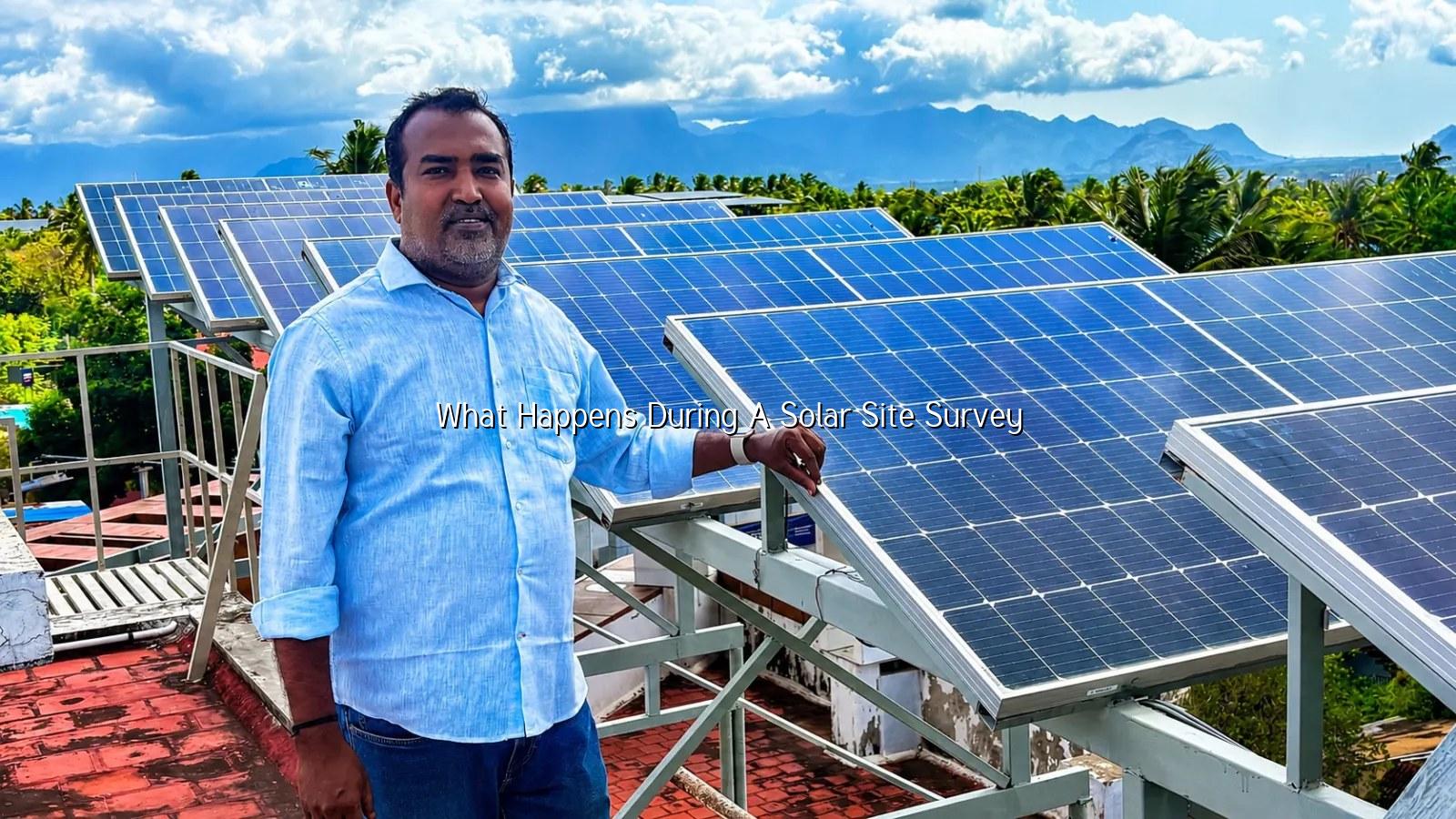
What happens during a solar site survey is simple in principle, but the details matter more than most people expect. We visit your home or business, check the roof, study the EB connection, look at shade and structure, then match all of that with your actual power use before we talk about a system.
In Kottar and nearby parts of Nagercoil, many roofs look suitable from the road and then turn out very different once we see the slope, the tank position or the cable route. A proper survey saves a lot of back-and-forth later. It also helps us avoid recommending the wrong capacity just because the roof looks big enough at first glance.
What we check
The parts of a survey that really affect the design
We do not start from a fixed package. We start from your site, because the site tells the truth. Roof size, direction, shading, existing wiring and EB details all shape the final recommendation, and the work changes quite a bit between a flat RCC roof in Suchindram and a sloped tiled roof in Ramanputhur.
Roof space and structure
The first thing we look at is the roof itself. We check usable area, slab condition, water tank placement, parapet height and how easy it is to move around safely. If the building has a sheet roof, we also look closely at fixing points and the way the frame will spread the load.
In coastal stretches like Colachel or Muttom, the structure is not the only thing that matters. Salt-laden air can affect hardware and connections over time, so we pay attention to mounting choices and how protected the cable runs will be. That one detail can save trouble later.
Shading, orientation and day-time use
We study where the sun falls through the day and what creates shade. A nearby tree, a future overhead tank, another building or even a small wall can change the layout more than people think. If the roof is partly shaded, we may split the arrangement differently or suggest a different approach entirely.
The other piece is your load pattern. Some customers use more power in the afternoon, others after sunset, and that changes the mix of panels, inverter and battery if any. We ask the right questions early, then the system design follows from there.
- We measure usable roof area, not just the full roof size.
- We look for shadow from trees, tanks, walls and adjacent buildings.
- We check the EB connection, meter position and main switch arrangement.
- We note cable entry points, drainage paths and where water can sit after rain.
- We discuss roof type, because RCC, tiled and sheet roofs need different mounting methods.
Survey flow
How the visit usually moves from one check to the next
Most customers like knowing the order beforehand, so we keep it practical. First we speak with you about the bill, the roof and what you want from the system. Then we move through the property and check the technical points in a way that matches the actual layout. In Thuckalay or Marthandam, where shopfront buildings can be tight and crowded, that sequence matters because roof access and cable routing are often the tricky parts.
- Initial discussion: We ask about your EB bill, the type of building and what you want the solar system to do for you.
- Roof and structure check: We inspect the surface, slope, support points and safe walking area.
- Shade and direction review: We see how the sun moves across the roof and where shadow falls during the day.
- Electrical review: We look at the meter board, wiring path, inverter location and any earthing points that matter.
- Design notes: We record what capacity makes sense and what extra work may be needed before installation.
If a site has obvious issues, we say so. Sometimes a roof needs a small repair first, sometimes the cable path needs a better route, and sometimes the question is not about solar at all but about whether the existing electrical setup is ready. People appreciate that honesty, because it avoids surprises after installation has already begun.
What to keep ready
Small things that make the survey smoother
A good survey is faster when you have a few basic things ready. You do not need to prepare much, but a little helps. Most people already have everything nearby, they just do not think of it until we ask.
We usually ask for a recent EB bill so we can see your units over the 60-day cycle. If the house has had roof work, rewiring or a water leakage repair, that information helps too. In places with strong wind exposure like Aralvaimozhi, we also pay more attention to frame stability and fixing points because the roof conditions can be more demanding than they look at first sight.
- A recent EB bill, so we can read the consumption pattern.
- Clear access to the roof, meter board and inverter location.
- Any notes about past leaks, cracks or roof repairs.
- Information about trees, tanks or future shade sources nearby.
- If it is a farm or remote site, details about pump timing and water source.
| Survey check | What we look for | Why it matters |
|---|---|---|
| Roof type | RCC, tiled or sheet roof | Changes the mounting method and cable route |
| Shadow pattern | Trees, tanks, walls and nearby buildings | Affects module placement and daily generation pattern |
| EB connection | Meter position, main switch and wiring path | Helps us plan safe electrical integration |
| Structure and exposure | Wind, salt air and drainage on the roof | Guides hardware choice and long-term reliability |
Why it matters locally
Local roofs behave differently, so the survey has to be real
Kanyakumari District gets strong sunshine through the year, but it also gets wind and monsoon conditions that affect the roof in practical ways. During the south-west and north-east monsoon periods, drainage and cable sealing become more important than people expect. If water can sit in the wrong place, it can create problems later.
That is why we look at the building as it is, not as a brochure drawing. A flat RCC home in Vadasery needs a different layout from a shop building in Kuzhithurai, and an agricultural site around Boothapandi or Thovalai needs its own approach again. For solar water pumps and remote supply, the survey often becomes a discussion about water timing, cable length and whether the site can support the equipment without strain.
What we tell you after the visit
After the inspection, we share what kind of system suits the site, what the likely layout looks like and whether any roof or electrical work should happen first. If your need is better covered by on-grid solar, we say that. If the site really needs battery backup, we may point you toward hybrid solar or off-grid solar instead. We do not push the same setup on every roof, because that would be lazy and, frankly, wrong.
How JRS SunTech Energy can help
From survey to design, we keep the process clear
JRS SunTech Energy starts with the survey, then builds the proposal from your roof, EB bill and site conditions. We serve homes, businesses and farms across Nagercoil and Kanyakumari District, and we guide customers through installation, the applicable subsidy procedures and the required documentation without making it complicated.
You also get one year of free service support after installation, along with continued technical help afterwards based on the product and warranty terms. If you want us to look at your site, send the address, a recent EB bill and a quick note about the roof, and we’ll take it from there.
JRS SunTech Energy, Door No. 227, First Floor, Cape Road, St. Xavier's Church Junction, Kottar, Nagercoil, Kanyakumari District, Tamil Nadu - 629002. Phone: 9787775999. Email: jrssuntechenergy@gmail.com.
Frequently asked
Questions we hear before a survey visit
We check your roof, the shadow pattern, your EB connection and where the inverter and wiring can go. We also ask how many units you use in the 60-day bill cycle so the design starts from your real need, not a guess.
Most visits are done in a single visit, but the time depends on roof shape, access and how much checking the team needs to do. If the roof is cramped or the wiring needs closer inspection, we stay a bit longer and note everything properly.
Yes, it helps a lot if someone is there to show the meter, roof access, and the spot where the inverter or batteries might sit. If the owner is away, we can still look at the roof and structure, but the discussion is better when you are present.
Keep a recent EB bill, clear access to the roof and the main switch area, and any details about past repairs or shading from nearby trees or tanks. That makes the visit faster and helps us give a more accurate system recommendation.
Usually yes, we can narrow it down during the visit by matching roof space, load pattern and budget. If the site has unusual shade, a weak structure or a tricky wiring path, we may need a second look before finalising the design.
That is one of the main reasons we do it. A survey can show weak roof areas, old cables, poor earthing points or mounting issues early, so we can plan the right fix instead of discovering it after work has started.
Hurry up!Subsidy ends 31 March 2027 · 134 days left
Next step
Need to know what your roof can support?
Send us your EB bill, site address and roof details, and we will plan a survey that fits the building and your actual power use.
- Your electricity requirement and 60-day EB bill
- Property type — home, shop, office, farm or institution
- Backup requirement and available roof space
Related: Solar Solutions · Subsidy Guidance · Contact
Free site survey · Kottar, Nagercoil