Solar buyer guide
What to Check When Buying a House That Already Has Solar
Before you sign, check the system the same way you would the roof and the EB papers, because a neat-looking house can still carry a tired solar setup.
Buyer checklist
Start with the solar file, not the paintwork
What to check when buying a house that already has solar begins with a simple question: does the system belong to the house, and does it still do the job the seller says it does? That sounds obvious, but buyers often inherit missing papers, a weak inverter, or roof work that was rushed the first time. If you're buying in Nagercoil or Kottar, that matters even more because roofs here deal with strong sun, seasonal rain and, on some streets, salt carried inland from the coast.
A good solar setup is a plus. A messy one can become a negotiation point very quickly. Panels may look fine from the road, while the mounting hardware is corroding underneath, or the EB records may not line up with the house sale file. We see this across Kanyakumari District, and the same pattern keeps repeating: the buyer trusts the visible parts first, then discovers the hidden parts later.
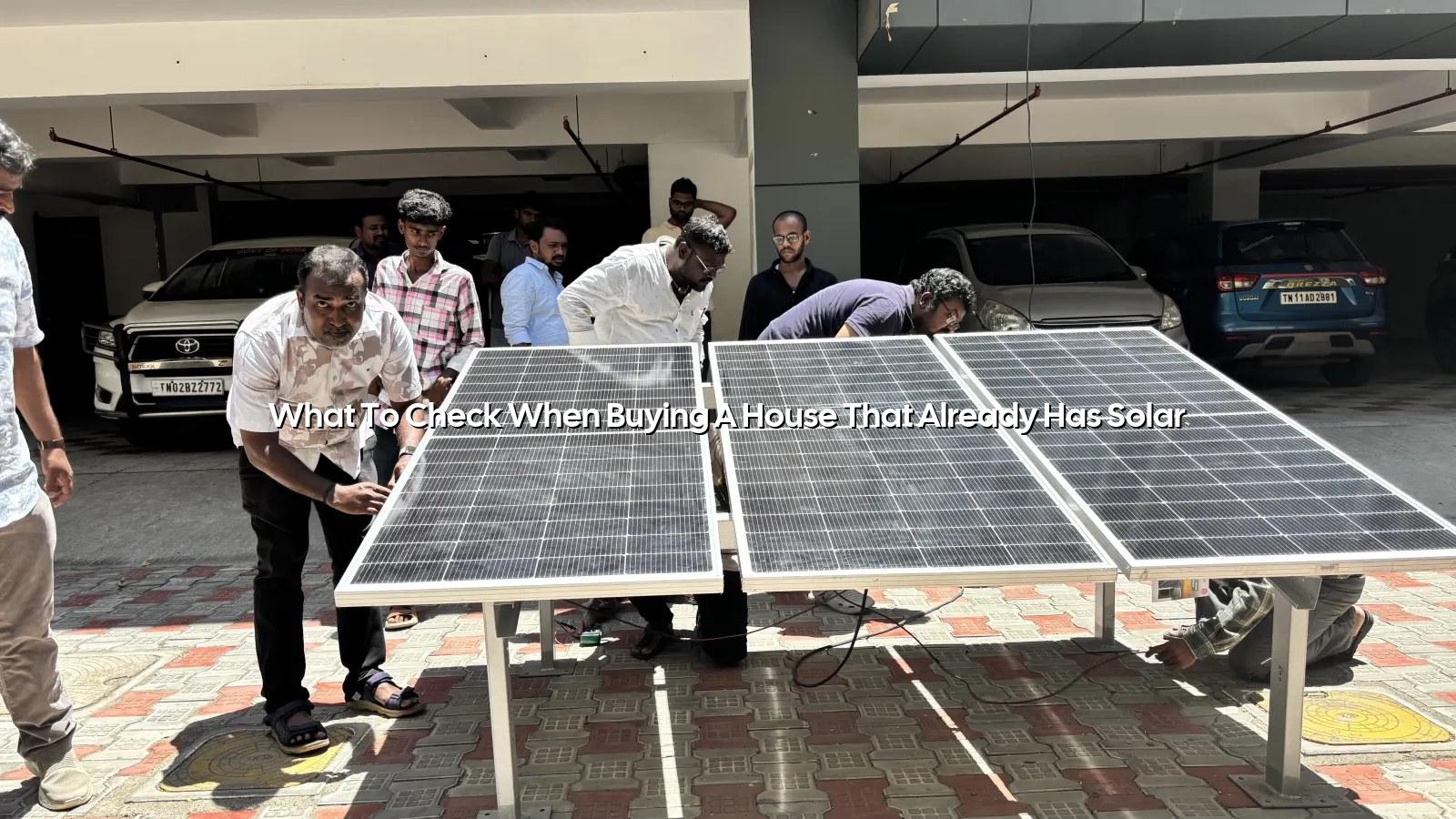
Before you sign
Which parts of the house tell you the solar story?
When a house already has solar, the system tells you a lot about how the previous owner treated the property. You want the papers, the roof and the hardware to agree with one another. If they don't, the sale may still go through, but you should know what you're taking on.
Ownership and utility records
The first thing to settle is ownership. Ask who paid for the system, whether it is meant to stay with the house, and whether the EB account details match the property you are buying. If a solar array was added after the original house paperwork, the file can be slightly untidy, and that is common enough in Kottar and Vadasery where home improvements happen in stages. Untidy is manageable. Unclear is not.
Panels, inverter and battery condition
Then look at the actual equipment. Panels should sit straight, without cracked glass, dark spots or loose mounting points. The inverter should start cleanly and show normal readings. If the home has batteries, ask how long they have been there, whether they are lead-acid or lithium, and whether the backup has been used regularly. A battery bank that looks neat can still be weak inside, especially if the house was vacant for stretches of time.
- Ask for the full file. Get the invoice, installation note, inverter manual, EB letters and any service records the seller has kept.
- Check the roof both ways. Look from inside the house for water marks, then look outside for loose conduits, patched areas or rust around the mounting points.
- Run the system if sunlight is available. Watch the inverter display, note any fault codes and make sure the array responds the way it should in daylight.
- Match the paperwork to the property. The EB account name, meter setup, sanctioned load and solar papers should all line up without guesswork.
- Ask who has serviced it. If the seller has never had it checked, that tells you something important before you move in.
Roof and weather checks
Mounting, wind and salt wear can change the answer
In Kanyakumari District, the roof matters just as much as the panels. RCC flat roofs are common in town houses, sloped tiled roofs still appear in older homes, and sheet roofs show up in some mixed-use properties. Each one needs a different mounting approach. On a house near Manavalakurichi or Colachel, we pay extra attention to salt-laden corrosion on clamps, fasteners and cable terminations, because sea air can age those small parts faster than people expect.
Wind is the other thing buyers often miss. The district gets strong air movement through the year, and areas around the Aralvaimozhi gap are known for it. That means the solar array should be anchored properly, not just placed neatly. If the structure looks light or improvised, the panels may still produce power, but you should ask whether the mounting was chosen for the site or simply copied from another roof. That distinction matters more than people think.
Signs the roof needs a closer look
Check cable sealing, junction box condition, roof penetrations and whether rainwater has a clear path away from the array. During the south-west and north-east monsoon periods, poor sealing shows up quickly. A buyer in Suchindram once told us the roof looked tidy from the lane, but the ceiling below had already been patched more than once. That happens. The outside can look fine while the hidden layer tells a different story.
| Item | What you should see | Why it matters |
|---|---|---|
| Roof mounting | Even brackets, clean fasteners, no rust trails | Tells you whether the structure was matched to the roof type and wind exposure |
| Inverter status | Normal display, no repeated faults, tidy wiring | Shows whether the heart of the system is healthy or already struggling |
| Utility paperwork | EB records, net meter details and system papers in one file | Prevents confusion when ownership changes hands |
| Battery condition | Clear labeling, safe placement, no swelling or heat marks | Helps you judge whether backup power is reliable or getting close to replacement |
| Service history | Cleaning notes, inspection records or troubleshooting reports | Tells you whether the system was looked after or simply left alone |
We also look at the spacing around the panels, because a roof that is too crowded can trap heat and make future service harder. If the house has a parapet wall or water tanks close by, shading can change during the day in ways the seller may not have noticed. A few extra minutes on site often saves a lot of back-and-forth later, and that is a trade many buyers are glad to make.
How we inspect
Our step-by-step review for a used solar house
We normally start with the documents before we ever go up on the roof. That stops people from focusing only on shiny panels while the real issue sits in a folder. After that, we look at the visible hardware, then the inverter and any batteries, and finally the EB side of the installation. In many homes the answer is not a full replacement. It may just need a clean, tightening and a proper handover.
If the seller cannot show the records, don't panic, but do slow down. A house in Marthandam or Thuckalay that has a solar array without clear paperwork deserves a closer look, because you want to know whether the system is on-grid, hybrid, or running through backup gear that was added later. The shape of the system changes what you need to verify, and it changes what can be handed over cleanly.
A practical order to follow
First, confirm the house sale papers and the solar papers belong to the same property. Second, inspect the roof mounting and cable runs. Third, ask for a live test of the inverter or battery backup. Fourth, ask whether any repairs were done recently, because fresh paint can hide work that needs a second look. And if the previous owner used the house as part home and part office, the loads may be different from what you expect from a normal family house.
- Look for a system label or equipment list near the inverter.
- Check that roof penetrations are sealed, not just covered.
- Ask whether the panels were cleaned regularly, especially after monsoon dust.
- Confirm whether the system is tied to the house's EB connection or set up as an independent backup arrangement.
- Request the service contact history if the seller has it.
If the house uses batteries, ask how they are charged and whether the backup runs the same loads every day or only during cuts. A battery bank that supports a fridge, fans and lighting needs a different level of attention than one that only covers a few sockets. That is the kind of detail that gets missed when people only ask, "Does it work?"
What a good handover looks like
Signs the system is ready to move with the house
A good handover feels boring, and that's a compliment. The files are in one place, the inverter is readable, the roof is tidy, and the seller can tell you when the last service was done. When those things line up, the system is easier to take over and easier to maintain. When they don't, you need to treat the solar part of the house like any other major item that came with the sale.
We see this often in homes around Nagercoil and the surrounding streets. Some owners kept neat records, some did not. The homes with a proper file usually have less trouble later, because you can tell what was installed, what was changed and what still needs attention. The other type can still be bought, but only after you understand what you are inheriting.
If the house has on-grid solar
On-grid homes are common because they keep using the EB connection while generating power in the daytime. If the property has this kind of system, make sure the inverter, meter arrangement and any approvals are cleanly documented. You can also read more about on-grid solar if you want to understand how the setup is usually built and why the paperwork matters so much during a property transfer.
If it is hybrid or battery backed
Hybrid systems and battery-backed homes need extra attention because there are more parts to test. Ask whether the batteries are lead-acid or lithium, how old the bank is, and who last checked it. If the property includes backup for a home office or a small business room, the loads may be heavier than expected, which changes how you should assess the system. One tiny warning sign is often enough to justify a second visit.
If the seller says everything is fine but the inverter shows repeated faults, trust the inverter. It usually tells the truth before anyone else does.
How JRS SunTech Energy can help
We can inspect the house before you commit
If you're buying a house that already has solar, we can visit the property, check the roof mounting, review the inverter and battery condition, and go through the EB and installation papers with you. We work from Kottar, Nagercoil and travel across Kanyakumari District, so we know the kind of roof structures and weather wear that show up here. If the system needs cleaning, repair, replacement advice or just a careful handover, we'll say it plainly.
We also guide customers through the document side when there is a subsidy-related trail or an approval question. For a clear next step, send us the house location, a few photos of the rooftop equipment, and whatever papers the seller has.
JRS SunTech Energy
Proprietor: Mr. Pious Antony Rajan
Phone: 9787775999
WhatsApp: 919787775999
Email: jrssuntechenergy@gmail.com
Address: Door No. 227, First Floor, Cape Road, St. Xavier's Church Junction, Kottar, Nagercoil, Kanyakumari District, Tamil Nadu - 629002
Frequently asked
Questions buyers ask us about houses with solar
Start with ownership and paperwork. You need to know who paid for the system, whether the EB account and solar records match the property, and if the inverter is showing normal operation. If those basics are unclear, slow the sale down and get the details checked.
Look for straight brackets, tidy cable runs, sealed roof points and no obvious rust or bending. A site visit helps because we can see if the mounting suits the roof type and the local wind conditions, which matter a lot in Kanyakumari District.
Yes, ask for the invoice, installation records, EB correspondence, net meter papers and any subsidy-related file the seller has. When a house changes hands in Nagercoil or nearby, missing papers can turn a simple handover into a long follow-up job.
Usually it can, but the handover has to be clean. The utility details, service records and equipment list should all make sense together, otherwise you inherit confusion instead of a working system.
That does not automatically mean trouble. We check alarms, display readings, wiring condition and whether the inverter still suits the way the house is used, especially if the property was part home and part office.
Honestly, yes. A short inspection can show whether the system only needs cleaning and tightening or whether there is a deeper issue with the inverter, batteries or roof fixings.
The process is the same, but we pay close attention to the roof finish, cable sealing and any corrosion on exposed parts. Small defects become easier to spot when we know the local building style and weather pattern.
Hurry up!Subsidy ends 31 March 2027 · 134 days left
Next step
Buying a house with solar?
Send us the house location, a few rooftop photos and the solar papers you have. We will help you check what is sound and what needs attention before you close.
- Your electricity requirement and 60-day EB bill
- Property type — home, shop, office, farm or institution
- Backup requirement and available roof space
Related: Solar Maintenance · FAQ · Contact