Solar subsidy guide
PM Surya Ghar Registration Process Explained
A practical walk-through of the rooftop solar registration flow, from the first roof check to the EB paperwork and commissioning.
Solar subsidy guide
PM Surya Ghar registration process explained without the usual confusion
PM Surya Ghar registration process explained is usually what people search for after they hear about rooftop solar and then realise there are forms, utility details and site checks to sort out. The process is actually manageable when it is done in the right order. Start with the roof, the EB connection and the real usage pattern, then move into paperwork once the system idea is clear.
We see the same thing across Kanyakumari District. A terrace house in Kottar does not behave like a sheet-roof home on the edge of Manavalakurichi, and a home near Rajakkamangalam has different exposure to salt air than an inland address. The registration file should reflect the house you really have, not the one somebody imagines from a form.
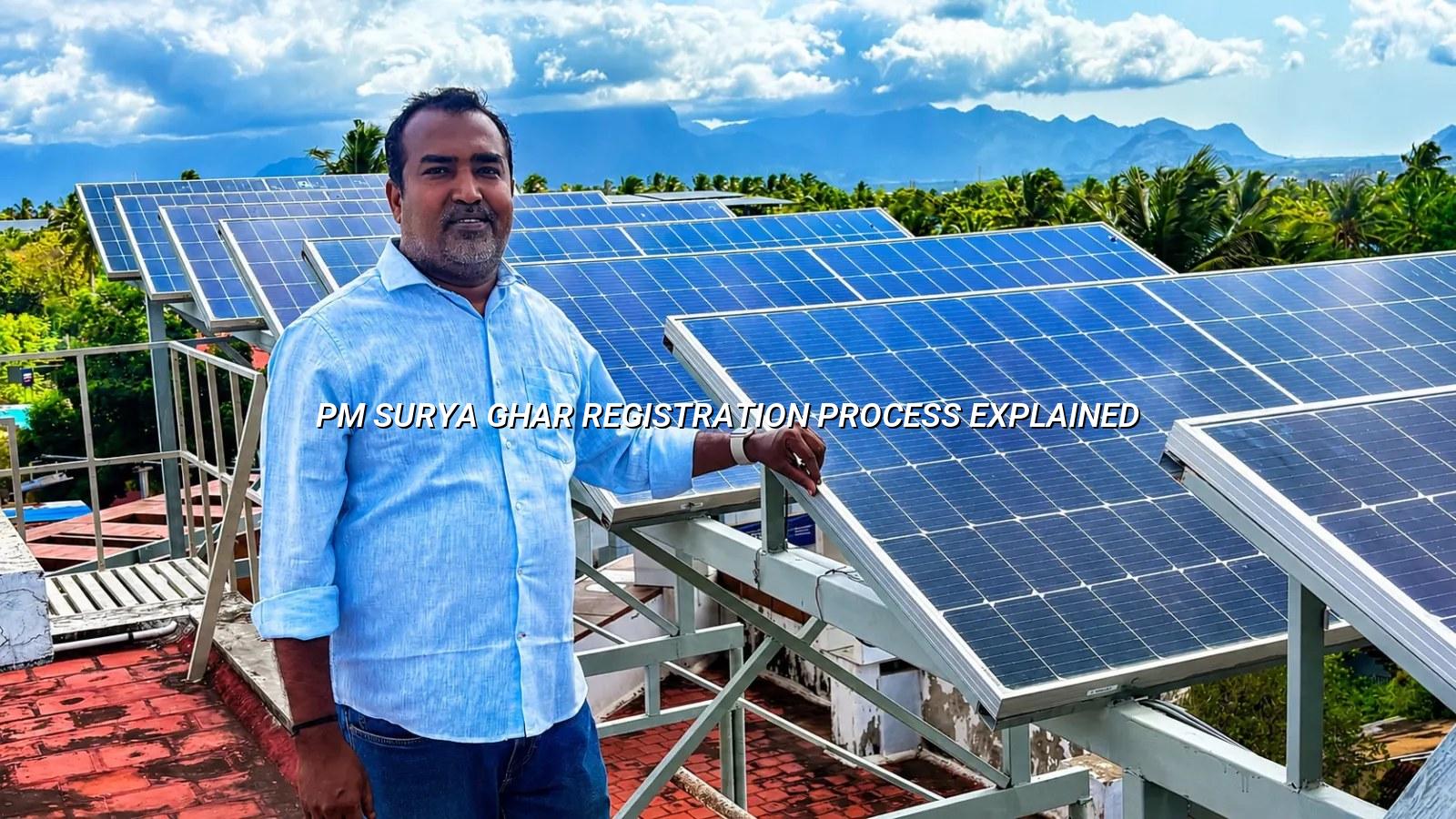
First things first
What a sensible start actually looks like
The fastest way to slow down a solar application is to begin with forms before you know whether the house can support the system. We prefer to look at the site, the monthly EB usage and the building type first.
Begin with the roof and the bill
Most homeowners call us with one or two last EB bills and a rough idea of the roof size. That is enough to start. We read the connection details, the number of units used over a 60-day cycle, the roof shape and the shading around the house, then we decide what size and type of system makes sense.
A flat RCC roof in Nagercoil town is one kind of job. A sloped tiled roof in Vadasery is another. If the house sits in a windy stretch near Aralvaimozhi, the mounting structure needs extra thought, because the district gets strong wind exposure and that changes the fixing plan.
Why the site visit comes early
A good survey tells us whether the cable route is practical, where the inverter can sit and how much clear roof area is really available. It also shows things the papers never do, like loose wiring, an awkward parapet wall or a water tank that throws shade at the wrong time.
And yes, we do pay attention to little things. In coastal and near-coastal places, the hardware and connection points need to be chosen with salt-laden air in mind, because that is where small issues start. A house in Colachel is not treated the same way as one farther inland, and that distinction matters from day one.
- Contact us first. Tell us your location, roof type and EB connection details so we can see what the house can support.
- Free site survey. We visit the property, look at shade, roof space, access, cable path and the condition of the electrical area.
- System design and quotation. We recommend a suitable capacity based on actual use and site conditions, not a one-size-fits-all package.
- Application and documentation support. We guide the paperwork connected with the applicable government solar programme and keep the details aligned with the installation plan.
- Installation, EB work and commissioning. Once the site is ready, the installation and the EB-related steps move ahead in order.
- After-sales support. We stay available after installation and provide one year of free service support, with continued technical help afterwards as needed.
Paperwork and checks
Documents, roof details and utility information that matter
The paperwork side is easier than people fear, as long as the details are accurate. A lot of delays come from a name mismatch, an incomplete address, unclear roof ownership or old wiring that should have been checked earlier. Once those things are known, the rest moves in a much straighter line.
We also keep the process grounded in the site itself. A family in Suchindram may have a roof with shade from nearby trees, while a home in Meenakshipuram may have a terrace that looks simple on paper but needs a different cable path in practice. The registration file should match the roof, the electrical connection and the installation plan, or it creates work later.
A practical checklist before you submit anything
- Keep the EB account details ready, especially the consumer name and service address.
- Check whether the roof is RCC, tiled or sheet, because the mounting layout will change.
- Take clear photos of the roof and the electrical area so the site record matches reality.
- Make sure the wiring and main protection points are in decent condition before installation starts.
- Tell us about trees, nearby buildings or parapet walls that may create shade during the day.
- Share any existing inverter or battery setup, if there is one, so we do not plan around the wrong assumption.
In Kanyakumari District, the weather is part of the decision too. We get strong year-round sunshine, but we also get regular wind and two monsoon periods, so drainage, cable sealing and fixing points matter. Boothapandi and Aralvaimozhi are good examples of places where structure and wind loading influence the mounting choice more than many people expect.
Roof types at a glance
How the same registration idea changes from one site to another
The programme name stays the same, but the site conditions do not. That is why we look at the roof, the utility connection and the surroundings before we say what should be done.
| Site condition | What we check | Why it matters in the process |
|---|---|---|
| RCC flat roof | Open area, parapet height, waterproofing points and cable route | Usually simpler for mounting, though drainage and access still need care |
| Sloped tiled roof | Tile condition, fixing points and safe walkway space | The structure needs a different fixing plan and more careful load handling |
| Sheet roof | Sheet strength, fastener condition and wind exposure | Fastening and sealing are important, especially in windy pockets of the district |
| Coastal home near the sea | Salt exposure, hardware choice and connection protection | Helps reduce avoidable wear on mounting parts and terminals |
| Agricultural site with borewell load | Water requirement, cable distance and daytime operating pattern | Guides whether a solar pumping approach is more suitable than a standard roof plan |
The site has to match the application
If the roof says one thing and the application says another, somebody ends up fixing it later. That is where time gets wasted. A shop building in Thuckalay or Marthandam will often need a different discussion from a residence in Kottar, because the load pattern and roof use are not the same.
We also look at the season
The south-west and north-east monsoon periods can expose loose cable runs or weak sealing very quickly. That is why we pay attention to drainage, roof edges and weatherproofing while the registration and design work are being done. A neat file is good, but the installation still has to survive the district's actual conditions.
Step by step
What happens from first contact to commissioning
This is the part most homeowners want in plain language. They want to know who does what, and when. The process is not complicated, but it does move in order, and that order matters if you want the paperwork and the installation to stay aligned.
We usually start by collecting the EB bill photo, the roof type and the property location. Then we do the site survey, check shading and structure, prepare the recommendation and guide the documentation. After that the installation, EB-related steps and commissioning follow as the site becomes ready.
What we look for during the survey
- Roof space that is genuinely usable, not just measured from the outside.
- Shading from trees, water tanks, walls or nearby buildings during the day.
- Safe cable routing that does not leave the wiring exposed or awkward.
- The condition of the electrical area, including the main connection points.
- Whether the roof structure is better suited to on-grid solar, hybrid solar or another setup.
In some homes, especially around Parvathipuram or Agasteeswaram, the first survey reveals that the roof access is the real issue, not the connection. In other places, a house may look perfect until we notice the shading pattern in the afternoon. That is why we prefer to see the roof ourselves instead of building the process around assumptions.
How JRS SunTech Energy can help
How JRS SunTech Energy Can Help
We help customers through the full rooftop solar flow, including the survey, system design, installation, EB-related documentation and the subsidy guidance that sits around the process. Our team does not try to force one standard system onto every house. We start from your EB bill, roof space, structure, budget and site condition, then recommend what fits.
We also work with solar panels, inverters, batteries, solar water pumps, solar water heaters and maintenance, so the advice stays practical from one step to the next. If your roof is in Kottar, your shop is in Kuzhithurai or your farm site needs a pumping setup, we can look at the site and tell you the honest next move. That is usually where the real help begins.
Contact JRS SunTech Energy, Door No. 227, First Floor, Cape Road, St. Xavier's Church Junction, Kottar, Nagercoil, Kanyakumari District, Tamil Nadu - 629002. Phone: +91 97877 75999 | Email: jrssuntechenergy@gmail.com
Useful notes
Small things that keep the process moving
A few simple checks before you call us make the whole thing easier. Nothing fancy. Just the details people usually forget.
Send the EB bill photo, not only the consumer number, because the account details are easier to read that way. If the roof has old waterproofing work, tell us early. If there is an existing inverter or battery setup, mention it too, because it changes the conversation on layout and cable routing.
A lot of people wait until they think they have every document before they get in touch. That usually slows things down. It is faster to start with the site and let us tell you which papers are actually needed, because the real work starts with the roof and the connection, not with a folder full of guesses.
A few field-tested points
- Keep the service address and EB account name aligned where possible.
- Tell us about any nearby trees or tanks that cast afternoon shade.
- Let us know if the roof is RCC, tiled or sheet so the mounting choice is realistic.
- For homes with heavy daytime use, the load pattern should guide the system plan.
- If the site is coastal, say so early because hardware choices change with salt exposure.
This is also where our one year of free service support after installation is helpful. If a customer needs a follow-up check on the inverter or an electrical connection after the job is done, we are still there. That kind of support matters more than a flashy promise.
Frequently asked
Questions we hear about PM Surya Ghar registration
Start with the EB account details, the roof type and the space you actually have. We also look at shading, cable route, structure and whether the house is a fit for rooftop solar before any form work begins.
Yes, that is the step that saves most people trouble later. A survey lets us see the roof, the electrical area and the real site condition, so the application matches what can be installed.
Usually you will need identity and EB connection details, proof related to the roof or property and some site information. The exact list can change with the stage of the application, so we guide customers through the current paperwork rather than guessing.
Yes, we regularly help customers from Kottar and nearby Nagercoil areas with the survey, documents and the utility-related steps. The office stays in Kottar, and we travel to the site to check what suits the roof and connection.
The process usually moves into verification, installation planning, EB documentation and commissioning. We stay involved so you know what comes next and which paper or site check matters at each stage.
It does. RCC flat roofs, sloped tiled roofs and sheet roofs all need different mounting choices, and the drainage and cable routing can change too. That is one reason the site visit comes before the final recommendation.
Yes, and coastal conditions need a little more care. In places such as Colachel, Manavalakurichi and Rajakkamangalam, salt-laden air affects hardware and connections, so the installation plan has to take that into account from the start.
Next step
What to do if you want us to look at your roof
If you want the process checked properly, send us the house location, the EB bill photo and a few roof pictures. We will tell you whether the site is better suited for on-grid solar, hybrid solar with battery backup, or some other option, and we will say it plainly. No pushy language, no guessing.
The main thing is to start with the roof, not the form. Once the site, the EB connection and the paperwork point in the same direction, the rest of the registration process becomes much more manageable, and JRS SunTech Energy can help you through it from Kottar to the rest of the district.
Hurry up!Subsidy ends 31 March 2027 · 134 days left
Next step
Need help with the registration steps for your roof?
Send us your EB bill photo, roof type and site location, and we will help you figure out the next step.
- Your electricity requirement and 60-day EB bill
- Property type — home, shop, office, farm or institution
- Backup requirement and available roof space
Related: Subsidy Guidance · Solar Solutions · Contact
Free site survey · Kottar, Nagercoil