Solar service guide
Solar Panel Replacement Process
Know what gets checked, what gets removed and how we put a system back to work safely when a panel needs replacement.
Solar repair help
What the solar panel replacement process really looks like
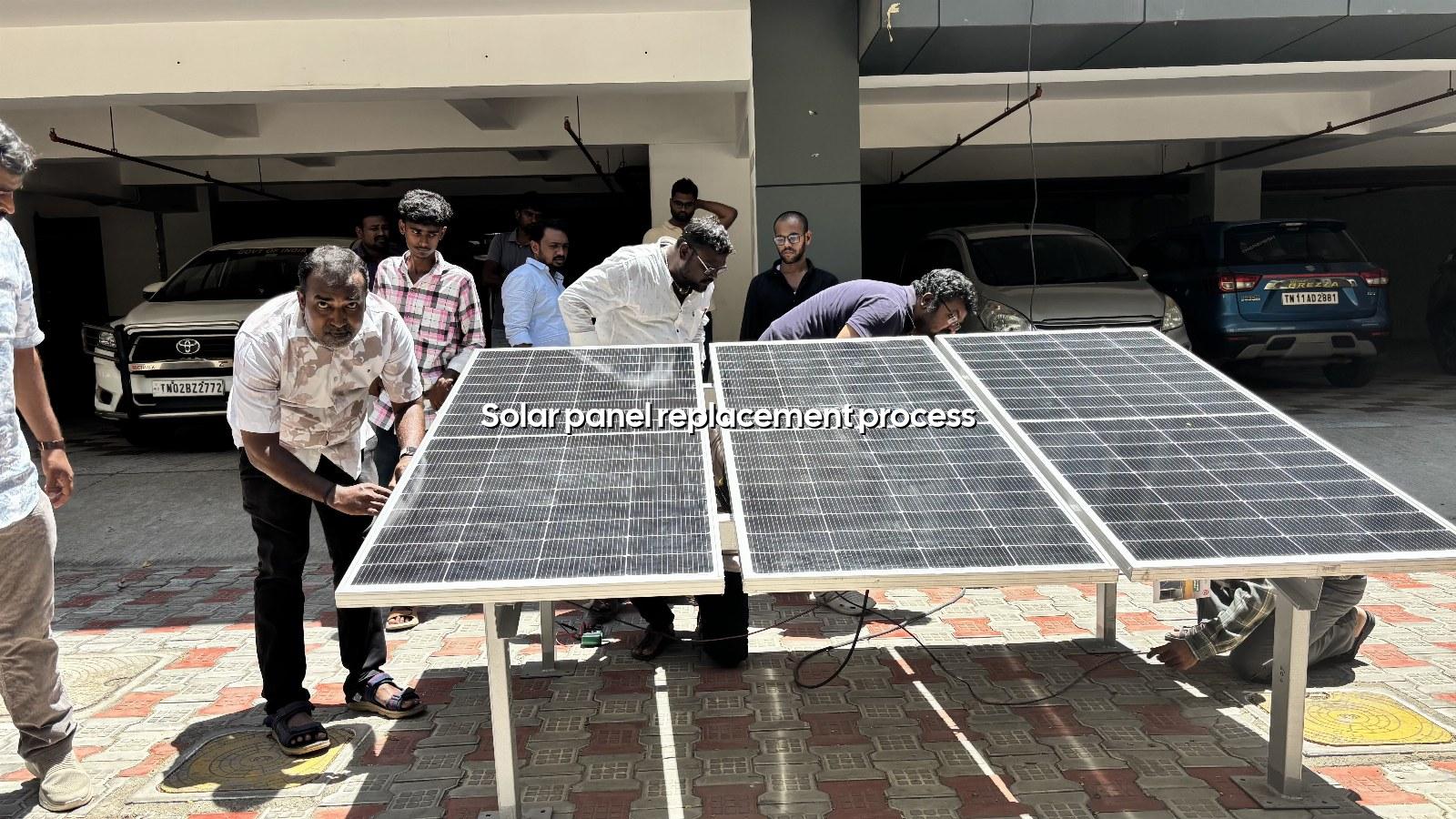
The solar panel replacement process starts with a proper fault check, not with taking things apart on the roof. That matters because a weak panel, a loose MC4 connector, a cable issue or a shaded string can all look similar from the ground. We sort out the actual cause first, then we decide if a panel change is needed.
In Kanyakumari District, roofs face strong sun, sea air in some pockets and plenty of wind on exposed buildings. A panel that has worked fine for years can still fail early if the mounting, sealant or cable entry has aged badly. On a flat RCC roof in Nagercoil the access is one story; on a sloped tiled roof in Suchindram or a sheet roof near the coast, the replacement method changes a bit, and that is where careful work saves you from repeat trouble.
Replacement basics
When a panel should be changed, and when it should not
Not every low-generation complaint means a panel is dead. Sometimes the inverter is fine, the panel is fine, and the problem sits in the connector, the cable run or one dirty corner of the array. We look at the system as a whole, because that is the only honest way to tell you what should happen next.
Signs that usually point to replacement
Cracked glass, a visibly burnt junction box, melted connector housing, a hot spot line on the back sheet and repeated string imbalance are the common ones. If a panel has physical damage, the safest move is normally to remove it and fit a suitable replacement. We also look for water marks around the frame and discoloration near the connectors, because those clues often show up before the full failure.
Cases where repair or cleaning may be enough
A dirty module, a loose clamp, a corroded connector or a cable rubbed by wind movement does not always call for a new panel. On a roof in Kottar or Vadasery, for example, we may find that the panel output is low only because the string has one weak joint hidden under old tape. That sort of finding saves you from replacing something that is still usable.
- We isolate the array before any removal work starts.
- We check inverter readings and string behaviour first.
- We inspect the roof, mounts and cable ends at the same time.
- We match the new panel to the existing system layout as far as practical.
- We test generation again after fixing the panel in place.
Step-by-step
The process we follow on site
Every replacement job starts a little differently, but the logic stays the same. You want safe isolation, the right panel choice, careful mounting and a proper final test. That keeps the work neat and stops the same fault from coming back a week later.
- Site check: We look at the roof type, panel condition, wiring path and inverter display before touching anything. If the site is a shop in Marthandam or a house in Meenakshipuram, the access and fixing points can be very different, so we plan around the actual roof.
- Power isolation: We switch off the system in the proper sequence and confirm the array is safe to work on. That part sounds simple, but it matters because a live string can still carry current even on a cloudy day.
- Panel removal: The damaged module is unfastened without twisting the rail or pulling strain onto nearby cables. We keep an eye on the surrounding hardware, because old clamps and weathered cable ties often need attention too.
- Replacement fitment: The new panel is mounted with the correct alignment, orientation and hardware. If the roof is near the coast, we pay extra attention to fixings and exposed connections since salt air can be hard on metal parts over time.
- Testing and handover: We check polarity, connection tightness and generation after the panel goes in. Then we explain what changed, what to watch for and when to call us if the reading looks odd.
What we check
A quick reference on the replacement job
| Check point | Why it matters | What we look for on site |
|---|---|---|
| Panel condition | Tells us if the module can still be trusted | Cracks, burn marks, delamination, hot spots |
| Roof structure | Affects access, safety and mounting choice | RCC flat roof, tiled roof or sheet roof details |
| Connections | Bad joints can mimic panel failure | Loose plugs, corrosion, cable wear, water ingress |
| Inverter behaviour | Shows if the system is reading the array properly | String voltage, warnings, odd output drops |
| Environmental exposure | Influences the replacement hardware we choose | Wind load, salt air, drainage and cable sealing |
Local site factors
Why roofs in this district need a careful replacement plan
Kanyakumari District gets strong sunlight through the year, which is exactly why people invest in solar in the first place. The same district also sees wind exposure, especially in more open stretches, and that puts more stress on frames, clamps and the cable route. If a replacement panel is fitted without checking those small things, the fix may look fine on day one and then start giving trouble later.
Coastal and near-coastal areas need extra attention around hardware and junctions because salt-laden air can affect exposed metal and connections. Inland homes in Boothapandi or Thovalai may have a different issue instead, like dust, tree shade or a roof pitch that makes access awkward. We work from the site in front of us, not from a standard script.
The roof type changes the method
RCC flat roofs often make panel replacement straightforward, but the cable route still needs inspection. Sloped tiled roofs need more care around tile movement and mounting points, while sheet roofs call for a closer look at fasteners, leakage points and the way the panels are braced against wind. That's why a site survey is never wasted time.
Process tips
What to keep in mind before you book the work
A good replacement job starts with the right information from you. If you send us a photo of the panel, the inverter display and the roof area, we can usually narrow things down faster before the visit. That helps us arrive with the right plan and the right parts where possible.
Helpful things to check first
Look for obvious cracks, broken glass, loose wires or a smell of burnt plastic near the inverter or roof junction box. If the problem started after heavy rain, monsoon wind or a nearby roof repair, tell us that too. Small clues often point us in the right direction and save time on site.
Questions we usually ask before a visit
We ask how old the system is, whether the panel damage is visible, whether the fault is one panel or the whole array and whether there has been any recent roof work. On homes around Ozhuginasery and Ramanputhur, the answer is sometimes tied to shading from a new tree line or a nearby structure, so we ask about the surroundings as well.
- Keep a clear photo of the inverter screen if it shows an error or warning.
- Do not try to lift a panel alone if the roof is steep or slippery.
- Share any recent leak, storm or roof work before the visit.
- Tell us if the system was installed by another company, so we can plan the inspection properly.
- If you are in a coastal pocket, mention that too because the hardware check may need extra attention.
How we help
How JRS SunTech Energy can help
We handle solar panel replacement process work as part of our wider service and maintenance support, so you do not have to guess whether the fault sits in the panel, the inverter or the wiring. Our team visits from our office at Kottar, Nagercoil, checks the system honestly and explains what needs replacement and what does not.
If the job needs a replacement panel, a connector fix, a cable inspection or a follow-up generation check, we can guide it through from survey to commissioning. We also help with the EB and documentation side where that becomes part of the job. JRS SunTech Energy, Door No. 227, First Floor, Cape Road, St. Xavier's Church Junction, Kottar, Nagercoil, Kanyakumari District, Tamil Nadu - 629002. Phone: 9787775999. Email: jrssuntechenergy@gmail.com.
Frequently asked
Questions people ask about panel replacement
If the drop is only from dust, bird marks or shade at certain hours, a clean and a quick check may be enough. When a panel has visible cracks, burnt marks, broken glass or a hotspot issue, replacement is usually the better route. We inspect the panel, the connectors and the inverter reading before we say anything firm.
Yes, it can. In a series string, one weak panel can pull down the output of the whole set, and sometimes the inverter will keep showing an odd reading. That is why we test before removing anything, instead of guessing from the EB bill or the roof view.
We first make the roof safe, then isolate the array and remove the fixed panel without stressing the hooks or rails. On sloped tiled roofs we check for tile movement and cable wear around the entry point, since that is where trouble often starts. After the new panel is mounted, we verify polarity and recheck the generation.
Yes, we do. We often get calls from homes and shops in Kottar, Vadasery and nearby areas where the original installer is no longer easy to reach. We can inspect the system, tell you what needs changing and handle the replacement work with proper documentation support if needed.
We try to keep the system aligned with the current inverter and panel layout so the array works properly. If the old model is no longer available, we suggest a compatible replacement and explain any practical limits before work starts. The aim is simple: clean output, safe wiring and no surprises after commissioning.
That depends on the roof, access and what else turns up during inspection. A straightforward swap is quicker than a roof with damaged fittings or weathered cable ends, so we always plan for the actual site instead of promising a fixed script.
Hurry up!Subsidy ends 31 March 2027 · 134 days left
Next step
Need one panel checked before you decide?
Send us a photo of the panel, the inverter screen and the roof area, and we will tell you the next sensible step.
- Your electricity requirement and 60-day EB bill
- Property type — home, shop, office, farm or institution
- Backup requirement and available roof space
Related: Solar Maintenance · Products · Contact
Free site survey · Kottar, Nagercoil