Solar maintenance guide
Solar Panel Hotspot Problem Explained
A practical look at what hotspots are, how they start, and how we check them on rooftop solar systems in Nagercoil and across Kanyakumari District.
Solar fault check
What a solar panel hotspot really is, and why it matters on your roof
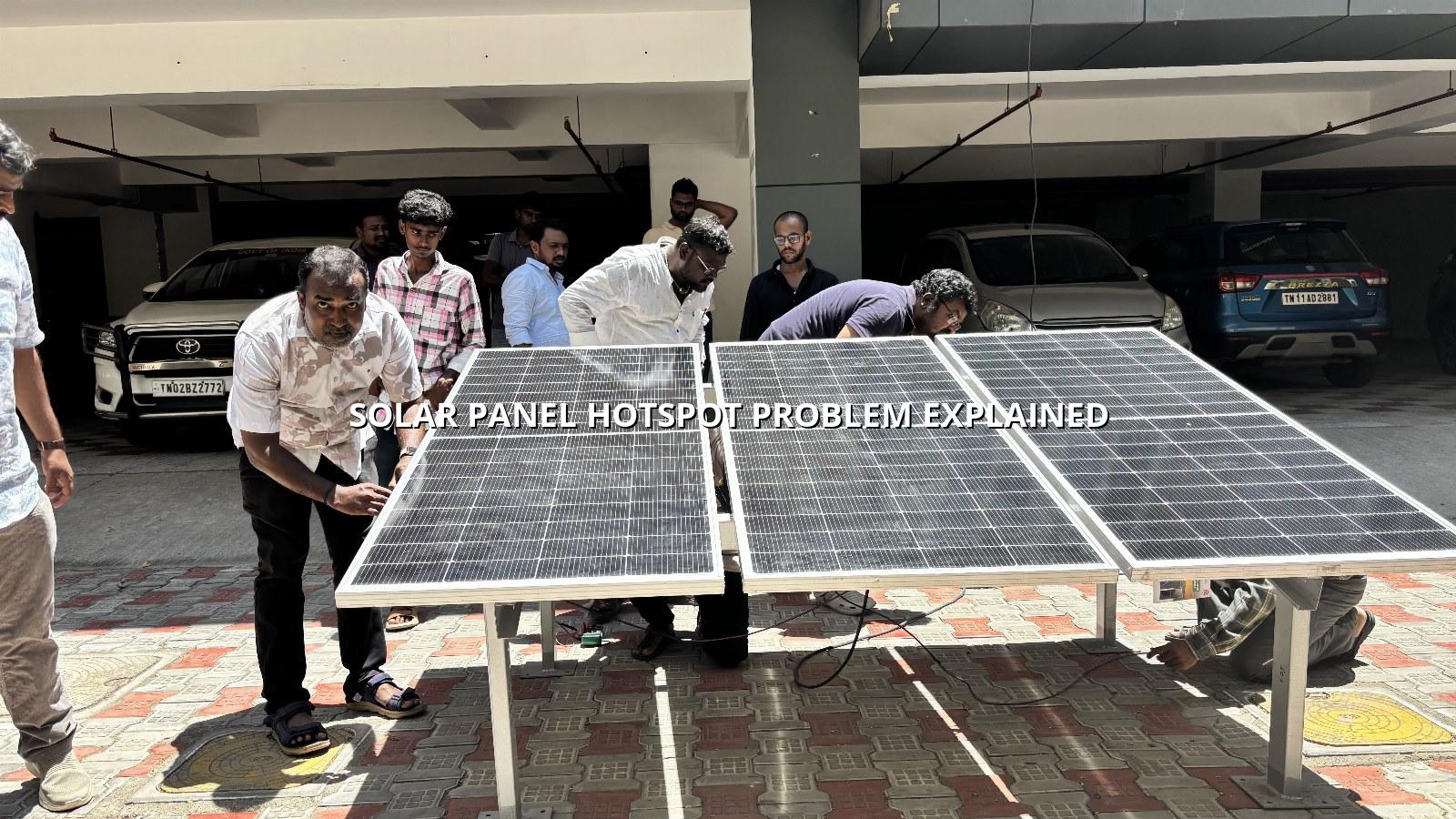
The solar panel hotspot problem explained in plain words is this: one small part of a module is carrying current badly, so that spot heats up more than the rest. The heat can come from shade, dirt, a cracked cell, a weak solder joint, or a connector that is not sitting right.
Most people notice the issue after a patch on the backsheet, a strange warm area, or a drop in generation that does not match the weather. In Kottar and Vadasery we often find that a roof has done fine for months, then one change in shade, dust or cable movement makes the weak spot show itself.
How hotspots start
Why one small fault turns into a hotter spot
Hotspots are usually not random. They point to an uneven electrical path somewhere in the module or string, and the panel keeps working just enough to hide the trouble for a while.
Shade and dirt change the current path
A small shadow from a tank, pipe, parapet or cable tray can make one cell behave differently from the rest. Dust streaks and bird dirt do the same thing when they sit on one section long enough. We see this often on RCC roofs where the array was fitted around other roof items instead of being planned around them from the start.
Internal damage can stay hidden
A panel can look fine from the ground and still have a cracked cell, a poor solder joint or a weak connection inside the laminate. That weak point heats up when the system runs, and the heat may only show clearly once the roof has been in full sun for a while. On sheet roofs in Aralvaimozhi and Thovalai, movement from wind loading can bring that weakness out sooner.
- Start with the shape of the heat. Hotspots usually sit in one place, not across the whole panel.
- Check for repeated shade. Tanks, poles, walls and even a cable shadow can be enough.
- Look at the connections. Loose MC4 joints, poor crimping and heat marks often go together.
- Inspect the backsheet. Bubbles, browning or a burnt smell are signs we treat seriously.
- Compare the module to its neighbours. A single panel that runs hotter will stand out in a string check.
Signs on site
What you might see before the fault gets worse
Some hotspot signs are plain to see, but many start with a power change rather than a visual mark. If the inverter seems normal, the weather is clear and one string still lags behind, that is usually where we begin the search.
In coastal and near-coastal parts of Kanyakumari District, salt-laden air can make connector trouble show up sooner than people expect. We have seen roofs in Colachel and Manavalakurichi where the module was still sound, yet the terminations and cable route had picked up moisture and corrosion, and that kind of fault creates heat in a hurry.
| Sign | What it may mean | What we check first | How urgent it is |
|---|---|---|---|
| Brown mark on one cell | Local heat on part of the module | Shade, cracked cell, string mismatch | Needs inspection soon |
| Burnt smell near the array | Connector or junction issue | Cable ends, terminals, junction box | Stop and inspect quickly |
| One panel is warmer in thermal view | Possible hotspot or internal fault | Thermal scan and electrical test | High priority |
| Output drops after a dusty spell | Soiling or partial shading | Cleaning pattern, roof obstructions | Moderate, but do not delay |
A hotspot is usually a symptom, not the whole story. If the underlying problem is left in place, a cleaning visit alone will not solve it, and the same panel can start heating again the next time the system runs under load. Sometimes the issue is not even the module itself, it is the cable path across the roof and how much heat that line has picked up on the way.
Our inspection method
How we work through a hotspot complaint on a service visit
We do not rush to replacement. A proper inspection, a few measurements and a look at the roof conditions usually tell us more than guesswork ever will.
What we check first
We ask when the problem was first noticed and whether it shows up at a certain time of day. Then we look at the roof layout, the distance between panels and the route of the cables. On many homes in Ozhuginasery and Parvathipuram, a tiny shadow from a pipe or an overhead wire ends up creating the same heating pattern every afternoon.
After that, we test the string output, look at connector condition and inspect the junction box area. If the job calls for it, we use thermal inspection so we can find the warmer spot instead of guessing at it. That keeps the repair focused on the real weak point.
Why the roof itself matters
Kanyakumari District gets strong sunshine through the year, but the roof decides how steady the output stays. A flat RCC terrace behaves differently from a sloped tiled roof, and sheet roofs move differently again when the wind picks up. That is why we inspect the mounting structure, not just the glass on top.
In Boothapandi and the Aralvaimozhi belt, wind loading matters quite a lot. A loose clip, a strained cable tie or a badly sealed entry point can become a heat issue later, especially after repeated movement through monsoon weather. So we check drainage, cable sealing and the way the array was fixed down.
- We check whether the hotspot belongs to one panel or follows the whole string.
- We look for cracked glass, backsheet damage and loose termination points.
- We confirm whether cleaning will help or whether the fault is electrical.
- We inspect mounts and cable routes where wind or salt air may have played a part.
- We tell you plainly if the panel needs repair, replacement or simply better cleaning.
Prevention and upkeep
How to lower the chances of hotspot trouble later
A fair number of hotspot cases can be avoided with decent planning and ordinary maintenance. Nothing fancy. If a roof has morning shade from a tank or evening shade from a wall, that should be part of the design, not something discovered after the first service call.
Habits that help
- Keep the module surface clean, especially after dry and dusty spells.
- Trim or remove repeated shade sources before they settle into a daily pattern.
- Check that cable entry points stay sealed during the monsoon months.
- Watch for loose clips, rattling conduits and obvious connector wear.
- Ask for a thermal or electrical check if one panel keeps behaving differently.
For a commercial roof in Marthandam, Thuckalay or Kuzhithurai, the same idea applies, but the load on the system can be different because of longer operating hours and more wiring on site. We often find that the hotspot is only the visible part of a bigger maintenance issue, and that is why the fix needs a full roof check.
And if the system has already had a rough season, do not wait for the mark to spread before you ask for a visit. A quick inspection is easier than fixing a burned connector after it has cooked the surrounding parts.
What the next step looks like
Which hotspot cases usually need cleaning, repair or part replacement?
This is the kind of comparison we use when we explain the next step in plain language. It helps you see whether the problem looks like dirt, a repairable connection issue, or something deeper inside the module.
| Situation | What it often points to | Likely next step |
|---|---|---|
| One panel is warmer at midday only | Partial shade or debris on the module | Clean, check shading, then retest |
| One corner shows burn marks | Cell damage or internal fault | Electrical inspection and module assessment |
| Connector area feels hot | Loose joint or poor crimping | Repair or replace the connection point |
| Thermal scan shows several warm spots | More than one weak point on the array | Full roof-side check and string review |
| Issue returns after cleaning | Problem deeper than dirt | Look at wiring, mismatch and panel condition |
Honest advice matters here. If the panel can stay in service with a cleaned contact, we say that. If it has a cell fault that will keep heating, we say that too. Nobody wants to replace a good panel by mistake, and nobody wants to leave a weak one on the roof just because it still makes some power.
How JRS SunTech Energy Can Help
What we do when you call us about a hotspot
We handle hotspot checks as part of our solar service and maintenance work, and we also inspect systems installed by other companies. Our team starts from the roof condition, the EB connection, the string layout and the visible signs on the modules, then we tell you what needs attention and what does not. In many cases, the fix is simpler than people expect.
If the fault needs panel replacement, connector correction or a wiring fix, we explain it plainly and move from there. You also get one year of free service support after installation on eligible work, with continued technical help afterwards, subject to product and installation terms.
JRS SunTech Energy, Door No. 227, First Floor, Cape Road, St. Xavier's Church Junction, Kottar, Nagercoil, Kanyakumari District, Tamil Nadu - 629002. Phone: 9787775999 | WhatsApp: https://wa.me/919787775999?text=Hi%20JRS%20SunTech%2C%20I%20would%20like%20to%20discuss%20a%20solar%20solution%20for%20my%20requirement. | Email: jrssuntechenergy@gmail.com
Frequently asked
Questions people ask about hotspot problems
A hotspot is a small area on a module that gets hotter than the rest because current is not moving through that part evenly. It usually points to shade, a cracked cell, a weak connector or some other local fault, not a problem with the whole system.
The earliest signs are often a warm patch, a brown mark, or output that does not match the weather. Sometimes you only notice it during a service visit when a thermal camera or electrical test shows one panel behaving differently from the others.
Yes, it can. The heated area can spread stress to nearby cells and connectors, and the backsheet can also show damage if the problem stays in place for too long, so it is better to inspect it early.
Shading, dirt buildup, cracked cells, poor soldering, loose connectors and module mismatch are common causes. In windy or coastal parts of the district, cable strain and moisture can add to the issue too.
We do. We inspect solar systems installed by other companies as part of our service work, and we check whether the trouble sits in the panel, the wiring or the mounting side of the roof.
If you smell burning, see scorch marks or find a damaged connector, switch the system off and call for inspection. If it is only an output drop and nothing looks burnt, keep an eye on it and book a visit soon.
Hurry up!Subsidy ends 31 March 2027 · 134 days left
Next step
Seeing a hotspot or a strange burn mark on the panel?
Send us a photo of the panel, the inverter screen if relevant, and a short note about when the issue started. We will tell you the next sensible step.
- Your electricity requirement and 60-day EB bill
- Property type — home, shop, office, farm or institution
- Backup requirement and available roof space
Related: Solar Service & Maintenance · Solar Solutions · Contact
Free site survey · Kottar, Nagercoil