Solar panel care
What Causes Micro Cracks in Solar Panels
A plain-English guide to the causes, warning signs, and the checks we use when a rooftop system starts acting strangely.
Panel faults
What causes micro cracks in solar panels, and why they matter
What causes micro cracks in solar panels is usually not one big accident. It is more often a mix of handling stress, roof movement, heat cycling and the small knocks that build up quietly over time. If a rooftop system in Nagercoil starts losing output and the wiring looks normal, micro cracks are one of the first things we check.
The awkward part is that the crack can sit inside the cell. The glass may still look clean from outside, so the panel seems fine and the owner keeps using it as usual. On homes in Kottar and Vadasery, we often find that the problem began during installation, then grew slowly as the panel heated up each day and cooled at night.
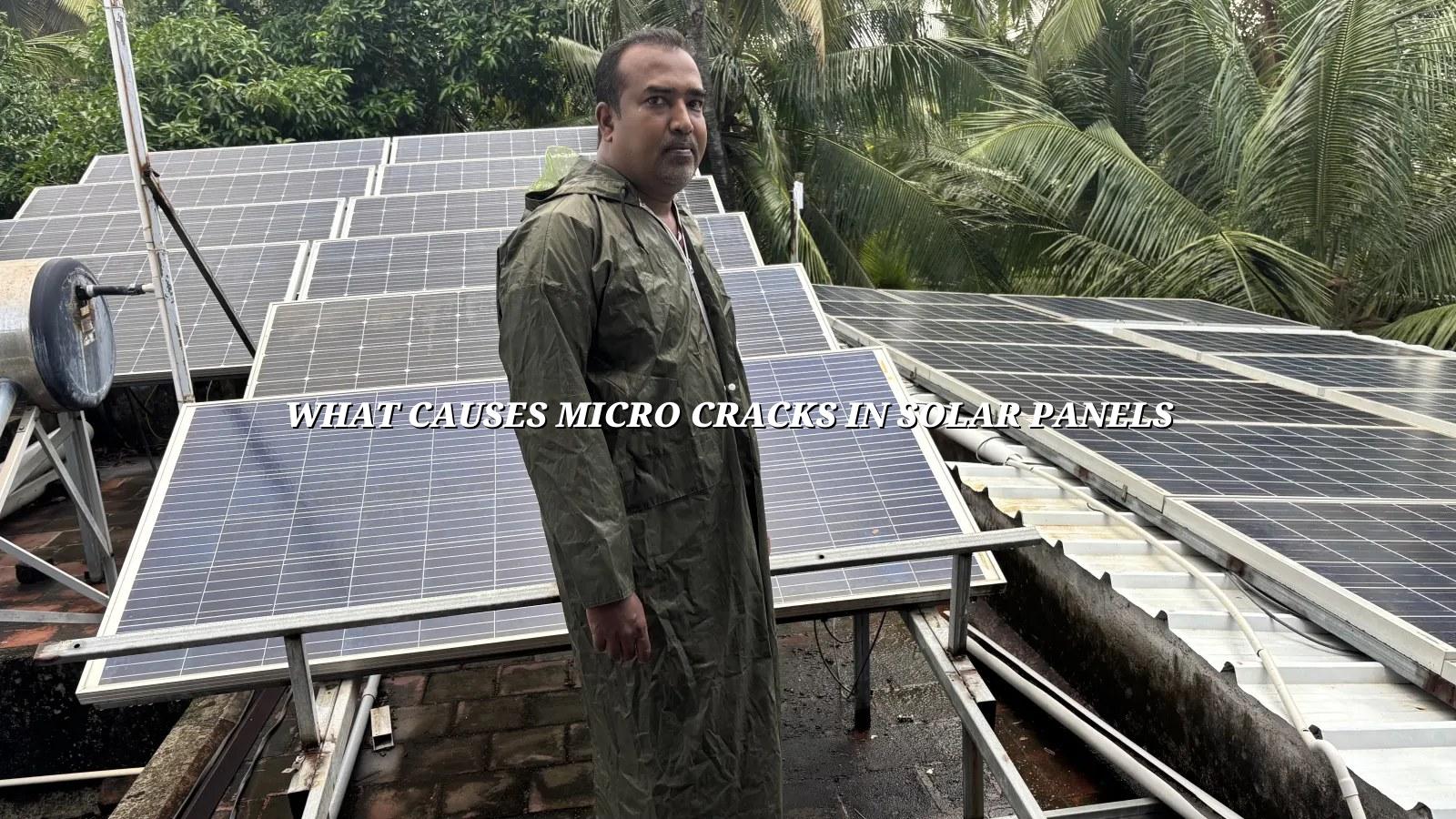
How cracks begin
The everyday reasons a panel starts to fail
Most people think a crack comes from a single visible accident. Sometimes that is true, but in real roof work the cause is usually a chain of smaller stresses. A panel that sits well today may still have been bent, twisted or hit months ago.
Handling stress during transport and installation
Panels are glass modules, so rough lifting can create trouble even when nobody hears a break. If installers hold the panel by the middle, press it unevenly, or place it on a roof edge before the frame is ready, the cells inside can take a hidden hit. That is why we pay attention to how the module moves from the vehicle to the mounting structure, especially on narrow-access rooftops.
Frame bend, roof movement and wind load
In Kanyakumari District, wind is not a side issue. Roofs in Thovalai and Boothapandi can see enough movement that a loose or lightly built structure starts flexing every time the weather changes. That flexing stresses the cell layers, and over time small hairline cracks can form where the panel has been forced to work against the frame.
- Rough handling: lifting, dragging or placing the module before the structure is ready.
- Frame flex: a mounting system that twists in wind or with roof movement.
- Thermal cycling: daily heat and cool changes that expand and contract the cells.
- Transport shock: vibration from road movement or a sudden knock on site.
- Hidden roof stress: poor alignment, uneven clamps or support points that sit wrong on the module.
Signs you can notice
How micro cracks show up on a real rooftop system
A micro crack does not always announce itself with a sudden shutdown. Often the first sign is weaker generation on one part of the array, then an inverter message that makes no sense until the module is tested. Sometimes the customer notices that the bill from the EB connection has crept up and the system is no longer offsetting units the way it did in the first few months.
On a house in Kottar or Suchindram, we normally start with the basic things first. We look for shade, dirt, loose connectors, heat marks on the junction box and any sign that the panel frame is not sitting square. If those are fine, we move deeper and check for module stress, which is where micro cracks often hide.
Signs worth paying attention to
- Output drops on a clear day even though the panels look clean.
- One string behaves differently from the others.
- The inverter shows irregular generation during normal sunlight.
- Fine cell-line marks appear after a strong wind event or rough maintenance.
- Moisture, cable strain or frame movement shows up around the module area.
Local conditions
Why district conditions change the risk
The answer is not the same for every roof. A tiled house near the coast behaves differently from an RCC flat roof inland, and a farm structure behaves differently again.
Coastal air and hardware choice
Near places like Colachel and Muttom, salt-laden air makes the quality of clamps, fasteners and electrical terminations matter more than people expect. The panel itself may be fine, but if the support hardware or wiring is under strain, the module sees repeated movement and that repeated movement can become a crack issue. We also look closely at cable sealing because monsoon rain and salty air do not forgive sloppy joints.
Roof type and mounting design
RCC flat roofs, sloped tiled roofs and sheet roofs all need different support points. A sheet roof that vibrates in the wind near Aralvaimozhi can create a different stress pattern from a flat terrace in Nagercoil. If the structure is chosen badly, the panel keeps taking little shocks, and that is how micro cracks begin their quiet work.
| Cause | What it affects | What we usually inspect |
|---|---|---|
| Installation handling | Cell layers, frame corners, module alignment | Lift points, clamp position, roof access path |
| Wind and vibration | Mounting structure, frame stress, cable movement | Bracket tightness, support spacing, roof stiffness |
| Heat cycling | Cell expansion and contraction | Module condition, hot spots, string behaviour |
| Water entry | Junction box, connectors, backing layer | Sealing, cable glands, corrosion marks |
| Roof movement | Panel flex and long-term stress | Base support, roof condition, frame straightness |
Inspection method
How we figure out whether the panel is the real problem
The first thing we do is not guess. We start with the simple checks because many apparent panel faults turn out to be wiring, shading or connection issues. If the readings still look wrong, we look at the mounting, the roof and the module itself. That is usually where the story becomes clear.
For a rooftop on the town side of Marthandam or Thuckalay, we might find that the array has been pushed by wind, or that a clamp sat a little too hard on the frame. On a farm site, we may see movement from a support pole or a weak section of the structure. Either way, the repair decision changes once the actual cause is known. We do not like telling someone to replace a panel if the real fix is a support adjustment.
A practical step-by-step approach
- Check generation first: compare what the system is producing with what the weather should allow.
- Inspect the roof area: look for shade, dust, loose cables, corrosion and frame movement.
- Test the electrical path: confirm connectors, strings and inverter readings are normal.
- Examine the module: look for cell-line marks, stress points and signs of impact.
- Decide the next step: clean, repair, strengthen the structure, or replace the panel if needed.
Prevention tips
Ways to reduce the chance of micro cracks
You cannot remove every risk, but you can lower it a lot with the right design and a careful installation. Most of the prevention work happens before the panel is switched on.
What helps on site
- Use proper lift points when moving the module onto the roof.
- Match the mounting structure to the roof type and wind load.
- Keep clamps even, not over-tightened on one side.
- Seal cable entry points so water does not sit near the connections.
What helps after installation
- Check the array after the first heavy monsoon spell.
- Look for loose hardware after strong wind exposure.
- Keep the panels clean, but avoid rough scrubbing.
- Schedule inspection if output drops without a clear reason.
How we help
How JRS SunTech Energy Can Help
If you suspect micro cracks, we can inspect the roof, test the system and tell you plainly what is happening. We handle rooftop solar service, installation checks, inverter troubleshooting and preventive maintenance for homes, shops and agricultural sites across Kanyakumari District. If the issue is a panel fault, we will say so. If it is really a mounting or connection problem, we say that too.
Our office is at Door No. 227, First Floor, Cape Road, St. Xavier's Church Junction, Kottar, Nagercoil, Kanyakumari District, Tamil Nadu - 629002. You can call us on 9787775999 or email jrssuntechenergy@gmail.com, and we will help you decide the next step.
Why the right diagnosis matters
A cracked module is not the only thing that can drag down generation, and chasing the wrong fault wastes time. We see systems where the panel is blamed, but the real cause is a loose termination, a bad clamp position or a roof that moves more than it should. That is why our checks are practical and a bit old-fashioned: look, test, compare, then act.
Frequently asked
Questions we hear about micro cracks and panel damage
Most of the time it starts with handling. A panel can bend a little if it is carried poorly, stood on unevenly, or fixed to a frame that is still not square. We see that sort of thing on tight rooftops where the crew has little room to move, and the module takes a stress hit that does not show up right away.
Yes, they can. The district gets strong sunshine through the year, plus wind exposure and monsoon weather, so the glass, cells and frame keep expanding and contracting. On coastal roofs in places like Colachel and Muttom, salt-laden air can make poor connections age faster too, so the whole installation needs proper mounting and regular inspection.
You usually cannot prove it just by looking from the ground. A drop in output, hot spots, odd string behaviour, or fine lines in the cell area can all point that way. We check the roof, the wiring, the inverter readings and the module surface before saying whether it is a crack issue or something simpler like dust, shade or a loose connection.
Not always. Some panels keep working for a while, while others lose performance or develop bigger faults later. The right call depends on how serious the damage is, where it sits, and what the electrical checks show. We would rather tell you honestly if the panel still has useful life than push a replacement too early.
No, not by themselves. They can be one clue in a bigger picture, and sometimes the real issue is the mounting, wiring or roof movement around the panel. A careful inspection tells you whether the fix is a clean, repair, replacement or just better support on the structure.
It can help a lot. Regular inspection catches loose clamps, cable strain, water entry and frame movement before they turn into larger problems. On roofs in Thovalai or Boothapandi where wind loading matters, we also check the mounting structure because a steady frame keeps the panel under less stress.
Next step
Book a check before the issue spreads
If your system is newer but not behaving the way it should, it is worth checking before a small panel fault grows into a bigger maintenance problem. We can inspect the array, look at the mounting structure and help you decide whether the panel needs repair, replacement or just better support.
The main thing is to act on the signs early. A little movement, a little heat stress and a little water entry can add up quicker than most people expect.
Hurry up!Subsidy ends 31 March 2027 · 134 days left
Next step
Do you need a panel inspection?
Send us your roof location, a short note about the issue and a photo if you have one, and we will tell you what to check next.
- Your electricity requirement and 60-day EB bill
- Property type — home, shop, office, farm or institution
- Backup requirement and available roof space
Related: Solar Maintenance · Contact · About
Free site survey · Kottar, Nagercoil