Solar guide
What Is a Government Approved Solar Vendor
A clear explanation for homeowners and business owners in Nagercoil who want to know what approval means, why it matters, and what to ask first.
Solar approval basics
What approval means before anyone touches your roof
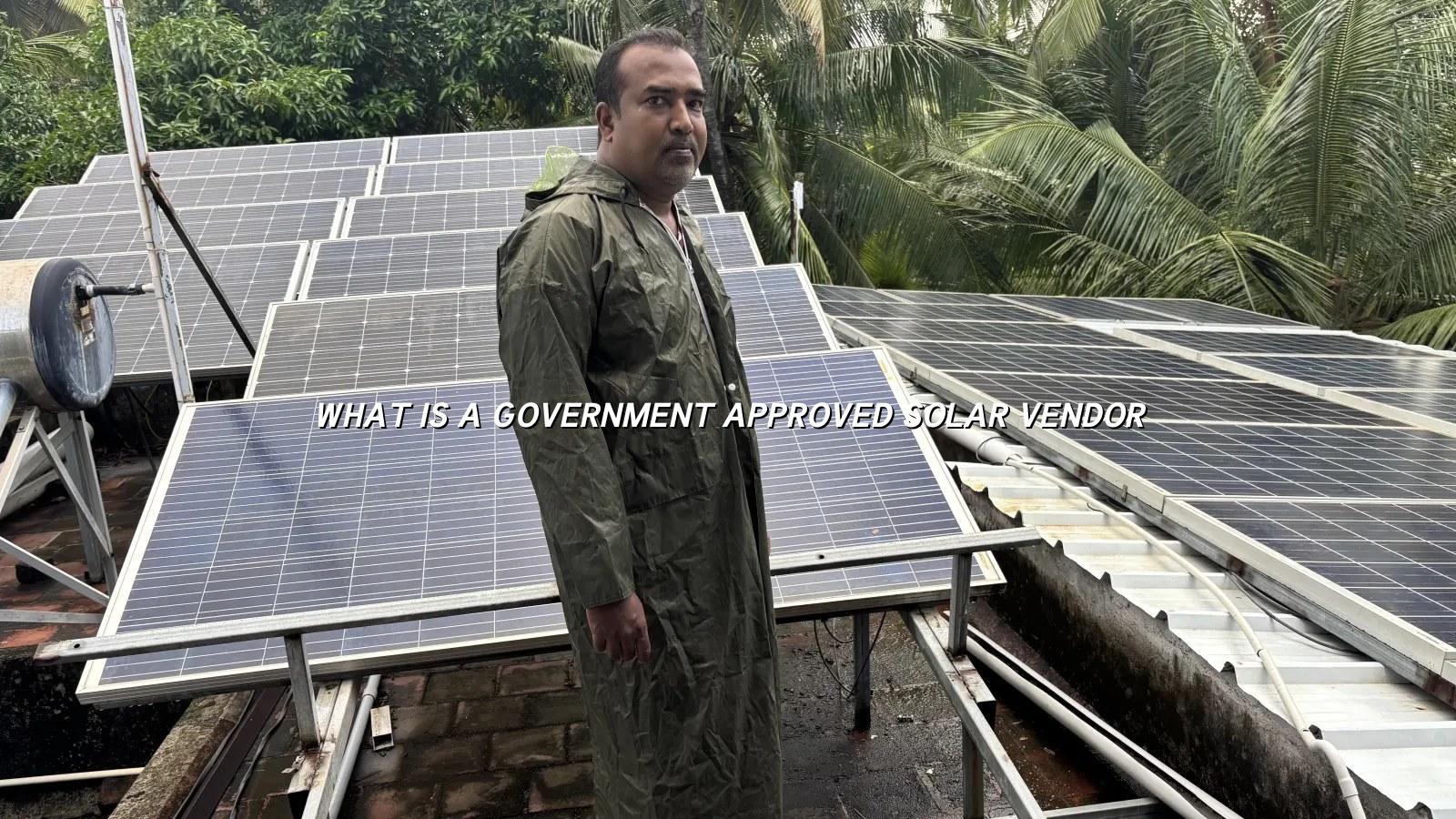
What is a government approved solar vendor? In plain language, it is a company that is allowed to work inside the rules of the applicable government rooftop solar programme and guide you through the approval side of the job. That matters because solar is not only panels on a roof, it's also the survey, the EB paperwork, the commissioning and the handover that follows.
We hear this question often from people in Kottar and Vadasery, and the first thing we usually say is that approved does not mean one standard system for everyone. Your EB bill, the roof shape, available space, shading from nearby buildings or trees and even how the building sits in the wind can change the recommendation. In Kanyakumari District, salt-laden air and the monsoon months also affect the hardware choices, so the vendor has to think beyond just the panel count.
How it works
Why customers ask about approval before signing anything
Most people start asking about this once they realise rooftop solar has several moving parts. There is the site survey, the design, the paperwork, commissioning and the service that comes after installation. If the vendor cannot explain those parts in a way that makes sense, that is usually the first warning sign.
Approval is about the process, not a sticker on a brochure
A government approved solar vendor should be able to talk you through the process from the first call. That means checking the EB connection, understanding how many units you use in a 60-day cycle, looking at the roof type and then deciding whether on-grid, off-grid or hybrid solar fits the site. We often see people begin by asking for a price, then later realise the real question is whether the roof can hold the system cleanly and safely.
The right vendor also knows that an approved route is not the same for every building. A flat RCC terrace in Ozhuginasery does not behave like a sheet roof near the coast, and a tiled roof in Suchindram needs a different mounting approach again. Good work starts with the roof in front of you, not with a ready-made package name.
What you should expect when the vendor is genuine
You should get a simple explanation, not a pile of jargon. The vendor should tell you what documents are needed, what the site survey will check, how the installation will be commissioned and what happens once the system is live. If the story keeps changing from one phone call to the next, you will feel that very quickly.
We also tell customers that approval does not remove the need for proper workmanship. Cable sealing, waterproofing, correct earthing and the right mounting structure still matter. Around Kanyakumari District the southwest and northeast monsoon periods can expose sloppy work fast, and that is true whether the system sits on a home roof or a shop building.
| Stage | What the vendor should do | What you should look for |
|---|---|---|
| First conversation | Ask about the EB connection, roof type, location and solar goal | See whether they listen before suggesting a system |
| Site survey | Inspect shade, slope, access, drainage and structure | Check whether the questions are practical, not scripted |
| System design | Recommend a suitable capacity from your actual use and roof space | Make sure the plan is tied to your site, not a fixed bundle |
| Documentation | Guide the subsidy and EB paperwork for the applicable programme | Confirm who prepares the forms and who follows them up |
| Commissioning | Test the system, finish the electrical work and hand over clearly | Ask how support will work once the system is running |
- Always ask for a site survey before anyone finalises a capacity.
- Check that the vendor can explain the EB and documentation steps in plain words.
- Make sure the mounting design suits wind exposure and coastal air.
- Confirm who will guide the subsidy paperwork and who will stay in touch after installation.
- Look for one clear point of contact instead of being sent from person to person.
Step by step
How the approval path usually moves from enquiry to handover
The path is simpler when the vendor works properly. First, you speak with the team and share the basics of your roof and EB connection. Then a site survey is done, the design is prepared, and the paperwork is handled before installation moves ahead. After that comes commissioning, and finally the support that follows the handover.
Here is how we like to explain it to customers who feel unsure at the start:
- Start with the bill and the roof. Bring the recent EB bill and show the roof so the vendor can understand usage and space together.
- Let the site survey happen first. A real survey checks shade, structure, cable routes and access before anyone speaks about a final system.
- Ask how the design was chosen. The right answer should connect your units, roof type and building use to the proposed capacity.
- Confirm the paperwork path. Know who handles the EB documentation and the subsidy guidance, and what you need to provide.
- Stay for commissioning. Watch the system being tested and ask questions about the inverter, wiring and handover while the crew is there.
- Keep the support number handy. After installation, service support matters when you want help with inspection or troubleshooting.
On homes in Ramanputhur or offices in Kuzhithurai, that order keeps the job tidy. If you reverse the order and start with a price sheet, you often end up spending more time fixing the assumptions later.
What to check
Questions that separate a real vendor from a sales pitch
The easiest way to judge the vendor is to listen to the questions they ask you. If they want to know the 60-day bill history, roof access, drainage paths and nearby shade, they are thinking about the site as it is. If they jump straight to a fixed package, they may be trying to fit you into something that was never meant for your roof.
We see the same pattern on commercial roofs too. A building in Thuckalay or Marthandam may have daytime loads, older wiring and more equipment already on the roof, so the solar design has to respect all of that. The process still starts with the survey, then the design, then the approval work.
Things worth asking before you decide
Ask who will visit the site, who will prepare the documents, how the EB connection is handled and what happens after the system is commissioned. Ask whether the mounting structure is chosen for the local weather, because wind loading is not a small detail in this district. And ask whether the company will support the system later, since service after installation is part of the job too.
We also think the answer should be honest if the site is not ready. Sometimes a roof needs a small repair first, or the wiring needs attention before solar goes up. It is better to hear that early than to discover it after the material has already arrived.
- Check if the vendor asks about your actual units, not just your address.
- See whether they mention roof type, drainage and shade without being prompted.
- Confirm that the design is matched to your building, whether it is RCC, tiled or sheet roofing.
- Ask how they handle service support after installation and who answers the phone.
- Make sure the paperwork is explained before you are asked to sign anything.
Solution fit
Approved status still has to meet the right solar design
The approval answer does not end the conversation. After that, the real question is whether the system suits your site, your roof and the way you use electricity every day.
Homes, shops and offices need different thinking
A family house in Kottar usually needs a different layout from a shop or office building in Thuckalay. On homes, we look at day and evening use, terrace space and roof angle. On shops and offices, daytime load, inverter choice and the continuity of the EB connection often matter more.
That is why a vendor with real approval should still ask practical questions. How many rooms use fans and lights during the day? Is there a pump load? Is the roof RCC, tiled or sheet? Is the wiring old? These are the questions that decide whether solar feels orderly after installation or messy every time you go near the meter board.
Coastal weather changes the hardware choice
Much of the district has salt-laden air, and that means hardware selection matters more than people expect. A roof near Colachel or Manavalakurichi can need more care in mounting hardware and connection protection than one farther inland. The monsoon months also make drainage and cable sealing worth checking twice.
Wind matters too. In exposed parts of the district, and especially when we think of the broader wind belt around Aralvaimozhi, a vendor has to consider strength and fixing before looks. That is one reason we prefer to see the site ourselves instead of guessing from a phone photo.
Service and support
What happens after the system is commissioned
The work does not stop when the crew packs up. You still need someone to answer questions about performance, inverter behaviour, electrical connections and basic upkeep. That is why service support matters so much when you are choosing a vendor.
At JRS SunTech Energy, we provide one year of free service support after installation, with continued technical assistance afterwards. Specific service terms vary depending on the product, the manufacturer warranty and the installation itself. We also handle solar service and maintenance for systems installed by other companies, including inspection, performance checking, inverter troubleshooting, electrical connection inspection and preventive maintenance.
A small issue is easier to fix early
If output drops, a cable loosens or the inverter shows something odd, it is better to ask early instead of waiting. In our experience, the second visit is often where the useful details show up, because the customer has had a chance to watch the system under normal use. That is true for homes, shops and agricultural sites alike.
We also work across different solar needs, so if your site turns out to suit on-grid solar, off-grid solar or hybrid solar, we can discuss the option that actually fits. If the site needs a pump, a heater or battery backup, we can talk through those too without pushing the wrong setup.
How we help
How JRS SunTech Energy can help with the approval and the installation
At JRS SunTech Energy, we start from your EB bill, your roof space and the real site conditions, then recommend a system that fits the building instead of forcing one standard size. We guide homes, businesses and agricultural applications through installation, subsidy procedures and the required documentation, and we keep the advice tied to what the site can actually take. If you need on-grid solar, off-grid solar, hybrid solar or another solution from our range, we will say so plainly.
We also service systems we did not install, so if you already have solar and something feels off, we can inspect it and tell you what needs attention. For a free site survey, contact JRS SunTech Energy, Door No. 227, First Floor, Cape Road, St. Xavier's Church Junction, Kottar, Nagercoil, Kanyakumari District, Tamil Nadu - 629002. Phone: 9787775999. Email: jrssuntechenergy@gmail.com.
The first call should be straightforward
If you are still asking what is a government approved solar vendor, the next step is simple: let us look at your roof and your EB connection. We will tell you honestly whether the site looks ready, whether it needs a repair first, or whether another solar setup makes more sense. That saves time and cuts down the back-and-forth later.
Frequently asked
Questions people ask about approved solar vendors
It is a solar company that can work within the relevant rooftop solar programme and handle the related paperwork in the proper way. For you, that means the vendor should be able to explain the approval path without making the process feel confusing or hidden.
Ask which programme the vendor is approved under and ask them to walk you through the paperwork they would handle for your site. A real vendor should be comfortable explaining the EB connection details, the documents needed and the next step after survey.
No, the approval itself does not decide the size. Your EB bill, roof space, shading, roof type, the structure of the building and the site conditions are what shape the recommendation, especially in a district with wind and salt-laden air.
Yes, that is part of what we guide customers through. We help eligible customers with the installation steps and the documentation linked to the applicable government rooftop solar programme, while keeping the design tied to the site.
Ask who will do the survey, who handles the paperwork, what service support comes after installation and whether the roof will be checked before capacity is suggested. On a house with an RCC roof, tiled roof or sheet roof, those questions matter more than a quick sales pitch.
Yes, because commercial buildings still need the same survey, documentation and commissioning flow. A shop in Marthandam or an office in Thuckalay can have a very different load pattern from a home, so the vendor has to design for the building in front of them.
Hurry up!Subsidy ends 31 March 2027 · 134 days left
Next step
Still wondering what approved solar means for your roof?
Send us your EB bill, roof type and location details, and we will tell you what looks suitable before you decide anything.
- Your electricity requirement and 60-day EB bill
- Property type — home, shop, office, farm or institution
- Backup requirement and available roof space
Related: Subsidy Guidance · Solar Solutions · Contact
Free site survey · Kottar, Nagercoil