Solar guide
Common Mistakes When Installing Rooftop Solar
A practical look at the planning errors, roof checks and wiring details that save you from avoidable trouble later.
Solar planning basics
Common mistakes when installing rooftop solar start before the first panel goes up
Common mistakes when installing rooftop solar usually begin with a poor survey, a rushed quote or a layout that looks neat on paper and fails on the roof. If you are planning a home system in Nagercoil or a shop roof in Marthandam, the first job is not buying panels, it is checking the roof, the EB connection and the way the building actually behaves in the sun.
We see the same pattern again and again. A customer wants the panels fixed quickly, the installer skips a few checks, and later there is heat build-up, cable strain, water seepage or a system that never quite matches the household's pattern of use. Kanyakumari District gives us strong year-round sunshine, but it also gives us wind, salt-laden air in some areas and monsoon spells that punish sloppy work.
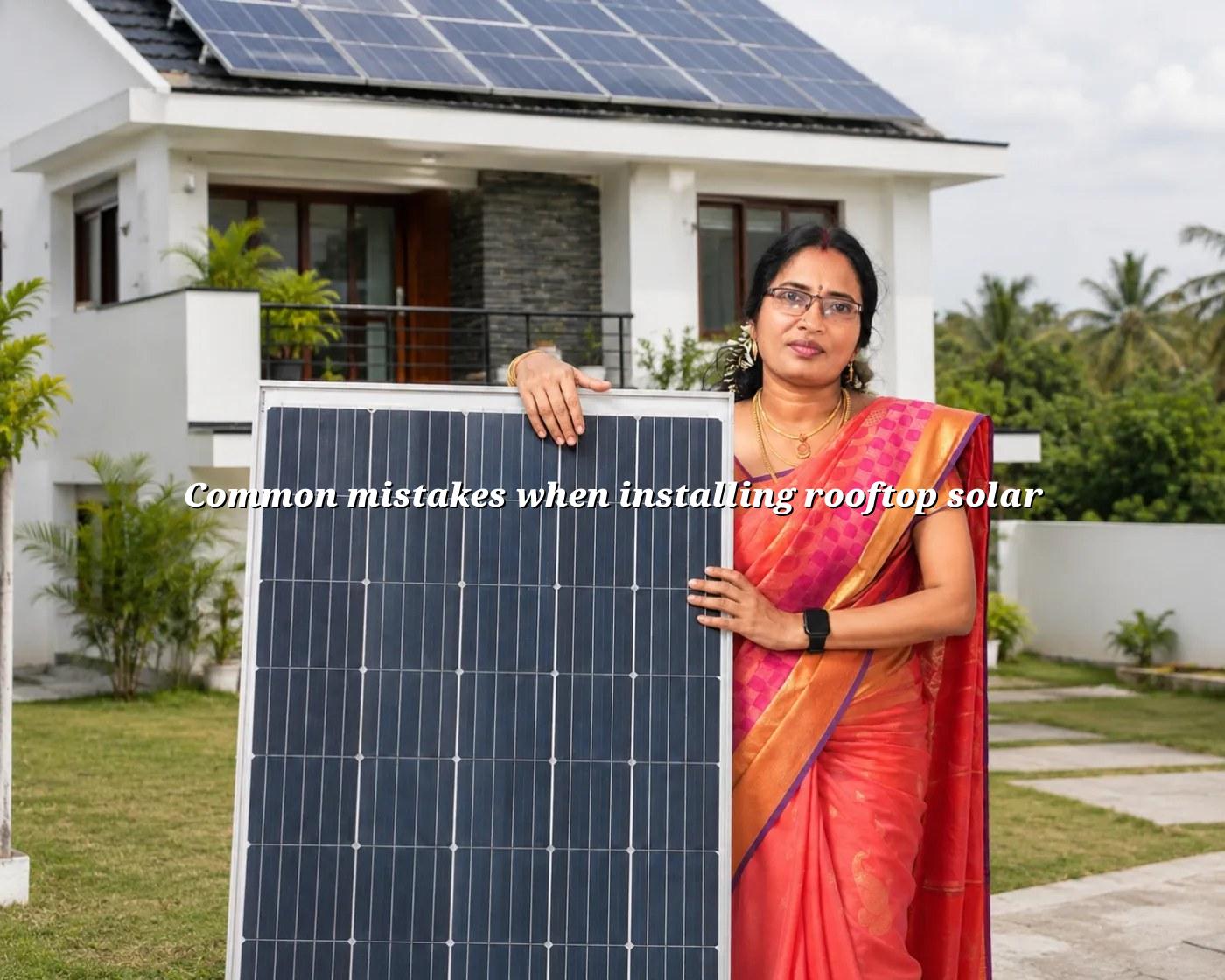
What goes wrong
Where rooftop solar installation mistakes usually begin
Most of the avoidable trouble comes from assumptions. A roof looks strong, so people assume it is fine. A bill shows enough usage, so they assume any capacity will do. A shaded corner seems small, so they assume it does not matter. That is how an installation can end up under-performing long before the first maintenance visit.
Skipping a real site survey
A proper survey is not a quick glance from the gate. We look at roof orientation, shadow movement, parapet height, water tank position, cable paths, structure type and where the inverter can sit without cooking in the sun. On a tiled home roof in Kottar, for example, the fixing method is very different from a flat RCC terrace in Vadasery, and that difference matters.
Choosing capacity from guesswork
Some people ask for a system size they heard from a neighbour and never check whether it fits their own EB bill. The right size depends on your actual 60-day consumption, roof space, budget, shading and whether the building uses power mostly in the day or later in the evening. We don't sell one standard system, because one standard system is how people end up disappointed.
- Measure usable roof area, not just total roof area.
- Check the EB meter position before the wiring plan is fixed.
- Match the mounting structure to the roof type and wind exposure.
- Keep drainage paths open so rainwater does not sit around the array.
- Plan cable routes before drilling starts, not after.
Common errors
Five mistakes we keep seeing on rooftops
Some of these look small on the day of installation, which is exactly why people miss them. Later, they become the reason a system feels awkward to live with or expensive to fix.
- Ignoring shading from the real time of day. A roof can look clear in the morning and still lose a useful amount of sun later because of a tank, a nearby wall or a tree line. In places like Suchindram and Agasteeswaram, we often see that the shade story changes during the afternoon more than people expect.
- Using weak mounting for the local wind. Kanyakumari District is known for wind exposure, so the structure has to be picked carefully. A fix that seems fine on a calm day may not be the fix you want on a sheet roof in Aralvaimozhi or on a taller building edge near Thovalai.
- Letting cable runs become an afterthought. Loose cables, sharp bends and poor sealing at roof penetrations can create headaches later. Monsoon water finds the weak point every time, and the south-west and north-east seasons both punish bad sealing.
- Putting the inverter in the wrong spot. We still see units installed where they get heat, dust and splash, or where nobody can reach them for routine checking. A shaded, ventilated and accessible location is much better than a place chosen only for short cable length.
- Skipping grounding and protection planning. Earthing, surge protection and connection quality are not decoration. They are part of the job, and if they are done casually the system can give trouble when weather and supply conditions change.
Roof and structure
Roof type changes the installation method more than most people think
In this district we work on RCC flat roofs, sloped tiled roofs and sheet roofs, and each one needs a different conversation before the first fixing is made. RCC usually gives more freedom for layout, but you still have to think about drainage and wind uplift. Tiled roofs need careful support and sealing so the roof stays weather-tight, while sheet roofs demand attention to fastener quality and the condition of the existing sheet line.
The mistake is assuming the same bracket, the same layout and the same cable path will suit every house. That is not how real roofs behave. On older homes in Kottar or houses closer to the sea side at Colachel, we also pay more attention to corrosion risk and the way hardware will age in salt-laden air.
What we check before we say yes
We look at the roof structure, the age of the roof, any cracks or weak points, and how the weight will be spread. We also check whether the proposed array leaves space for future maintenance, because panels that are packed edge to edge can be awkward to clean or inspect later. That is a small detail on day one and a big one after a few rainy seasons.
Comparison table
What to compare before you approve a rooftop solar layout
The table below shows the sort of comparison we do during a normal survey. It helps customers see why the same roof can lead to different recommendations.
| Check point | What can go wrong | What we look for | Why it matters |
|---|---|---|---|
| Roof condition | Cracks, loose sheets or weak fixing points | Sound structure and suitable mounting surface | Protects the roof and the array over time |
| Shading | Panels partly hidden by walls, tanks or trees | Shadow pattern through the day | Helps the array produce as expected |
| Cable route | Long, exposed or badly sealed paths | Short, protected and neatly sealed routing | Reduces wear and weather entry points |
| Inverter location | Heat, dust, splash or poor access | Ventilated and serviceable wall position | Makes checking and support easier later |
| EB connection | Paperwork or meter details not ready | Clear documentation and correct connection plan | Helps the system move to commissioning smoothly |
Installation steps
The seven-step way we avoid avoidable mistakes
We keep the process simple because the job itself has enough moving parts. A neat sequence is what keeps people from making rushed decisions halfway through.
We start by understanding the bill, the roof and your actual power use. Then we design around the building, not around a random kit. That sounds ordinary, but ordinary is what gets the roof right.
- Contact us first. Send your EB details, roof photos and a quick note about the property type. That gives us enough to start the conversation without guessing.
- Free site survey. We visit and check the roof, structure, shade, access and practical installation points. If there is a concern, we tell you plainly.
- System design and quotation. We match the capacity to your actual needs, roof space and site conditions. No one-size-fits-all system, because roofs are not one-size-fits-all.
- Installation. Mounting, module fixing, inverter placement and cable runs are done in sequence so the layout stays clean and inspectable.
- EB and documentation. We guide the paperwork and connection steps that apply to the job, including support around the subsidy process where relevant.
- Commissioning. The system is checked, switched on and tested so the installation is ready for normal use.
- After-sales support. You get one year of free service support after installation, with continued technical help afterwards. Terms vary by product, manufacturer warranty and installation.
Local conditions
Why Nagercoil and Kanyakumari District need a careful approach
The district is kind to solar in one way and hard on bad workmanship in another. Strong sunlight is there, but so are windy stretches, coastal air in several parts and the two monsoon periods that make drainage and cable sealing matter. That is why the same roof in Thuckalay can need a different fix than a similar-looking roof closer to the shore.
We also pay attention to the kind of building people actually have here. One customer has a flat terrace with a water tank and a few walls casting shadows, another has a sloped tiled house, and someone else has a sheet-roofed commercial space with a regular EB connection. If you treat those as the same job, the result usually looks tidy for a week and annoying for years.
There is also the local habit of wanting a quick answer from a neighbour's experience. Helpful, but not enough. A system that worked well on one roof in Marthandam may need different mounting, different cable runs or a different inverter spot on your own building in Nagercoil.
How we help
How JRS SunTech Energy can help with rooftop solar planning
At JRS SunTech Energy, we start with your EB bill, roof space and site conditions, then recommend a suitable capacity instead of pushing a standard package. We guide rooftop solar customers through installation, the applicable subsidy procedures and the required documentation, and we work across homes, businesses and agricultural applications from our office in Kottar, Nagercoil.
If you already have a layout in mind, we can check it honestly and tell you where the weak points are. If you are still early in the process, we can help you compare on-grid solar, hybrid solar and other options so you do not end up fixing avoidable mistakes later. You can call us on 9787775999, write to jrssuntechenergy@gmail.com or visit us at Door No. 227, First Floor, Cape Road, St. Xavier's Church Junction, Kottar, Nagercoil, Kanyakumari District, Tamil Nadu - 629002.
Frequently asked
Questions people ask before they install rooftop solar
The biggest mistakes are rushing the roof survey, choosing the wrong system size and ignoring shading or cable routing. We also see people accept a layout without checking where the inverter, earthing point and AC connection will actually sit.
Start with the roof condition, structure and usable space. An RCC flat roof, tiled roof or sheet roof can all work, but each one needs a different fixing method and waterproofing check before installation starts.
Yes, it matters a lot. The connection details, meter position and paperwork should be clear before commissioning, because a neat physical installation can still stall if the EB side is not prepared properly.
Even a small patch of shade from a nearby tree, tank pipe or parapet wall can affect generation in one part of the array. That is why we check the roof at the time of day when shadows are most useful to see.
Yes, it can. In places closer to the coast, we look harder at mounting hardware, fasteners and cable sealing because salt-laden air and wind can be rough on a sloppy install.
No, roof space is only one part of it. We size from your EB bill, the actual 60-day consumption, roof layout, shading and the way you use power during the day.
Hurry up!Subsidy ends 31 March 2027 · 134 days left
Next step
Planning a rooftop solar install and want a second opinion?
Send us your EB bill, roof photos and a short note about the property, and we will tell you what makes sense before you move ahead.
- Your electricity requirement and 60-day EB bill
- Property type — home, shop, office, farm or institution
- Backup requirement and available roof space
Related: Solar Solutions · FAQ · Contact
Free site survey · Kottar, Nagercoil