Solar guide
Solar for a Cold Storage Unit
See how we plan solar for cold rooms, pack houses and storage spaces that need steady power in Kanyakumari District.
Cold storage solar
What solar for a cold storage unit really needs to do
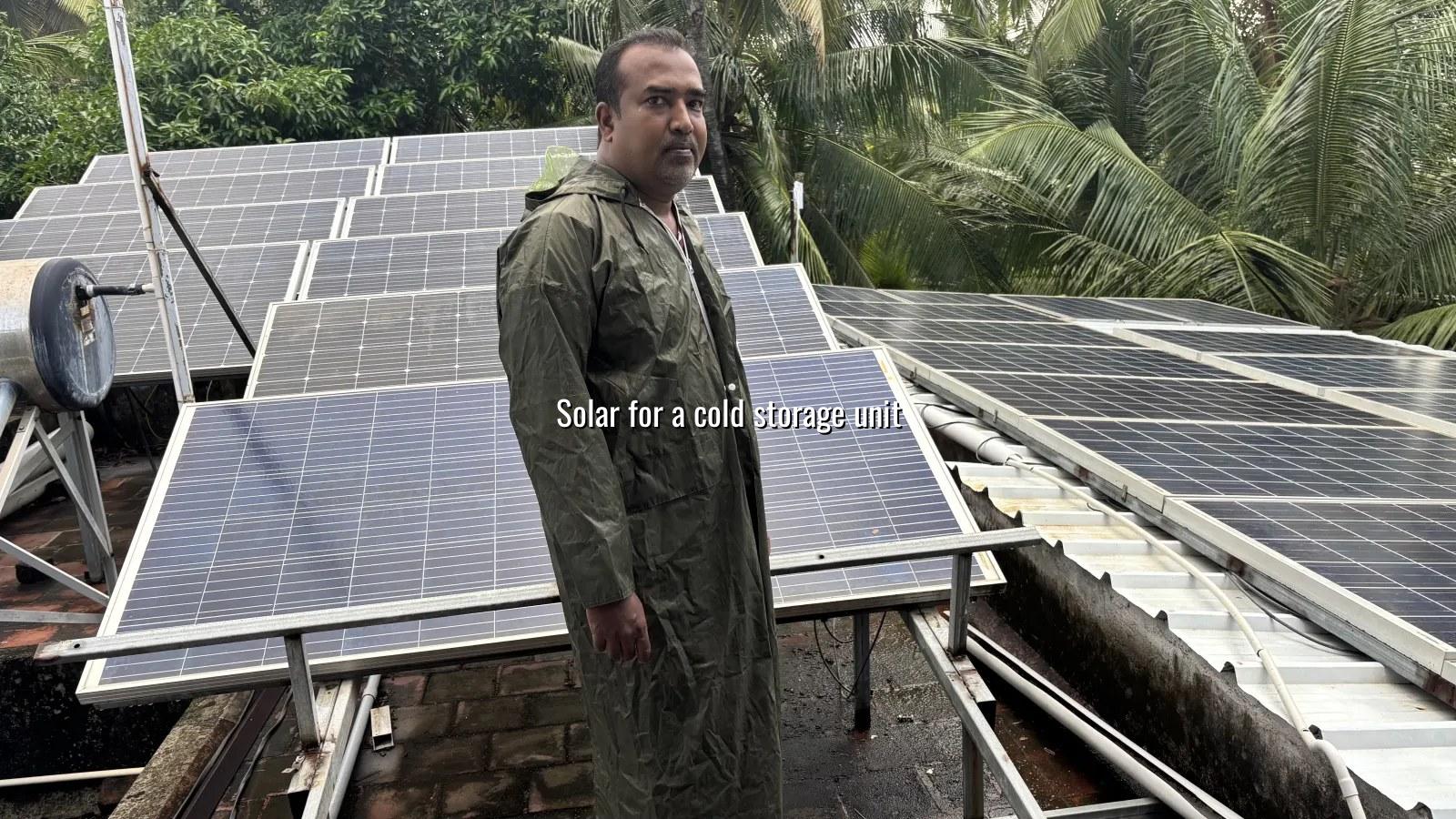
Solar for a cold storage unit is not about putting panels on a roof and hoping the compressor behaves. It starts with the real load, the way the room cycles through the day, and the backup you need when the EB supply is uneven. If you run a cold room in Nagercoil or anywhere else in Kanyakumari District, the first question is simple: how do we keep storage conditions steady without pretending the site is like every other site?
We look at the connected load, the starting pattern of the refrigeration equipment, roof or yard space, and how much of the site sits under shade. In Kottar we often see people assume the roof is enough just because it is large, but the usable area after setbacks, service access and mounting gaps can be much smaller than expected. Around Colachel or Muttom, salt air becomes part of the design conversation too, because hardware that looks fine on paper can age badly if the connections are careless.
Sizing and design
How we plan the system before we talk about panels
Every cold room behaves a little differently. Some run with a fairly even demand, others see a hard start, then a long hold period, then a sudden pull when doors open and produce comes in. That is why we do not sell one standard system. We study the EB bill, the site layout and the equipment first, then recommend what makes sense for the load and the building.
Why the load pattern matters so much
Refrigeration is not a flat load. Compressors, fans, controllers and lighting can all behave differently across the day, and a cold storage unit may need to keep working when the sun drops or clouds come in. That means the solar design has to respect real operating hours, not an ideal chart from a brochure. When we visit a site, we ask what happens during peak loading, during night holding, and during days when the unit is barely opened.
In Thovalai and Boothapandi we have seen agricultural and storage sites where the owner thought the roof size was the only issue, but the real issue was the equipment sequence. Once the actual pattern is clear, we can think about on-grid solar, hybrid solar or, in some cases, an off-grid style approach for locations with very specific operating needs.
What the site tells us in the first visit
The survey is practical. We check roof orientation, structure type, shade from nearby walls or tanks, and whether the mounting can be done on an RCC roof, a sloped tiled roof or a sheet roof. If the site is near the coast, we look more carefully at corrosion risk, cable entry points and earthing. Strong wind exposure across parts of the district also changes how we detail the mounting frame.
A cold storage unit with a yard-mounted array may need different support planning than a shop roof in Marthandam or Thuckalay. That is normal. The point is to match the system to the site you actually own, not to an imagined standard roof. We we can only do that properly when the survey is honest and the equipment list is complete.
- Start with the actual EB bill and equipment list. We need the running load, not a rough guess from memory.
- Check roof space and structure. RCC flat roofs are common, but sheet roofs and tiled roofs need different mounting thinking.
- Look at shading and direction. Nearby walls, tanks and trees can reduce usable generation more than people expect.
- Decide the backup approach. Some sites need only solar tied to the EB connection, while others need battery support or a hybrid layout.
- Plan the documentation early. If the EB process or subsidy paperwork applies, it is easier when the file is prepared before installation starts.
Site factors
The local conditions that change the answer
Kanyakumari District has strong year-round sunshine, but the design still changes with the season. The south-west and north-east monsoon periods matter because rainwater, drainage and cable sealing can affect the long-term condition of the installation, especially where the roof has old joints or awkward water paths. A cold storage unit cannot afford avoidable downtime, so those details are not cosmetic.
Near Manavalakurichi or Rajakkamangalam, salt-laden air is a real consideration. We choose mounting structure and connection practices with that in mind, because a small shortcut in hardware or termination can become a bigger service issue later. Inland, the concern may shift more toward wind loading and roof access, especially on taller sheds or open yards.
Common building types we see
Most sites fall into one of a few patterns: RCC terraces on commercial buildings, low-rise shed roofs over storage spaces, or mixed agricultural buildings where a pump or cold room sits beside other equipment. That mix affects how we route cables, where we place the inverter, and how much of the roof remains free for maintenance. If your site is in Nagercoil, the building may be compact but still suitable; if it is in an open edge area, the wind and the access path matter more.
- Check whether the roof can safely take the mounting load and maintenance foot traffic.
- Keep service access clear around inverter, protection devices and cable runs.
- Use corrosion-aware hardware on coastal and near-coastal projects.
- Seal roof penetrations properly where cable entry cannot be avoided.
- Leave room for inspection so cleaning and troubleshooting stay simple later.
System choices
Which solar setup fits a cold storage project?
There is no single answer. A cold storage unit with a stable EB connection may do best with an on-grid solar design that cuts daytime grid dependence. If the site has unreliable supply or needs more continuity during interruptions, hybrid solar can make more sense. In remote farm-linked projects, off-grid or battery-backed arrangements may be part of the picture.
| Option | Best fit | What we check first | Typical use case |
|---|---|---|---|
| On-Grid Solar | Sites with a regular EB connection and daytime use | Roof space, bill pattern, load timing | Cold rooms that run while produce is being handled |
| Hybrid Solar | Sites that need solar plus battery support | Backup hours, inverter choice, battery placement | Cold storage units that want more continuity during cuts |
| Off-Grid Solar | Remote locations with limited or unreliable grid access | Autonomy needs, battery bank size, daily load profile | Farm-linked cold rooms and similar isolated sites |
| Solar + Pumped Applications | Storage sites with a nearby agricultural load | Space, wiring distance, seasonal operation | Facilities in the wider Thovalai and Boothapandi belt |
We also look at the equipment brands already familiar to the owner or maintenance staff. Some customers prefer Sungrow, Deye or Growatt for inverter preference, while others ask about Polycab or Eastman in a broader package discussion. The right answer depends on the site, the service expectation and the kind of support you want after installation.
Our process
How JRS SunTech Energy handles the project
We keep the process practical because storage owners do not have time for unnecessary back-and-forth. First you contact us, then we arrange a free site survey. After that we prepare the system design and quotation based on the actual site, not a template. If the project is suitable, we move into installation, EB and documentation support, commissioning and then after-sales support.
Cold storage projects often need a firmer hand on documentation than people expect, especially when the EB connection is part of the plan. In Kottar and nearby parts of Nagercoil, we usually find that a clear file saves time later, because nobody wants to pause a working cold room while a missing paper is being chased. That is one reason our team keeps the paperwork discussion early, not as an afterthought.
What makes our approach different on site
We do not push one fixed capacity. We start from the EB bill, the roof or ground area, shading, and the structure. If the building is small, we say so. If a hybrid path is better, we say that too. And if the site is not ready for solar yet, we will tell you what needs to be fixed first, because a rushed setup is not a favour to anyone.
For customers in Marthandam, Thuckalay and Kuzhithurai who run storage alongside shops or trading spaces, the question is often how much of the daytime grid draw can be reduced without disrupting the cold chain. That is a fair question, and it deserves a site-based answer, not a guess from a phone call.
How to prepare
What you should keep ready before the survey
A little preparation makes the visit smoother. You do not need a full engineering file in advance. Just keep the latest EB bill, any notes on the current cold room equipment, and a rough idea of whether the roof is RCC, tiled or sheet. If there is a generator or battery backup already, mention that too.
People often forget to mention future plans. That matters. If the unit may expand, or if another cold room is likely to be added later, the solar layout should leave room for that possibility. It is easier to plan once than to pull apart a neat installation later because the business grew faster than expected.
A few practical things to look for
- Old roof sheets with corrosion around fasteners.
- Shading from water tanks, stair blocks or nearby trees.
- Loose cable runs near loading areas.
- Drainage paths that may splash onto terminations during monsoon rain.
- Enough wall or floor space for inverter and electrical protection devices.
That sort of checking saves time later and keeps the system easier to maintain. It also helps us decide whether your site is better suited to a roof mount, a ground mount, or a mixed arrangement.
How JRS SunTech Energy can help
Planning solar for a cold storage unit with the right details
We help with the full path, from site survey and system design to EB documentation support and commissioning. If your cold storage unit is in Nagercoil, Kottar or anywhere else in Kanyakumari District, we’ll look at the real load, the roof, the backup needs and the local conditions before we recommend anything. That usually gives a cleaner answer than trying to choose equipment first and hoping the site fits later.
Our team also gives one year of free service support after installation, with continued technical help afterwards. If you want to talk through a new project or an existing cold room that needs a better setup, get in touch and we’ll take it from there.
Contact JRS SunTech Energy, Door No. 227, First Floor, Cape Road, St. Xavier's Church Junction, Kottar, Nagercoil, Kanyakumari District, Tamil Nadu - 629002. Phone: 9787775999. WhatsApp: https://wa.me/919787775999?text=Hi%20JRS%20SunTech%2C%20I%20would%20like%20help%20with%20solar%20for%20a%20cold%20storage%20unit.. Email: jrssuntechenergy@gmail.com.
Frequently asked
Questions we hear about solar for a cold storage unit
Yes, if the load is studied properly and the system is matched to the actual running pattern. Cold storage is not treated like a normal home load, because compressors, fans and other controls can start and stop in a way that changes the demand across the day.
We usually ask for the EB bill, the connected load details if you have them, roof or ground space, and the hours when the unit works hardest. If there is battery backup or generator backup already, that matters too.
Solar can suit both, but the design changes a lot. A small cold room may fit on a shed roof or RCC terrace, while a larger unit may need a mix of roof mounting, open area mounting and careful cable planning.
We do, and that matters around places like Colachel and Muttom where salt-laden air can be rough on hardware and terminations. In those sites we pay close attention to mounting structure choice, fasteners, earthing and cable sealing.
Then we look at actual usable space, not just total roof area. Sometimes the answer is a smaller solar array, sometimes a different mounting layout, and sometimes we recommend another solar solution if the roof simply cannot support the needed capacity.
Yes, we guide the EB connection steps, the documents needed and the general process where approval is required. That is often the part people find most confusing, especially when they are juggling production, storage and regular utility supply at the same time.
Hurry up!Subsidy ends 31 March 2027 · 134 days left
Next step
Is your cold storage ready for solar?
Send us your EB bill, location and a few photos of the roof or yard, and we will tell you what kind of solar setup suits the unit.
- Your electricity requirement and 60-day EB bill
- Property type — home, shop, office, farm or institution
- Backup requirement and available roof space
Related: Hybrid Solar · Solar Solutions · Contact
Free site survey · Kottar, Nagercoil